Why an Abyssinian Hates a Closed Door
Oh, the closed door dilemma! If you're an Abyssinian owner, you know this struggle all too well. You just want five minutes of privacy to use the bathroom, or perhaps you’re trying to keep your furry friend out of a particular room for their safety, only to be met with relentless scratching, indignant meows, or a persistent head-butt against the barrier. It's not just annoying; it feels like a personal affront to our clever, demanding companions. This guide will dive deep into why your Abyssinian absolutely despises a closed door and, more importantly, what you can do to find a peaceful resolution for both of you.
The Abyssinian's Relentless Curiosity and Need for Engagement
Let's be honest, an Abyssinian isn't just any cat. They are bundles of energy, intelligence, and boundless curiosity. For them, a closed door isn't just a piece of wood or a barrier; it's a mystery, a challenge, and an unacceptable obstruction to their personal sphere of influence. Their world is one big adventure waiting to be explored, and every part of the house is rightfully theirs to survey.
Every Closed Door is a Personal Affront
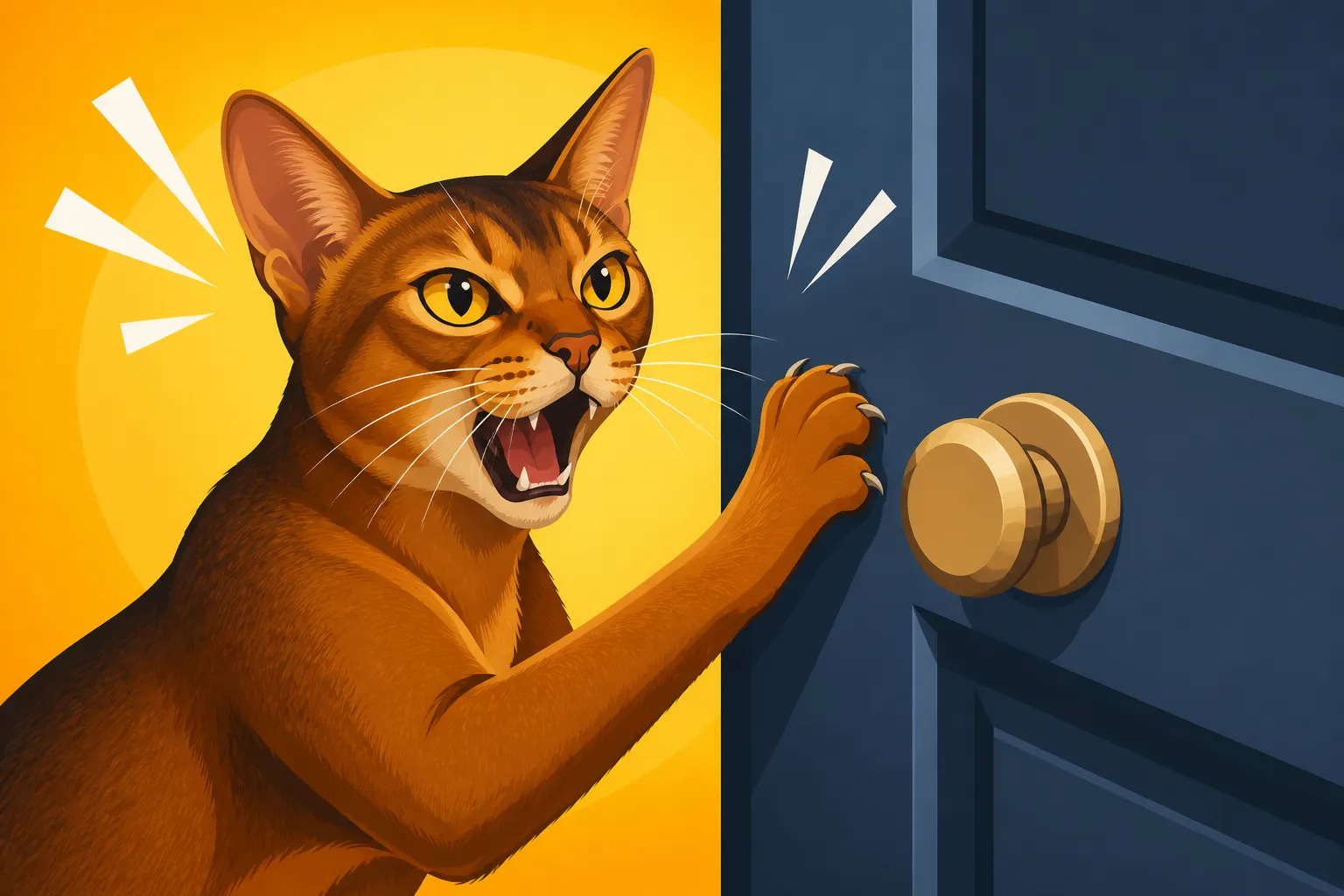
Your Abyssinian genuinely believes that anything happening on the other side of a closed door is something they must be a part of. They are naturally inquisitive creatures, always needing to know what you're doing, what's making that interesting sound, or why you've suddenly vanished from their sight. When a door clicks shut, it doesn't just block their path; it ignites their intense drive to investigate. They perceive it as an active denial of access to information, which is something their highly intelligent minds simply cannot tolerate. It's less about being naughty and more about their inherent need to be involved in every aspect of their environment. They truly embody the phrase "curiosity killed the cat," though in their case, it usually just leads to a very vocal protest at your bedroom door.
Consider the layout of your home and how your Abyssinian interacts with it daily. They have probably already mapped out every climbable surface, every hidden nook, and every potential hunting ground. A closed door disrupts this mental map and signals that a portion of "their" territory has suddenly become inaccessible. This can be genuinely unsettling for a cat that thrives on order and predictability within their domain. It’s no wonder they start pawing and vocalizing; they're trying to restore balance to their world and understand why their access has been revoked. They see themselves as the benevolent overlords of the household, and a closed door is nothing short of a coup. You might find that your Abyssinian also loves to engage with Why an Abyssinian Opens Doors and Cabinets – it's all part of their relentless quest for access.
The Fear of Missing Out (FOMO) is Real
For an Abyssinian, FOMO isn't a human social media trend; it's a fundamental part of their existence. If you're behind that door, they are convinced something absolutely fascinating is happening, and they are being unfairly excluded. Maybe you're opening a treat bag, playing with a forbidden toy, or, gasp, interacting with another human or pet without them. Their active minds race with possibilities, and their desire to participate overrides any sense of decorum. This often manifests as intense vocalizations, from chirps to urgent meows, escalating into full-blown yowls if their demands aren't met. They aren't trying to annoy you; they're genuinely worried they're missing out on vital information or exciting activities.
This intense need to be included stems from their deeply social nature. Abyssinians thrive on interaction and often form strong bonds with their human companions. They are not the type of cat to quietly observe from afar; they want to be right in the thick of things. Whether you're doing laundry, cooking dinner, or simply reading a book, your Abyssinian wants to be your co-pilot. A closed door isolates them from this preferred state of constant companionship and engagement. They crave your attention and presence, and a closed door feels like a withdrawal of that comfort and connection. You’ll quickly learn that The Abyssinian Is the Busiest Cat in the House is not just a title, it's a way of life, and that includes being busy right next to you.
More Than Just a Pet: The Abyssinian's Social Instincts
Unlike some cat breeds that are perfectly content with their own company for long stretches, Abyssinians are highly social and thrive on interaction. They see themselves as an integral part of your family unit, or as I like to say, their "pride." This profound social need is a major driver behind their aversion to closed doors.
They See Themselves as Part of Your "Pride"
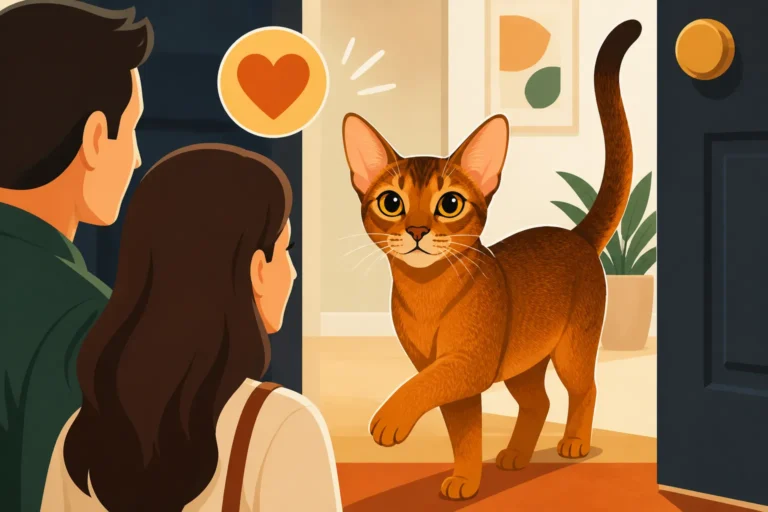
Abyssinians don't just live with you; they live as part of you. They often bond fiercely with their chosen humans, following them from room to room, supervising tasks, and generally acting like an extra shadow. When a door is closed, it breaks this natural connection and can feel to them like being excluded from the core social group. It goes against their instincts to be separated from their pride, even for a short time. They are often quite vocal about this, trying to communicate their displeasure and demand re-entry into the fold. This isn't just about curiosity; it's about belonging and security.
This deep-seated social drive means they often struggle with being left alone. If you're frequently leaving your Abyssinian by themselves for extended periods, they might develop a heightened sense of anxiety around closed doors, as it mimics the feeling of being abandoned. While a second cat can often help alleviate loneliness, even then, they still want access to you. They are companions through and through, and being shut out runs counter to their very nature. It's why many owners find that Why an Abyssinian Should Not Be Left Alone All Day becomes a crucial consideration for their household harmony.
The Desire for Constant Companionship
An Abyssinian's desire for companionship is almost dog-like. They thrive on attention, play, and simply being in the same room as their people. If you've ever tried to work from home with an Abyssinian, you know they're not content just to sleep on a nearby chair; they want to be on your desk, supervising your typing, or maybe even "helping" you with your paperwork. A closed door means an abrupt cessation of this preferred state of togetherness, leaving them feeling lonely or neglected, even if you're just on the other side. This constant desire for proximity can be overwhelming at times, but it's a hallmark of the breed's affectionate personality.
They are also incredibly intuitive and pick up on subtle cues. If they hear you rustling in the bathroom, they might think you're getting ready for an exciting new adventure and want to join. If they smell food or hear you chatting on the phone, their sense of inclusion kicks in, and they can't understand why a door would stand between them and whatever interesting activity is occurring. This isn't a cat that will respect your boundaries without a fight; they see your boundaries as suggestions, at best, and actively challenge them when they involve exclusion. This is part of How an Abyssinian Reacts to Being Shut Out – they simply don't understand the concept.
The Unintended Consequences of Our Actions and Environment
Sometimes, our own habits or the way we've set up our home can inadvertently reinforce the closed-door obsession in our Abyssinians. They are smart, and they learn quickly what gets them what they want.
Reinforcement of Demanding Behavior
Let's be honest, how many times have you given in to the insistent meowing or scratching at the door? It's tough to ignore, especially in the middle of the night or when you're trying to focus. But every time you open that door in response to their demands, you're inadvertently teaching your Abyssinian that vocalizing and scratching are effective strategies for gaining access. They're not being malicious; they're simply being intelligent and adaptive. They’ve learned through cause and effect that persistence pays off. This creates a cycle that can be incredibly difficult to break.
The solution isn't to suddenly ignore them entirely, which can lead to distress. Instead, it requires a thoughtful approach to behavior modification. If the door always opens when they're making a fuss, they'll just try harder next time. Conversely, if the door never opens when they're demanding, but sometimes opens when they're quiet, they might start to associate quiet behavior with eventual access. It’s a delicate balance that requires consistency and patience. Understanding What an Abyssinian Does When It Is Bored can help you proactively prevent some of this demanding behavior before it even starts.
Lack of Environmental Enrichment
An Abyssinian with insufficient mental and physical stimulation is a bored Abyssinian. And a bored Abyssinian is a destructive Abyssinian, or one that directs all its considerable energy towards trying to get into whatever room is currently off-limits. These cats need activities that challenge their intelligence and allow them to burn off their abundant energy. If they're not getting enough interactive play, puzzle toys, or opportunities to climb and explore their environment, they'll seek out other ways to entertain themselves, and harassing the closed door often becomes a favorite pastime.
Think about how you've set up your home. Abyssinians are vertical cats; they love to climb and observe from high vantage points. If your home doesn't offer enough cat trees, wall shelves, or other vertical spaces, they might feel restless and contained, leading them to view closed doors as yet another frustrating limitation. Providing ample enrichment, especially engaging their minds with things like puzzle feeders you can find on sites like Amazon, can significantly reduce their focus on the forbidden door. Consider investing in sturdy, tall cat trees, readily available from various retailers including Amazon, to give them outlets for their natural climbing instincts. An Abyssinian Needs Height More Than It Needs Floor is a mantra for a reason!
Inconsistent Boundaries Send Mixed Signals
One of the biggest culprits in perpetuating the closed door struggle is inconsistency. If sometimes a door is open and other times it's closed, your Abyssinian gets mixed signals. They learn that the rule isn't fixed, and therefore, it's worth testing every time. This can be particularly true for bathroom doors; one minute it’s open, the next it’s closed for your privacy, and your cat simply doesn't understand the difference. Cats thrive on routine and clear expectations, and when those are absent, they will default to their own desires, which usually involves total access.
Establishing clear, consistent boundaries is key. If a particular room is always off-limits, then the door must always remain closed. If it's a room that's sometimes accessible, you'll need to work on training them to respect your entry and exit. This might involve setting up an alternative engaging activity for them outside the door before you close it. Remember, an Abyssinian is clever enough to remember patterns, both yours and their own. If the rule isn't consistent, they'll keep trying to bend it.
Strategies for Restoring Peace and Respecting Boundaries
Dealing with an Abyssinian who despises closed doors requires a multi-faceted approach, combining environmental enrichment, consistent training, and a deep understanding of their unique personality. It's not about "winning" against your cat, but about establishing mutual respect and clear communication.
Environmental Enrichment: Provide Alternatives
The first step is to ensure your Abyssinian has plenty to do and explore outside the closed-door zone. This means engaging their minds and bodies throughout the day.
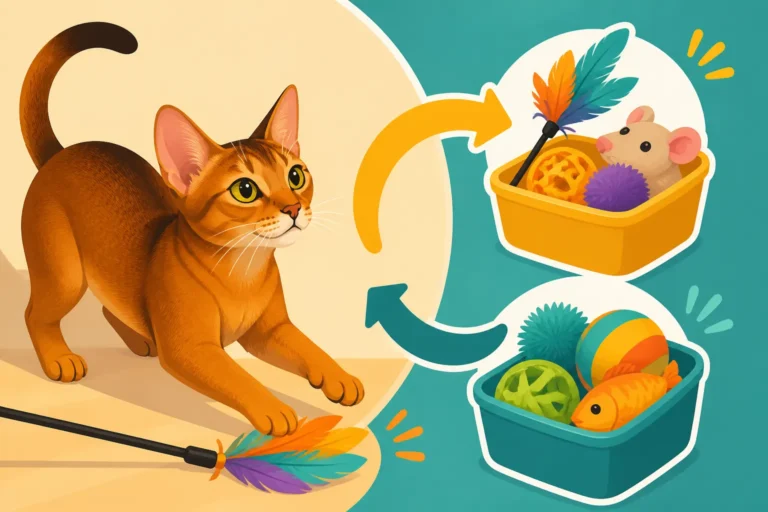
- Interactive Play: Schedule dedicated playtimes, ideally two or three sessions a day, using wand toys that mimic prey. This helps them burn off energy and satisfies their hunting instincts. Don’t just leave toys lying around; Abyssinians get bored easily, so Why an Abyssinian Loses Interest in a Toy Fast is a common issue. Rotate toys frequently to keep things novel.
- Puzzle Feeders: These are fantastic for mental stimulation. Instead of putting all their food in a bowl, use puzzle feeders or hide small portions of kibble around the house. This taps into their natural foraging behavior and gives them a "job" to do. You can find a wide variety of these on Amazon, from simple treat balls to more complex feeders that require problem-solving.
- Vertical Space: As mentioned, Abyssinians love to climb. Install wall shelves, cat trees, or secure cat perches near windows. The higher, the better! This gives them vantage points to survey their kingdom and provides physical exercise. You can find excellent, sturdy options for Why an Abyssinian Needs a Tall Cat Tree on Amazon, ensuring they have plenty of elevated spaces.
- Window Perches & Catios: A window perch offering a view of the outside world, perhaps even a bird feeder, can provide hours of entertainment. For supervised outdoor access, a "catio" can be a game-changer, giving them a safe space to enjoy fresh air and new smells.
By providing these enriching activities, you redirect their energy and focus away from the frustrating closed door and towards more positive, acceptable outlets.
Consistent Training and Desensitization
Training an Abyssinian is less about command and more about creating routines and predictable environments.
- Gradual Desensitization: If there's a particular door you need to keep closed (like a home office or bedroom), start by closing it for very short periods while you are still present in the accessible area. Ignore any initial meows or scratches. When they quiet down, open the door. Gradually increase the duration the door stays closed, always opening it when they are calm and quiet, never in response to demanding behavior.
- Positive Reinforcement: When your Abyssinian is calm and relaxed near a closed door, or when they simply walk away from it, reward them with a treat or praise. This helps them associate positive outcomes with not harassing the door.
- Sound Masking: Sometimes, the sounds from behind the door are what trigger their FOMO. Playing soft music or a white noise machine can help mask these sounds, reducing their incentive to investigate.
- Childproof Latches: For cabinet doors or pantries that are truly off-limits, consider installing childproof latches. Your Abyssinian's intelligence means they'll quickly figure out standard door handles, but these latches can provide a much-needed physical barrier. Many types are easily found on Amazon.
Remember, consistency is paramount. Every time you give in to their demands, you undo previous training. This process requires patience, but it's worth it for a calmer household.
Table: Common Closed Door Behaviors and Their Meaning
| Behavior | What Your Abyssinian is Saying | Potential Solutions |
|---|---|---|
| Persistent Meowing/Yowling | "I want in! What are you doing without me? I'm lonely!" | Increase playtime, provide puzzle feeders, ignore until quiet, then open. |
| Scratching/Banging on Door | "This barrier is unacceptable! I must breach it and investigate!" | Provide scratch posts near the door, apply deterrent tape (consult vet first). |
| Head-butting Door | "My presence must be acknowledged! Let me in, human!" | Redirect with a favored toy, ensure ample vertical space and other enrichment. |
| Sitting and Staring Intently | "I'm observing. I know you're in there. I'll wait you out." | Provide a comfortable, engaging space outside the door, don't reinforce with immediate opening. |
| Pushing on Handle/Jumping on Knob | "I know how this works. I will get through this, eventually." | Install childproof latches, remove items that give leverage to jump. |
By understanding the "why" behind their closed-door antics, you can develop a strategy that caters to their needs while still maintaining your own boundaries. It's a journey, not a sprint, but with patience and the right tools, you can teach your Abyssinian to respect the door – most of the time!
Disclaimer
This article is for general informational purposes only and does not constitute professional advice. Laws, prices and regulations vary by location and change over time. Consult a qualified professional for guidance on your specific situation.