How an Abyssinian Reacts to Being Shut Out
It’s a scenario familiar to almost every Abyssinian owner: you just need a few minutes of peace, or perhaps you're doing something dangerous that a curious cat shouldn't be involved in, so you close a door. What follows is usually a masterclass in feline protest. This guide dives deep into why your Abyssinian reacts so strongly to being shut out and offers practical strategies to navigate their persistent demands for inclusion.
Why a Closed Door Is an Abyssinian's Worst Enemy
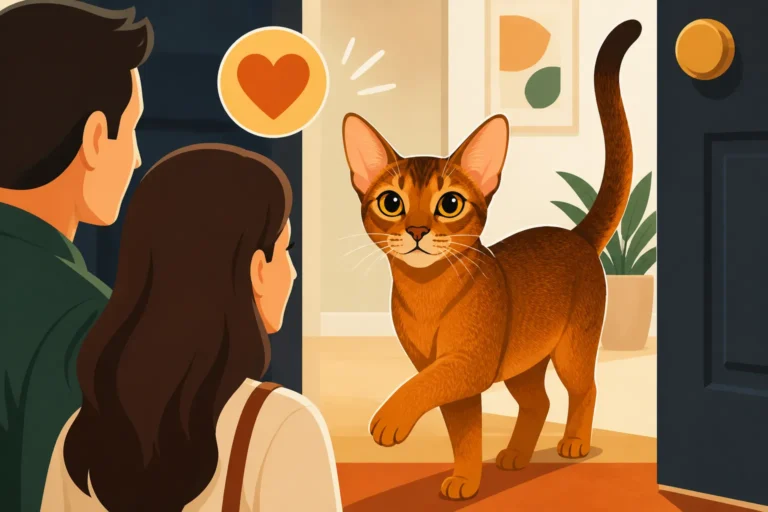
For a breed celebrated for its active, social, and intelligent nature, a closed door isn't just a barrier; it's an affront to their very existence. Abyssinians are inherently curious, highly interactive, and possess a profound need to be involved in whatever their humans are doing. They are not the type of cat to quietly nap in another room while you go about your business. Their world revolves around constant engagement, exploration, and supervision of their human companions. When you close a door, you're essentially telling them that they are excluded from their primary source of enrichment and connection, and for an Abyssinian, that's almost unbearable.
They crave mental stimulation and thrive on being part of the action. Whether you're washing dishes, working at your desk, or simply using the restroom, your Abyssinian firmly believes they should be right there, observing, participating, or at the very least, supervising. A closed door suggests there's a secret world beyond, a mystery to be solved, or worse, a fun activity happening without them. This isn't just a casual preference; it's deeply ingrained in their personality. You might have noticed Why an Abyssinian Follows You Without Sitting Still, a clear indication of their desire for constant proximity and involvement.
The Abyssinian's Need for Control and Supervision
Let's be honest, your Abyssinian sees themselves as the benevolent (or sometimes not-so-benevolent) ruler of their domain, and that includes you. When a door is closed, it breaks their illusion of control and their ability to oversee all household operations. They need to know what you're doing, who you're talking to, and why that specific object is now on the floor. It's not out of spite; it's simply their nature to be perpetually vigilant and engaged. This intense desire to be part of everything contributes significantly to their energetic and often demanding personalities. They're often described as the busiest cat in the house, and being confined behind a closed door directly contradicts that core characteristic.
The Fear of Missing Out (FOMO) is Real for Abyssinians
The Abyssinian's famous curiosity means that for them, "out of sight" is definitely not "out of mind." It just means "something interesting is happening, and I'm missing it." Imagine being a highly intelligent, endlessly inquisitive creature whose entire universe is contained within four walls, and suddenly one of those walls becomes an impenetrable barrier. Their minds immediately jump to conclusions about what exciting adventures, delicious treats, or intriguing sounds are being withheld. This inherent What an Abyssinian Does When It Is Bored drives them to investigate every possible way to rejoin you. They are masters of problem-solving when motivated by curiosity and the desire for interaction, so a closed door becomes their next great challenge.
The Abyssinian's Repertoire of Protest
Once they realize a door is closed, your Abyssinian will typically launch into a multi-pronged protest strategy. It's rarely a silent affair. They have a remarkable ability to escalate their demands until you, the human, finally relent. This isn't just annoying; it's a testament to their persistence and intelligence.
Vocalizations and Persistent Chirps
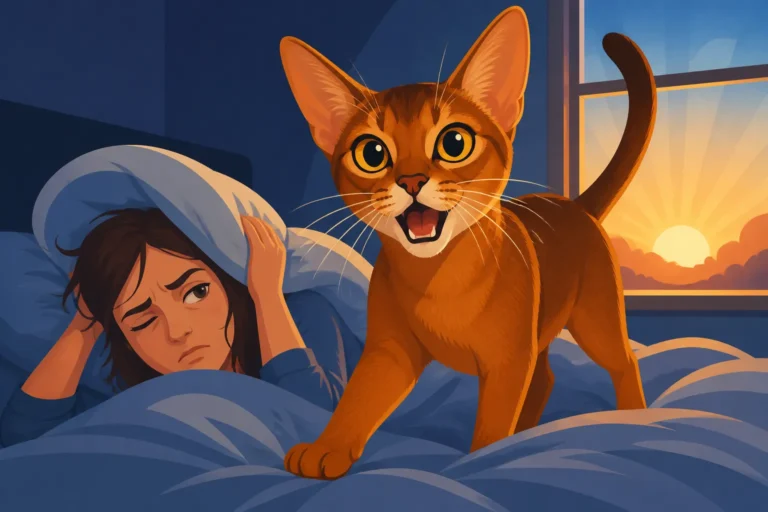
The first line of attack is almost always vocal. Abyssinians are known for being more vocal than some other breeds, though perhaps not as famously loud as a Siamese. You might hear a gentle "mew" at first, a polite inquiry. When that doesn't work, it quickly escalates. Their distinct chirps, often described as bird-like trills, will become more frequent and insistent. What an Abyssinian's Chirp Means is usually a clear "Hey! I'm here! Let me in!" These chirps can evolve into more demanding meows, sometimes even sounding like a plaintive cry. They will often pace outside the door, pausing only to direct their vocal barrage directly at the obstruction. It's an auditory alarm clock, a constant reminder that they are waiting, and they expect an answer.
The Art of Door Manipulation
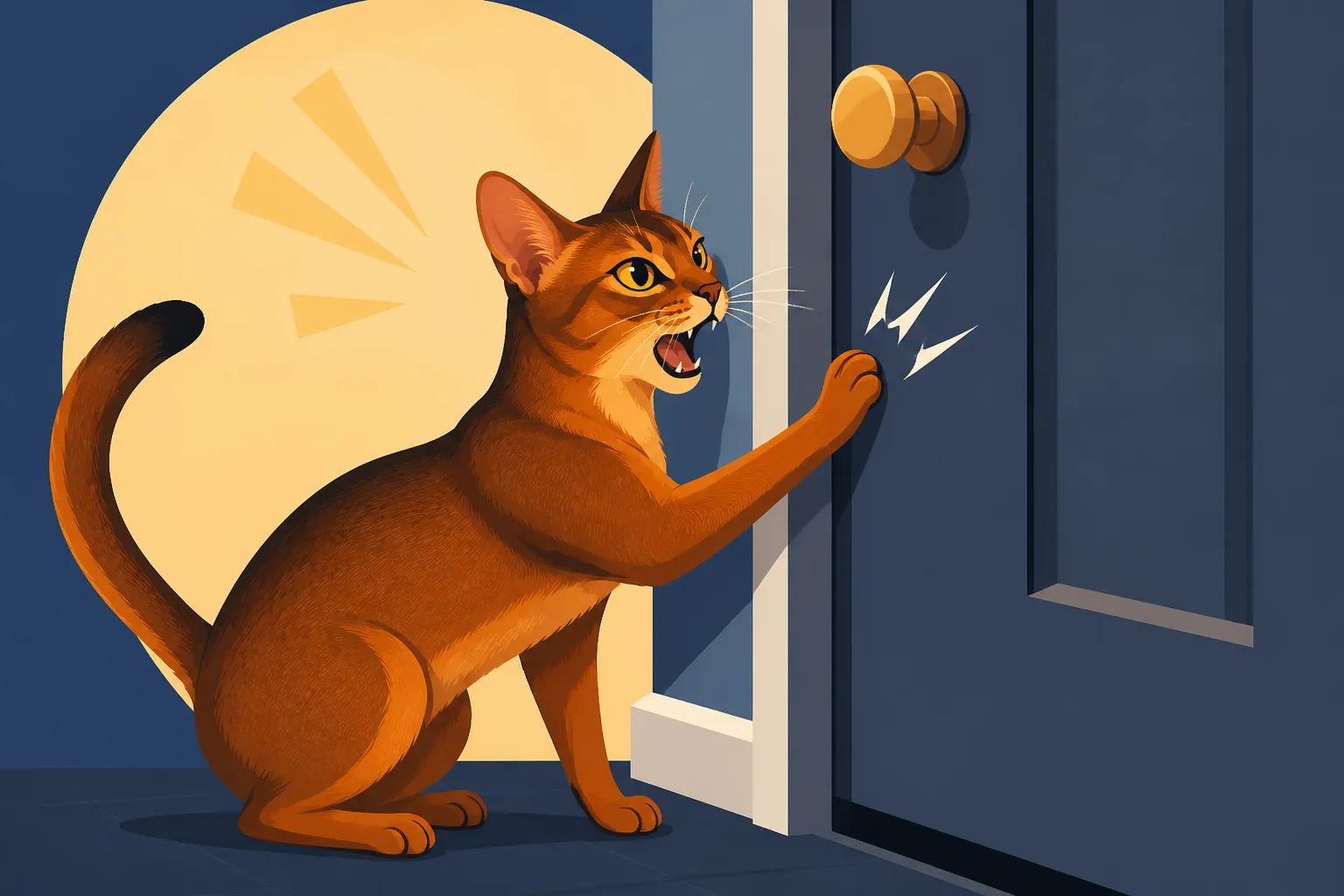
Don't underestimate an Abyssinian's physical prowess or their understanding of how things work. Many Abyssinian owners quickly learn that standard door handles are mere suggestions for these agile cats. They will stand on their hind legs, batting at the handle, jumping, or even using their body weight to pull down lever-style handles. There's a reason why posts like Why an Abyssinian Learns to Push a Handle Down exist; it's a common trait! They will scratch at the doorframe, paw under the door, or even ram it with their heads in a frustrated attempt to gain entry. This isn't just random behavior; it's a methodical exploration of how to overcome the barrier. They're essentially conducting an engineering experiment, driven by their unwavering goal to be with you. You might find claw marks on the door or frame as evidence of their tireless efforts, a minor casualty in their quest for access.
The Table of Abyssinian Door-Closed Reactions
| Reaction Type | Typical Abyssinian Behavior | Owner's Likely Experience | Underlying Motivation |
|---|---|---|---|
| Vocalization | Persistent chirps, trills, insistent meows, mournful cries. | A constant soundtrack to your "private" moments. | Communicating desire to be included; seeking attention. |
| Physical Assault | Pawing, scratching, batting at door handles, jumping at door. | Scratches on paintwork, rattling handles, thumping sounds. | Attempting to manipulate the barrier; testing boundaries. |
| Vigilant Waiting | Sitting directly outside the door, staring intently. | Feeling watched, guilt-tripped into opening the door. | Patiently (but insistently) waiting for access; "I'm not leaving." |
| Escalation | Increased volume/frequency of vocalizations, more vigorous scratching/jumping. | The "noise level" increases until you crack. | Demonstrating unwavering determination; unwilling to be ignored. |
Strategies for a Peaceful Coexistence
While it might feel like a losing battle, there are absolutely ways to manage your Abyssinian's strong aversion to closed doors. It's all about redirecting their energy, satisfying their needs, and sometimes, outsmarting their clever antics.
Proactive Enrichment and Scheduled Play
The best defense is a good offense. If your Abyssinian is protesting a closed door, it often means their need for interaction and mental stimulation hasn't been fully met. Ensure they get plenty of dedicated playtime throughout the day. We're talking active, engaging play with wand toys that mimic prey, sessions that leave them panting and satisfied. How Much Play an Abyssinian Needs Each Day is crucial for these high-energy cats. Before you need to close a door, engage them in a strenuous play session, followed by a meal. A tired, fed cat is much more likely to settle down, even if just for a little while. Puzzle feeders are also a fantastic tool to keep their active minds busy. You can find many interactive puzzle feeders on platforms like Amazon that require them to work for their food, channeling their intelligence into a productive activity. This can buy you valuable minutes of quiet time.
Training and Redirection Techniques
Abyssinians are incredibly smart, which means they are highly trainable. Clicker training can be a game-changer for teaching them alternative behaviors. Instead of scratching the door, you can teach them to go to a designated "place" (like a comfy bed or a cat tree) when you say a command, rewarding them heavily when they comply. You can also use strong deterrents on the door itself, like double-sided sticky tape or motion-activated air sprayers (used sparingly and with caution, as some cats are highly sensitive) to make the door an unpleasant experience without associating you with the punishment. The goal is to make them choose not to bother the door. For more stubborn door-openers, you might need to install child-proof latches or specific cat-proof door locks, easily found on Amazon or at your local hardware store. These can be particularly useful for areas like the pantry or bathroom where you absolutely need to keep them out. How to Secure a Cupboard Against an Abyssinian provides similar strategies for keeping them out of restricted areas.
Creating an Engaging Environment
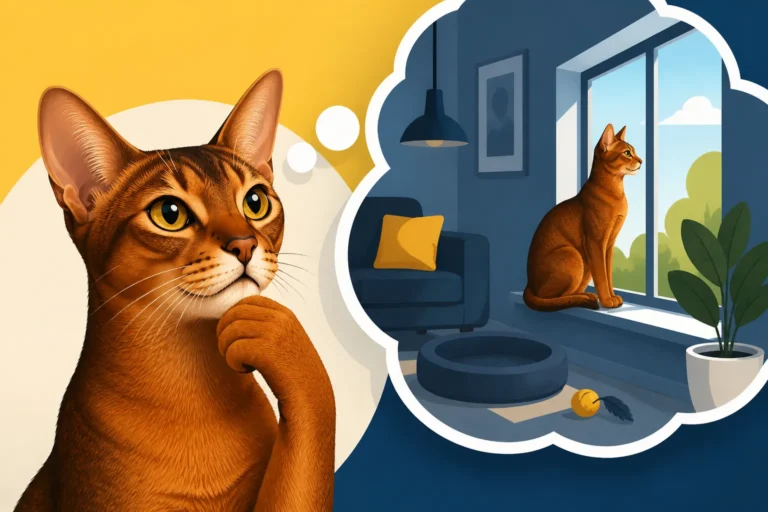
Even if you need to close a door to a specific room, ensure the rest of their environment is stimulating and engaging. Abyssinians thrive on vertical space, so cat trees, wall shelves, and window perches are essential. A busy bird feeder outside a window can provide hours of entertainment for your Abyssinian, giving them a "job" to do: bird watching. Consider if they might benefit from a companion, especially if you work long hours. Whether Two Abyssinians Are Easier Than One is a common question, and for these social creatures, a compatible playmate can significantly reduce their focus on constantly bothering you. If you have an Abyssinian and they are constantly demanding attention, sometimes a buddy is the best solution.
The Long-Term Impact of Consistent Exclusion
While it's perfectly normal to need privacy or to keep your cat out of certain areas for their safety, consistently ignoring their pleas for entry or routinely shutting them out without providing adequate alternatives can have a negative impact on your Abyssinian's well-being.
Increased Anxiety and Destructive Behaviors
An Abyssinian who feels constantly excluded can develop heightened anxiety. This isn't just emotional distress; it can manifest physically. Stress can lead to overgrooming, where they compulsively lick and chew their fur, sometimes to the point of creating bald patches. Why a Stressed Abyssinian Overgrooms is a clear indicator that their emotional needs are not being met. They might also escalate their destructive behaviors beyond the door itself, turning to scratching furniture, chewing on forbidden items, or even inappropriate urination if their stress levels become severe. Remember, What Destructive Behavior in an Abyssinian Really Means is often a cry for attention or an expression of unmet needs rather than simple naughtiness. A frustrated Abyssinian is an ingenious Abyssinian when it comes to finding outlets for their pent-up energy.
Strained Bond and Reduced Trust
Your Abyssinian relies on you for companionship and interaction. When you consistently shut them out, it can subtly strain your bond. They might become more demanding when you are present, trying to "make up for lost time," or they could, in extreme cases, become more withdrawn, though this is less common for such a social breed. The key is balance. It's about finding times when you can include them, even if it's just letting them sit on the bathroom counter while you brush your teeth, and providing rich alternatives for when you can't. A healthy relationship with an Abyssinian involves understanding and respecting their high need for interaction, even when it sometimes feels overwhelming. By actively engaging with them, providing outlets for their energy, and offering alternatives when a door needs to be closed, you reinforce trust and ensure a happier, more well-adjusted cat.
Disclaimer
This article is for general informational purposes only and does not constitute professional advice. Laws, prices and regulations vary by location and change over time. Consult a qualified professional for guidance on your specific situation.