Why an Abyssinian Gets Into the Bin
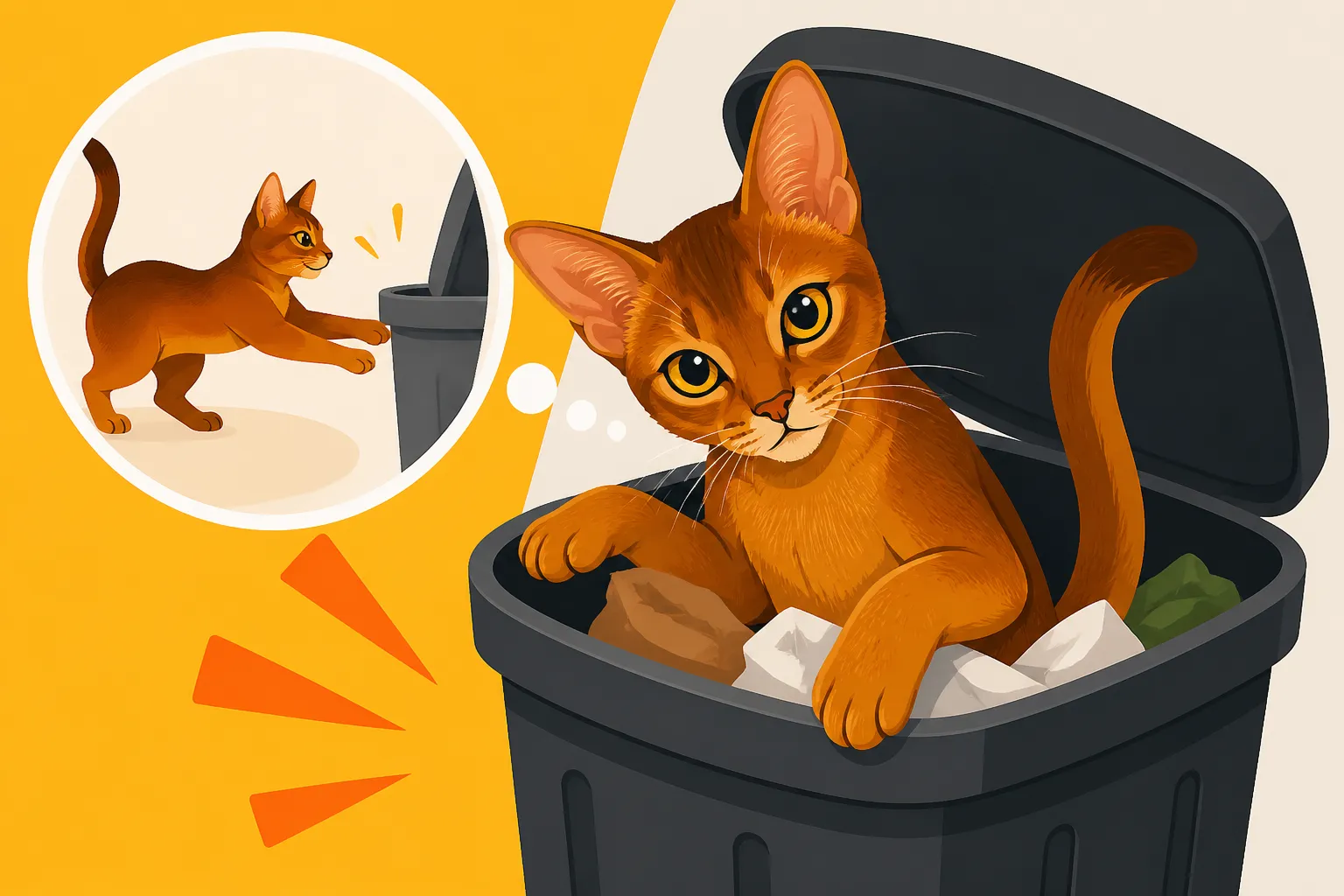
There's nothing quite like the specific dread of walking into your kitchen only to find the contents of your bin strewn across the floor, perhaps with a triumphant, albeit messy, Abyssinian staring at you from the wreckage. It’s frustrating, bewildering, and often feels like a personal affront, especially when you thought you'd secured everything. You're left asking, "Why my cat? Why the bin?" This guide is here to shed light on the unique Abyssinian motivations behind this mischievous behavior and provide you with actionable steps to reclaim your kitchen and your sanity.
The Abyssinian's Natural Instincts and the Bin's Allure
Let's be real, an Abyssinian isn't just a pretty face; they are a whirlwind of intelligence, energy, and unbridled curiosity. What we see as a messy trash can, they often see as an irresistible challenge, a puzzle, or even a forgotten treasure chest. Understanding these deep-seated instincts is the first step to curbing the behavior.
The Hunter's Curiosity and Resourcefulness
Abyssinians possess an incredible intellect, coupled with a boundless desire to explore and understand their environment. They aren't content to merely observe; they want to interact, manipulate, and figure things out. If there's a problem to solve, an Abyssinian is likely to take it on, and a bin, especially one with an intriguing lid, presents a fantastic problem. They are the ultimate problem-solvers in feline form.
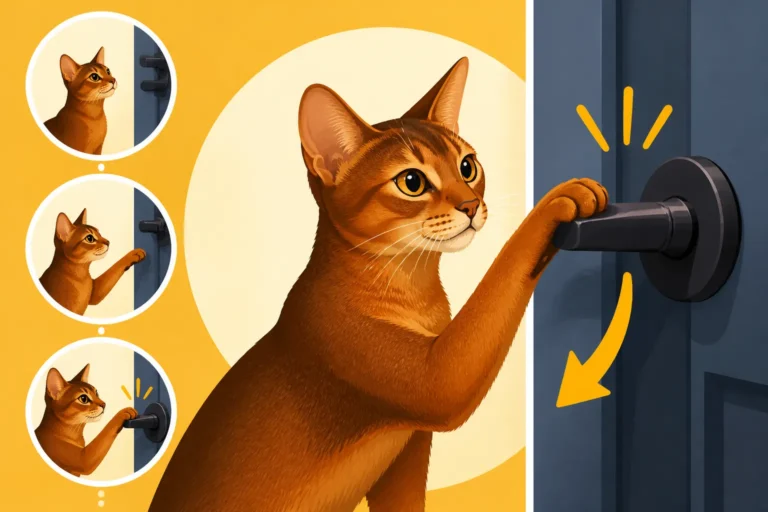
Think about their wilder ancestors, the small, swift hunters and scavengers. Every cranny, every discarded item, could have been a potential meal or an interesting find. This primal drive is still very much alive in your domesticated Abyssinian. They don't just paw at things; they strategically test mechanisms, push and pull, and use their slender, agile paws with surprising dexterity. You might be shocked at how quickly they can learn to open a cupboard, flip a lid, or even manipulate a pedal bin if it offers the slightest leverage. They connect the action with the reward (the bin's contents) incredibly fast. It's not malice; it's simply a cat being a cat, but with a highly advanced, super-sleuth twist that only an Abyssinian truly masters. They're constantly looking for How to Give an Abyssinian a Job, and sometimes, that job is "bin inspector."
A Treasure Trove of Novel Scents and Textures
For an Abyssinian, the bin is a sensory buffet. Their sense of smell is far more acute than ours, and what might be a faint, unpleasant odor to us is a rich tapestry of exciting new information to them. Imagine the wafting scents of last night's chicken, the intriguing aroma of a discarded yogurt pot, or the subtle sweetness of a fruit peel. These aren't just smells; they're invitations to investigate.
Beyond the scent, there's the tactile experience. Crinkly wrappers, soft food scraps, sturdy cardboard, and slippery plastic all offer a delightful array of textures to bat, chew, and tear at. For a cat that thrives on novelty, a bin offers endless possibilities that a standard cat toy might lack after a few days. They are drawn to the unusual, and the bin is a constantly changing landscape of intriguing objects. It’s like a daily surprise box just waiting to be unpacked. This isn't just about food; it's about the sheer joy of discovery and engagement with something new and exciting, making it far more compelling than a static scratching post.
Boredom and Lack of Mental Stimulation
This is often the silent culprit behind many Abyssinian behavioral quirks, and bin raiding is no exception. Abyssinians are renowned for their high energy levels and their intelligent, active minds. They are not content to simply lounge about all day. If they aren't provided with sufficient mental and physical enrichment, they will find ways to entertain themselves, and those ways are often not to our liking. A bored Abyssinian is a destructive Abyssinian, not out of spite, but out of an innate need to do something.
Consider how much play an Abyssinian needs each day. It’s significantly more than many other breeds. If they're left alone for long stretches without interactive toys, challenging puzzle feeders, or regular play sessions with you, that overflowing bin becomes the most exciting thing in the house. It's a challenging climb, a scent hunt, and a destructive game all rolled into one. They aren't thinking, "I'm going to make a mess;" they're thinking, "This is fascinating! What's inside? Can I get it out? Can I climb on it? Can I tear it?" Investing time in understanding their need for engagement and providing appropriate outlets for their energy is crucial. If they are well-exercised and mentally stimulated, the bin often loses its illicit appeal.
Common Triggers and Environmental Factors
While an Abyssinian's innate curiosity is a driving force, certain environmental factors in our homes can inadvertently make the bin an even more tempting target. Identifying and addressing these triggers is key to resolving the issue.
Accessible Bins and Lack of Proper Security
Let's face it, many of us use standard kitchen bins that are perfectly functional for human use but are utterly useless against the cunning of an Abyssinian. A simple swing-top lid, a foot pedal mechanism, or even an open-top bin might as well have a flashing "Welcome, Explorers!" sign on it for an Abyssinian. They are quick learners and incredibly persistent. They watch us, they experiment, and they remember what works. How an Abyssinian Learns to Open a Cupboard applies just as much to bins.
Once they figure out how to access the bin, it becomes a learned behavior. Each successful raid reinforces the idea that the bin is a worthwhile target. It’s not about their strength; it’s about their strategic thinking. They’ll nudge a lid open, pry at a seam, or even jump on a pedal to get the top to lift. We often underestimate their ingenuity until we come home to a chaotic scene. A standard kitchen bin, no matter how elegant, often provides insufficient resistance to a determined Abyssinian.
Food Scraps and Irresistible Odors
This is perhaps the most obvious, yet often overlooked, trigger. Even if your Abyssinian is well-fed and has access to plenty of food, the allure of "forbidden" or novel food scraps is incredibly strong. The smell of meat, fish, cheese, or anything rich in protein can be an overpowering siren call. Even cooked bones, which are incredibly dangerous for cats due to splintering, can be a major draw. Spoiled food, while disgusting to us, might present an even more intense and intriguing aroma to a cat.
Beyond actual food, packaging that once held food also retains strong odors. The wrapper from a block of cheese, the empty cat food pouch, or even the cardboard sleeve from a microwave meal can be highly appealing. These scents act as powerful attractants, making the bin a priority investigation site. It's not necessarily about hunger, but about the deeply ingrained drive to investigate and consume novel, high-value resources. This is why Why an Abyssinian Learns Faster When It Is Hungry can sometimes manifest in undesirable ways when applied to bin exploration.
Attention-Seeking Behavior
While often unintentional on our part, our reactions to a bin raid can sometimes inadvertently reinforce the behavior. When you discover the mess, your natural reaction might be to rush over, exclaim in frustration, and immediately clean it up. From your Abyssinian's perspective, this sudden burst of attention, even if negative, is still attention. An Abyssinian craves interaction and engagement with their human companions.
If they've been feeling a bit neglected or bored, creating a spectacular mess might be their ingenious way of ensuring you interact with them. They might not understand your exasperation, but they certainly understand that their action led to you focusing solely on them. This is a tricky one to manage because you have to clean up the mess. However, try to do so with as little fanfare as possible, and immediately follow up by redirecting their attention to an appropriate activity, like a play session with a favorite wand toy.
Practical Solutions for a Bin-Proof Home
Now that we understand the "why," let's dive into the "how" to stop it. The good news is that with a few strategic changes, you can largely mitigate your Abyssinian's bin-raiding tendencies. It's all about making the bin inaccessible and uninteresting.
Securing Your Bins
This is your absolute first line of defense. Standard bins are simply not going to cut it against an Abyssinian's determination. You need to invest in bins that are truly cat-proof. Look for options with secure, locking lids or heavy-duty pedal mechanisms that require more force or dexterity than an Abyssinian can muster.
Here are a few types to consider:
- Step-on bins with a locking lid: Many modern kitchen bins feature a pedal, but the key is finding one with an additional locking mechanism that keeps the lid firmly shut even if jumped on. Some bins offer a manual lock or a strong clasp.
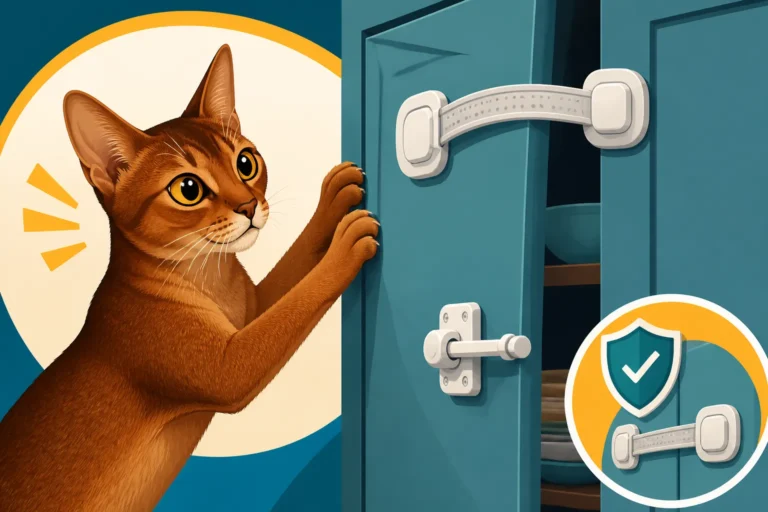
- Bins inside cabinets: The simplest solution for many is to place the bin inside a pantry or a lower cabinet. Then, the focus shifts to securing the cabinet door itself. How to Secure a Cupboard Against an Abyssinian details methods like childproof latches, which are incredibly effective and surprisingly easy to install.
- Motion-sensor bins (with caution): While some motion-sensor bins might seem like a good idea, an Abyssinian can quickly figure out how to trigger the sensor, or worse, use the opening mechanism as a leverage point to pull the lid off entirely. If you opt for one, ensure it has a strong, secure fit for the lid.
Remember, whatever solution you choose, test it from your Abyssinian's perspective. Can they jump on it and open it? Can they pry the lid off with their paws? Can they nose underneath a seam?
Here's a quick comparison of common bin types:
| Bin Type | Abyssinian Security Level (1-5, 5 being most secure) | Pros | Cons |
|---|---|---|---|
| Open Top Bin | 1 | Easy access for humans | Zero security, a cat's paradise |
| Swing Top Lid | 1-2 | Conceals odors | Easy to bat open, light and easily moved |
| Standard Pedal Bin | 2-3 | Hands-free operation | Lid can often be lifted with determined pawing |
| Locking Pedal Bin | 4-5 | High security, keeps odors in | Can be more expensive, takes up space |
| Bin Inside Secured Cabinet | 5 | Invisible, provides double layer of defense | Requires cabinet space, cabinet lock installation |
When searching for secure bins, many owners have found success with robust kitchen bins available on platforms like Amazon, often marketed as "pet-proof" or "child-proof." Just read reviews carefully and check that the locking mechanism is truly secure against a determined feline.
Managing Food Waste and Odors
Even the most secure bin won't solve the problem if the irresistible odors are still wafting out. Think of this as a complementary strategy to securing the bin itself.
- Scrape plates thoroughly: Don't leave appealing food residue on plates before putting them in the bin. Scrape them directly into the toilet or a dedicated, secure compost bin if you have one.
- Use smaller, tied-off bags: Instead of a large bin liner that collects waste for days, consider using smaller grocery bags for food scraps. Tie them off immediately and dispose of them in an outdoor bin as soon as possible. This drastically reduces the lingering odors inside.
- Immediate disposal of highly odorous items: Fish skin, chicken bones, strong-smelling dairy products – these should go straight into an outdoor, lidded bin after use, not linger in the kitchen bin.
- Place bins strategically: If possible, locate your kitchen bin inside a pantry or a utility room where your Abyssinian doesn't have free access. This provides another layer of deterrence.
- Be mindful of other hazardous items: It's not just food. Remember that Medication Must Be Locked Away From an Abyssinian, and other dangerous items like cleaning products, string, or plastic bags also pose a risk if accessible in the bin.
By reducing the olfactory appeal of the bin, you remove a significant part of the motivation for your Abyssinian to even bother investigating it.
Boosting Enrichment and Redirecting Energy
The proactive approach is always the most effective with an Abyssinian. A bored Abyssinian is a mischievous Abyssinian. If their physical and mental needs are met, they are far less likely to seek out inappropriate forms of entertainment like bin diving.
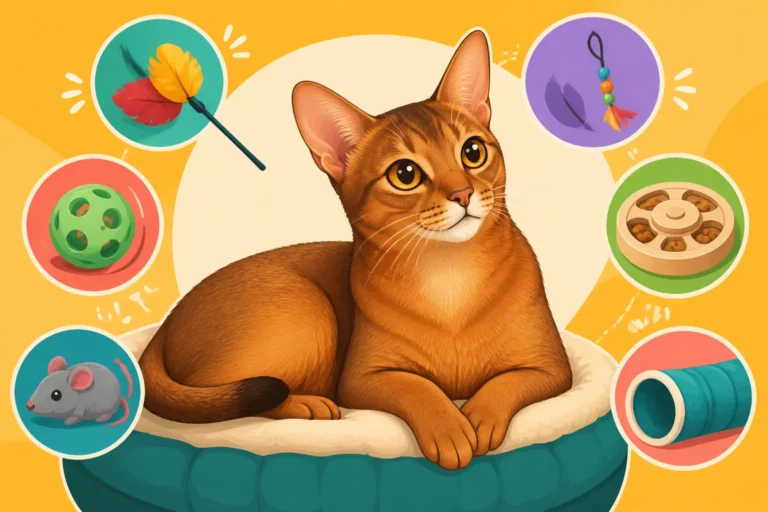
- Interactive play sessions: Dedicate time each day for active, engaging play. Use wand toys that mimic prey, allowing them to stalk, chase, and "kill" their quarry. Aim for at least two to three sessions of 10-15 minutes each. How to Split an Abyssinian's Play Into Sessions can make this easier to fit into a busy schedule.
- Puzzle feeders: These are fantastic for mental stimulation and slow down eating, making meal times more engaging. Instead of just putting down a bowl, use a puzzle feeder. Which Puzzle Feeders Hold an Abyssinian's Attention are those that offer a challenge without being overly frustrating. You can find many options on Amazon, from treat balls to more complex labyrinth designs.
- Vertical space: Abyssinians are climbers and surveyors. They feel safest and most content when they can observe their domain from a high vantage point. Ensure your home has ample vertical space, such as tall cat trees, wall-mounted shelves, or even cleared-off tops of bookcases. An Abyssinian Needs Height More Than It Needs Floor, and providing this outlet helps satisfy their natural instincts. You might be surprised at the difference What Wall Shelves for an Abyssinian Cost to Install can make to their overall happiness and behavior.
- Companionship: If your Abyssinian is an only cat and you're away for long periods, consider if Whether Two Abyssinians Are Easier Than One might be a good solution. Another high-energy cat, especially another Abyssinian, can provide the mental and physical interaction that you simply can't offer 24/7.
- Clicker training: This is an excellent way to engage an Abyssinian's intelligent mind. Teaching them tricks or even simple commands can be incredibly rewarding for both of you. Why Clicker Training Works on an Abyssinian is because it provides clear communication and positive reinforcement.
By enriching their environment and ensuring their innate needs are met, you'll find your Abyssinian is much less inclined to seek out "trouble."
Long-Term Strategies for a Harmonious Home
Solving the bin problem isn't usually a one-and-done fix. It requires consistency, patience, and a deep understanding of your Abyssinian's unique personality. These long-term strategies will help ensure a peaceful coexistence, free from future bin-related mishaps.
Consistent Training and Redirection
Consistency is paramount when dealing with any unwanted cat behavior, especially with intelligent breeds like Abyssinians. Every single time your Abyssinian shows interest in the bin, or attempts to get into it, you must redirect their attention.
- Positive Interruption: Don't scold or yell, as this can create fear or simply teach them to do it when you're not around. Instead, make a sharp, startling noise (like clapping your hands or saying "nope!"). This interrupts the behavior without scaring them.
- Immediate Redirection: The moment you've interrupted them, immediately pick up a favorite wand toy or offer a puzzle feeder. Engage them in an appropriate activity. The goal is to teach them: "Bin = no fun, but this toy = fun!"
- Reward Good Behavior: When your Abyssinian walks past the bin without investigating, or plays nicely with their designated toys, offer praise, a gentle pat, or a small, healthy treat. Positive reinforcement is far more powerful than punishment for cats.
This consistent approach helps your Abyssinian learn the boundaries without developing anxiety or resentment.
Understanding Your Abyssinian's Motivation
Take a moment to truly observe when and why your Abyssinian is trying to get into the bin. Is there a pattern?
- Is it hunger? Even if you free-feed or have regular meal times, a growth spurt or increased activity might mean they're genuinely a bit hungrier. How Many Meals a Day an Abyssinian Should Get can influence their satiety levels. Ensure they're getting enough high-quality food to meet their energetic needs.
- Is it attention-seeking? If the bin raids tend to happen when you're busy or just returned home, it might be their way of saying, "Hey, look at me!" In these cases, proactively engage with them with a good play session before they resort to destructive behavior.
- Is it boredom? If they're restless, chasing imaginary foes, or pacing, they're likely under-stimulated. This is where amping up the enrichment, as discussed earlier, becomes crucial. Understand that What Destructive Behavior in an Abyssinian Really Means is often a cry for more engagement.
By pinpointing the underlying motivation, you can address the root cause rather than just the symptom. Your Abyssinian isn't acting out of spite; they're communicating a need.
Creating an Abyssinian-Friendly Environment
Ultimately, the goal is to create a home environment where your Abyssinian can thrive, express their natural behaviors, and feel safe and stimulated, all without resorting to bin exploration. This involves thinking ahead and anticipating their curious nature.
- Abyssinian-proof your home, not just the bin: Once they've mastered the bin, they might move on to other forbidden territories like cupboards, drawers, or even the toilet. Proactively secure anything that could be dangerous or create a mess.
- Provide designated climbing and scratching areas: Abyssinians will climb, and they will scratch. Give them acceptable outlets. Tall, sturdy cat trees and sisal scratching posts are essential. What Wall Shelves for an Abyssinian Cost to Install could be a fantastic investment to satisfy their need for height.
- Regular rotation of toys: To keep their interest piqued, rotate their toys regularly. A toy that's been put away for a week can feel brand new and exciting when it reappears.
- Outdoor access (supervised): If you're able, a secure catio can provide an incredible amount of stimulation, fresh air, and enrichment, distracting them from indoor mischief. Even harness training for supervised walks can be beneficial.
Living with an Abyssinian is an adventure, and sometimes that adventure includes outsmarting them when it comes to household rules. With understanding, patience, and the right strategies, you can turn that bin-raiding terror into a well-behaved, happy, and intellectually fulfilled feline companion.
Disclaimer
This article is for general informational purposes only and does not constitute professional advice. Laws, prices and regulations vary by location and change over time. Consult a qualified professional for guidance on your specific situation.