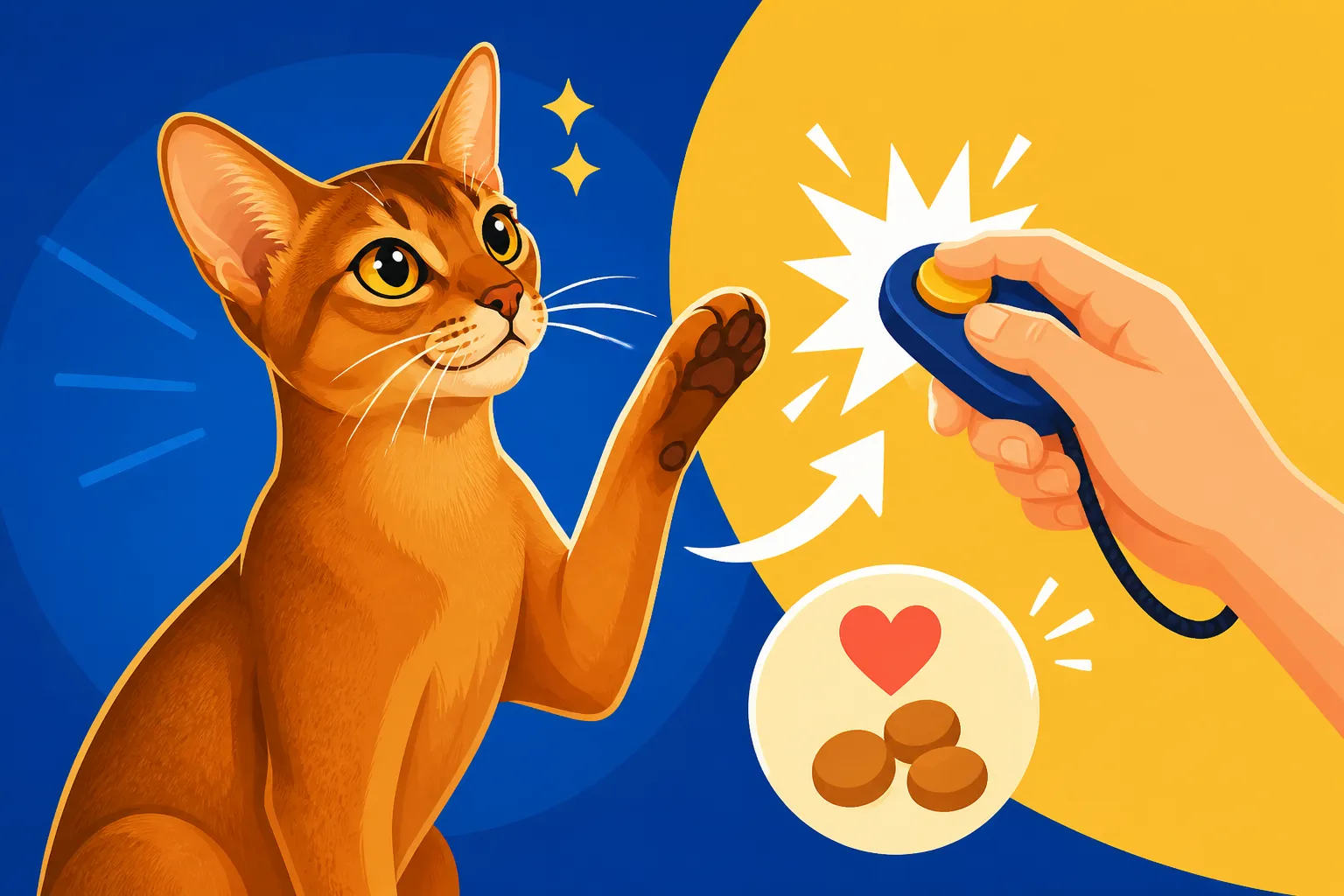
Why Clicker Training Works on an Abyssinian
Many cat owners throw up their hands, convinced their feline companions are untrainable. They see a dog fetching and sitting on command and sigh, thinking their aloof cat could never be bothered. But for those of us who share our homes with the intelligent, energetic Abyssinian, this couldn't be further from the truth. If you've ever felt like your Aby is too independent or too busy to learn, you're not alone, but I'm here to tell you that clicker training is not only possible but incredibly effective for this unique breed. This guide will dive deep into why clicker training harmonizes so perfectly with the Abyssinian's natural inclinations, making learning a joyful experience for both of you.
Understanding the Abyssinian Mindset for Training
Before we even touch a clicker, it's crucial to understand the very essence of what makes an Abyssinian tick. These aren't your average couch potato cats; they are bundles of boundless energy and sharp intellect, always on the go. Trying to train an Aby without appreciating their core personality is like trying to teach a fish to climb a tree – it's just not going to work with their natural abilities.
Their Innate Curiosity and Intelligence
Abyssinians are, by nature, incredibly curious and intelligent creatures. They aren't content to simply observe the world from a distance; they want to interact with it, understand it, and often, conquer it. This isn't just mischief for mischief's sake; it's a deep-seated drive for mental stimulation. You'll often find your Aby systematically exploring every new nook and cranny in your home, methodically investigating anything new that appears, or even figuring out how to open cabinets and doors that you thought were secure.
This constant mental engagement means they pick up on patterns and learn quickly. Their brains are wired for problem-solving, and they thrive when given challenges. If an Abyssinian isn't given appropriate outlets for this intellectual energy, it can manifest in ways we might perceive as destructive, like knocking items off shelves or getting into places they shouldn't. Clicker training taps directly into this innate intelligence, providing a structured, positive way for them to use their brains, making them feel productive and satisfied. It's like giving a gifted student an engaging puzzle rather than rote memorization – they excel because the task appeals to their natural strengths.
The High Energy and Drive for Activity
If you've ever lived with an Abyssinian, you know they are not statues. They are sleek, athletic machines that seem to have an endless supply of get-up-and-go. They race through the house, leap onto the highest shelves, and engage in elaborate play sessions with an intensity that can sometimes leave other cat breeds looking bewildered. This high energy isn't something you can simply suppress; it needs to be channeled. Ignoring an Abyssinian's need for activity is a recipe for disaster, leading to a bored, frustrated, and potentially unruly cat. They have an incredible capacity for physical activity, often darting from one end of the house to the other in a blur of motion, then launching themselves to the top of the tallest cat tree in a single bound. The Abyssinian Is the Busiest Cat in the House is not just a saying; it's their way of life.
Clicker training provides an excellent outlet for this physical and mental energy. Instead of chasing a laser pointer aimlessly for twenty minutes, they can engage in active, goal-oriented tasks. Think of teaching them to jump through a hoop, weave through your legs, or even perform a complex retrieve. These activities not only burn off physical energy but also require focus and coordination, satisfying their drive for purposeful movement. When an Abyssinian learns a new trick, they're not just moving their body; they're moving it with intent and for a clear reward, which is far more satisfying for their active minds.
Independent Yet People-Oriented Nature
One of the most charming, and sometimes puzzling, aspects of an Abyssinian's personality is their unique blend of independence and intense people-orientation. Unlike some lap cats who seek constant physical contact, Abyssinians often prefer to be near you, involved in what you're doing, rather than directly on you. They'll follow you from room to room, perch on your shoulder while you work, or supervise your kitchen activities from a high vantage point, but they might resist being held for long periods. Why an Abyssinian Will Not Sit on Your Lap is a common experience for Aby owners.
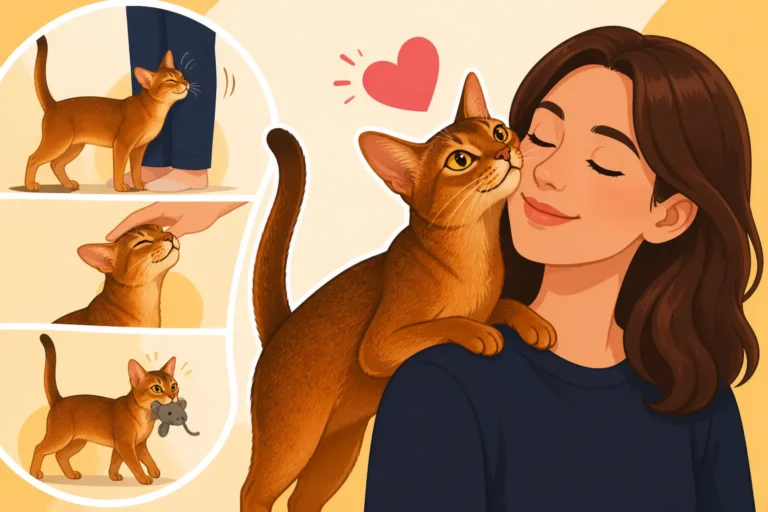
This doesn't mean they don't crave interaction; quite the opposite. They thrive on engagement and shared experiences with their humans. Clicker training becomes a fantastic bridge for this specific aspect of their personality. It's a cooperative activity that allows for intense, focused interaction without demanding the kind of physical restraint or prolonged cuddling that some Abyssinians might find overstimulating. You're working together on a task, building a stronger bond through clear communication and shared success. This active participation strengthens their trust and deepens their connection with you, making them feel valued as a contributing member of the household. It's a "doing" relationship rather than a "sitting still" one, which perfectly suits the Aby temperament.
How Clicker Training Aligns with Abyssinian Instincts
Now that we understand the Abyssinian's core personality traits – intelligence, high energy, and people-oriented independence – it becomes clear why clicker training is such a natural fit. It's not about forcing an Abyssinian to conform to our desires; it's about leveraging their inherent characteristics in a structured, positive way that benefits both cat and owner.
Positive Reinforcement and High Value Rewards
The foundation of clicker training is positive reinforcement, which is absolutely critical for an Abyssinian. These cats respond incredibly well to clear, consistent feedback and rewards, and they simply do not tolerate punishment or harsh corrections. Abyssinians are sensitive souls, and a negative experience can quickly shut down their willingness to cooperate. Instead, positive reinforcement fosters a desire to learn and engage.
The clicker itself acts as a precise marker. When your Abyssinian performs the desired behavior, even a tiny part of it, the click signals exactly that moment. This immediate and unambiguous feedback is something their intelligent minds grasp quickly. It's like saying, "Yes! That's it!" at the perfect instant. Following the click with a high-value treat reinforces the behavior, making your Aby much more likely to repeat it. These treats don't have to be big; in fact, tiny, easy-to-swallow morsels like cooked chicken, tuna flakes, or specialized cat training treats work best. The goal is to make the reward something they truly desire, something worth working for. This precise pairing of action, click, and reward creates a strong positive association, making learning efficient and enjoyable for your Aby.
Mental Stimulation as a Core Need
For an Abyssinian, mental stimulation isn't a luxury; it's a necessity. A bored Abyssinian is often a creative, and sometimes destructive, Abyssinian. They have an insatiable drive to explore, investigate, and figure things out. If you don't give them a "job" to do, they'll invent their own, which might involve meticulously dismantling toilet paper rolls or systematically opening every cabinet in the kitchen. How to Give an Abyssinian a Job means giving them activities that engage their minds.
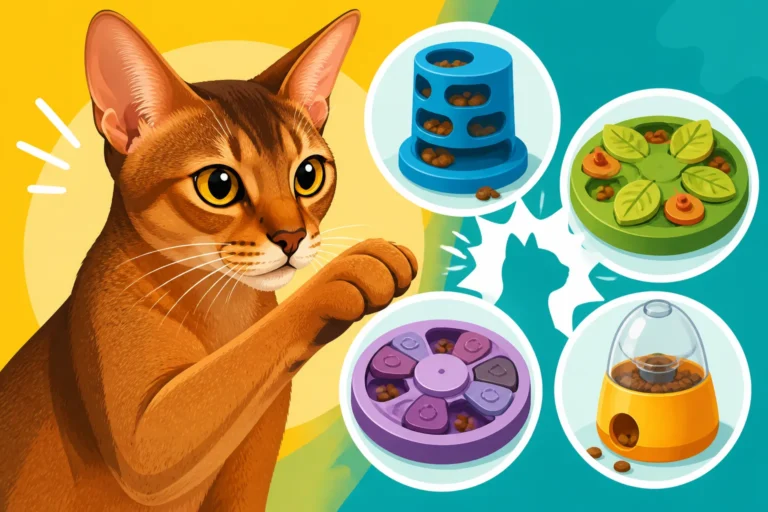
Clicker training provides that crucial mental workout. Each new trick or command presents a cognitive challenge, requiring focus, memory, and problem-solving skills. Whether it's learning to weave through your legs, jump over a small hurdle, or solve a multi-step puzzle feeder, these activities engage their active minds in a way that passive play simply cannot. It's like providing a crossword puzzle or a Sudoku for a human; it's engaging and satisfying. The process of learning, figuring out what you want, and receiving that satisfying click and treat is a deeply enriching experience for an Abyssinian. It keeps their brains sharp, reduces boredom, and often mitigates undesirable behaviors that stem from a lack of mental engagement.
Building Communication and Trust
One of the most beautiful outcomes of consistent clicker training with an Abyssinian is the profound improvement in communication and the deepening of trust between you and your cat. Many people believe cats are enigmatic and difficult to understand, but clicker training dismantles this misconception by creating a clear, two-way dialogue.
Through the training process, your Abyssinian learns to pay attention to your cues, body language, and the sound of the clicker. They start to anticipate what you might ask for and understand the consequences (the click and treat) of their actions. Simultaneously, you become much more attuned to your cat's responses, subtle signals of understanding or confusion, and their level of engagement. You learn to read their willingness to participate, their excitement for a particular treat, or when they've had enough for a session. This heightened awareness fosters a stronger, more empathetic relationship. It's no longer just a human trying to control a cat; it's two individuals collaborating towards a shared goal, bound by positive interactions. The trust built through these consistent, positive exchanges makes your Abyssinian more confident, more responsive, and ultimately, a more harmonious companion.
Getting Started with Clicker Training Your Abyssinian
Ready to embark on this rewarding journey? It's exciting to see your Abyssinian's intelligence truly shine through as they learn new things. Like any new endeavor, starting with the right tools and a solid understanding of the basics is key to success.
Essential Tools and Supplies
Before you begin, gathering a few simple items will make the process much smoother. Thankfully, you don't need much, and most items are readily available.
- The Clicker: This is your primary communication tool. There are many types of clickers out there, from simple box clickers to those with wrist straps or even finger clickers. The key is to find one that produces a consistent, distinct sound that isn't too jarring for your sensitive Abyssinian. Some cats might prefer a softer click, so if your Aby seems startled, try a different type. You can find a variety of clickers on Amazon, often in multi-packs, allowing you to experiment.
- High-Value Treats: This cannot be stressed enough – the treats must be something your Abyssinian absolutely adores. This isn't the time for regular kibble. Think small pieces of cooked chicken, lean meat, freeze-dried treats (many brands are available on Amazon), or even a tiny dab of wet food on a spoon. They should be soft, easy to chew and swallow quickly, and tiny enough that your cat isn't full after a few repetitions. Remember, the goal is rapid delivery and consumption so you can move on to the next repetition quickly.
- A Quiet Space: Especially in the beginning, choose a calm area of your home with minimal distractions. This helps your Abyssinian focus solely on you and the task at hand. Once they're more proficient, you can gradually introduce more distractions.
Having these three components ready before your first session will set you up for success.
Charging the Clicker: The Foundation
This initial step is absolutely crucial and often overlooked by eager new trainers. "Charging the clicker" means teaching your Abyssinian that the sound of the click always means a treat is coming. It builds the fundamental association that will be the bedrock of all future training.
Here's how to do it:
- Get Ready: Have your clicker in one hand and a few small, high-value treats in the other, ready to go.
- Click and Treat: Simply click the clicker, and immediately (within one second) offer your Abyssinian a treat. Don't ask for any behavior. Don't wait for them to do anything. Just click, then treat.
- Repeat: Do this 10-20 times in a session. Take a break. Repeat a few more sessions throughout the day.
- Observe: You'll know the clicker is "charged" when your Abyssinian hears the click and immediately looks at you expectantly for the treat, or even starts moving towards your hand. They've made the connection: click = delicious reward.
This process might take a day or two, but don't rush it. This is the most important part of clicker training. Without this clear association, the clicker will just be a random noise.
Keeping Sessions Short, Positive, and Frequent
Abyssinians are incredibly smart, but they also have a rather short attention span, especially when it comes to formal training. Trying to force a long, drawn-out session will only lead to frustration for both of you and can quickly sour their enthusiasm for learning.
- Keep it Short: Aim for sessions that are only 2-5 minutes long. Seriously, that's it! During this time, you might get 5-10 repetitions of a behavior. It's better to have multiple short, successful sessions than one long, frustrating one.
- Keep it Positive: Always end a session on a high note, even if it means asking for an easy trick they already know perfectly. You want them to walk away feeling successful and eager for the next session. Never push them to the point of disinterest or frustration. If they wander off, let them go. End the session gracefully.
- Keep it Frequent: Because the sessions are so short, you can easily do several throughout the day. Two or three 3-minute sessions are far more effective than one 10-minute session. This frequent, brief exposure keeps them engaged and reinforces learning without overdoing it. Remember, How Long It Takes to Clicker Train an Abyssinian isn't about the clock, it's about consistency and positive experiences.
By adhering to these principles, you'll ensure that clicker training remains a fun, engaging, and highly effective activity for your active and intelligent Abyssinian.
Common Tricks and Behaviors Abyssinians Excel At
Once your Abyssinian understands that the click means a treat, a whole world of possibilities opens up. Their innate intelligence and desire for interaction make them fantastic students, often surprising owners with how quickly they pick up new concepts.
Teaching Basic Commands: Sit, Stay, Come
These foundational commands aren't just for dogs; they can be incredibly useful and fun for an Abyssinian, tapping into their cooperative nature.
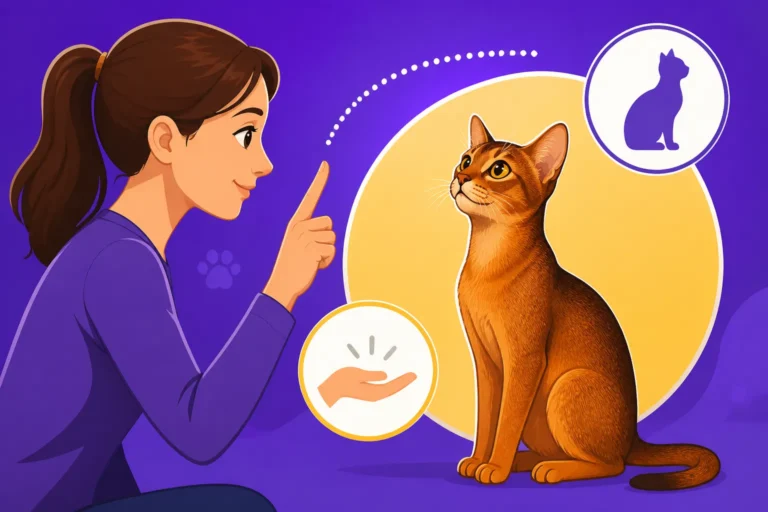
- Sit: This is often the first trick many Abyssinians learn. Start by luring. Hold a high-value treat just above their head, slowly moving it back towards their tail. As their nose follows the treat, their rear end will naturally lower into a sit. The instant their bottom touches the ground, click, then give the treat. Repeat this several times. Once they're consistently sitting with the lure, start introducing the verbal cue "Sit" just before you lure. Eventually, you'll be able to fade the lure entirely, and they'll sit on command. How to Teach an Abyssinian to Sit provides more detailed steps.
- Come: This is a vital command, especially for their safety. Start in a quiet room, a short distance from your Aby. Say "Come" in an excited, happy voice, then back away a step or two. The moment they take a step towards you, click and reward them with a super high-value treat. Gradually increase the distance and introduce light distractions. Make "Come" an incredibly rewarding experience, associating it with good things.
- Stay: Once your Abyssinian understands "Sit," you can introduce "Stay." Have them sit, say "Stay," and then take a tiny step back. If they remain, click and reward. Gradually increase the distance and duration. If they move, gently put them back in the "Sit" position (without punishment), and try again with a shorter duration. Consistency is key here.
Advanced Skills: Fetch, High Five, Leash Training
Abyssinians aren't just about the basics; many of them delight in learning more complex behaviors.
- Fetch: Many Abyssinians are natural fetchers, seemingly born with an instinct to retrieve. If yours is one of them, the clicker can refine this behavior. Start by throwing a favorite toy a short distance. When your Aby picks it up, click! When they bring it even a little closer to you, click again! When they drop it at your feet, or even in your hand, offer the click and a high-value treat. Gradually increase the distance and hold out for them to bring it closer before the click. Which Tricks an Abyssinian Learns Fastest often includes fetching for an Aby. Whether an Abyssinian Fetches Naturally is a common question, and for many, the answer is yes!
- High Five: This is a fun, flashy trick that always impresses. Hold a treat in a closed fist, slightly above and to the side of your Aby's paw. They'll likely try to bat at your hand to get the treat. The instant their paw makes contact with your hand, click, and then open your hand to give the treat. Once they're reliably pawing your hand, introduce the verbal cue "High Five" and slowly start presenting an open palm instead of a closed fist. How to Teach an Abyssinian to High Five breaks it down further.
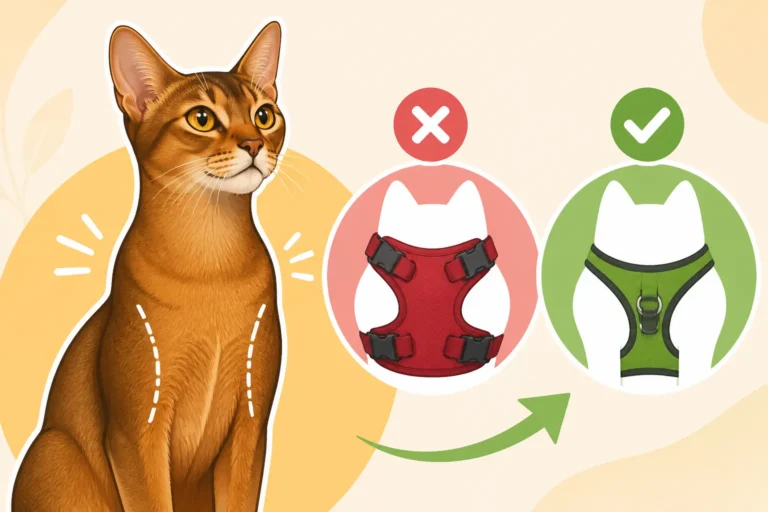
- Leash Training: While it requires patience, Abyssinians can often be successfully leash trained, allowing them to safely explore the outdoors in a harness. Start by simply introducing the harness in a positive way, clicking and treating for sniffing it, then for wearing it for short periods. Gradually attach the leash and allow them to drag it, always clicking for calm behavior. Only once they're completely comfortable with the harness and leash inside the house should you attempt supervised outdoor excursions. How to Leash Train an Abyssinian is a more extensive topic, but the clicker is invaluable in making each step a positive experience.
Problem Solving and Redirecting Undesirable Behaviors
One of the most powerful applications of clicker training is not just teaching new tricks, but also solving common behavior problems by teaching your Abyssinian an alternative acceptable behavior.
- Counter Surfing: Instead of punishing them for being on the counter, teach them a "place" command, such as a designated cat tree or mat. Click and treat lavishly when they go to their "place" on command. If they jump on the counter, gently redirect them to their place, ask for the command, and reward. This gives them a clear, positive alternative.
- Scratching Furniture: While scratching is natural, you can redirect it. Ensure you have plenty of appropriate scratching posts and surfaces. When you see your Aby use a scratching post, click and treat generously! You can even entice them to the post with catnip, click, and treat. The goal is to make the scratching post more rewarding than the sofa.
- Play Biting: Abyssinians can be intense players, and sometimes that play can get a bit rough. If your Aby play-bites your hands, immediately withdraw your attention and "time out" by walking away. Then, redirect their energy by engaging them with an appropriate wand toy. When they successfully play with the toy without biting you, click and treat. How to Stop an Abyssinian Play Biting is a valuable resource. The clicker helps mark the acceptable interaction with the toy.
By using the clicker to positively reinforce the behaviors you want to see, you can effectively diminish the behaviors you don't want, creating a more harmonious household for you and your clever Abyssinian.
Challenges and Considerations for Abyssinian Training
While Abyssinians are highly trainable and respond beautifully to clicker training, it's not always a perfectly smooth ride. Understanding potential hurdles and how to navigate them will save you frustration and ensure a more successful training journey. Remember, every Abyssinian is an individual, and patience is your most valuable tool.
Avoiding Frustration and Over-Training
One of the biggest pitfalls when training an intelligent and eager cat like an Abyssinian is pushing too hard, too fast, or for too long. Their enthusiasm can be infectious, making you want to teach them everything at once, but this can quickly lead to burnout for both of you.
- Read the Room (or the Cat): Your Abyssinian will give you cues when they're losing interest or getting frustrated. They might start grooming themselves excessively, look away, try to bat at the clicker, or simply walk away. When you see these signs, it's time to end the session. Trying to force more repetitions will only create negative associations with training.
- Keep it Fun: Training should always feel like a game. If it starts to feel like a chore for your Aby, you've gone too far. Vary your tricks, change up the treats, and always maintain an upbeat, encouraging tone. An Abyssinian thrives on novelty and engagement, so keep things fresh.
- Don't Overdo It: Stick to those short, frequent sessions. A few minutes of focused, positive training is far more effective than a long session where your cat's mind has wandered. Always aim to end on a successful note, even if it's just repeating an easy trick they've mastered. This leaves them feeling accomplished and looking forward to the next time.
The Importance of Consistency from All Household Members
Cats, especially intelligent ones like Abyssinians, thrive on predictability and clear communication. If different people in the household are applying different rules or using different methods, it can create confusion and slow down progress significantly.
- Unified Cues: Ensure everyone uses the same verbal cues for commands. If one person says "Sit" and another says "Down," your Aby won't know which behavior is expected.
- Consistent Rewards: Everyone should understand what constitutes a high-value treat and use it consistently with the clicker. If one person gives a treat after a click and another just offers praise (which is also good, but not a primary reinforcer for learning), the cat's understanding will be muddled.
- Reinforce Rules: If you're using clicker training to redirect undesirable behaviors, everyone needs to be on board with the new acceptable alternative. For example, if you're teaching your Aby to go to their mat instead of counter surfing, every household member must reinforce the "mat" command and redirect consistently, rather than sometimes allowing counter surfing. Inconsistency sends mixed signals and can lead to frustration for your Abyssinian.
Not All Abyssinians Are the Same
While Abyssinians share many breed characteristics, individual personalities can vary wildly. Some Abyssinians might be natural prodigies, picking up new tricks in minutes, while others might require more patience, different motivators, or a slightly adjusted approach.
- Acknowledge Individuality: Don't compare your Abyssinian to others you've seen online or even to a littermate. Celebrate their unique learning style and pace. One Aby might be a fetch wizard, while another excels at agility courses.
- Find Their Motivation: While most Abyssinians are food motivated, some might respond better to a favorite toy as a reward, or even just intense praise and a good ear scratch. Experiment to find what truly excites your cat. Why an Abyssinian Learns Faster When It Is Hungry often boils down to finding the right, desirable reward.
- Celebrate Small Victories: Learning is a journey, not a race. Each small step, each successful repetition, is a win. Praise your Abyssinian enthusiastically for every effort they make, no matter how small. A positive, encouraging attitude from you is one of the most powerful motivators for your intelligent and sensitive Abyssinian.
By keeping these considerations in mind, you can tailor your clicker training approach to your specific Abyssinian, ensuring a rewarding and enriching experience for both of you.
Here's a quick reference table for training essentials:
| Item | Purpose | Key Characteristics | Where to Find |
|---|---|---|---|
| Clicker | Precise marker for desired behavior | Clear, consistent sound; comfortable to hold | Pet stores, online retailers (e.g., Amazon) |
| High-Value Treats | Primary positive reinforcement | Tiny (pea-sized), easy to swallow, highly palatable | Pet stores, grocery stores, Amazon |
| Training Sessions | Learning frequency and duration | 2-5 minutes per session, 2-3 sessions per day (or more) | Your schedule, quiet home environment |
| Patience | Essential for success with any animal | Endless supply, positive attitude | Developed over time! |
| Consistency | Reinforces learning, prevents confusion | Unified approach from all household members | Team effort within your household |
Disclaimer
This article is for general informational purposes only and does not constitute professional advice. Laws, prices and regulations vary by location and change over time. Consult a qualified professional for guidance on your specific situation.