How to Teach an Abyssinian to High Five
Abyssinian cats are incredibly smart, often a little too smart for their own good, which means they can get into mischief if their brilliant minds aren't adequately challenged. If you've got an Aby who loves to explore, climb, and generally run the house, you know exactly what I mean. Teaching tricks isn't just a fun party piece; it's a fantastic way to engage their intelligence, burn off some of that boundless energy, and strengthen your bond. This guide will walk you through the surprisingly simple steps to teach your Abyssinian how to high-five, bringing out their inner superstar.
Understanding Your Abyssinian's Learning Style
Before we dive into the nitty-gritty of the high-five, it's crucial to understand why Abyssinians are so receptive to this kind of engagement. They're not your typical 'lounge all day' cats, and their unique personality demands a tailored approach to training.
Why Abyssinians Excel at Trick Training
Abyssinians are often called the "Clowns of the Cat World" or the "Puma of the living room" for a reason. They are highly intelligent, intensely curious, and possess an almost dog-like eagerness to interact with their humans. Unlike some breeds that might tolerate a training session for a few treats, Abyssinians genuinely thrive on mental stimulation and the positive attention that comes with learning new things. They love being the center of attention, and mastering a trick like the high-five feeds right into that desire. Their energy levels are famously high, and channeling that into productive, brain-boosting activities like trick training is far more satisfying for them (and less destructive for your furniture) than simply letting them be bored. Think of it as giving them a job; Abyssinians love having a job. You might also find that Training an Abyssinian Is Easier Than Stopping It from doing something they shouldn't.
This innate drive makes them incredibly receptive. They are problem-solvers by nature, always investigating, pushing boundaries, and figuring things out. When you present a "problem" like "how do I get that treat from my human?", they will enthusiastically apply their intelligence to solve it. Their short, close-lying coat and agile bodies also mean they move with incredible grace and precision, which is a definite plus when it comes to physical tricks. They're not clumsy; they're coordinated, making paw-based tricks a natural fit.
The Importance of Positive Reinforcement
With an Abyssinian, positive reinforcement isn't just a good idea; it's practically the only way to go. These cats are sensitive souls and will quickly shut down or become disinterested if training feels like a chore or involves any harshness. Punishment or scolding is completely counterproductive and will only damage your bond. Instead, we want to make training the most fun, rewarding experience possible. This means an abundance of high-value treats, enthusiastic verbal praise, and even a favorite toy as a reward.
Think about what truly motivates your Abyssinian. Is it a tiny piece of freeze-dried chicken? A dollop of tuna paste? A quick game with a wand toy? Identify their absolute favorite rewards and save those exclusively for training sessions to keep their motivation sky-high. When they do something even remotely close to what you want, reward them immediately and lavishly. This instantaneous feedback is how they connect their action to the reward. They learn, "Oh, that got me the good stuff!" This is why clicker training often works wonders with Abyssinians, as the click is a precise marker for the exact moment they perform the desired behavior, followed immediately by the treat. If you're new to this, learning Why Clicker Training Works on an Abyssinian can be a great starting point.
Setting Up for Success
Preparation is key to a smooth training experience. First, choose a quiet space where there are minimal distractions. No noisy televisions, barking dogs, or other cats running through. You want your Abyssinian's full, undivided attention. Second, keep your training sessions short and sweet. Abyssinians have an amazing capacity for learning, but their attention span can be fleeting, especially for repetitive tasks. Aim for 2-5 minutes per session, several times a day, rather than one long, drawn-out session. You want to end each session on a positive note, leaving them wanting more.
Having your treats ready and easily accessible is also crucial. You don't want to be fumbling for rewards while your cat loses interest. Small, pea-sized treats work best, so they can eat them quickly and get back to learning. You can find excellent cat treats, often in bulk, on platforms like Amazon. Consider breaking larger treats into smaller pieces to avoid overfeeding and keep their drive high. Also, make sure your Abyssinian isn't absolutely starving, but not completely full either. A slightly hungry cat is more motivated by food rewards. Why an Abyssinian Learns Faster When It Is Hungry is a real phenomenon!
Step-by-Step Guide to Teaching the High Five
Now for the fun part! Teaching the high five is a series of small, achievable steps. Remember to be patient, consistent, and always positive.
The Lure-and-Reward Method
The "lure-and-reward" method is often the easiest way to start any trick training with a cat. Here's how it works for the high-five:
- Get Their Attention: Start by getting your Abyssinian to sit or stand comfortably in front of you. A good way to do this is by holding a treat near their nose to grab their focus. Many Abyssinians already know how to sit if you've done any basic training. If not, you might want to review How to Teach an Abyssinian to Sit first, as a solid "sit" or "stay" can make other tricks easier.
- Present the Lure: Hold a high-value treat between your thumb and forefinger. Now, with the treat slightly visible, hold your closed fist or just your fingers (with the treat inside) near your Abyssinian's nose, then slowly move your hand slightly above and behind their paw, specifically the one you want them to high-five with. The idea is to make them reach for the treat.
- Encourage the Paw Lift: As you move your hand, their natural instinct will be to try and get the treat. They might sniff your hand, bat at it, or even try to bite it gently. Wait for them to lift their paw towards your hand, even if it's just a tiny lift. The moment their paw comes off the ground in the direction of your hand, click (if you're using a clicker) and immediately give them the treat.
- Repeat and Refine: Do this several times. Each time, try to get them to lift their paw a little higher or make a bit more contact with your hand before you reward. Some cats might be hesitant at first, and that's okay. Just reward the smallest movement towards the desired action. Persistence is key, but always keep it fun and light. You are building muscle memory and association.
Introducing the Verbal Cue and Hand Gesture
Once your Abyssinian is consistently lifting their paw when you present your luring hand, it's time to add the verbal cue and the actual high-five gesture.
- Add the Verbal Cue: As your cat lifts their paw, just before they touch your hand, say "High Five!" (or whatever cue you choose, like "Paw!" or "Up!"). Then, click and treat as usual. The timing here is important: you want them to associate the sound of "High Five" with the action of lifting their paw.
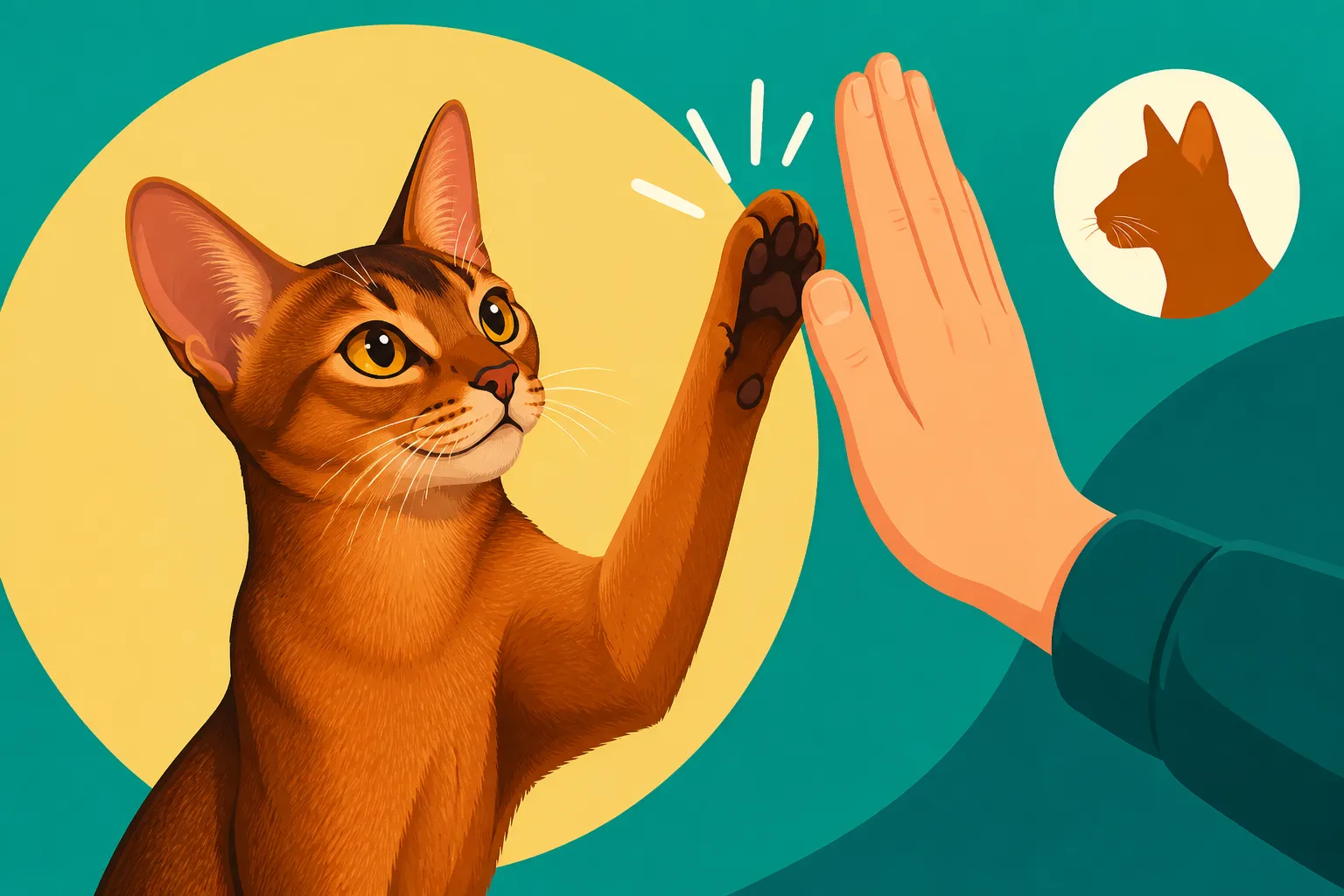
- Introduce the Hand Gesture: Now, instead of luring with a treat in your hand, hold your open palm out to them in the classic high-five position. Keep a treat ready in your other hand. When you say "High Five!" and present your open palm, your cat should, by now, understand that lifting their paw and touching your hand is the desired action. The moment their paw touches your open palm, click and immediately reward them with the treat from your other hand. This is where your Abyssinian starts to connect the gesture and the verbal cue with the action, even without seeing the treat in your "high-five" hand.
- Practice Makes Perfect: Repeat this many times. Keep your high-five hand flat and steady. Don't move it towards their paw, make them reach for your hand. This helps solidify the correct motion. Make sure you are always rewarding them immediately and enthusiastically. A clear, happy "Good job!" or "Yes!" can go a long way.
Fading the Lure and Generalizing the Trick
The goal is for your Abyssinian to perform the high-five on command, without needing to see a treat first. This is called "fading the lure."
- Reduce the Visual Lure: Start by making the treat less obvious. Instead of holding it in your other hand, have it in your pocket or a nearby container. Give the verbal cue ("High Five!") and present your open palm. When they perform the trick, immediately grab a treat and reward them. Slowly increase the time between the high-five and the treat delivery, but never make them wait too long in the initial stages.
- Intermittent Rewards: Once your Abyssinian reliably high-fives on cue, you can start varying the reward schedule. Instead of rewarding every single time, reward every two or three times, then every three or four, and so on. This makes the behavior stronger and more resistant to extinction because they learn that a reward might come, so they keep trying. Think of it like a slot machine; if it paid out every time, it wouldn't be as exciting! However, make sure to give a big reward after a few successful high-fives to keep them motivated.
- Generalize the Trick: Practice the high-five in different locations, with different people (if they're comfortable with strangers), and at different times of the day. This teaches your Abyssinian that "High Five!" means the same thing, no matter the context. For example, try it in the living room, then the kitchen, then by the window. Each new environment might require a little more patience and perhaps a return to a more continuous reward schedule initially, but they will quickly catch on. Soon, your Abyssinian will be high-fiving everyone who asks! You can even build on this by teaching them to Which Tricks an Abyssinian Learns Fastest next, or even to How to Teach an Abyssinian to Fetch.
Common Challenges and Troubleshooting
Even with an intelligent Abyssinian, you might hit a few bumps in the road. Don't get discouraged! It's all part of the learning process.
My Abyssinian Just Wants the Treat
This is a very common issue, especially with clever, food-motivated cats like Abyssinians. They see the treat, and their priority is to get the treat, often bypassing the desired action entirely.
- Closed Hand Lure: Initially, try holding the treat completely enclosed in your fist, offering only a very small scent or hint of it. They'll try to get it, but can't. Wait until they try something else, like batting at your hand, which is often a prelude to lifting a paw. The moment their paw comes up, open your hand and reward.
- Precision Timing: Your timing is absolutely critical here. You must reward the exact moment the paw lifts or touches your hand, not when they're biting at your fingers or trying to shove their head into your palm. This is where a clicker is invaluable, as it marks that precise moment with a distinct sound. If you're not using a clicker, a sharp, happy verbal marker like "Yes!" or "Good!" must be delivered at the exact second the paw is in the air or makes contact.
- Redirect Their Focus: If they're too treat-focused, reset the interaction. Put the treat away for a second, let them relax, and then try again. Sometimes, a quick break helps them process what you're asking. Ensure your primary high-five hand is empty, and the treat is held in your other hand, ready to deliver immediately.
- Smaller Treats: If they're trying to grab the treat aggressively, it might be too large or too tempting. Break treats into tiny, quick-to-eat pieces. This reduces their "grab and run" impulse and keeps them focused on the task at hand. You can find many suitable small treats on Amazon that are perfect for training.
Keeping Training Sessions Engaging
Abyssinians are known for their high energy and quick minds, but they can also lose interest if things become too monotonous or challenging.
- Variety is the Spice of Life: Don't just drill the high-five over and over. Mix it up! Perhaps do a few high-fives, then work on another trick your cat knows, like "sit" or "come." Even varying the reward can help – sometimes a treat, sometimes a quick feather wand wiggle. You can learn more about How Much Play an Abyssinian Needs Each Day to understand their overall energy requirements.
- Short, Frequent Sessions: As mentioned before, quality over quantity. Two to five minutes, two to four times a day, is far more effective than one long, boring session where you both get frustrated. Always end on a successful note, even if it's just for a small, easy step. This leaves your Aby feeling successful and eager for the next session.
- The Element of Surprise: Occasionally, introduce a super high-value treat they don't usually get, like a tiny bit of cooked shrimp or chicken. This keeps them guessing and excited about what the next reward might be. If you find Why an Abyssinian Loses Interest in a Toy Fast, the same principle applies to training: keeping things fresh and unpredictable is key.
- Play First, Then Train: Sometimes, an Abyssinian is just too full of zoomies to focus. A quick, energetic play session to burn off some of that initial burst can actually make them more receptive to training afterwards. After they've chased the wand toy for a few minutes and are a little tired, their mind might be calmer and more open to learning.
When Your Abyssinian Isn't Interested
Cats aren't always in the mood, and Abyssinians, for all their exuberance, are no exception. Forcing them will only lead to resentment.
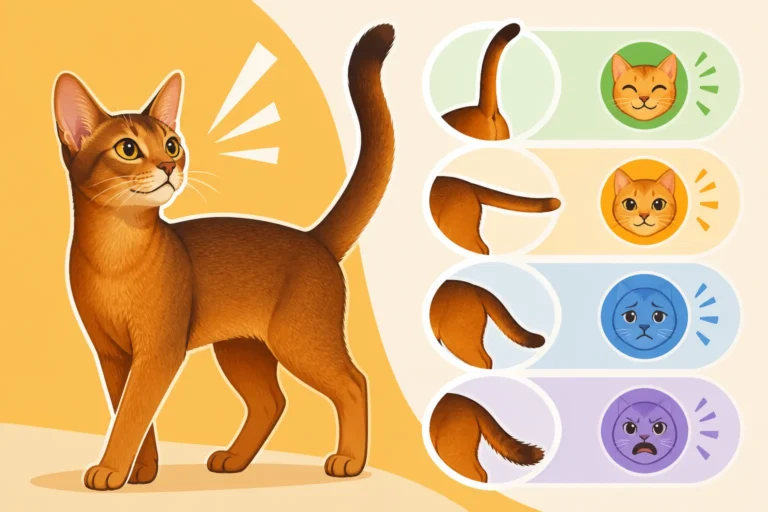
- Read Their Body Language: Is your Abyssinian's tail twitching impatiently? Are their ears flattened? Are they looking away or trying to walk off? These are all signs they're not into it right now. Don't push it. Simply end the session politely and try again later. Understanding What an Abyssinian's Tail Says can really help you tune into their mood.
- Timing is Everything: Try training when your cat is naturally active and alert, but not overly rambunctious. For many Abyssinians, this might be just before a regular mealtime, when they're anticipating food. Avoid trying to train right after they've woken up from a deep nap or when they're clearly trying to sleep.
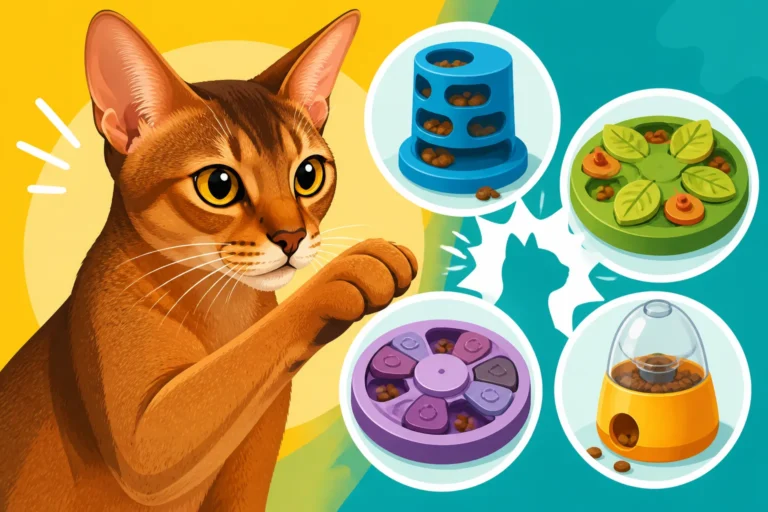
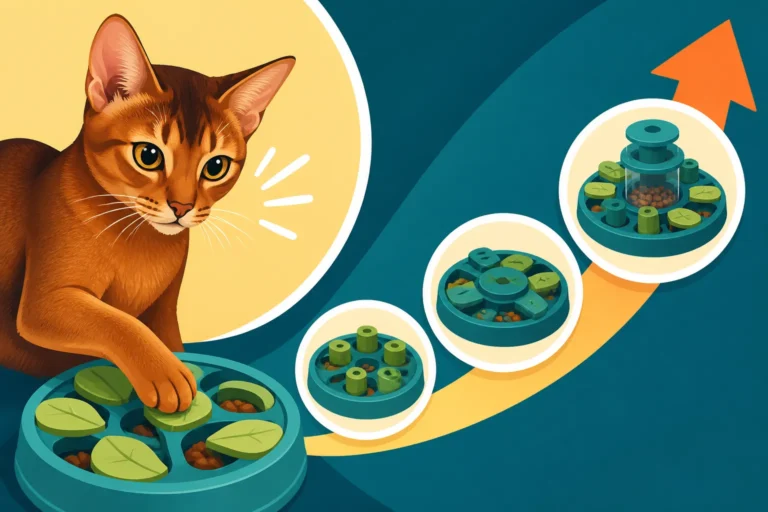
- Switch It Up: If the high-five isn't clicking today, perhaps try a different trick they already know, or even just some basic "sit" and "stay" commands. A success, even a small one, is always better than a frustrating failure for both of you. You could even try a puzzle feeder, which provides mental stimulation in a different way. Many engaging options for Which Puzzle Feeders Hold an Abyssinian's Attention are available.
- Health Check: If your usually eager-to-train Abyssinian suddenly loses interest for an extended period, it's always worth a quick check-in with your vet. A sudden change in behavior can sometimes be an early sign of an underlying health issue. Abyssinians are known for hiding illness, so any significant shift warrants attention. Why a Suddenly Still Abyssinian Needs a Vet is an important piece of information for any Aby owner.
| Common Training Mistake | Why it Happens | Troubleshooting Tip |
|---|---|---|
| Rewarding too late | Owner fumbles for treat, cat forgets why they were rewarded | Use a clicker or precise verbal marker. Have treats ready and easily accessible (e.g., in a treat pouch from Amazon). |
| Sessions are too long | Cat gets bored, frustrated, or overstimulated | Keep sessions 2-5 minutes. End on a high note. Multiple short sessions are better than one long one. |
| Using low-value treats | Cat isn't motivated enough to try hard | Experiment to find your Abyssinian's absolute favorite high-value treats (e.g., freeze-dried chicken, tuna flakes). |
| Being inconsistent | Cat gets confused about what's being asked | Use the same cue words and hand gestures every time. Practice regularly, even if only for a minute or two. |
| Getting frustrated/punishing | Damages bond, makes cat avoid training | Stay positive! If you're getting frustrated, take a break. Never scold or punish. Keep it fun. |
| Training in a distracting environment | Cat's attention is divided, can't focus | Choose a quiet, calm area away from other pets, loud noises, or open windows until the trick is well established. |
Beyond the High Five: Expanding Your Abyssinian's Repertoire
Once your Abyssinian has mastered the high five, you've unlocked a whole new world of possibilities for enrichment and bonding. This is just the beginning of their trick-training journey!
Building on the High Five
The high-five teaches your cat several fundamental concepts: paw targeting, responding to a verbal cue, and associating an action with a reward. These skills are transferable and can make teaching other paw-based tricks a breeze.
For example, a "shake a paw" or "handshake" trick is a very natural progression from a high-five. Instead of presenting your palm vertically, you can present it horizontally, low to the ground. Your cat already knows to lift their paw and touch your hand; you're just changing the orientation. Similarly, a "wave goodbye" can be taught by asking for a high-five, and then rewarding them for holding their paw in the air for a second or two before touching your hand, eventually fading the touch part. The possibilities are really only limited by your imagination and your cat's willingness to engage. You'll be amazed at Which Tricks an Abyssinian Learns Fastest once they get the hang of learning.
The Benefits of Regular Trick Training
Beyond the sheer entertainment value, regular trick training offers significant advantages for your Abyssinian's overall well-being.
- Mental Stimulation: Abyssinians are highly intelligent, and an under-stimulated Aby is often a destructive Aby. Trick training provides a fantastic outlet for their sharp minds, keeping them engaged and preventing boredom. This can significantly reduce unwanted behaviors like scratching furniture or excessive meowing that often stem from a lack of mental exercise. Think of it as intellectual play, which is just as important as physical play for these smart cats.
- Strengthened Bond: There's something incredibly special about the connection you build with your cat through positive reinforcement training. It's a cooperative activity where you're both working towards a shared goal, and every successful trick deepens the trust and understanding between you. Your cat learns that you're a source of fun, treats, and positive interaction, making them even more keen to spend time with you.
- Increased Confidence: Successfully learning new tricks can boost your Abyssinian's confidence. They learn that they can influence their environment and earn rewards through their actions, which is empowering for any animal. A confident cat is generally a happier, better-adjusted cat, less prone to anxiety or shyness.
- Better Behavior Control: While not strictly obedience training in the dog sense, teaching tricks can improve your cat's overall responsiveness to your voice and cues. If they understand that listening to you can lead to good things, they might be more inclined to respond to other commands, like "come" or "stay," which can be very useful in everyday life, or even when you need to teach them How to Leash Train an Abyssinian.
Integrating Play into Training
For an Abyssinian, the line between play and training is wonderfully blurry, and that's exactly how it should be! These cats are perpetual kittens, and their high energy means that making training feel like a game is the most effective approach.
- Wand Toys as Rewards: Don't limit rewards to just treats. For many Abyssinians, a quick 30-second burst of chasing a feather wand toy is just as motivating, if not more so, than a piece of kibble. Integrate short play sessions into your training schedule, perhaps as a "jackpot" reward for an exceptionally good performance or at the end of a session. You can find a huge variety of engaging wand toys on Amazon.
- "Hunt" for Treats: Turn treat-delivery into a mini-game. After a successful high-five, instead of just handing them the treat, toss it a short distance so they have to "hunt" for it. This taps into their natural predatory instincts and adds another layer of mental and physical engagement. Foraging activities really suit an Abyssinian's mind.
- Puzzle Feeders as Training Tools: Instead of just putting their meals in a bowl, use puzzle feeders. These toys require your Abyssinian to use their paws and brains to extract food, which is fantastic for mental enrichment. Some puzzle feeders are quite sophisticated and can be great for keeping their minds sharp even when you're not actively training.
- Keep it Light and Fun: Above all, remember that trick training should be an enjoyable experience for both you and your Abyssinian. If either of you isn't having fun, take a break. What Twenty Minutes a Day Does for an Abyssinian in terms of engagement and mental stimulation can really transform their happiness and your bond. These aren't just pets; they're intelligent companions who thrive on interaction.
By embracing your Abyssinian's intelligence and high spirits, you'll find that teaching them to high-five, and countless other tricks, is a rewarding journey that strengthens your bond and brings endless joy to your home.
Disclaimer
This article is for general informational purposes only and does not constitute professional advice. Laws, prices and regulations vary by location and change over time. Consult a qualified professional for guidance on your specific situation.