How to Make a Puzzle Feeder Harder for an Abyssinian
It’s a common scenario for Abyssinian owners: you excitedly bring home a new puzzle feeder, envisioning hours of engaging mental stimulation for your clever cat, only to have them solve it in about five minutes flat. Suddenly, that expensive toy is just… an expensive food bowl, and your super-smart Abyssinian is looking at you, wondering what’s next. If you're feeling a bit defeated by your cat's lightning-fast problem-solving skills, don't worry, you're not alone! Abyssinians are notorious for their intelligence and relentless drive, which means making a puzzle feeder truly challenging requires a bit of creativity on your part. This guide is all about giving you practical, empathetic ways to elevate the difficulty of those feeders, ensuring your Abyssinian stays engaged, happy, and mentally stimulated for longer than a blink.
Understanding Your Abyssinian's Intellect and Drive
Let's face it, Abyssinians aren't your average couch potato cats. They're built for action, both physically and mentally. This inherent drive is what makes them such captivating companions, but it also means they require a higher level of environmental enrichment to truly thrive. When it comes to puzzle feeders, their natural instincts kick into overdrive, making short work of anything that doesn't demand serious thought.
Why Standard Puzzle Feeders Are Often Too Easy
Many commercially available puzzle feeders are designed with a broad range of feline intelligence in mind. For a typical cat, they might offer a decent challenge. But for an Abyssinian? They're often just a warm-up exercise. Your Abyssinian possesses a unique combination of keen observational skills, quick paws, and an insatiable curiosity that allows them to deconstruct a new puzzle almost instantly. They'll watch how a mechanism works once, maybe twice, and then they've got it figured out. This isn't a flaw in the feeder; it's a testament to your Abyssinian's incredible mind.
Think about it: in the wild, their ancestors would have to hunt, stalk, and strategize for every meal. That little kibble in a plastic contraption barely registers as a challenge compared to catching a mouse. So, when your Abyssinian breezes through a new feeder, it's not because they're being destructive or unappreciative, it's because their hardwired intelligence is seeking a more worthy opponent. It can be frustrating to invest in something you hope will entertain them for hours, only to find it's been conquered before you've even finished your coffee.
The Importance of Sustained Mental Engagement
A bored Abyssinian is a recipe for mischief. These cats need to put their brains to work, or they'll find other, potentially less desirable, outlets for their energy. This could manifest as exploring forbidden countertops, systematically removing items from shelves, or even developing attention-seeking behaviors. Sustained mental engagement through challenging puzzle feeders can help channel that energy positively. It taps into their natural problem-solving abilities and satisfies their intellectual hunger. Without this kind of consistent mental workout, your Abyssinian might just decide that "redecorating" your kitchen cabinets is a much more engaging pastime.
This isn't just about preventing bad behavior; it's about enriching their lives. Just like us, cats thrive on challenges and the satisfaction of overcoming them. A good puzzle feeder provides that sense of accomplishment, boosting their confidence and overall happiness. Regularly varying the difficulty and type of mental stimulation is key to keeping them interested and preventing them from getting too comfortable with any single solution. If you've ever wondered Why an Abyssinian Does When It Is Bored, a too-easy puzzle feeder might be part of the answer.
Strategies for Upping the Ante on Existing Puzzle Feeders
You don't always need to buy a brand new, more complex feeder. Often, you can modify the ones you already have to present a greater challenge. It's about thinking outside the box – or, in this case, inside the feeder!
Increasing Obstacles and Complexity
One of the simplest ways to make an existing puzzle feeder harder is to add more obstacles to the equation. Imagine a feeder where your Abyssinian simply scoops kibble out of a few cups. To increase difficulty, you could place small, cat-safe toys (like soft plastic balls or crinkle balls) into some of the cups, forcing them to move the toy before accessing the food. Even crumpled-up paper or cardboard can work wonders. This adds a physical step and requires more dexterity.
For feeders with tunnels or mazes, consider partially blocking some pathways. You could use a piece of cardboard secured with pet-safe tape, creating narrower openings or dead ends that they have to navigate around. If your feeder has adjustable openings for dispensing treats, tighten them down to the smallest possible setting. This makes it harder for kibble to fall out, demanding more persistent pawing and manipulation from your Abyssinian. Some interactive feeders found on platforms like Amazon even come with modular components that allow you to increase or decrease the complexity right out of the box, offering a dynamic challenge that grows with your cat's skill. Remember, the goal isn't to make it impossible, but to make it more difficult.
Combining Feeders for a Multi-Stage Challenge
Why use one puzzle feeder when you can use two, or even three? This strategy creates a multi-stage challenge, forcing your Abyssinian to complete one task to access the next. For example, you could place a small, easy-to-solve feeder inside a larger, more complex one. Your Abyssinian might first need to bat open a hinged door on the outer feeder, then extract the smaller feeder, and then solve that one to get their reward.
Another idea is to create a sequential puzzle. Set up one feeder that requires pawing to release kibble, and have that kibble fall into another feeder below it that requires a different action, like sliding a cover. This "domino effect" style of feeding can be incredibly engaging for an Abyssinian, as it mimics the multi-step process of hunting. They learn that their efforts lead to another mini-challenge, keeping their focus for longer. You could even scatter the contents of a solved feeder into a snuffle mat (more on those later) as the final stage of the "hunt."
Varying Location and Setup
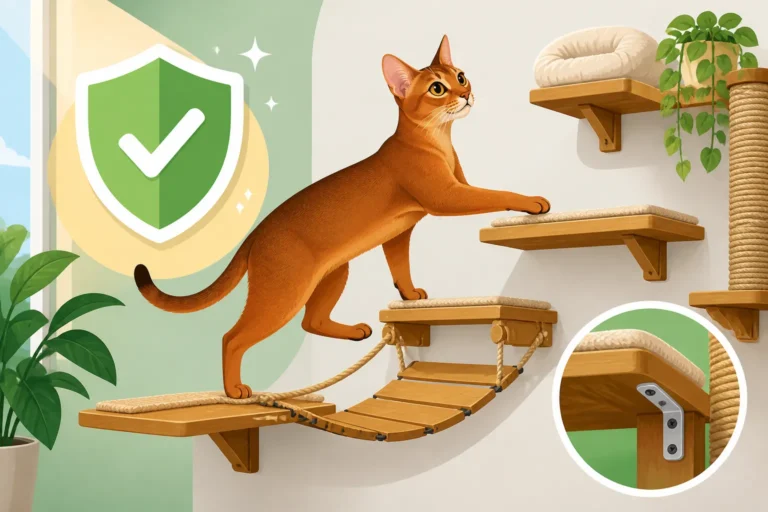
The physical placement of a puzzle feeder can drastically alter its difficulty. Most of us put feeders on the floor, but Abyssinians are climbers! Place a puzzle feeder on a sturdy, slightly elevated shelf that requires a jump to reach. This adds a physical challenge before the mental one even begins. Make sure the surface is stable and safe, of course. For an even greater challenge, place it on a higher shelf where your Abyssinian has to navigate a route using other An Abyssinian Needs Height More Than It Needs Floor cat furniture, like wall shelves or cat trees, to get to it.
You can also hide feeders in unexpected spots. Tuck one under a blanket on a chair, requiring them to "dig" and uncover it before they can even start solving the puzzle. Place another inside a large, open cardboard box filled with crumpled paper, so they have to wade through obstacles. Regularly rotating the locations of the feeders also prevents your Abyssinian from memorizing a single approach. If they never know where the next challenge will appear, they'll stay on their toes, constantly exploring and thinking. Some smart Abyssinians will even start checking every possible high spot or hiding place when they're hungry.
DIY and Advanced Puzzle Feeder Modifications
When commercial options just aren't cutting it, or you want to save some money, turning to DIY solutions and advanced modifications can be incredibly rewarding. Plus, you can tailor them precisely to your Abyssinian's unique skills.
Crafting Your Own Multi-Level Challenge
You'd be amazed what you can create with everyday household items. Cardboard boxes are your best friends here. You can construct multi-level towers or mazes by cutting holes between boxes, creating pathways and hidden compartments. For a simpler yet effective puzzle, take an empty paper towel or toilet paper roll, fold in the ends, and cut small holes along the sides. Fill it with kibble, and your Abyssinian has to bat it around to make the treats fall out. For something a bit more involved, gather a bunch of empty toilet paper rolls, stand them upright inside a shoe box, and sprinkle kibble into the tubes. Your cat then has to pull the kibble out from the individual tubes.
Safety is paramount with DIY. Ensure all materials are non-toxic, have no sharp edges, and are large enough not to be accidentally ingested. Avoid anything with small, easily detachable parts. Remember, the goal is mental stimulation, not an emergency vet visit. For a classic DIY, a snuffle mat, often seen for dogs, can be adapted for cats. You just need a rubber mat with holes and strips of fleece fabric. Tie the fleece strips through the holes, creating a dense, shaggy surface where you can hide kibble. Your Abyssinian will have to use their nose and paws to forage through the fabric, mimicking hunting in tall grass.
Introducing Timed or Automated Elements
To truly make a puzzle feeder harder, you can integrate timing. Timed feeders, available from pet stores and online retailers like Amazon, release a portion of food at pre-set intervals. While not a "puzzle" in the traditional sense, they turn mealtime into a waiting game, which can be a challenge for an impatient Abyssinian. You can combine this with a puzzle by having the timed feeder dispense into a regular puzzle feeder, adding a delay before the puzzle even starts.
Some advanced automated feeders require a specific action, like stepping on a pressure plate or waving a paw near a sensor, to dispense food into a puzzle tray. These high-tech options add a layer of training and association that can be very stimulating. They might require an initial training period, but once your Abyssinian understands the cause and effect, it can provide sustained mental effort. If you're a full-time worker and worry about your Abyssinian getting bored during the day, these kinds of feeders can be a lifesaver. Check out Whether an Abyssinian Copes With a Nine Hour Day for more tips on managing their energy when you're not home.
Leveraging Vertical Space and Gravity
Abyssinians are natural climbers and love to survey their world from above. You can use this to your advantage when creating more challenging puzzle feeders. Think vertical! Consider wall-mounted puzzle feeders that require your Abyssinian to climb, reach, and bat kibble down through various levels. These often consist of multiple tubes or cups that food drops through, forcing your cat to follow the trajectory and intercept the falling kibble at different points.
You can even create a simpler version by placing several small, open containers (like empty yogurt cups or paper cups) on different shelves or cat tree platforms, leading to a final collection point. Your Abyssinian has to bat the kibble out of each cup, watch it fall, and then descend to the next level to continue the process. This turns mealtime into an active, multi-stage hunt that engages both their mind and their athletic body. Remember, Why Wall Shelves Work Better Than a Tree for an Abyssinian for these kinds of activities is that they integrate seamlessly into their climbing routes, making the "hunt" feel more natural.
Integrating Puzzle Feeders into a Holistic Enrichment Plan
Puzzle feeders are fantastic, but they're just one piece of the Abyssinian enrichment puzzle. To truly keep these clever cats happy and challenged, you need a comprehensive approach that considers all their natural instincts.
The Role of Foraging and Hunting Games
Beyond structured puzzle feeders, integrate more informal foraging opportunities. Hide small portions of kibble or treats around the house, encouraging your Abyssinian to use their keen sense of smell and observational skills to find their meals. Tuck bits of food under rugs, inside empty paper bags, behind furniture, or even in the pockets of an old pair of jeans left on the floor. This mimics the "hunt" even more closely than a static puzzle feeder and keeps them active and engaged throughout the day.
Vary the hiding spots daily to prevent predictability. This kind of spontaneous foraging taps into their innate desire to explore and discover, preventing boredom and giving them a "job" to do. After all, Why Foraging Suits an Abyssinian's Mind so well is because it's deeply ingrained in their wild cat DNA. Don't be afraid to get creative with your hiding places; your Abyssinian will love the challenge of sniffing out their next snack.
Balancing Mental and Physical Play
While puzzle feeders provide excellent mental stimulation, your Abyssinian also needs plenty of physical activity. These are athletic cats, and without enough opportunity to run, jump, and climb, they can become restless. Ensure you're providing daily interactive play sessions with wand toys, laser pointers (used responsibly, always ending with a tangible reward), and fetch games. Your Abyssinian's boundless energy means that How Much Play an Abyssinian Needs Each Day is likely more than you think!
A well-rounded enrichment plan combines these elements. Perhaps a vigorous play session ends with a puzzle feeder, or a foraging hunt leads them to a cleverly hidden treat ball. Think about incorporating clicker training as well; Abyssinians are highly trainable and love to learn tricks like "sit," "stay," or even How to Teach an Abyssinian to Fetch. These activities not only provide mental and physical exercise but also strengthen the bond between you and your Abyssinian.
Monitoring and Adapting to Your Abyssinian's Progress
The journey of keeping your Abyssinian challenged with puzzle feeders is ongoing. What's difficult today might be easy next week. Regularly observe how quickly your cat solves a puzzle, how engaged they seem, and if they're showing any signs of frustration (e.g., giving up too easily, ignoring the feeder). If they're mastering things too fast, it's time to increase the difficulty again. If they seem overly frustrated, dial it back slightly to avoid discouraging them.
Keep a mental note, or even a literal log, of which puzzle feeders and modifications work best, and which ones they blow through with ease. Rotate your feeders and challenges regularly to keep things fresh. Some Abyssinians appreciate novel puzzles, while others enjoy re-solving familiar ones with increased difficulty. It's all about finding that sweet spot of challenge that keeps their brilliant minds working without becoming overwhelming.
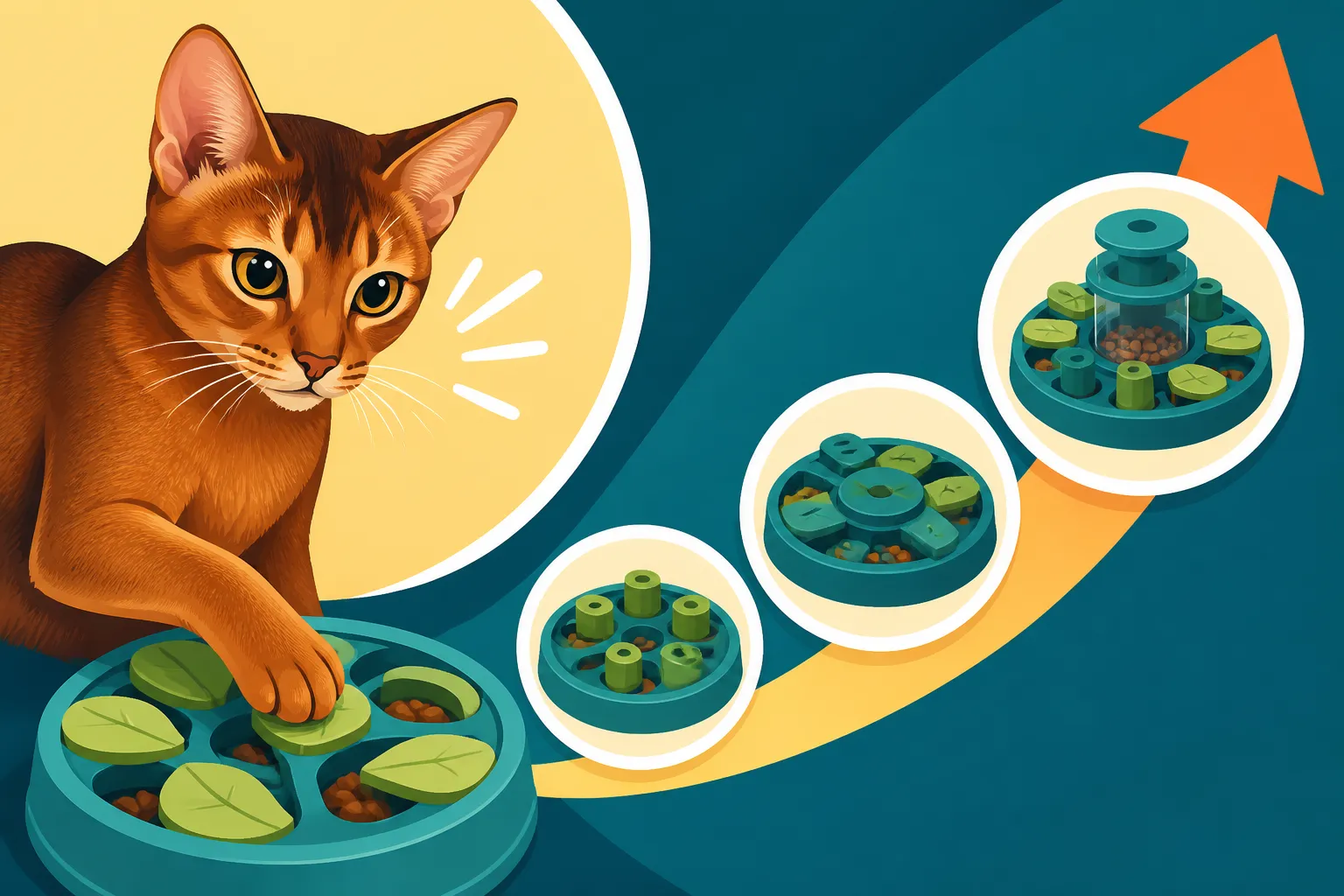
Here's a quick overview of how you can level up the difficulty of your Abyssinian's puzzle feeders:
| Difficulty Level | Common Feeder Type | Modifications to Increase Difficulty | Example Scenario |
|---|---|---|---|
| Basic | Open bowls, shallow trays with wide openings | Introduce small barriers in the bowl (rocks, larger toys). | Your Abyssinian gulps kibble too fast. You place a golf ball in the bowl, forcing them to eat around it. |
| Easy | Simple treat balls, feeders with few obstacles | Reduce opening size, add crumpled paper/ping pong balls inside. | Your Abyssinian quickly empties a treat ball. You tape over half the dispenser hole, making fewer treats fall out. |
| Medium | Slide feeders, feeders with multiple small cups | Increase the number of slides, add light objects on top of cups (plastic poker chips), combine two feeders. | They've mastered sliding all the covers. You place a lightweight plastic toy on top of each cover, requiring them to bat it off first. |
| Hard | Multi-level towers, feeders requiring complex pawing | Place feeder in a high, challenging-to-reach spot. Integrate timed dispensing. Add multiple layers of internal obstacles. | Your Abyssinian climbs your cat tree to reach a multi-chamber feeder. You've hidden extra kibble in a small box at the top, accessible only after solving the main feeder. |
| Expert | DIY elaborate mazes, automated feeders with sensors | Require multi-step actions (e.g., activate sensor then solve slide puzzle). Combine vertical challenges with ground foraging. | Your Abyssinian needs to tap a button to drop kibble onto a wall shelf, then bat it down through a series of tubes, finally collecting it from a snuffle mat on the floor. |
The key is to always keep it fun and engaging. Your Abyssinian thrives on interaction and mental gymnastics, and by continuously challenging their brilliant minds with increasingly difficult puzzle feeders, you're investing in their long-term health, happiness, and your bond together.
Disclaimer
This article is for general informational purposes only and does not constitute professional advice. Laws, prices and regulations vary by location and change over time. Consult a qualified professional for guidance on your specific situation.