Why an Abyssinian Needs a Tall Cat Tree
If you've ever lived with an Abyssinian, you know they aren't content to simply exist on the ground floor. These agile, endlessly curious cats possess an almost primal urge to ascend, explore, and survey their surroundings from the highest vantage point possible. This guide is here to explain why a tall cat tree isn't just a luxury for your Abyssinian, but an absolute necessity for their physical and mental well-being, and how to choose and integrate the perfect one into your home.
The Abyssinian's Innate Need for Vertical Space
Abyssinians are not your typical couch potatoes. They are a breed defined by their boundless energy, sharp intelligence, and an insatiable desire to be involved in everything happening around them. This isn't just a quirky personality trait; it's deeply ingrained in their behavior, driving their need for ample vertical territory. Without appropriate outlets for this instinct, you'll likely find your Aby scaling your bookshelves, curtain rods, or even the top of your kitchen cabinets, often to your dismay and potentially at risk to themselves.
They thrive on being active participants in their environment, and for a cat, the world looks entirely different from up high. It's not about being aloof; it's about being engaged, observing, and feeling secure. Failing to provide these essential climbing opportunities can lead to frustration, destructive behaviors, and even anxiety in these vibrant felines.
The Apex Predator Mentality (Even for a Tiny House Cat)
Let's face it, Abyssinians, despite their domestic bliss, still carry the wild instincts of their ancestors. In the natural world, elevated positions offer a significant advantage. From a high perch, a cat can survey its territory, spot potential prey (or, in your home, a stray dust bunny or a passing fly), and feel less vulnerable to perceived threats. It’s an evolutionary hardwiring that tells them "higher equals safer and more dominant." Your Abyssinian, even if they've never seen a mouse outside of a toy, still feels this fundamental urge.
This "apex predator mentality" is why your Aby will often choose the top of the wardrobe over a plush bed on the floor. It's not a snub; it's instinct. They feel more in control, more aware of their domain, and more secure when they have a commanding view. Providing a tall, sturdy cat tree directly taps into this deep-seated need, offering them a sanctioned and safe way to fulfill these ancient urges.
Observation Decks for the Curious Abyssinian
An Abyssinian isn't just busy; they are profoundly curious. They want to know what you're doing, who's at the door, what that noise was in the other room, and how the outside world is behaving. A tall cat tree acts as their personal observation deck, allowing them to participate in household activities without being underfoot. Imagine your Aby perched high, watching you cook dinner, or greeting guests from their elevated sanctuary. It's their way of being part of the action while maintaining a sense of personal space and control.
This constant desire for information and engagement is part of what makes them such fascinating companions. The Abyssinian Is the Busiest Cat in the House, and a tall cat tree allows them to manage that energy and curiosity constructively. Without a dedicated high spot, they'll often resort to less ideal perches, potentially damaging furniture or themselves in the process.
Escape Routes for Energy Bursts
Abyssinians are renowned for their incredible energy levels. They can go from a dead sleep to a full-throttle sprint in a blink, often tearing through the house like a furry blur. These bursts of energy, sometimes called "zoomies," are perfectly normal for the breed, but they need an outlet. A tall cat tree provides not just a destination for climbing, but also a launching pad and a vertical obstacle course. They can scale it in seconds, leap from perch to perch, and generally burn off some of that incredible drive.
This isn't just about physical exercise; it's mental enrichment too. Navigating multiple levels and varying textures on a well-designed cat tree engages their problem-solving skills and satisfies their exploratory nature. Think of it as a vertical playground that helps keep them stimulated and prevents boredom-induced mischief, which any Aby owner knows can be quite creative! For an active cat that An Abyssinian Needs Height More Than It Needs Floor, a properly sized cat tree is an indispensable part of their daily routine.
What Makes a Cat Tree "Tall Enough" for an Abyssinian
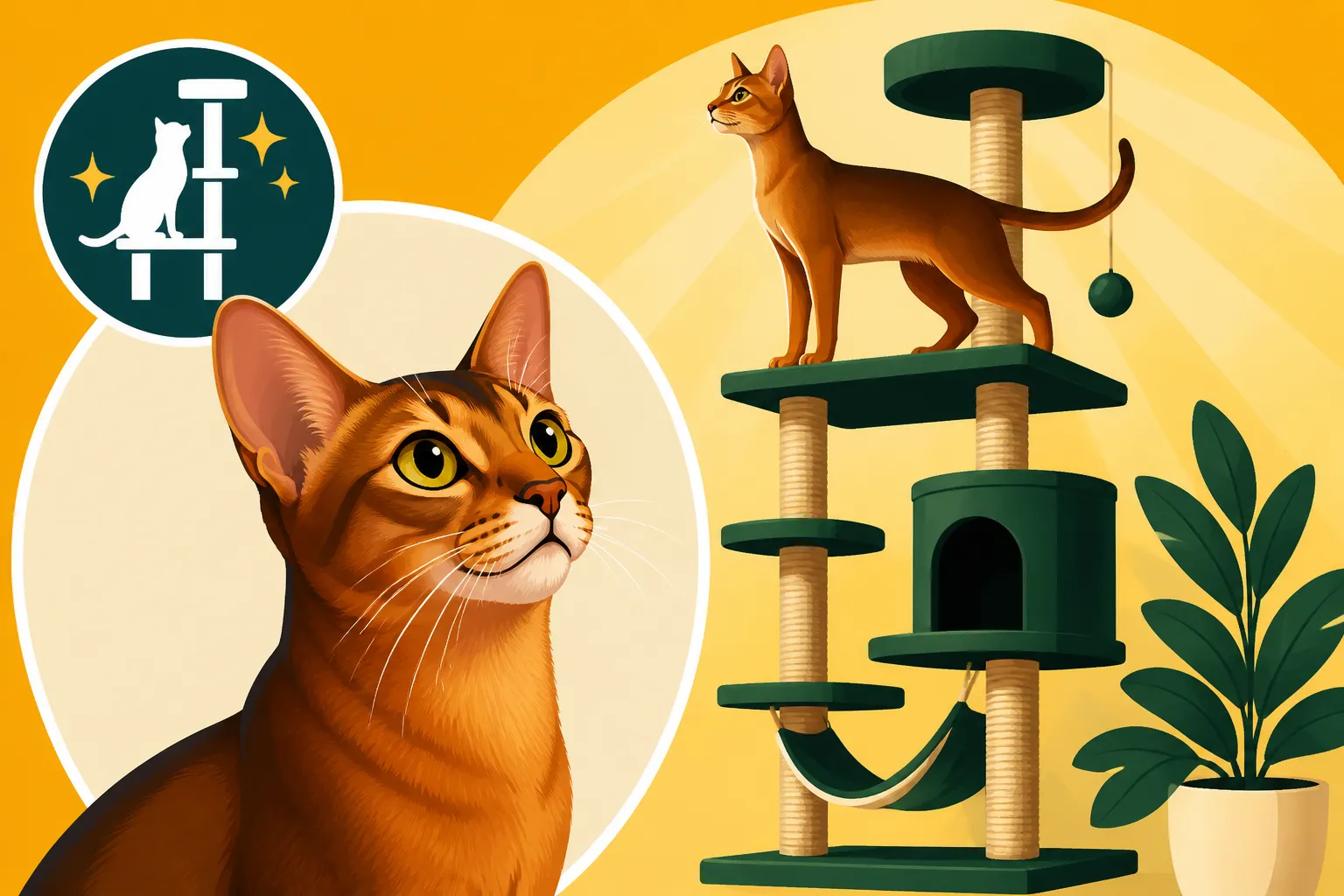
When we talk about a "tall" cat tree for an Abyssinian, we're not just talking about something slightly taller than a scratching post. We're talking about a multi-level structure that provides significant verticality, robust stability, and engaging features designed to withstand their energetic antics. A flimsy, short tree will quickly be ignored, or worse, become a hazard. Investing in a quality piece for your Aby is investing in their long-term happiness and safety.
It's tempting to pick up a cute, compact cat tree, especially if you have limited space. However, for an Abyssinian, "compact" often translates to "uninteresting" or "unstable." They need height to truly feel satisfied, to launch themselves, and to feel that sense of accomplishment that comes with reaching the top. How High an Abyssinian Will Climb is often limited only by the available structure, so provide them with generous options.
Stability and Sturdiness Are Non-Negotiable
This point cannot be stressed enough: an Abyssinian will test the structural integrity of anything they climb. Their lean, muscular bodies are deceptively powerful, and they launch themselves with incredible force. A wobbly or cheaply constructed cat tree is an accident waiting to happen. Imagine your Aby leaping onto the top perch from a full sprint, only for the entire structure to sway or, worse, topple over. This could lead to serious injury and a fear of climbing, defeating the entire purpose.
Look for a tree with a wide, heavy base and thick support posts. Many quality cat trees from retailers like Chewy will explicitly mention reinforced bases or wall-anchoring options. If it feels remotely unstable when you push on it, it's not going to stand up to an Abyssinian. While a fall from an unstable cat tree might be unexpected, having pet insurance like Healthy Paws can provide peace of mind for the adventurous Aby. Always prioritize rock-solid construction to ensure your active cat can climb and play without fear.
The Importance of Perch Placement and Size
Beyond just height, the design of the perches themselves is crucial. Abyssinians are incredibly agile, but they still need adequate space to land, turn around, and relax. Tiny, round perches might be fine for smaller or less active cats, but an Abyssinian needs generous, flat platforms. Think large, square, or rectangular platforms that allow them to stretch out fully, not just curl up in a ball.
The spacing between perches also matters. There should be enough distance for them to make satisfying leaps and bounds, but not so much that it becomes a precarious jump. Multiple levels, ideally with varied heights and perhaps a cozy cubby or hammock thrown in, will keep them engaged. Remember, they want to feel like they are exploring, not just balancing. A good cat tree will encourage their natural athleticism and provide ample opportunity to survey their kingdom, much like Why an Abyssinian Prefers the Highest Point in a Room.
Material Matters for Climbing and Scratching
The materials used in a cat tree are vital for both durability and enrichment. Carpeted surfaces are common, but look for durable, tightly woven carpet that can withstand vigorous clawing. Sisal rope, wrapped around posts, is an absolute must. Abyssinians love to scratch and stretch, and sisal provides the perfect texture for claw maintenance and marking territory. If the sisal is thin or poorly attached, it will unravel quickly, leaving you with a costly and quickly demolished structure. This connects to Why an Abyssinian Destroys Cheap Furniture Faster – they need sturdy materials built to last.
Consider materials that are easy to clean, too. While Abyssinians have a short, low-shedding coat, perches can still accumulate dander and occasional hairballs. Some cat trees offer removable covers or platforms made of easily wiped-down materials, which is a big plus for hygiene. A combination of soft lounging spots and rough scratching surfaces is ideal to meet all their needs.
Beyond the Cat Tree: Integrating Verticality into Your Home
While a tall cat tree is an excellent starting point, a truly enriching environment for an Abyssinian often goes beyond a single structure. Integrating vertical space throughout your home can turn ordinary rooms into exciting playgrounds, preventing boredom and redirecting their natural climbing instincts away from your furniture. It’s about creating an entire "cat highway" that satisfies their need for exploration and movement.
Think about your home from an Abyssinian's perspective. Where are the natural pathways? What are the interesting vantage points? How can you connect different areas of the room vertically? By doing so, you're not just providing places to climb; you're creating a dynamic and stimulating environment that caters to their unique intelligence and energy. How Many Vertical Levels an Abyssinian Needs is often more than you'd initially think.
Wall-Mounted Shelves and Climbing Systems
Wall-mounted cat shelves and specialized climbing systems are a fantastic way to supplement a tall cat tree. These systems allow you to create custom pathways, bridges, and perches that don't take up floor space, making them ideal for smaller homes. You can run shelves along a wall, create a path leading up to a cat tree, or even build an entire vertical playground that spans multiple walls. This is particularly appealing for Abyssinians, who love navigating complex environments and solving "puzzles."
When installing wall shelves, ensure they are securely mounted into wall studs and can hold your Abyssinian's weight (and then some!). Provide varied textures, perhaps carpeting on some shelves and bare wood on others. Don't forget to include scratching surfaces along the route. These systems not only satisfy their climbing urges but also offer new perspectives on their territory, fulfilling their innate curiosity. They might even teach themselves to How an Abyssinian Learns to Open a Cupboard if those are part of their climbing route!
Strategic Placement for Maximum Abyssinian Enjoyment
The best cat tree in the world won't be used if it's placed in a neglected corner. Strategic placement is key. Place cat trees and vertical structures in areas where your Abyssinian wants to be. This often means near windows (for bird watching, of course!), in main living areas where the family congregates, or even in a home office so they can "help" you work. The goal is to provide them with a high vantage point from which they can observe and interact with their favorite humans.
Consider placing vertical structures where they can see the action, such as Why an Abyssinian Ends Up on Top of the Fridge to oversee kitchen activities. If you have multiple vertical options, try to connect them visually or physically, creating a larger "superhighway" system for exploration. Remember, Abyssinians are social and curious, so isolation is not what they're looking for when seeking height.
The Role of Vertical Space in Multi-Cat Households
In a multi-cat household, vertical space becomes even more critical. It acts as a way to delineate territory, offer escape routes from playful (or annoying) housemates, and reduce conflict. If cats can choose different elevations, they can share a space more harmoniously. A dominant cat might claim the highest perch, while a more timid cat can find security on a lower, but still elevated, platform. This ensures every cat feels they have their own safe haven.
For Abyssinians, who can sometimes pester other cats with their endless energy, vertical options provide much-needed respite for all parties. It allows them to burn off energy by scaling the cat tree, rather than always engaging in ground-level chases. This layering of territory minimizes stress and enhances overall peace, proving that Why an Abyssinian Will Not Sit on Your Lap might mean they prefer to be on a high perch near you instead, watching the world go by. Keeping your Abyssinian physically and mentally active with these structures is key to their long-term health and preventing issues that could lead to vet visits, so considering Whether Pet Insurance Is Worth It for an Abyssinian is a smart choice for any owner.
| Feature | Benefits for an Abyssinian | Considerations |
|---|---|---|
| Height | Satisfies instinct to survey territory, burns energy | Must be stable and sturdy, not just tall |
| Multiple Levels | Offers varied climbing challenges, multiple rest spots | Perch size and spacing should accommodate leaps and turns |
| Sisal Scratching | Essential for claw health, stretches muscles, marks territory | Must be durable and tightly wrapped, easily replaceable |
| Sturdy Base | Prevents tipping during energetic climbs and jumps | Wide, heavy base or wall-anchoring is critical |
| Cozy Hiding Spots | Provides security, quiet retreats for napping or observation | Not every Aby uses them, but good for variety and stress relief |
| Placement | Near windows, in busy family areas | Avoid isolated corners; consider sun exposure |
Keeping Your Abyssinian Happy and Healthy on Their High Perches
Providing a tall cat tree is a significant step towards meeting your Abyssinian's needs, but it's not a set-it-and-forget-it solution. Ongoing care, maintenance, and awareness of your cat's behavior are crucial to ensure these vertical playgrounds remain safe and engaging. Just like any active member of your household, your Aby's needs evolve, and their environment should adapt with them.
Regular inspection of all climbing structures is essential. Check for loose screws, fraying sisal, or wobbly platforms. An Abyssinian will expose any weakness in a cat tree with their enthusiastic use. Replacing worn components or tightening connections proactively prevents accidents and ensures their climbing confidence remains high. After all, if Why an Abyssinian That Stops Climbing Needs a Vet, then maintaining their climbing environment is part of preventative care.
Remember, an Abyssinian's boundless energy and intelligence means they are always looking for new challenges. Don't be afraid to occasionally rearrange their vertical pathways, add new shelves, or introduce different types of enrichment toys on their perches. A dynamic environment keeps their minds stimulated and prevents boredom, which can lead to unwelcome behaviors. Keeping their world interesting ensures they remain the joyful, curious companions we all adore.
Disclaimer
This article is for general informational purposes only and does not constitute professional advice. Laws, prices and regulations vary by location and change over time. Consult a qualified professional for guidance on your specific situation.