How to Spot an Abyssinian Kitten Mill Listing
Finding an Abyssinian kitten is an incredibly exciting time, but the joy can quickly turn to dread when you realize not all breeders operate with the best intentions. It's a heartbreaking reality that many well-meaning prospective owners unknowingly fall victim to kitten mills, businesses that prioritize profit over the health and welfare of their animals. This guide is designed to empower you with the knowledge and red flags to look for, ensuring your search for a vibrant, healthy Abyssinian leads you to a reputable and ethical source, not a place that churns out kittens for cash.
The Lure of the "Bargain" Abyssinian
We all love a good deal, don't we? It's human nature to seek out value, especially when a significant purchase like a purebred kitten is involved. However, when it comes to living, breathing animals, the concept of a "bargain" often comes with hidden, devastating costs. Kitten mills prey on this desire for a lower price point, dangling seemingly attractive offers that, upon closer inspection, reveal a grim reality of neglect and corner-cutting.
Unrealistic Pricing and Discounts
One of the loudest alarm bells for a potential kitten mill listing is a price that seems too good to be true. Reputable Abyssinian breeders invest heavily in their cats' health, genetic testing, proper nutrition, veterinary care for both parents and kittens, clean facilities, and ongoing education. This all contributes to the cost of a well-bred kitten. When you see an Abyssinian advertised for significantly less than the going rate, it’s not usually a stroke of luck; it's almost always a sign that crucial steps have been skipped.
Think about it: a breeder dedicated to the welfare of their animals will ensure the queen receives top-notch prenatal care, has a safe, clean birthing environment, and that the kittens are seen by a vet multiple times, vaccinated, dewormed, and microchipped before going to their new homes. They'll feed high-quality food, like options you might find through a supplier like Chewy, ensuring optimal development. These expenses add up. A price that undercuts the market dramatically often indicates that the breeder has cut corners on these essential costs. This puts the kitten at risk for various health issues, behavioral problems, and a shorter, less happy life. Remember, How Much a Pet Abyssinian Costs From a Breeder reflects the significant investment a responsible breeder makes, and understanding Why an Abyssinian Costs More Than a Shelter Tabby sheds light on these differences.
Furthermore, be wary of breeders offering "sales," "clearance," or "limited-time discounts" on kittens. Healthy, well-socialized Abyssinian kittens from reputable lines are almost always in high demand. Breeders typically have waiting lists, and their primary goal is to place their kittens in loving, appropriate homes, not to move inventory quickly with sales promotions. These kinds of tactics are more common in commercial retail than in ethical animal husbandry, suggesting a focus on volume and quick turnover rather than careful placement and quality.
Rare Colors and "Exclusives"
Another red flag often waved by kitten mills is the claim of "rare" or "exclusive" Abyssinian colors, sometimes even at an inflated price. While Abyssinians do come in four beautiful, recognized colors—Ruddy, Sorrel, Blue, and Fawn—some unscrupulous sellers might try to market unstandardized colors or genetic anomalies as highly desirable, rare finds. You might see listings for "chocolate Abyssinians" or "silver Abyssinians with unique markings."
The problem here is two-fold. First, these "rare" colors might not be recognized by major cat registries like the Cat Fanciers' Association (CFA), meaning the kitten cannot be shown or, more importantly, its lineage might be questionable. Second, and more concerning, these unusual colors could be the result of irresponsible breeding practices, such as breeding cats that carry undesirable recessive genes or outcrossing with other breeds. This can introduce unforeseen health issues or genetic predispositions that a reputable breeder would actively test for and breed away from. A responsible breeder focuses on improving the breed standard and maintaining health, not on creating novelty colors for profit. If you see an advertisement for something that sounds too unique or extraordinary, like a "chocolate Abyssinian," it's worth double-checking breed standards, as Why a Chocolate Abyssinian Is Not CFA Recognized explains. Similarly, Why an Abyssinian Advertised as Rare Is a Warning often points to sellers who prioritize novelty over health and ethical breeding.
Red Flags in Communication and Transparency
A breeder's communication style and willingness to be transparent are huge indicators of their ethical standards. A reputable Abyssinian breeder will be open, eager to share information, and genuinely interested in you as a potential owner. Kitten mills, on the other hand, often exhibit evasiveness, high-pressure tactics, and a general lack of personal engagement.
Vague or Absent Health Information
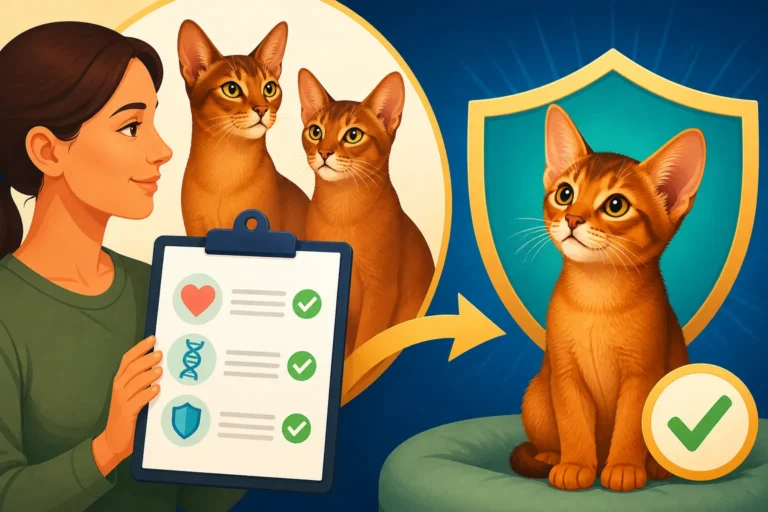
This is perhaps the most critical red flag. Reputable Abyssinian breeders are meticulous about the health of their breeding cats and kittens. They will proudly provide documentation of genetic testing for common Abyssinian health issues like Pyruvate Kinase Deficiency (PKD) and Progressive Retinal Atrophy (PRA-rdAc). They'll have detailed vaccination records, deworming schedules, and veterinarian check-up reports for each kitten.
Kitten mill listings, however, will often be vague or completely silent on health matters. They might offer generic statements like "all kittens are healthy" without providing any proof. If a breeder avoids questions about the parents' health history, specifically regarding conditions like kidney disease which can be prevalent in the breed, this is a massive warning sign. Remember, What an Abyssinian Breeder Should Have Tested Before You Buy outlines the essential screenings. You should expect to see documentation for Which Two DNA Tests an Abyssinian Must Have at a minimum. If you ask about kidney history in the line and get a dismissive answer, consider that a major red flag; What to Ask About an Abyssinian Line's Kidney History is a legitimate and important question for any prospective Abyssinian owner.
You should be able to verify that the parents are clear of these genetic conditions, not just rely on a breeder's word. A responsible breeder will use labs that offer clear results and will be happy to share certificates. If they hedge, claim the tests are "too expensive," or say they "don't believe in them," walk away immediately.
Pressure Sales Tactics and Poor Communication
When you're trying to communicate with a potential breeder, pay close attention to how they communicate. Are they responsive, polite, and thorough in their answers? Or do they seem pushy, impatient, or unwilling to engage in a detailed conversation? Kitten mills often employ pressure sales tactics, trying to rush you into a decision before you have time to think or ask too many questions. They might say things like, "There's another buyer interested, you need to act fast!" or "This price is only good for today."
A legitimate breeder wants to ensure their kittens go to the right homes for life. They will ask you questions – about your living situation, your experience with cats, your family, and your plans for the kitten. This isn't an interrogation; it's a responsible breeder performing due diligence to ensure a good match. If a seller shows no interest in your background, doesn't seem to care where the kitten will live, or only talks about payment, that's a huge red flag. Their communication might also be overly generic, using canned responses that don't sound personal or specific to your questions. They might simply reply with prices and availability without offering any deeper insight into their cattery or the kitten's personality.
Inability to Visit or See the Premises
This is one of the most glaring signs of a kitten mill. A reputable breeder is usually proud of their home and the environment in which their kittens are raised. They will welcome responsible visitors (at appropriate times, considering the kittens' age and health) to meet the kittens and their mother in person. This visit is invaluable. It allows you to observe the living conditions – are they clean, spacious, and stimulating? Do the cats look healthy, well-fed, and socialized? Do the kittens seem playful and confident?
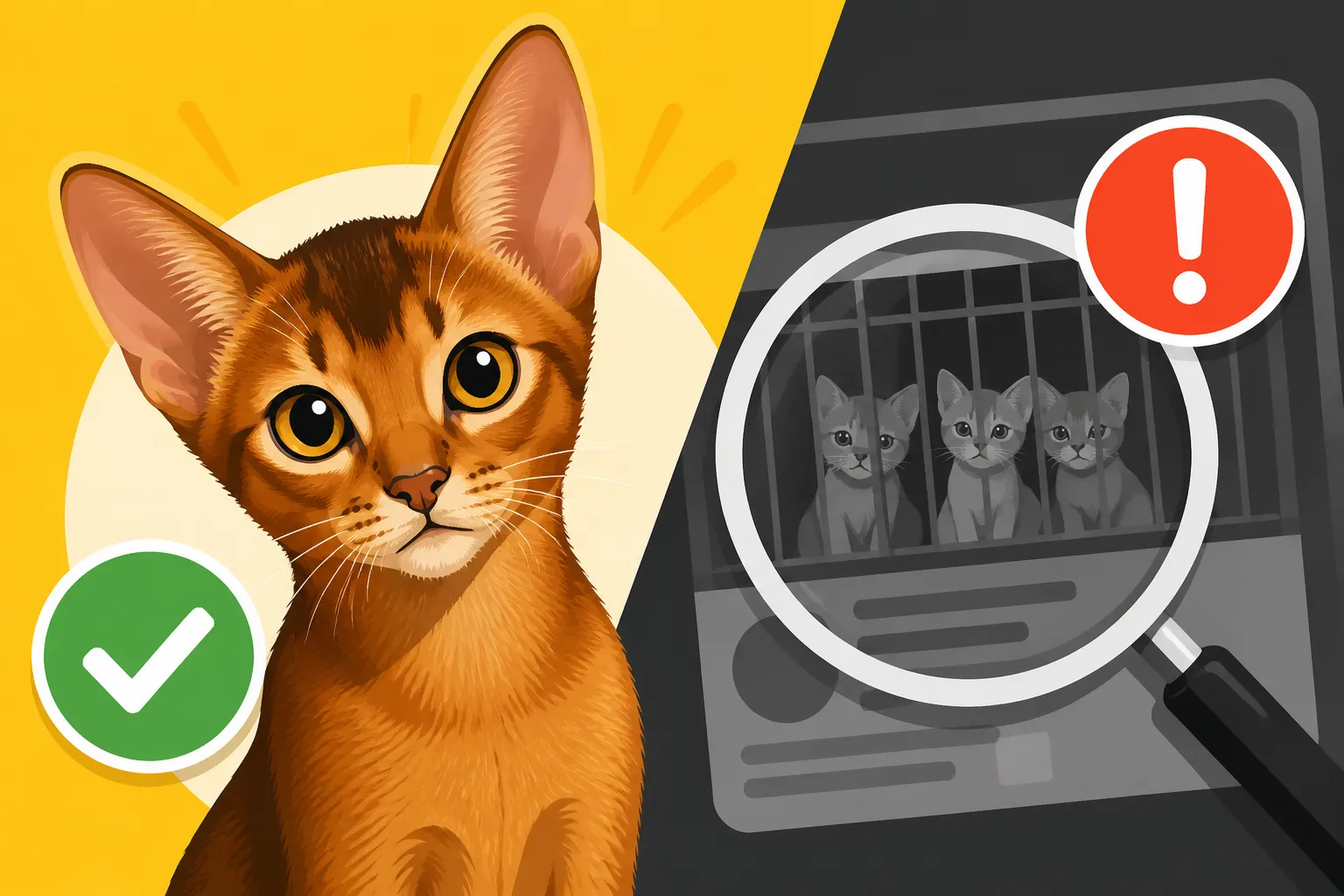
Kitten mills, however, will almost always find excuses to prevent visits. They might claim they're too busy, that the kittens are too young (even when they're well past the appropriate visiting age), or offer to meet you in a neutral public location like a parking lot. This is because their facilities are often unsanitary, overcrowded, or simply not fit for showing. They want to hide the deplorable conditions their breeding cats and kittens live in. If a breeder absolutely refuses a visit to their cattery or home, especially after initial conversations, it's time to politely decline and move on. Seeing What an Abyssinian Cattery Should Look Like involves seeing the actual living conditions, not just staged photos. As a prospective owner, you deserve to observe firsthand Why to Visit an Abyssinian Litter in Person to ensure ethical practices.
Warning Signs in the Listing Itself
Beyond pricing and communication, the actual listing or advertisement for an Abyssinian kitten can reveal a lot about the source. Unethical breeders often give themselves away through generic content, misleading photos, or a complete lack of verifiable credentials.
Generic Photos and Impersonal Descriptions
Take a good look at the photos in the listing. Are they high-quality, clear, and consistent? Do they show the kittens in a variety of settings, interacting with their mother or with people? Or are they blurry, poorly lit, or do they look like stock photos? Kitten mills often use generic photos, sometimes even stolen from other legitimate breeders or websites. If the photos are inconsistent—showing different backgrounds, different ages of kittens in the same litter, or even different breeds—it should raise your suspicions.
Furthermore, pay attention to the sheer volume of kittens being advertised. A reputable Abyssinian breeder typically has only one or two litters a year, if that. Seeing listings with multiple breeds available, or an unusually high number of Abyssinians of various ages all at once, is a strong indicator of a high-volume operation like a kitten mill. Their goal isn't quality; it's quantity.
The descriptions themselves can also be telling. Are they detailed, personal, and informative about the specific kitten's personality, quirks, and early development? Or are they short, generic, and focused solely on superficial characteristics or price? Descriptions that lack any real substance about the kitten's temperament, health, or the care it has received are often a sign that the seller doesn't truly know or care about the individual animals. They might just be copying and pasting the same text for every kitten they sell, regardless of breed.
Lack of Breeder Information and Registries
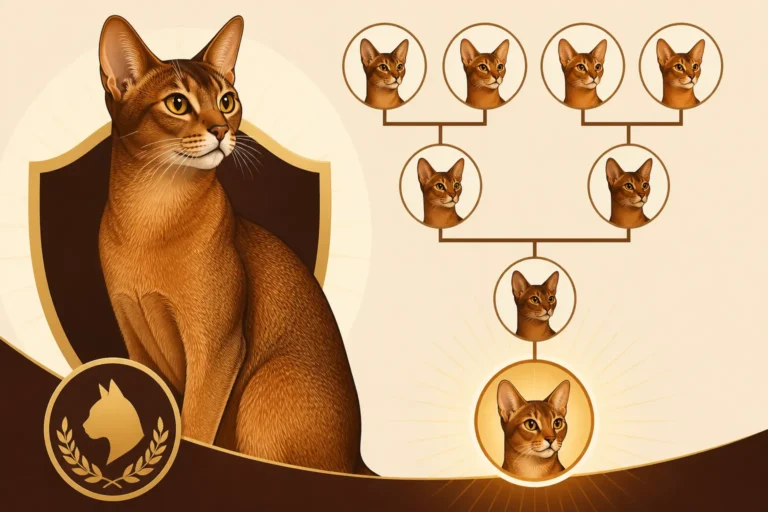
A reputable Abyssinian breeder will be proud of their cattery, their registered prefix, and their involvement in the breed community. Their listing should clearly state their cattery name and affiliation with major cat registries such as the Cat Fanciers' Association (CFA) or The International Cat Association (TICA). They should be able to provide registration papers for the kitten and its parents, proving their purebred status and lineage. You should always confirm Which Registry an Abyssinian's Papers Come From to ensure legitimacy.
Kitten mill listings, in contrast, often omit any verifiable breeder information. You might only get a first name, a phone number, or an email address, with no mention of a cattery name, website, or registry affiliation. This anonymity is intentional – it makes it harder for buyers to trace problems back to them. If you can't find any information about the breeder online or within official cat registries, that's a major cause for concern.
Moreover, a reputable breeder will always provide a detailed contract, including a health guarantee and a spay/neuter agreement for pet kittens. This contract protects both you and the kitten, outlining responsibilities and expectations. Kitten mills rarely offer comprehensive contracts or health guarantees; if they do, the guarantees are often vague, short-term, or riddled with loopholes. Always be sure to read What an Abyssinian Health Guarantee Actually Promises before committing, as many kitten mill guarantees are not worth the paper they're written on. Their focus is on the sale, not on the long-term well-being of the animal or the satisfaction of the buyer.
What a Reputable Abyssinian Breeder Looks Like
Now that we’ve covered the red flags, let's paint a clearer picture of what a responsible, ethical Abyssinian breeder looks like. Knowing what to look for is just as important as knowing what to avoid. A reputable breeder is a passionate advocate for the breed, committed to producing healthy, well-adjusted kittens, and supporting their new families.
The Mark of Quality and Care
A genuinely good Abyssinian breeder acts as a gatekeeper, not just a salesperson. They are selective about who buys their kittens because they have invested so much into each one. This means they will interview you thoroughly, asking detailed questions about your home, your family, your lifestyle, and your experience with cats. This might feel a bit like an interrogation, but it’s actually a wonderful sign that they care deeply about where their kittens are going. Why an Abyssinian Breeder Who Interviews You Is a Good Sign is all about ensuring the kitten thrives in its new environment.
Their cattery or home environment will be clean, well-maintained, and designed with the cats' well-being in mind. You'll see dedicated areas for the queen and her kittens, with plenty of stimulation, safe toys, and comfortable bedding. The adult cats will look healthy, vibrant, and well-socialized, often interacting calmly with the breeder and visitors. A visit should reveal What an Abyssinian Cattery Should Look Like—a place of loving care, not just production.
Reputable breeders are transparent about everything. They'll share their experience, their breeding philosophy, and the efforts they put into socializing their kittens. They'll readily provide full health records for the kitten, including vaccination dates, deworming history, and microchip information. They'll also offer a comprehensive health guarantee that outlines what it covers and for how long. This transparency builds trust and assures you that you're getting a kitten that has received the best possible start in life.
Transparency and Ongoing Support
One of the cornerstones of a reputable Abyssinian breeder is their commitment to transparency, particularly concerning genetic health. They will readily provide proof that their breeding cats have been tested and are clear of common hereditary diseases. This means showing you official certificates for tests like those for Pyruvate Kinase Deficiency Is the Abyssinian's Best Known Test and PRA-rdAc Takes an Abyssinian's Sight by Five. They understand the importance of these screenings not just for the individual kitten, but for the health of the entire breed. They’re invested in the future of the Abyssinian, not just the sale of one kitten.
Furthermore, a good breeder offers ongoing support long after you take your kitten home. They consider themselves a lifelong resource and friend. They'll be available to answer questions, offer advice on everything from diet to behavior, and simply check in to see how your Abyssinian is doing. This continued relationship is invaluable, especially for first-time Abyssinian owners. They will often recommend things like pet insurance from providers like Healthy Paws, understanding that unexpected veterinary costs can arise even with the healthiest of kittens, and that comprehensive care is a long-term commitment.
They understand that owning an Abyssinian is a significant long-term commitment, and they’re upfront about all aspects, including the potential costs over a lifetime, because Why an Abyssinian's Lifetime Cost Dwarfs Its Purchase Price is a reality that responsible owners need to be prepared for. Choosing a reputable breeder might mean a higher initial cost and a longer wait, but it's an investment in a healthy, happy, and well-adjusted companion who will bring you joy for many years to come, without the heartbreak and financial strain often associated with animals from kitten mills.
Here’s a quick comparison to help you discern:
| Feature | Kitten Mill Listing | Reputable Breeder Listing |
|---|---|---|
| Pricing | Unusually low, "bargains," sales, quick discounts | Consistent with breed standards, fair, reflects investment |
| Colors Advertised | "Rare," "exclusive," unstandardized, novelty colors | Recognized breed standard colors (Ruddy, Sorrel, Blue, Fawn) |
| Genetic Health Info | Vague or absent; no proof of PKD/PRA tests | Provided: clear documentation for PKD/PRA of parents and kittens |
| Vaccination/Deworming | Minimal or incomplete records; generic claims | Detailed, verifiable records and vet check-ups |
| Communication | Pushy, rushed, generic, avoids detailed questions | Patient, informative, asks you many questions, interested in placement |
| Visits to Cattery | Discouraged, refused, offers public meeting spots | Welcomed (at appropriate times), transparent about living conditions |
| Photos in Listing | Low quality, inconsistent, stock photos, many breeds | High quality, specific to litter/kitten, shows mother, clean environment |
| Breeder Information | Anonymous, no cattery name, no registry affiliation | Clear cattery name, registered with CFA/TICA, proud of lineage |
| Contract/Guarantee | None, vague, short-term, or loophole-filled | Comprehensive, includes health guarantee, spay/neuter clause |
| Post-Purchase Support | None | Lifelong support, advice, and friendship |
Disclaimer
This article is for general informational purposes only and does not constitute professional advice. Laws, prices and regulations vary by location and change over time. Consult a qualified professional for guidance on your specific situation.