Whether an Abyssinian Guarantee Covers Kidney Disease
It's incredibly frustrating when you fall in love with a beautiful Abyssinian kitten, bring them home, and then years later face a devastating diagnosis like kidney disease, only to find out that the breeder's health guarantee, which you thought would cover you, doesn't actually extend to such a condition. This guide will walk you through the complexities of Abyssinian health guarantees, specifically addressing why kidney disease is often excluded, and empower you with the knowledge to protect your beloved feline companion.
Understanding Breeder Health Guarantees for Abyssinians
When you invest in a purebred Abyssinian, one of the assurances you often receive is a health guarantee from the breeder. On the surface, this sounds like a wonderful safety net, promising peace of mind. However, the devil is often in the details, and understanding the scope and limitations of these guarantees is crucial, especially when it comes to a breed-specific concern like kidney disease.
The Standard Scope of a Health Guarantee
Most breeder health guarantees are designed to cover congenital or hereditary diseases that become apparent within a relatively short timeframe after you bring your kitten home. We're typically talking about the first few months, or sometimes up to a year or two. These guarantees often focus on conditions that can be definitively identified through genetic testing or clear clinical signs in early life. For example, conditions like Pyruvate Kinase Deficiency (PKD) or Progressive Retinal Atrophy (PRA-rdAc), for which there are reliable DNA tests, are usually covered, provided the breeder has done their due diligence in testing the parents. If your kitten were to develop symptoms of one of these testable conditions within the guarantee period and your vet confirmed it, a good breeder would typically offer a replacement kitten or a refund. This is why it's so important to review What an Abyssinian Breeder Should Have Tested Before You Buy. The intention is to assure buyers that the kitten they are purchasing is free from immediate, known genetic defects. However, the world of feline health is far more intricate than just a few clear-cut tests.
The Specific Challenge of Renal Amyloidosis in Abyssinians
Now, let's talk about kidney disease, specifically renal amyloidosis, which is a significant concern within the Abyssinian breed. This isn't your average "older cat" kidney decline; this is a hereditary condition where an abnormal protein called amyloid builds up in the kidneys, eventually leading to organ failure. The heartbreaking part is that this often doesn't manifest until later in life, sometimes when the cat is still quite young, but often past the typical window of a health guarantee. An Abyssinian with amyloidosis might appear perfectly healthy for years, full of that signature Abyssinian energy, only for symptoms to suddenly emerge at three, five, or even eight years old. Renal Amyloidosis Is the Abyssinian Problem Nobody Can Test For highlights just how difficult this disease is to manage from a breeding and guarantee perspective. The insidious nature of its onset, combined with the lack of a simple diagnostic test for predisposition, makes it a very different beast compared to conditions like PK Deficiency. Owners often don't even realize there's an issue until the kidneys are significantly compromised, perhaps noticing Why a Thirsty Young Abyssinian Is a Red Flag. This delayed and often subtle progression makes it incredibly difficult for breeders to offer guarantees that stretch far enough into an Abyssinian's lifespan to cover this particular ailment.
Why Abyssinian Kidney Disease Is Often Excluded from Guarantees
It can feel incredibly unfair when you're faced with a sick cat and a guarantee that offers no solace. However, there are very specific, albeit complex, reasons why renal amyloidosis is so frequently excluded from standard breeder health guarantees. It's not necessarily about a breeder trying to shirk responsibility, but rather grappling with the limitations of current science and the practicalities of breeding.
The Lack of a Direct Genetic Test
The single biggest reason renal amyloidosis is a grey area for guarantees is the frustrating reality that Why No Gene Test Exists for Abyssinian Amyloidosis. Unlike PK Deficiency or PRA-rdAc, where a simple cheek swab can definitively tell you if a cat is clear, a carrier, or affected, there's no such test for amyloidosis. Researchers have been working on it for years, but the genetic markers are complex, likely involving multiple genes and environmental factors, making it impossible to predict with a single test. This means a breeder cannot, with current technology, perform a DNA test on a kitten or its parents and confidently say, "This cat will never get amyloidosis," or even "This cat is not genetically predisposed." Without a clear, verifiable genetic test, it becomes nearly impossible to write a guarantee that is both fair to the buyer and feasible for the breeder. How do you guarantee against something you can't test for? It's a scientific hurdle that impacts owners and breeders alike, leaving everyone in a difficult position.
The Late and Variable Onset of Symptoms
Another crucial factor is the timeline of the disease. While some unfortunate Abyssinians can show signs of kidney trouble devastatingly early—How Young an Abyssinian Can Lose Its Kidneys outlines some heartbreaking scenarios—many do not exhibit symptoms until they are adults, often well past the typical one or two-year guarantee period. Imagine a guarantee that has to extend for five, seven, or even ten years to cover a condition like this. That's a huge commitment for a breeder, especially given the unpredictable nature of the disease. Two cats from the same litter, with seemingly identical care and diet, might develop amyloidosis at wildly different ages, or one might never show symptoms at all. This variability makes it very challenging to define what constitutes a "guarantee-able" case. Is it when the first blood values show a slight elevation? Or only when full-blown kidney failure sets in? The progressive nature, where Why an Abyssinian's Kidneys Fail Before Its Coat Dulls means early detection without specific tests is tough, further complicates matters, as early, subtle signs might be missed or attributed to other factors until it's too late.
Financial Implications for Breeders
Let's be realistic: covering a disease like renal amyloidosis under a guarantee would place an enormous financial burden on breeders. The diagnostic process can be lengthy and expensive, often involving multiple vet visits, specialized blood tests like SDMA, urine protein evaluations, and even biopsies. Then, the treatment for kidney disease, while it can extend an Abyssinian's life, involves specialized diets, fluid therapy, medications, and frequent veterinary check-ups. How a Vet Manages an Abyssinian in Kidney Failure shows just how comprehensive and costly this care can be. If a breeder were to offer a guarantee that covered these extensive costs, or even the cost of a replacement kitten for a condition that might not appear for many years, it would likely drive kitten prices prohibitively high or make breeding Abyssinians an unsustainable endeavor. Most small, reputable breeders operate on thin margins, dedicating resources to health testing for known conditions, quality food, vet care for their breeding cats, and proper socialization for kittens. Asking them to shoulder potentially tens of thousands of dollars in veterinary bills years down the line for an untestable condition simply isn't feasible for the vast majority. It's a harsh reality that often leaves owners feeling abandoned, but it stems from a difficult financial and scientific equation.
What to Look For and How to Protect Your Abyssinian
While the lack of a direct guarantee for kidney disease can be disheartening, it doesn't mean you're powerless. There are proactive steps you can take to mitigate the risk and ensure your Abyssinian receives the best possible care throughout their life. It really comes down to doing your homework and being prepared.
Asking the Right Questions About Lineage and Health History
Since there's no genetic test for amyloidosis, the absolute best tool you have is information about the breeder's lines. A truly responsible and ethical Abyssinian breeder will be an open book when it comes to the health history of their cats. You need to be asking questions that go far beyond just the immediate parents. Inquire about the health of grandparents, great-grandparents, and even full siblings from previous litters. Specifically, ask about instances of kidney disease and at what age it occurred. A good breeder actively tracks this information and will be able to discuss their lines' history transparently. They might even participate in registries or health databases that monitor such conditions. Why an Abyssinian Line's History Matters More Than Any Test underscores this point perfectly. They should be able to tell you if any cats in their pedigrees have succumbed to renal amyloidosis and, importantly, what steps they're taking to reduce the risk in future generations, even without a specific test. This might include avoiding certain pairings or only breeding cats from lines with a consistently low incidence of the disease into old age. Don't be shy about asking to speak with their veterinarian, too; a breeder with nothing to hide will likely be happy to provide a reference.
The Role of Pet Insurance and Early Veterinary Care
Given that breeder guarantees typically fall short on conditions like amyloidosis, pet insurance becomes an incredibly valuable safety net. Companies like Healthy Paws offer comprehensive coverage that can help cushion the financial blow of unexpected illnesses, including chronic conditions like kidney disease. While policies often have waiting periods and may not cover pre-existing conditions, enrolling your Abyssinian when they are a young, healthy kitten is often the smartest move. This ensures that any future, unforeseen illness will be covered. Do your research into different providers and their specific plans, deductibles, and reimbursement rates.
Beyond insurance, proactive veterinary care is paramount. Regular annual check-ups are non-negotiable, and once your Abyssinian hits middle age (around 7-8 years old), your vet might recommend yearly bloodwork that includes specific kidney markers like SDMA (Symmetric Dimethylarginine) and urine protein-to-creatinine ratios. These tests can catch subtle changes in kidney function much earlier than traditional creatinine levels, sometimes long before your cat shows any outward signs. Which Blood Values Catch an Abyssinian's Kidneys Early explains this in more detail. Early detection allows for dietary management, supplements, and other interventions that can significantly slow the progression of the disease and improve your cat's quality of life. Be prepared for What an Abyssinian's Annual Checkup Costs to include these important diagnostics as your cat ages.
Building a Comprehensive Health Safety Net
Ultimately, protecting your Abyssinian from the devastating impact of kidney disease, or any other serious health issue not covered by a breeder guarantee, means building a multi-layered safety net. It starts with selecting a reputable breeder who prioritizes health and transparency over all else. This means going beyond basic genetic tests and delving deep into lineage history for conditions like amyloidosis. Next, secure robust pet insurance early in your cat's life; it's a financial buffer against the unknown. Finally, establish a strong, ongoing relationship with a veterinarian who is familiar with breed-specific concerns and committed to proactive, preventative care. This partnership, combined with a healthy diet and a stimulating environment, gives your energetic Abyssinian the best chance at a long, vibrant life.
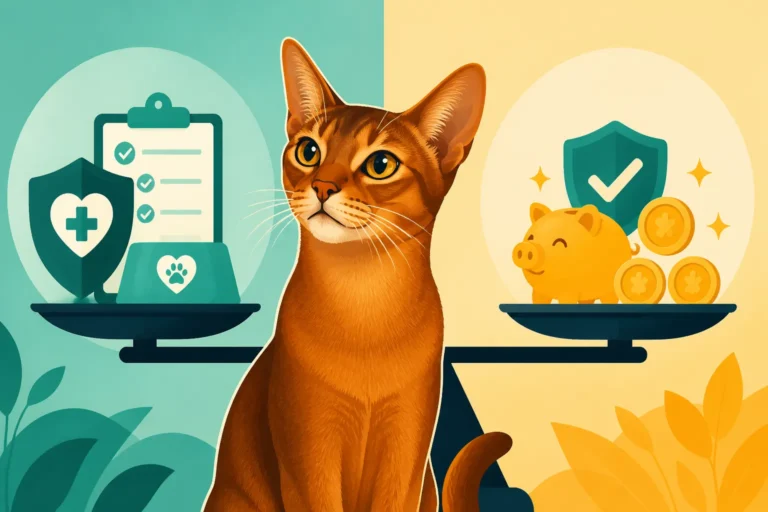
Here’s a quick comparison to help you understand the differences between a typical breeder guarantee and pet insurance when it comes to Abyssinian kidney disease:
| Feature | Typical Breeder Health Guarantee | Pet Insurance (e.g., Healthy Paws) |
|---|---|---|
| Coverage Period | Usually 1-2 years (for congenital/hereditary issues) | Continuous, lifelong (as long as premiums are paid) |
| Kidney Disease (Amyloidosis) | Almost always excluded due to lack of test & late onset | Often covered if not a pre-existing condition before policy began |
| Cost Reimbursement | Replacement kitten or purchase price refund for covered issues | Percentage of vet bills (e.g., 70-90%) after deductible |
| Pre-existing Conditions | N/A (focus on issues arising after purchase) | Excluded (critical to get insurance when young and healthy) |
| Diagnostic Tests | May be required to validate claim for covered issues | Covered as part of eligible illness claims |
| Treatment Costs | Generally not covered beyond initial diagnosis (if covered) | Covered for eligible illnesses, including medications, fluids, special diets |
| Peace of Mind | For early-onset, testable genetic conditions | For a wide range of unexpected accidents and illnesses throughout life |
It’s clear that while a breeder guarantee is vital for those initial, verifiable health issues, pet insurance is your long-term partner in navigating the more complex, later-onset challenges like Abyssinian renal amyloidosis. Consider both as essential components of responsible Abyssinian ownership. Whether Pet Insurance Is Worth It for an Abyssinian is a conversation every owner should have.
Disclaimer
This article is for general informational purposes only and does not constitute professional advice. Laws, prices and regulations vary by location and change over time. Consult a qualified professional for guidance on your specific situation.