How Much a Pet Abyssinian Costs From a Breeder
If you've fallen head over heels for the Abyssinian cat, you're not alone! These energetic, intelligent, and strikingly beautiful felines capture hearts instantly. But as you begin your search for a kitten, one of the first questions that naturally pops up is, "How much does an Abyssinian actually cost from a reputable breeder?" It’s a completely valid concern, and it’s often more complex than just a single number, reflecting the significant investment of time, care, and expertise that goes into raising these special cats. This guide is here to help you navigate the financial landscape of bringing a well-bred Abyssinian kitten into your home.
The Sticker Shock: Understanding the Initial Abyssinian Kitten Price Tag
When you first see the price for an Abyssinian kitten from a reputable breeder, it might feel a bit like sticker shock. You’re not alone in that reaction! These aren't your average shelter adoption fees, and there's a very good reason for it. The price reflects not just the kitten itself, but the immense dedication, health testing, lineage tracking, and early socialization that a responsible breeder pours into their cats. Think of it less as simply buying a product, and more as investing in a healthy, well-adjusted, and genetically sound companion who will be with you for many years.
Pet Quality vs. Show Quality: What's the Difference in Cost?
One of the biggest factors influencing the initial cost of an Abyssinian kitten is whether it's sold as "pet quality" or "show quality." Most people are looking for a loving companion, which falls under pet quality. These kittens are still purebred Abyssinians with all the wonderful traits of the breed, but they might have a very minor cosmetic "fault" that wouldn't meet the strict standards for the show ring, such as a slightly less-than-perfect ear set, a tiny white spot that isn't allowed, or a pattern irregularity. These minor details don't affect their health, temperament, or their ability to bring joy to your home in any way.
Show quality kittens, on the other hand, are typically reserved for breeders or individuals who intend to exhibit their cat in cat shows. These kittens are deemed to perfectly match the breed standard in every detail, from head shape and ear placement to coat ticking and body structure. They also often come with breeding rights, which significantly increases their price. Breeders invest heavily in their lines, aiming for perfection, and that dedication is reflected in the cost of a show-quality animal. If you're simply looking for a beloved family member, a pet-quality Abyssinian is usually a more affordable and perfectly wonderful option.
Color and Rarity: Does it Affect the Price?
Yes, the specific color of an Abyssinian can indeed influence its price. Abyssinians primarily come in four recognized colors: Ruddy, Sorrel (sometimes called Red), Blue, and Fawn. Ruddy is the most common and often considered the "original" Abyssinian color, so you might find ruddy kittens to be slightly less expensive, simply due to supply and demand.
As you move into the dilute colors like Blue and Fawn, or the rich Sorrel, the prices can climb a bit. This isn't because these colors are "better" or healthier, but often because they are less commonly bred or simply in higher demand among prospective owners. For instance, a beautifully colored Fawn Abyssinian, with its soft, sandy tones, might be priced a little higher due to its striking appearance and less frequent availability. It's truly a matter of personal preference when choosing a color, and remember, all Abyssinians, regardless of color, share that incredible personality and lively spirit.
Location and Breeder Reputation: Why These Matter for the Price
Where you live and the reputation of the breeder you choose can also play a significant role in the cost of your Abyssinian kitten. Breeders in areas with a higher cost of living or strong demand might naturally price their kittens a little higher to cover their own expenses. Similarly, a breeder with a long-standing reputation for producing healthy, well-socialized, and champion-line Abyssinians will often command a higher price. This premium isn't arbitrary; it reflects years of experience, meticulous genetic selection, top-notch veterinary care, and the sheer amount of time and effort invested in each litter.
A reputable breeder will spend countless hours on things like early neurological stimulation, proper weaning, litter training, and socialization to ensure their kittens are confident and ready for their new homes. They also invest in comfortable, clean cattery environments, high-quality food, and continuous education about feline health and genetics. When you purchase from such a breeder, you're not just buying a kitten; you're buying peace of mind, knowing that your new family member has had the best possible start in life. Be prepared for a significant range, but always remember that the cheapest kitten is rarely the best investment in the long run.
Beyond the Purchase: What's Included (and What Should Be)
When you're looking at the price of an Abyssinian kitten, it's crucial to understand what that price typically includes. A responsible breeder’s fee isn't just for the kitten itself; it covers a whole host of services and assurances that are absolutely vital for your new companion's health and your peace of mind. If a breeder isn't offering these basic inclusions, it should raise a red flag about their practices.
Health Guarantees and Initial Vet Care
Any reputable Abyssinian breeder will provide a comprehensive health guarantee. This usually covers genetic or congenital health issues for a specified period, typically the first year or two of the cat's life. This is a critical safety net for you as a new owner. Beyond the guarantee, the initial price should also cover several rounds of deworming, at least the first set of vaccinations (and often the second booster), and a thorough veterinary check-up before the kitten goes home. Some breeders even provide a microchip, which is excellent for identification and safety.
They should also provide documentation from these vet visits. If a breeder dismisses the need for these upfront health measures or offers a kitten for a significantly lower price without them, you could be looking at substantial veterinary bills down the line. A healthy start is paramount for an active breed like the Abyssinian, and a good breeder ensures this foundation. For more on what to expect, read What an Abyssinian Breeder's Health Guarantee Covers.
Pedigree Papers and Registration
Another essential inclusion with a purebred Abyssinian is their pedigree papers and registration with a recognized cat association, such as the Cat Fanciers' Association (CFA) or The International Cat Association (TICA). These papers confirm your kitten's lineage, proving they are indeed a purebred Abyssinian. For pet-quality kittens, breeders often provide "limited registration," meaning the cat is registered but cannot be used for breeding. This is a standard practice to protect their lines and ensure kittens sold as pets are spayed or neutered.
The breeder should handle the initial registration process and provide you with the necessary documents, or clear instructions on how to complete it yourself. This isn't just fancy paperwork; it’s a verification of your cat's heritage and a testament to the breeder's adherence to breed standards. Understanding Which Registry an Abyssinian's Papers Come From can help you verify the authenticity of the documents you receive.
Genetic Health Testing: Non-Negotiable Costs for a Breeder
This is perhaps one of the most significant reasons for the price of a well-bred Abyssinian kitten. Responsible breeders meticulously screen their breeding cats for genetic diseases common in the breed. The two most critical DNA tests for Abyssinians are for Pyruvate Kinase Deficiency (PKD) and Progressive Retinal Atrophy (PRA-rdAc).
Pyruvate Kinase Deficiency Is the Abyssinian's Best Known Test and it can cause severe anemia. PRA-rdAc Takes an Abyssinian's Sight by Five, leading to blindness. A reputable breeder will test all their breeding cats to ensure they are clear of these genetic mutations or are only carriers paired with a clear cat to prevent affected offspring. These tests aren't cheap, and the cost of performing them, interpreting the results, and sometimes repeating them across generations is built into the kitten’s price. This upfront investment by the breeder dramatically reduces the risk of you ending up with a kitten that develops a debilitating and expensive genetic illness later in life. Knowing How Much an Abyssinian DNA Panel Costs gives you an idea of the breeder's investment. This crucial testing ensures that breeders are doing What an Abyssinian Breeder Should Have Tested Before You Buy.
Here’s a quick comparison of what you might expect from a reputable breeder versus a less scrupulous one:
| Feature | Reputable Abyssinian Breeder | Less Reputable Seller |
|---|---|---|
| Initial Price | Higher, reflecting health testing, care, and quality | Lower, often suspiciously so |
| Health Guarantee | Comprehensive, written guarantee for genetic health | Vague, limited, or non-existent guarantee |
| Vaccinations | Age-appropriate first/second vaccinations, documented | Few or no vaccinations, undocumented |
| Deworming | Multiple rounds, documented | Unknown or skipped |
| Spay/Neuter Contract | Mandatory for pet-quality kittens | Optional or ignored |
| Microchipping | Often included or offered | Rarely included |
| Genetic Test Results | Verifiable proof for parents (PKD, PRA-rdAc) | Non-existent or falsified |
| Pedigree/Registration | Provided with recognized association (CFA/TICA) | No papers, or questionable "registration" |
| Kitten Age | 12-16 weeks minimum | As young as 6-8 weeks, too early for proper development |
| Support | Ongoing support and advice | None after sale |
Why a "Bargain" Abyssinian Isn't Really a Bargain
It's tempting to look for a deal, especially when the initial cost of a purebred Abyssinian can be substantial. However, when it comes to living creatures, particularly those with specific breed health concerns, a "bargain" often comes with a much higher hidden cost. Cutting corners on the initial purchase price almost always means sacrificing vital health checks and ethical breeding practices, which can lead to heartbreaking and expensive problems down the road.
The Hidden Costs of Untested Lines
When a kitten is offered at a significantly lower price than the breed standard, it's often because the breeder has skipped essential health screening. This means their breeding cats may not have been tested for genetic conditions like Pyruvate Kinase Deficiency or Progressive Retinal Atrophy. You might save a few hundred dollars upfront, but you could easily face thousands in veterinary bills if your kitten develops one of these inherited diseases. Imagine the emotional and financial toll of caring for a cat with a chronic illness that could have been avoided with responsible breeding.
This is precisely Why an Abyssinian Sold Cheap Is Usually Untested. The difference in initial cost often reflects the difference between a lifetime of manageable care and a potential lifetime of medical intervention. Think of it this way: buying a cheap kitten from an unknown source is a gamble, and the stakes are your cat's health and your wallet. It's a prime example of Why an Untested Abyssinian Is Cheaper for a Reason.
Recognizing Red Flags in Breeder Practices
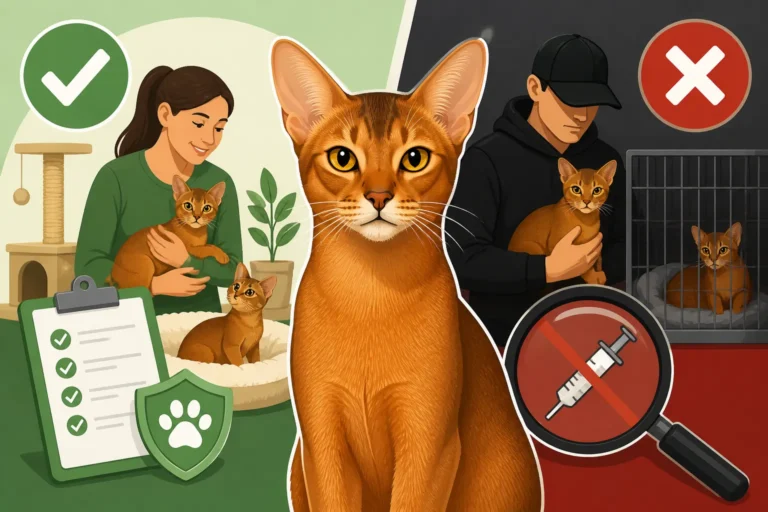
Knowing the red flags of an irresponsible breeder can save you immense heartache and expense. Here are a few things that should make you pause:
- No health testing documentation: If a breeder cannot or will not provide verifiable proof of genetic testing for the parents, walk away.
- Kittens leaving too early: Abyssinian kittens should stay with their mother until at least 12-14 weeks of age. This allows for crucial socialization and immune system development. Kittens leaving younger than this are often poorly socialized and more prone to health issues.
- Multiple breeds or many litters: A reputable breeder usually specializes in one or two breeds and focuses on quality over quantity.
- No health guarantee or a very vague one: As discussed, a solid, written health guarantee is non-negotiable.
- Unclean or chaotic environment: If the cattery (even if it's their home) is dirty, overcrowded, or the cats seem fearful or unwell, it’s a huge warning sign.
- Refusal to let you visit: While some breeders may have legitimate reasons for limiting visitors (especially during outbreaks), a complete refusal to allow any interaction or video calls to see the living conditions is suspicious.
- Pressuring you for a quick sale: Reputable breeders want to find the best possible homes for their kittens and will interview you thoroughly. They won't rush you.
These are all signs of How to Spot an Abyssinian Breeder Who Does Not Test. Always do your homework and don't be afraid to ask tough questions.
The Long-Term Investment in a Healthy Abyssinian
Ultimately, the initial cost of a well-bred Abyssinian from a reputable breeder is an investment in a healthier, happier cat that is more likely to live a full and vibrant life for The Twelve to Fifteen Years an Abyssinian Usually Gets. You're reducing the likelihood of expensive genetic health problems, ensuring your cat has a sound temperament, and gaining the ongoing support of a knowledgeable breeder.
While the initial price might seem high, consider the lifelong costs of owning a cat. Food, litter, toys, routine vet care, and emergency funds are all part of the equation. Investing in a healthy kitten upfront can actually save you money in the long run by reducing unexpected, major veterinary expenses. For example, knowing your Abyssinian comes from clear lines means you might not have to worry about the specific, often costly, treatments for genetic conditions.
Even with a healthy cat, you'll still have ongoing expenses. Considering pet insurance and ensuring you're feeding high-quality food are all part of responsible ownership. These ongoing costs are significant, and starting with a healthy cat minimizes the chances of adding huge, unexpected medical bills to that budget.
In conclusion, while the initial price of a pet Abyssinian from a breeder can feel like a lot, remember you're paying for expertise, ethical practices, and the best possible start for your future companion. It’s an investment that pays dividends in joy, companionship, and fewer worries for years to come.
Disclaimer
This article is for general informational purposes only and does not constitute professional advice. Laws, prices and regulations vary by location and change over time. Consult a qualified professional for guidance on your specific situation.