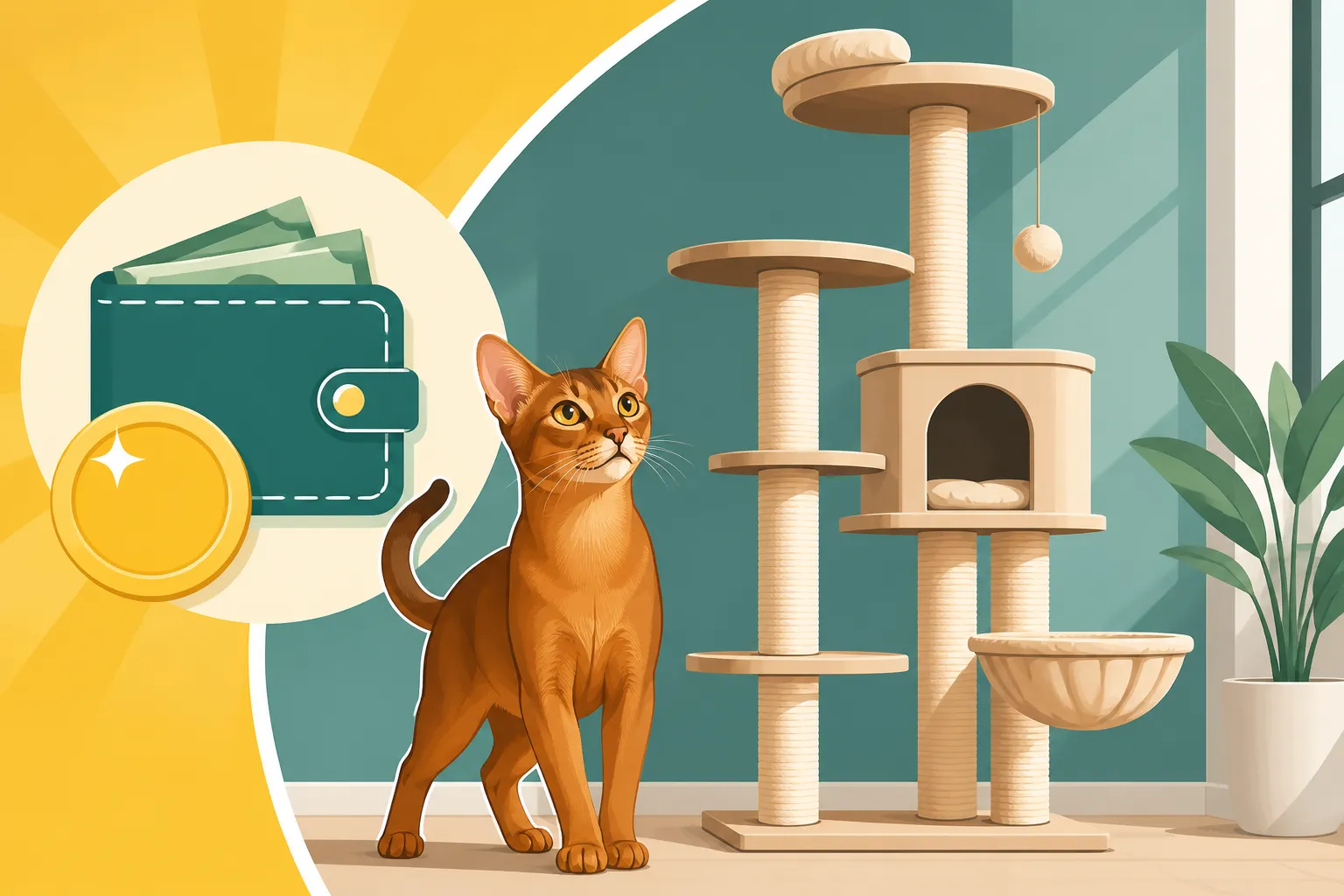
What a Cat Tree Tall Enough for an Abyssinian Costs
Few things are as frustrating for an Abyssinian owner as watching their agile, energetic cat scale the bookshelves, leap onto the fridge, or eye up the precarious stack of laundry, all because they crave height. Your Abyssinian isn't just being naughty; they're fulfilling a primal need for vertical space, and if you don't provide it, they'll find it themselves—often in places you'd rather they didn't. This guide will help you understand why tall cat trees are non-negotiable for this breed and what to expect when investing in one that truly meets their demanding standards.
Why Your Abyssinian Demands Height
Abyssinians are not your typical lounge-around-on-the-sofa kind of cat. They are bundles of energy, curiosity, and boundless athletic ability, traits that have earned them the nickname "the supermodels of the cat world." Their sleek, muscular bodies are built for climbing, jumping, and exploring every inch of their territory. For an Abyssinian, a home isn't just a flat landscape; it's a multi-dimensional playground, and they need to conquer its heights.
The Abyssinian's Innate Need to Climb
Think about it: in the wild, being high up offers safety from predators, a prime vantage point for spotting prey, and a sense of territorial dominance. Your Abyssinian, despite generations of domestication, still carries these instincts deep within their DNA. They crave that elevated perspective, that feeling of surveying their domain from above. This isn't just about fun; it's about their mental and emotional well-being. A bored Abyssinian is often a destructive Abyssinian, and providing challenging vertical spaces is one of the best ways to channel their natural drive. It gives them a sense of purpose and helps them burn off that incredible energy, preventing them from concocting their own, less desirable, adventures. You might notice your Aby often sitting Why an Abyssinian Prefers the Highest Point in a Room.
What Happens When an Abyssinian Lacks Vertical Space
Without adequate vertical outlets, an Abyssinian can become frustrated, anxious, and even destructive. You might find them scratching furniture relentlessly, not out of malice, but because they're looking for an appropriate climbing surface. They might knock items off shelves, not just because they're mischievous, but because they're testing boundaries and trying to create their own vertical pathways. A cat that's constantly seeking out high places that aren't secure can also pose a safety risk to themselves, leading to falls or injuries. Imagine the stress of constantly telling your cat "no" or worrying about what they'll get into next—a well-designed cat tree mitigates so many of these common issues, leading to a happier cat and a more harmonious home. A cat who isn't sufficiently challenged might even engage in behaviors like Why an Abyssinian Left Alone Redecorates.
Decoding the Cost: Factors Influencing Abyssinian Cat Tree Prices
When you start looking for a cat tree, you'll quickly realize there's a vast range of options, from small, carpeted cubes to towering cat condos. The price differences aren't arbitrary; they reflect several key factors that are especially critical when buying for an active Abyssinian.
Size and Height
This is perhaps the most obvious factor. Abyssinians aren't tiny cats, and they certainly aren't sedentary. They need a cat tree that can keep up with their athleticism and provide genuine height. A small, two-foot-tall tree designed for a kitten or a less active senior cat simply won't cut it for a high-flying Abyssinian. You'll need something substantial, often reaching floor-to-ceiling or at least six feet tall. More levels, more perches, and a wider footprint for stability all contribute to a higher material cost and thus a higher price tag. Remember, an Abyssinian will How High an Abyssinian Will Climb, so aim for the stars (or at least the ceiling).
Material Quality and Durability
This is where many cheaper cat trees fall short for an Abyssinian. Flaky particle board wrapped in thin, easily shreddable carpet might look okay initially, but it won't withstand the repeated assaults of an agile, claw-happy Aby. You need sturdy construction, ideally with solid wood posts or thick-walled cardboard tubes, and durable coverings like sisal rope for scratching and thick, plush fabric for lounging. A well-built cat tree for an Abyssinian should feel heavy and stable, even when your cat is launching themselves at it. Investing in quality materials means the tree will last longer, provide better stability (reducing the risk of tipping), and offer more satisfying scratching surfaces. Many owners find that Why an Abyssinian Destroys Cheap Furniture Faster is a lesson learned the hard way.
Features and Accessories
Beyond just height and materials, the features of a cat tree also play a significant role in its cost.
- Perches and Beds: Are they spacious enough for an adult Abyssinian to comfortably sprawl out? Are they well-padded? Do they have raised edges for security?
- Scratching Surfaces: A variety of sisal-wrapped posts is essential. Some trees include sisal ramps or panels, which are great for full-body stretching and scratching. Where to Put an Abyssinian's Scratching Posts is almost as important as the quality of the posts themselves.
- Enclosures/Condos: While Abyssinians love to be up high, they also appreciate cozy nooks. Condos built into the tree provide a sense of security and a place to retreat.
- Tunnels and Ramps: These add extra elements of play and exploration, enriching the experience for your cat.
- Washable Components: Some higher-end trees come with removable, washable covers for beds and perches, making maintenance much easier.
Each of these additions enhances the tree's functionality and appeal but also contributes to the overall manufacturing cost and, consequently, the retail price.
What You Can Expect to Pay for an Abyssinian-Appropriate Cat Tree
The price spectrum for cat trees suitable for an Abyssinian is quite wide, reflecting the varying levels of quality, size, and features discussed above. It's important to set realistic expectations and understand what you're getting for your investment. When you're browsing online retailers like Chewy, you'll see a huge range, so let's break it down.
Budget-Friendly Options
At the more affordable end of the spectrum, you might find cat trees ranging from the lower end of the scale to a moderate amount. These options typically offer less height, often around four to five feet, and might be made with lighter particle board construction. The scratching surfaces may be limited, and the overall stability might be questionable for a truly athletic Abyssinian who throws their weight around. While they can be a starting point, they may not offer the long-term durability or the sheer vertical challenge that an Abyssinian thrives on. Think of these as stepping stones, not necessarily the ultimate solution. They might serve well for a temporary period or as a supplementary smaller tree in a different room, but likely won't satisfy their primary climbing needs.
Mid-Range Selections
Moving into the mid-range, you'll start to see a significant improvement in quality, height, and features. These trees generally fall into a higher moderate price bracket. They often feature taller designs, sometimes reaching six feet or more, with multiple levels, larger perches, and more extensive sisal scratching areas. The construction is usually sturdier, using denser materials that offer better stability for active jumpers. You'll find more variety in design, including multi-tier condos, hammocks, and integrated toys. This category often represents the sweet spot for many Abyssinian owners, balancing quality and functionality without breaking the bank. For a good primary cat tree that will get heavy use, this is often a wise choice.
Premium and Custom Builds
At the top end, premium and custom-built cat trees can be a significant investment, often priced considerably higher than mid-range options. These are often floor-to-ceiling designs, crafted from solid wood or high-grade plywood, offering unparalleled stability and longevity. They may feature elaborate designs, including intricate climbing paths, built-in feeding stations, and luxurious, washable bedding. Some companies specialize in modular systems or custom installations that can be tailored precisely to your home and your Abyssinian's specific needs, creating a veritable indoor jungle gym. While the initial outlay is higher, these trees are often built to last for many years, providing a lifetime of enrichment for your high-energy companion. For an Abyssinian that lives The Twelve to Fifteen Years an Abyssinian Usually Gets, this can be a worthwhile long-term investment.
Here's a quick overview of what to expect:
| Category | Typical Height | Construction Material | Features | Suitability for Abyssinians |
|---|---|---|---|---|
| Budget-Friendly | 3-5 feet | Particle board, thin carpet | 1-2 small perches, limited scratching | May serve as a temporary or secondary tree, likely lacks stability/height for primary use. |
| Mid-Range | 5-7 feet | Denser particle board, wood posts, plush/sisal | Multiple large perches, condos, ample sisal scratching | Good balance of height, stability, and features for active Abyssinians. |
| Premium/Custom | Floor-to-ceiling, 7+ feet | Solid wood, high-grade plywood, durable fabrics | Extensive climbing routes, large platforms, built-in elements, custom options | Excellent long-term investment, provides maximum enrichment and stability. |
Beyond the Purchase Price: The Long-Term Value of a Good Cat Tree
It's easy to get caught up in the initial sticker shock of a high-quality cat tree, but it's crucial to look at it as a long-term investment in your Abyssinian's health, happiness, and your home's integrity. A cheap cat tree might seem like a bargain, but it can quickly become a liability.
Investing in Your Abyssinian's Well-being
A tall, sturdy cat tree isn't just furniture; it's a vital piece of enrichment equipment. It provides physical exercise, which is essential for maintaining your Abyssinian's lean muscle mass and healthy weight. It offers mental stimulation as they navigate its levels, observe their surroundings, and engage their natural instincts. This proactive approach to their well-being can actually save you money in the long run. A well-exercised and mentally stimulated cat is less likely to develop stress-related behaviors that could lead to costly vet visits or destructive habits that damage your home. Providing appropriate outlets for their energy is key to having a happy and healthy Abyssinian, and remember What an Abyssinian Costs to Keep Every Year includes these considerations.
Durability and Replacement Costs
Consider the lifespan of a cat tree. A budget-friendly model made with flimsy materials might need to be replaced every year or two as it falls apart under the stress of an Abyssinian's vigorous climbing and scratching. That seemingly cheap purchase quickly adds up. A mid-range or premium cat tree, built with better materials and construction, can last five, ten, or even more years. This means fewer replacements over your cat's lifetime, ultimately saving you money and reducing waste. Furthermore, a stable tree prevents falls and injuries, saving you from potential emergency vet bills, which can be considerable. It's often true that Why a Single Abyssinian Costs More in Damage if their environmental needs aren't met.
When you're factoring in the cost of owning an Abyssinian, remember that items like a robust cat tree are part of their essential care, just like their food or vet visits. Thinking about the overall picture, and recognizing that quality enrichment can prevent later expenses, will help you make the best decision for your active, beloved Abyssinian.
Disclaimer
This article is for general informational purposes only and does not constitute professional advice. Laws, prices and regulations vary by location and change over time. Consult a qualified professional for guidance on your specific situation.