Why an Abyssinian Left Alone Redecorates
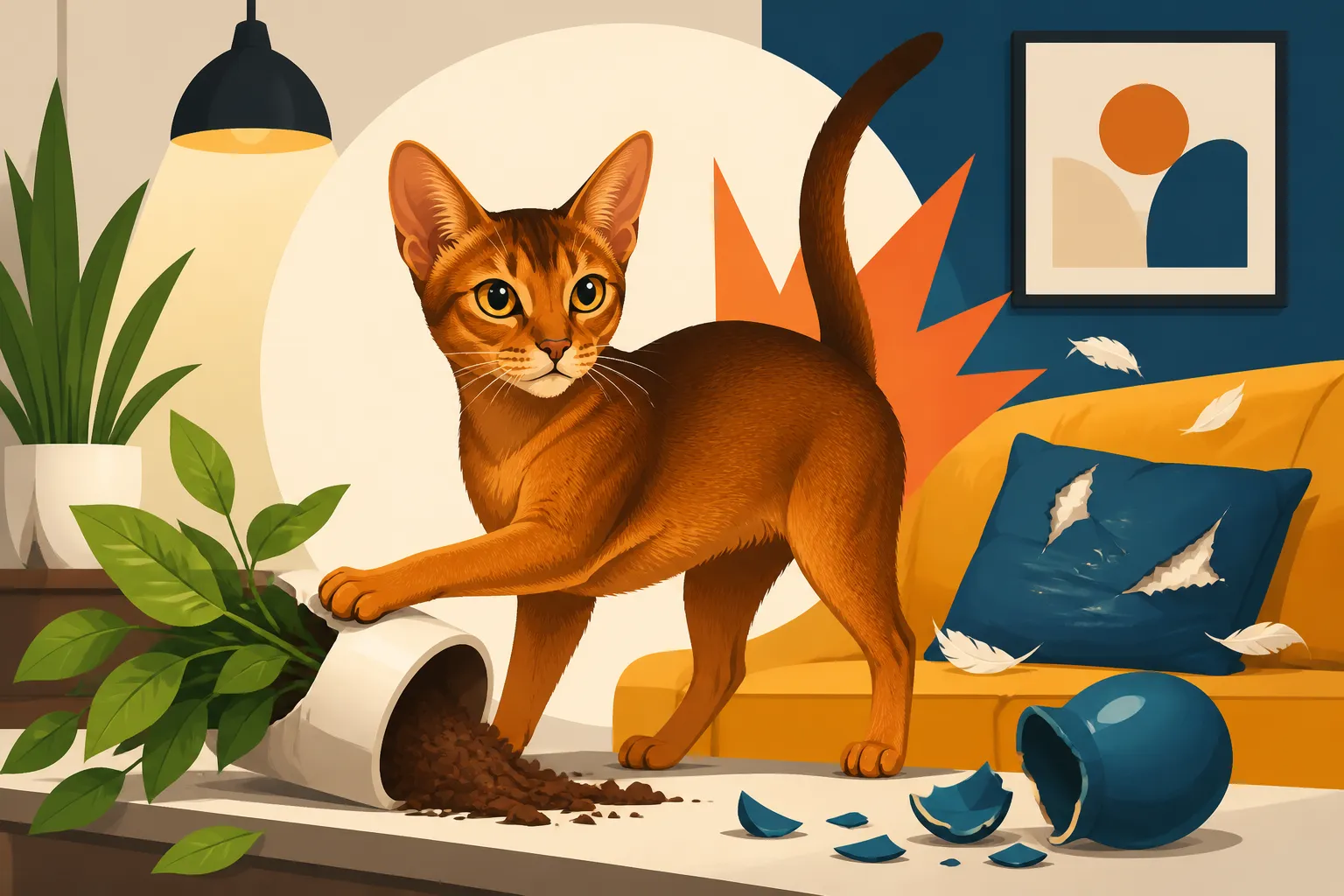
It's incredibly frustrating, isn't it? You spend time carefully arranging your home, only to come back to a scene that looks like a miniature whirlwind passed through, courtesy of your beloved Abyssinian. This guide is here to explain why your Abyssinian acts like a tiny interior designer with an avant-garde vision and, more importantly, how you can channel their boundless energy and intelligence into more constructive (and less chaotic) projects.
Understanding the Abyssinian's Innate Drive for Activity
Abyssinians are not your average couch potato cats. They are renowned for their incredible energy, sharp intelligence, and insatiable curiosity. When left alone for extended periods, especially without adequate stimulation, this potent combination of traits often manifests as what we affectionately call "redecorating." It's not malice; it's simply an Abyssinian trying to fulfill its natural instincts in an environment that might not be designed for their particular brand of exuberance.
The Hunter's Mind in a Home Environment
Imagine being built for speed, agility, and the thrill of the chase, but confined to a space where all the prey is imaginary, and the "hunting" consists of batting at a dust bunny. That's often the daily reality for an Abyssinian left unsupervised. They possess a deep-seated instinct to explore, to solve puzzles, and to engage with their environment actively. They need outlets for this innate hunting drive, even if it's just a game of fetch with a crinkly ball or a complex puzzle feeder. Without these outlets, they'll create their own "hunts," and your shelves, countertops, and cupboards become their personal playground. How Many Hours a Day an Abyssinian Stays Active really highlights just how much energy these cats have to burn.
Think about it: in the wild, a cat's day is filled with seeking out food, patrolling territory, and staying alert for threats. Your Abyssinian's day, if unmanaged, becomes a quest to fill that void. That stack of magazines? A mountain to conquer. The cupboard door? A mystery to solve. Your carefully arranged knick-knacks? Potential "prey" to bat around. Their minds are constantly working, and if you don't give them something appropriate to think about, they'll find something themselves, much to the detriment of your decor.
The Problem of Boredom and Excess Energy
Boredom is the archenemy of any Abyssinian owner's furniture and peace of mind. These cats thrive on engagement, and a lack of it can quickly lead to what looks like destructive behavior but is actually a desperate plea for stimulation. An Abyssinian that's not tired out through play, or whose brain isn't challenged with new experiences, will simply make its own fun. This often involves rearranging your belongings, pulling things out of drawers, or systematically exploring every nook and cranny of your home. What an Abyssinian Does When It Is Bored covers this in detail, and it’s a must-read for anyone facing this issue.
Their high energy levels mean they can go for hours, especially when you're not there to interrupt them. A quick five-minute play session before you leave for work just won't cut it. They need sustained periods of intense activity to truly expend their physical energy, coupled with mental challenges to keep their sharp minds occupied. If they're not getting this, that pent-up energy has to go somewhere, and often it goes into disassembling your living room or exploring the contents of your kitchen pantry.
Common "Redecorating" Behaviors and Their Roots
When an Abyssinian decides to "redecorate," it's rarely a subtle affair. Their methods are often direct, sometimes ingenious, and almost always designed to explore, conquer, or simply get attention. Understanding the specific actions and their underlying motivations is the first step toward managing them.
Countertop Clearing and Shelf Sweeping
One of the most classic Abyssinian "redecorating" moves is the systematic clearing of countertops and shelves. Those carefully placed ornaments, picture frames, or even your car keys suddenly find themselves relocated to the floor. This isn't random; it's often a combination of play, curiosity, and a drive to control their high-rise territory. Abyssinians love height and vantage points. An Abyssinian Needs Height More Than It Needs Floor explains this beautifully. From their elevated perches, everything below them is fair game.
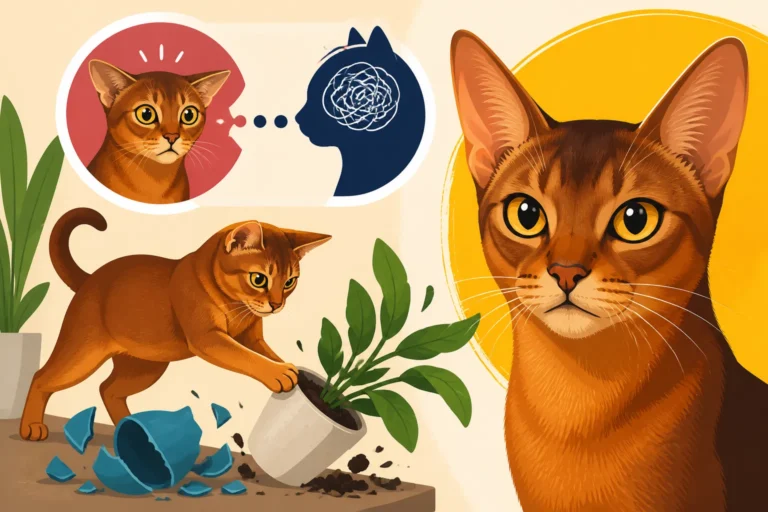
They bat items off not just for the satisfying crash, but also to observe how objects react to gravity. For a cat, especially an intelligent one like an Abyssinian, this is a fascinating experiment. They learn about object permanence (or lack thereof), sound, and movement. Your prized vase isn't just a decorative item; it's a potential toy, a sound generator, or simply something in the way of their desired clear space. This behavior can also be a way of seeking attention; if they've learned that knocking something off gets a reaction, they'll repeat it when they feel neglected or bored.
Opening Cabinets and Drawers
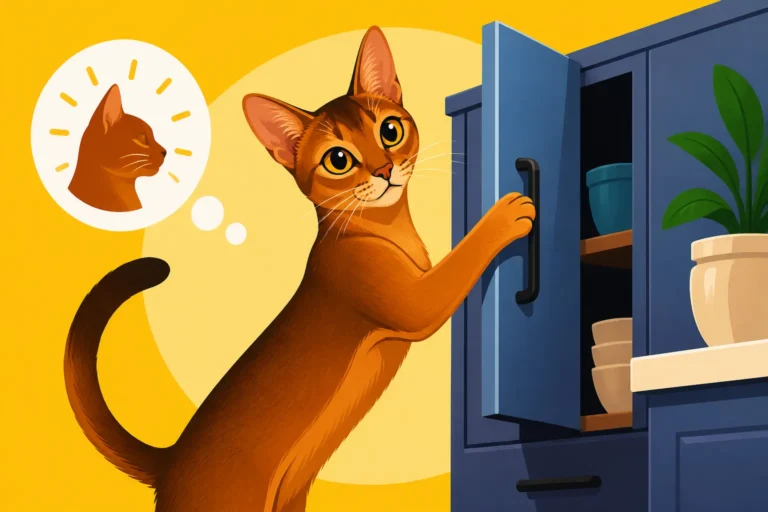
Many Abyssinian owners discover that childproof latches quickly become a necessity, not just a suggestion. These intelligent cats quickly figure out how to manipulate handles, pull knobs, and even slide open drawers. They have a natural inclination to investigate every hidden space. Why an Abyssinian Opens Doors and Cabinets delves into this fascinating (and sometimes maddening) trait. They're not just looking for food; they're exploring, seeking new sensory experiences, and perhaps even creating new "dens" or hiding spots.
It's astonishing how quickly they learn. Once they understand the mechanism, they'll apply that knowledge to every similar door or drawer in the house. This can lead to your clothing being pulled out, kitchen utensils being scattered, or worst of all, access to dangerous items like cleaning supplies or medications. They see a closed door not as a boundary, but as a challenge, an invitation to uncover what secrets lie within.
Shredding Paper and Digging in Planters
If you've ever returned home to a confetti explosion of toilet paper, shredded mail, or unearthed potting soil, you've witnessed another form of Abyssinian "redecoration." These behaviors often stem from a need for tactile stimulation, a desire to mimic digging or shredding prey, and sometimes, just plain old mischief. Paper products offer a satisfying tearing sensation and sound, replicating the thrill of a small hunt.
Digging in planters, while messy, can also be a natural instinct. Cats are drawn to soft soil for digging and sometimes even for using as an impromptu litter box, especially if their regular box isn't clean enough or in a quiet location. It also offers a different texture to explore, and perhaps the roots or leaves provide something interesting to chew on. This can be particularly frustrating when you're trying to keep your houseplants intact and your floors clean.
Here's a quick look at common "redecorating" behaviors, their likely causes, and potential solutions:
| Behavior | Underlying Need/Motivation | Solutions |
|---|---|---|
| Countertop/Shelf Clearing | Exploration, play, attention-seeking, territorial assertion | Increase vertical spaces, provide interactive toys, schedule dedicated play, secure fragile items. |
| Opening Cabinets/Drawers | Curiosity, intellectual challenge, seeking new spaces/items | Install childproof latches, offer puzzle toys, rotate hidden treats, create safe "exploring" boxes. |
| Shredding Paper/Fabrics | Tactile stimulation, mimic hunting, boredom | Provide appropriate scratching surfaces, offer crinkle toys, enrich play, secure paper products, limit access to tempting fabrics. |
| Digging in Planters | Natural digging instinct, seeking new textures, potential litter box alternative | Cover soil with large rocks/pinecones, offer a designated digging box, ensure litter box cleanliness/location, provide safe cat grass for chewing. |
| Chewing on Wires/Cables | Curiosity, oral stimulation, boredom | Cable manage with protectors, provide chew-safe toys, use bitter sprays on non-toxic wires, increase mental stimulation. |
Creating an Enriched Environment to Redirect Energy
The key to stopping your Abyssinian's "redecorating" isn't punishment; it's proactive prevention and redirection. You need to create an environment that caters to their high energy and intelligence, giving them acceptable outlets for their natural behaviors.
Maximizing Vertical Space
Abyssinians are climbers, pure and simple. They crave height, not just for safety, but for observation and territory marking. If you don't provide ample vertical real estate, they will make their own, often using your bookshelves, cabinets, and curtains as their personal climbing gym. Investing in tall, sturdy cat trees and wall-mounted shelves can make a huge difference. An Abyssinian Needs Height More Than It Needs Floor is a prime example of understanding this fundamental need.
Think about how you can create a "superhighway" system for them around your room, using shelves, cat trees, and even sturdy furniture. Placing a cat tree near a window can also give them visual stimulation as they watch the world go by, fulfilling some of their curiosity without them needing to knock over your houseplants. You can find excellent multi-level cat trees and wall-mounted cat shelves on platforms like Amazon, offering various designs to fit your home's aesthetic while satisfying your Abyssinian's aerial ambitions.
Engaging Their Minds with Puzzle Feeders and Interactive Toys
Since Abyssinians are incredibly intelligent, they need their brains to be just as tired as their bodies. Simply putting food in a bowl twice a day doesn't offer any mental challenge. This is where puzzle feeders shine. These feeders require your cat to use their paws or nose to extract kibble or treats, slowing down mealtime and providing valuable mental exercise. Which Puzzle Feeders Hold an Abyssinian's Attention offers some great suggestions for getting started.
Beyond mealtime, a variety of interactive toys can keep them engaged when you're not around. Think about toys that move on their own (timed electronic toys), toys that dispense treats (treat balls), or even simple crinkle balls and wands that you rotate regularly to keep things fresh. Rotating toys helps prevent boredom; if they see the same three toys every day, they'll quickly lose interest and go back to exploring your belongings. Hiding treats around the house, essentially turning your home into a giant scavenger hunt, is another fantastic way to engage their foraging instincts.
Implementing a Consistent Play Schedule
The single most effective way to combat an Abyssinian's destructive "redecorating" tendencies is a consistent, rigorous play schedule. These cats need dedicated, interactive playtime with you, daily. We're not talking about a quick flick of a feather wand; we're talking about vigorous, engaging sessions that mimic hunting and leave them panting and satisfied. How Much Play an Abyssinian Needs Each Day will give you a good idea of the commitment involved. Aim for at least two to three sessions of 15-20 minutes each, focusing on high-energy chase and pounce games.
Use wand toys to simulate prey, letting them stalk, chase, and "catch" the toy. Finish each session by allowing them a definitive "kill" of the toy, followed by a small treat or meal. This completes their hunting cycle and provides immense satisfaction. A tired Abyssinian is a good Abyssinian, and one that's had its hunting needs fulfilled is far less likely to turn your home into its personal jungle gym when you're gone.
Setting Boundaries and Managing Your Abyssinian's "Projects"
Even with the best enrichment, some Abyssinians will still push boundaries. It's important to set clear limits and cat-proof your home strategically. This isn't about crushing their spirit, but about keeping them safe and protecting your belongings.
Cat-Proofing Your Home Environment
Since Abyssinians are so curious and adept at getting into things, thorough cat-proofing is essential. This goes beyond simply putting away valuables. Think about securing cabinets with childproof latches, especially in the kitchen and bathroom where cleaning supplies or medications might be stored. For electrical cords, which many Abyssinians find irresistible to chew on, invest in cable protectors or conduits to keep them safe and out of reach. How to Cable Manage a Room for an Abyssinian is crucial reading here.
Consider what items are truly irreplaceable or dangerous and remove them or secure them completely. For planters, covering the soil with large, heavy river rocks or pinecones can deter digging. Some people even use a layer of foil or double-sided tape on surfaces they want to keep their cat off, as Abyssinians generally dislike the feel or sound. Remember, a bored Abyssinian will find the weakest link in your cat-proofing.
Considering a Companion
While it might seem counterintuitive to get another cat when one is already "redecorating" your home, for many Abyssinians, a companion can be a game-changer. Abyssinians are highly social cats and often thrive with a playmate to burn off energy with. A second cat, especially another active breed or even another Abyssinian, can provide the constant interaction and wrestling matches that you, as a human, simply cannot. Why a Second Cat Suits an Abyssinian explains the benefits of this dynamic.
If you're considering this route, research how to introduce a new cat slowly and carefully. The goal is a harmonious household where your Abyssinians can entertain each other, reducing the likelihood of them turning their attention to your curtains or cupboards out of sheer loneliness or boredom. It's not a magic bullet, but for a truly high-energy Abyssinian, a companion can be the best form of enrichment.
Harnessing Their Intelligence Through Training
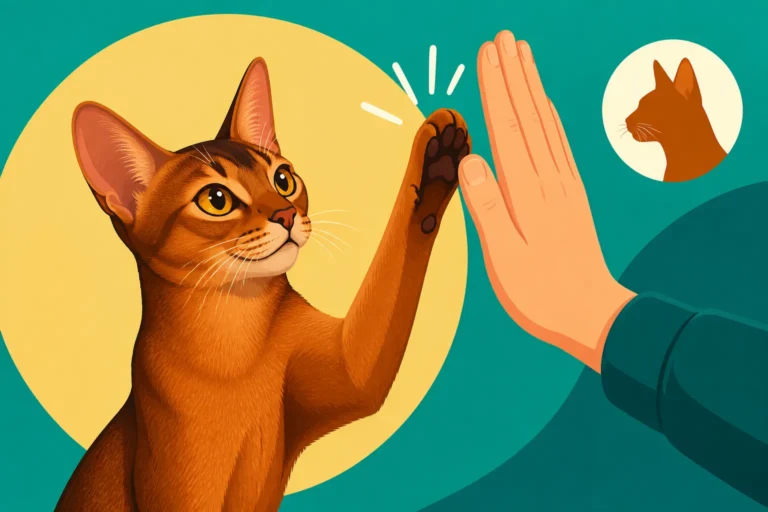
Believe it or not, you can train an Abyssinian. Their intelligence makes them highly receptive to positive reinforcement training, and teaching them tricks or commands can provide incredible mental stimulation. Clicker training, in particular, works wonders with this breed. You can teach them to sit, stay, come when called, or even walk on a harness and leash. Training an Abyssinian Is Easier Than Stopping It is a great resource to get started.
Engaging in training sessions not only strengthens your bond but also gives them a "job" to do, fulfilling their need for mental engagement. A ten-minute training session can be just as tiring for their brains as a vigorous play session is for their bodies. This structured interaction can significantly reduce unwanted behaviors because their mental energy is being directed into learning and problem-solving, rather than finding new ways to unravel your toilet paper roll.
Disclaimer
This article is for general informational purposes only and does not constitute professional advice. Laws, prices and regulations vary by location and change over time. Consult a qualified professional for guidance on your specific situation.