Whether an Abyssinian Has a Forehead Marking
Many cat lovers are familiar with the distinctive "M" marking that often graces the forehead of tabby cats. It's a hallmark of so many beloved feline friends, a clear signifier of their wild tabby heritage. But if you're looking at an Abyssinian and scratching your head, wondering why you don't see that clear "M" or any bold stripes, you're not alone. This guide will dive deep into the fascinating genetics behind the Abyssinian's unique coat, explaining why these elegant felines stand apart from their tabby cousins when it comes to facial markings and why that subtle, unbroken look is precisely what makes them so special.
The Abyssinian's Signature Ticked Coat: A Study in Subtlety
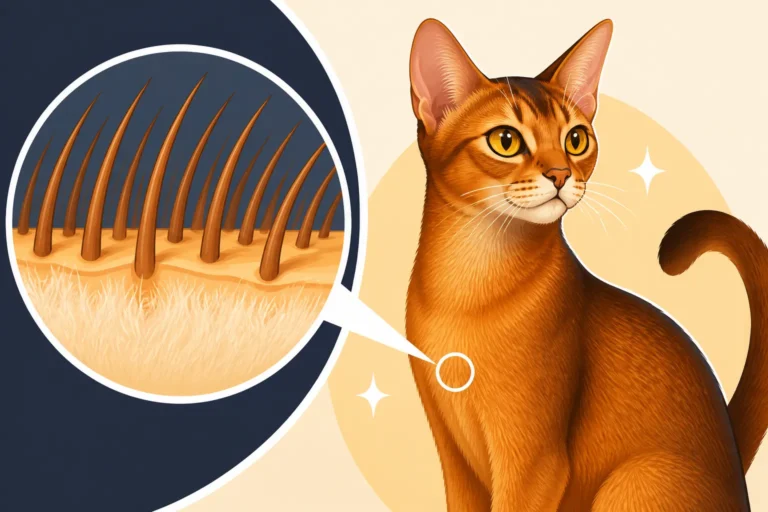
The Abyssinian is a breed renowned for its utterly unique coat, which, at first glance, can appear solid or uniform in color. However, a closer inspection reveals a stunning phenomenon known as "ticking." This isn't just a pretty pattern; it's a defining characteristic that sets the Abyssinian apart from almost all other domestic cat breeds. It’s what gives their fur that shimmering, almost iridescent quality as they move, making it look as if their coat is alive with motion. Unlike other tabby patterns, where stripes, spots, or swirls are clearly visible, the Abyssinian's ticking works to beautifully obscure these traditional markings.
This ticked pattern is crucial to understanding why you won't typically find a prominent "M" on an Abyssinian's forehead. It's a genetic marvel that prioritizes a multi-banded hair shaft over distinct blocks of color. Each individual hair on an Abyssinian's body, except for perhaps the very tip of the tail and the soles of their paws, features alternating bands of light and dark pigment. This intricate banding, often three or four bands per hair, is what creates the depth and warmth in their coat, preventing the formation of clear, defined stripes or spots that are the hallmark of other tabby cats. It's an illusion of uniformity that holds a secret complexity within each strand.
The Genetic Symphony Behind the Ticking Pattern
At the heart of the Abyssinian's ticked coat lies a specific genetic combination involving the agouti gene. All cats carry the agouti gene, which controls whether a cat has banded hair (like a tabby) or solid-colored hair. However, in Abyssinians, there’s a special modifier gene, sometimes referred to as the "ticked tabby" gene, that takes the basic agouti pattern and elevates it to an art form. This modifier essentially restricts the expression of the tabby stripes to individual hairs, rather than allowing them to form continuous patterns across the body. The result is a coat where each hair tells a story, rather than the whole coat displaying a graphic design.
This specialized ticked tabby gene works by causing the pigment in each hair shaft to switch on and off multiple times during growth, creating those distinct bands of color. Think of it like a miniature zebra stripe on every single hair. The more bands, the more refined the ticking. This genetic instruction essentially tells the cat's fur follicles to produce pigment in a stop-start fashion, leading to bands of eumelanin (black/brown pigment) and phaeomelanin (red/yellow pigment) along the length of each hair. It's a complex interplay that gives the Abyssinian its characteristic shimmering, "agouti" appearance, without the familiar stripes. How an Abyssinian's Agouti Banding Works explains this in even more detail.
Why the "M" Mark Vanishes in a Purebred Abyssinian
Given the sophisticated genetic blueprint for ticking, it becomes clear why the traditional "M" forehead marking, so common in other tabby types, is largely absent in a well-bred Abyssinian. The very purpose of the ticked tabby gene is to suppress those clear, defined tabby patterns that would otherwise be present. It's a deliberate genetic choice, so to speak, to favor the banded hair over distinct markings. Instead of a bold "M," you'll usually see a smooth blending of the ticked fur across the forehead, maintaining the overall uniformity and subtle elegance of the Abyssinian's appearance.
While Abyssinians are genetically tabbies (they carry the agouti gene, otherwise they would be solid colored!), their unique modification means they don't express the tabby pattern in the conventional way. The ticking acts as a veil, softening and breaking up any potential stripes or swirls into individual bands on each hair. This is why you also won't see clear leg bands or necklace stripes around their neck that are characteristic of mackerel or classic tabbies. The breed standard highly values this lack of overt tabby markings, considering them a fault in the show ring. Why an Abyssinian Has No Tabby Stripes delves into this fascinating characteristic in more depth.
What You'll Actually See on an Abyssinian's Forehead
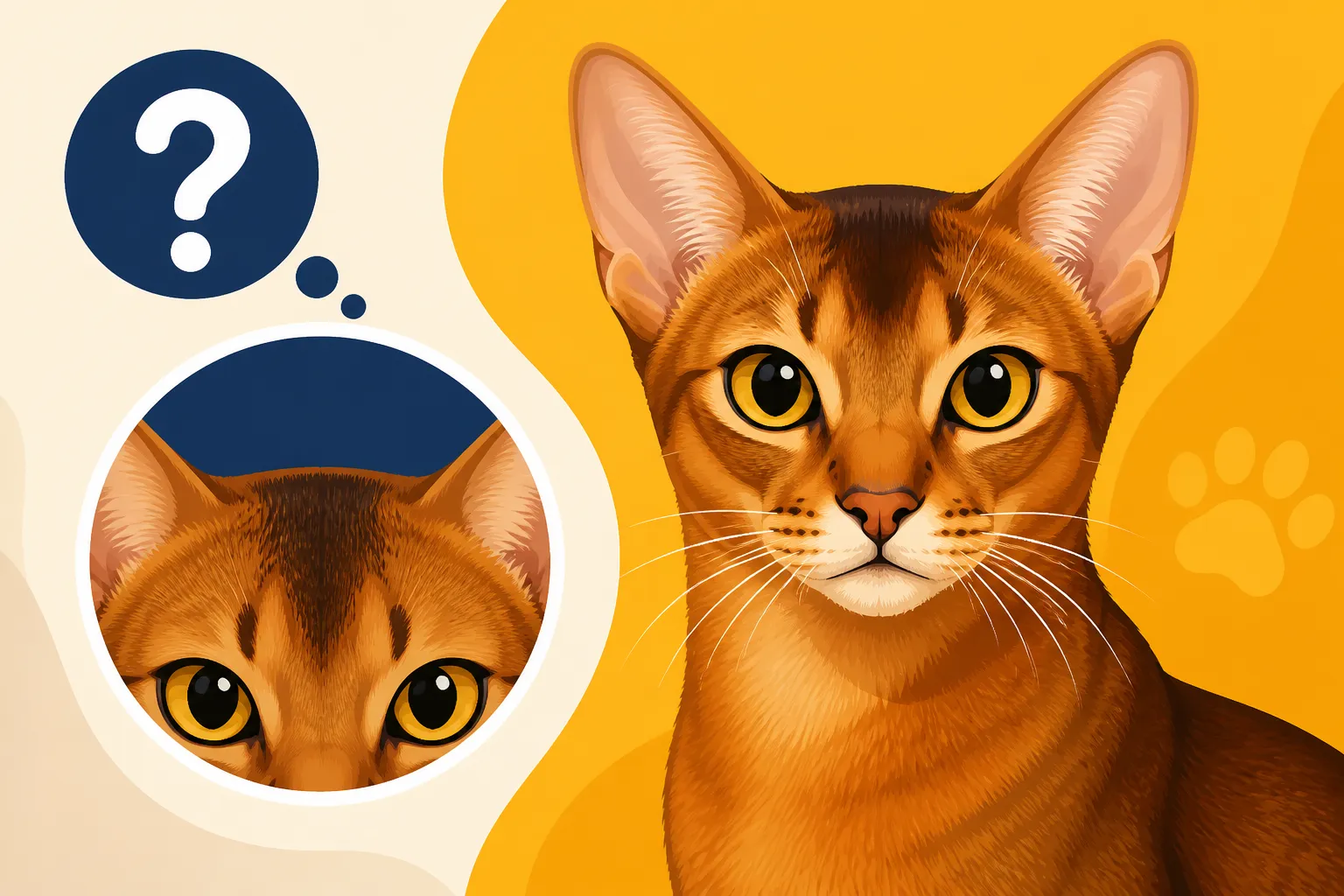
So, if there's no "M" marking, what does an Abyssinian's forehead look like? For those accustomed to bold patterns, it might seem surprisingly plain at first, but for aficionados of the breed, it's a canvas of subtle beauty. The forehead, like the rest of the body, is covered in the same ticked fur, creating a uniform appearance that flows seamlessly from the top of the head down to the nose. There might be some very gentle shading or a slightly denser concentration of ticking, but nothing that forms a distinct, high-contrast pattern. The focus is always on the quality of the ticking itself, not on any superimposed design.
The beauty of an Abyssinian's face lies in its expressive eyes, often rimmed with a darker halo, and its elegant, somewhat wedge-shaped head, all complemented by the soft, flowing ticked fur. Without distracting patterns, the cat's natural features truly stand out. This unbroken flow of color and texture across the forehead contributes to the breed's overall sleek and refined look, emphasizing their lean, athletic build and graceful lines. It's a testament to the fact that sometimes, less truly is more, especially when it comes to the intricate detail of their coats.
From Ghost Markings to Subtle Shading
While a purebred Abyssinian should ideally not have a distinct "M" on its forehead, you might occasionally observe very faint "ghost markings." These are not true, bold tabby stripes but rather slight indications of the underlying tabby pattern that the ticking gene hasn't completely suppressed. In the case of the forehead, this might manifest as a barely perceptible shadow where an "M" would typically be, visible only in certain lighting or at specific angles. These ghost markings are often more apparent in kittens, as their adult ticking hasn't fully developed, and tend to fade with maturity. When an Abyssinian Kitten's Adult Ticking Arrives explains how this charming blotchiness disappears.
Beyond these rare ghost markings, the forehead generally displays subtle variations in the density and shade of the ticking. For example, a ruddy Abyssinian might have warmer, richer tones of gold and red blending across its brow, while a blue Abyssinian might show softer, cooler grey and beige hues. These slight differences in color saturation contribute to the overall depth of the coat, giving the face character without relying on stark patterns. It’s all about the interplay of light and shadow on those individually banded hairs, creating a living tapestry of color that shifts as the cat moves its head.
The Strict Standards of Abyssinian Appearance
For breeders and judges in the cat fancy world, the absence of prominent tabby markings, including the forehead "M," is not just a preference—it's a critical aspect of the Abyssinian breed standard. Organizations like the Cat Fanciers' Association (CFA) and The International Cat Association (TICA) clearly outline the desired appearance for an Abyssinian, and prominent barring or striping is considered a fault. A perfectly ticked coat, free from overt patterns, is what breeders strive for and what judges look for in the show ring. How an Abyssinian's Ticking Is Judged in the Ring provides more insight into these exacting standards.
Any clear, well-defined "M" or other tabby stripes on the forehead, neck, legs, or tail would indicate a deviation from the ideal Abyssinian type. Such markings suggest that the ticking gene's suppressive effect isn't as complete as desired, and while the cat would still be a beloved pet, it wouldn't meet the stringent criteria for showing or breeding. The expectation is for a clean, unmarked look, allowing the beauty of the ticked hair to be the sole focus. It’s a testament to centuries of selective breeding aimed at perfecting this incredibly distinctive coat. Why an Abyssinian With Barring Is Penalized highlights just how important this is in the show world.
Understanding Variations and the Importance of Breeding
While the ideal Abyssinian should present a uniformly ticked coat with minimal or no overt tabby markings, variations can occur. These variations are often linked to genetic expression and, in some cases, the breeding practices behind the cat. It's a reminder that genetics can be wonderfully complex, and even with the best intentions, slight deviations from the perfect standard can appear. Understanding these nuances helps us appreciate the careful work of responsible breeders and the natural progression of a kitten's development.
The presence of more pronounced markings isn't necessarily a sign of ill health or a lesser quality pet, but it does indicate how closely the individual adheres to the established breed aesthetic. For many pet owners, a faint ghost marking on the forehead is a charming quirk rather than a flaw. However, for those involved in preserving the breed's distinct look, these details are paramount.
When Kittenhood Reveals More Prominent Patterns
It's quite common for Abyssinian kittens to display more noticeable "ghost markings" on their bodies, including their foreheads, than their adult counterparts. When they're tiny, you might see faint stripes on their legs or a shadowy "M" on their brow. This is completely normal and part of their developmental process. A kitten's coat is still maturing, and the full effect of the ticking gene takes time to manifest completely. The individual hairs haven't yet grown to their full banded length, and the overall density of the adult coat isn't present, which allows these underlying tabby patterns to peek through.
As the kitten grows and its coat matures, these ghost markings typically recede and become less visible, eventually blending into the smooth, ticked appearance characteristic of the adult Abyssinian. The coat fills out, and the increasing length and banding of each hair work to obscure the earlier, more defined patterns. This transition is fascinating to observe and is a natural part of an Abyssinian's development. If you acquire an Abyssinian kitten, don't be alarmed if you see some faint markings; patience will reveal the stunning adult coat beneath. How a Ruddy Abyssinian's Coat Develops illustrates this developmental process through the lens of one of the breed's most common colors.
The Breeder's Role in Maintaining the Breed's Distinctive Look
Responsible Abyssinian breeders play a crucial role in maintaining the breed's distinctive ticked coat and ensuring the absence of unwanted tabby markings, including the forehead "M." They achieve this through careful selective breeding, choosing parent cats that consistently produce offspring with the desired uniform ticking. Breeders understand the genetic nuances of the ticking pattern and work diligently to strengthen these traits within their lines. This dedicated effort is why most purebred Abyssinians exhibit the classic, unmarked forehead we expect.
A reputable breeder will be transparent about their breeding goals and the lineage of their cats, often providing pedigrees that show generations of ancestors selected for correct type and coat. They strive to produce cats that not only conform to the breed standard but also possess excellent health and temperament. The consistency of the ticked coat, including the lack of a forehead "M," is a hallmark of good breeding and a testament to their commitment to the integrity of the Abyssinian breed. When you consider the beauty of an Abyssinian, you're truly appreciating the art and science of dedicated breeding.
Disclaimer
This article is for general informational purposes only and does not constitute professional advice. Laws, prices and regulations vary by location and change over time. Consult a qualified professional for guidance on your specific situation.