When the Somali Got Championship Status
It can be incredibly confusing to understand the history of cat breeds, especially when one breed suddenly gives rise to another that looks quite different. For many Abyssinian enthusiasts, the appearance of longhaired kittens in their litters was initially a mystery, and then a source of debate, leading to the eventual recognition of the beautiful Somali cat. This guide will take you through the fascinating journey of how the Somali breed, often referred to as a "longhaired Abyssinian," carved out its own identity and gained championship status in the major cat registries.
The Abyssinian and the Curious Case of the Longhair Gene
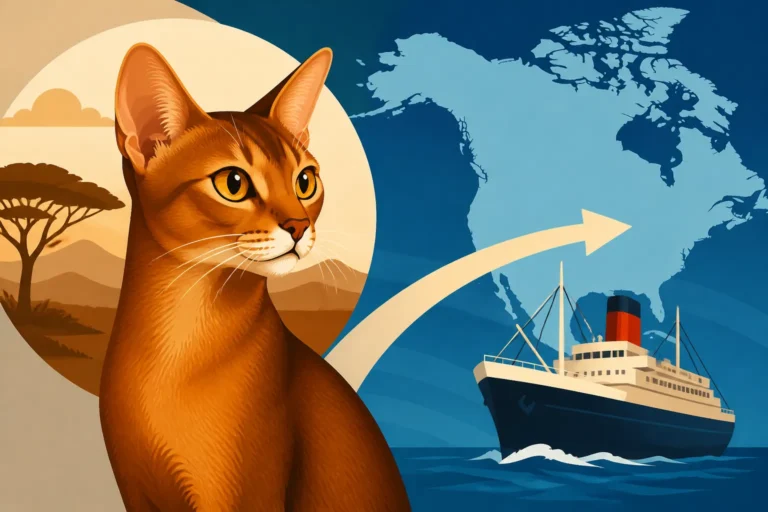
The Abyssinian, with its striking ticked coat and lithe, muscular body, has a long and storied history, though its precise origins are somewhat shrouded in legend, as explored in The Abyssinian Is Probably Not From Abyssinia. For generations, breeders focused on perfecting the Abyssinian's short, close-lying coat and distinctive agouti banding. However, lurking silently within the breed's genetic makeup was a recessive gene that would eventually lead to the creation of an entirely new breed.
Tracing the Recessive Longhair Trait
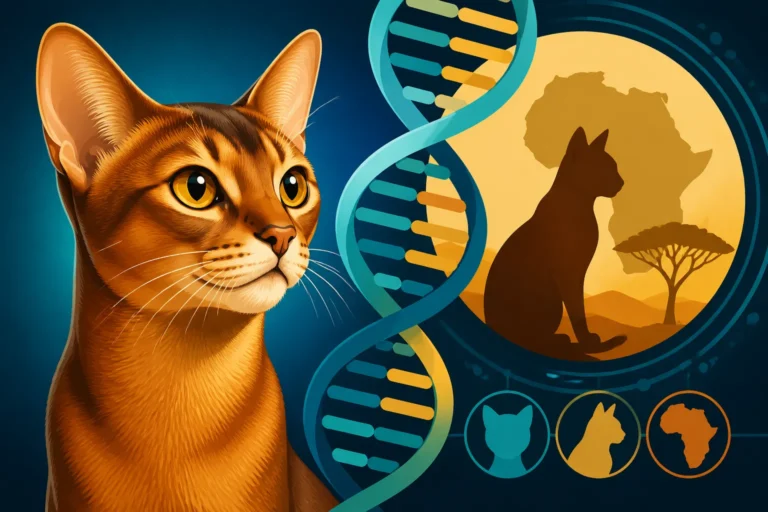
For decades, long before the Somali was officially recognized, breeders would occasionally find a fluffy, longer-haired kitten nestled amongst their otherwise sleek, short-coated Abyssinian offspring. These kittens were often a puzzle, and sometimes even a source of embarrassment, as they didn't conform to the strict breed standard for Abyssinians. The longhair trait is recessive, meaning that both parent cats must carry a copy of the gene for a kitten to express it. If a breeder mated two Abyssinians who were both carriers for the longhair gene, there was a statistical probability that some of their kittens would inherit two copies of the gene, resulting in a plush, medium-length coat. These carriers themselves looked just like any other Abyssinian, making the trait difficult to eliminate without genetic testing, which wasn't widely available or understood in earlier times. This recessive gene, quietly passed down, explains Why the Long Hair Gene Was in Abyssinians All Along.
The presence of this gene wasn't unique to one particular line; it was fairly widespread within the Abyssinian gene pool, indicating it had been there for a very long time, possibly dating back to the foundational cats of the breed. It speaks to the hidden genetic diversity that can exist even in breeds with tightly defined physical standards. Imagine the surprise of a breeder, meticulously planning their pairings for type and color, only to discover a soft, plumed tail and ear tufts on a newborn. It was a deviation that needed to be understood, or, as some initially thought, simply overlooked.
Unexpected Kittens in Abyssinian Litters
When these longhaired kittens appeared, they were often viewed as "mistakes" or "faults" within an Abyssinian litter. They certainly didn't meet the criteria for showing or breeding as Abyssinians. Instead of the tight, short ticking expected of the breed, these kittens had a softer, fuller coat that obscured the crispness of the ticking pattern. Their fur was often described as semi-longhaired, with noticeable britches (fur on their hind legs), a bushy tail, and tufts of hair around their ears and toes. How a Somali Turns Up in an Abyssinian Litter explains this phenomenon in more detail.
Because they were considered "unshowable" and "unbreedable" by Abyssinian standards, many of these beautiful longhaired kittens were quietly placed in pet homes, often at a reduced price, with potential owners advised not to breed them. They were loved for their affectionate natures and playful antics, but their genetic heritage as an Abyssinian was undeniable, despite their differing coat length. This is how the "longhaired Abyssinian" continued to exist, cherished by their families, but unacknowledged by the formal cat fancy for many years.
Early Appearances and the Reluctance to Accept
The initial reaction to longhaired kittens in Abyssinian litters was far from enthusiastic within the established cat breeding community. These beautiful, fluffy cats were often seen as a genetic anomaly, a deviation from the desired standard, rather than the beginning of a new breed. This period was marked by a significant amount of debate and even some apprehension among breeders dedicated to preserving the Abyssinian's distinct short-haired look.
The "Unwanted" Longhairs
For a significant period, particularly in the mid-20th century, these longhaired kittens were, frankly, unwanted by many Abyssinian breeders. They represented a genetic trait that was not part of the established breed standard, and breeders feared that acknowledging them would dilute the purity of the Abyssinian line. The focus was heavily on maintaining the breed's characteristic short, ticked coat. When a longhaired kitten was born, it was often quietly sold as a pet, sometimes under a casual descriptor like "fluffy Aby," or even given away, with no official recognition of its unique qualities. Why Somali Kittens Were Once Given Away Quietly sheds more light on this practice.
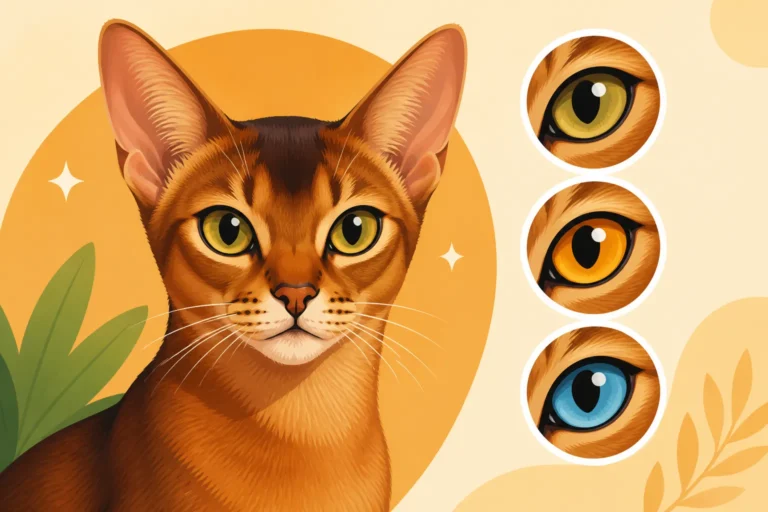
These kittens, despite their "undesirable" coat length from a show perspective, were otherwise perfectly healthy and delightful pets, inheriting the Abyssinian's intelligent, active, and affectionate temperament. They displayed all the other classic Abyssinian traits—the large, alert ears, the expressive almond-shaped eyes, and the playful, curious nature. The problem wasn't their quality as cats, but their divergence from a specific aesthetic criterion. Many of their owners, however, found their longer coats to be an added charm, giving them a softer, almost foxy appearance.
The Initial Breeder Stance
The prevailing attitude among Abyssinian breeders was, for a long time, to suppress the longhair gene. There was a genuine concern that if these longhaired cats were allowed to be bred, it could negatively impact the Abyssinian breed itself. Some breeders would discreetly test their breeding cats for the longhair gene and avoid mating carriers, hoping to eradicate the trait from their lines. It was a preventative measure, driven by a desire to protect the integrity of the breed they had worked so hard to establish and perfect.
However, not all breeders agreed with this approach. A few forward-thinking individuals saw the beauty and potential in these longhaired cats. They recognized that these were not mixed breeds, but rather genetically pure Abyssinians with one specific, albeit recessive, difference. This recognition was the first crucial step towards advocating for their separate identity. These breeders started to quietly track the longhaired cats, noting their lineage and proving that they were indeed direct descendants of established Abyssinian lines. This groundwork laid the foundation for the eventual formal proposal of a new breed.
Evelyn Mague and the Birth of the Somali Breed
The shift from "unwanted fluffies" to a recognized breed didn't happen overnight. It took the dedication and vision of particular individuals who saw beyond the established norms. One name stands out prominently in the history of the Somali cat: Evelyn Mague. Her passion and perseverance were instrumental in bringing the longhaired Abyssinian into the spotlight and giving it its own identity.
A Vision for the Longhaired Abyssinian
Evelyn Mague, an American Abyssinian breeder from Rochester, New York, is widely credited as the "Mother of the Somali." She was not merely accepting of the longhaired kittens that appeared in her litters; she saw their unique beauty and potential. Instead of dismissing them as faults, she embraced them, understanding that they were merely expressing a recessive gene that had been present in the Abyssinian gene pool for a very long time. Mague began to intentionally breed these longhaired Abyssinians in the early 1960s, a courageous step given the prevailing attitudes.
Her work involved careful selection and breeding to ensure that these cats maintained the core Abyssinian temperament and characteristics, only differing in coat length. She aimed to create a robust, healthy line of these semi-longhaired cats, emphasizing their intelligence, playfulness, and striking appearance. Her dedication provided a crucial turning point, moving the narrative from genetic anomaly to intentional development of a new, distinct breed. Who Bred the First Somali is a story that largely revolves around her efforts.
Naming the New Breed
One of the most significant steps in establishing a new breed is giving it a name that evokes its essence and ideally, its lineage. Evelyn Mague chose the name "Somali" for her longhaired Abyssinians. This was a clever and fitting choice, inspired by geographical association. Just as Ethiopia (formerly Abyssinia) borders Somalia in East Africa, the Somali cat was seen as a "bordering" relative to the Abyssinian breed. It was a subtle nod to their shared heritage, yet it also gave the new breed its own identity, separating it from being merely a "longhaired Abyssinian."
The name resonated and quickly gained traction. It helped solidify the idea that these cats were not just a variant, but a distinct entity deserving of their own recognition. The name "Somali" also conjured an image of exotic beauty, fitting for a cat with such a rich, flowing coat and a lively, intelligent demeanor. This deliberate naming strategy was a critical part of building the breed's profile and preparing it for formal acceptance within the wider cat fancy.
The Path to Championship Recognition
Achieving championship status is a monumental journey for any new cat breed. It requires consistent breeding, a defined standard, and the persistent advocacy of dedicated breeders. For the Somali, this path was meticulously charted by Evelyn Mague and other early enthusiasts, who worked tirelessly to prove the breed's genetic purity and unique qualities to the major cat associations.
Gaining Provisional Status
The first step for a burgeoning breed seeking recognition is typically to gain provisional, or "new breed and color," status. This allows the cats to be exhibited at shows, but not to compete for championship titles. Instead, they are judged against their own evolving standard, and breeders receive feedback from judges. This period is crucial for demonstrating consistency in type, temperament, and health across multiple generations. For the Somali, this phase was all about proving that they weren't just random longhaired cats, but a stable, identifiable breed.
The Cat Fanciers' Association (CFA), one of the largest cat registries in North America, granted the Somali provisional status in 1972. This was a huge milestone. It meant that Somalis could appear at CFA shows, drawing attention and educating the public and other breeders about their existence. Breeders like Evelyn Mague showcased their best Somalis, highlighting their vibrant ticked coats, elegant build, and engaging personalities. This visibility was vital for building support and demonstrating that the breed was thriving and consistent. Other organizations followed suit, gradually opening their doors to the Somali as a recognized preliminary breed.
Securing Full Championship
After a period of successful exhibition and demonstration of consistent type under provisional status, a breed can apply for full championship status. This is the ultimate goal, allowing the breed to compete for Grand Champion and other prestigious titles, which dramatically increases its profile and desirability. For the Somali, this moment arrived fairly quickly after its provisional acceptance, thanks to the strong foundation laid by its dedicated breeders.
The CFA officially granted the Somali full championship status in 1979. This was a landmark achievement, cementing the Somali's place in the cat fancy as a distinct and respected breed. It affirmed that the breed had met all the stringent requirements for genetic stability, sufficient numbers, and a clearly defined and reproducible standard. The ability to compete for championship titles meant that Somalis could now earn the same accolades as Abyssinians, Persian, and Siamese, showcasing their beauty and characteristics on an equal footing. This date, 1979, is the answer to the specific query of When the Somali Got Championship Status within the CFA. Other major associations followed similar timelines.
Here's a simplified look at how some major associations recognized the Somali:
| Organization | Provisional Status | Championship Status |
|---|---|---|
| Cat Fanciers' Association (CFA) | 1972 | 1979 |
| The International Cat Association (TICA) | 1979 | 1979 |
| Governing Council of the Cat Fancy (GCCF – UK) | Early 1980s | Mid-1980s |
| Fédération Internationale Féline (FIFe – Europe) | Early 1980s | Mid-1980s |
Please note: Exact dates for international organizations can vary slightly by region and specific branch; these are general timeframes.
International Recognition Differences
While the CFA's recognition in 1979 was a pivotal moment, it's important to remember that cat fancy is global, with multiple major registries, each with its own procedures and timelines. The timeline for recognition can vary significantly between organizations like CFA, TICA (The International Cat Association), FIFe (Fédération Internationale Féline), and GCCF (Governing Council of the Cat Fancy) in the UK. For example, while TICA often moves quickly, granting provisional and championship status in the same year if a breed meets their criteria, European registries like FIFe and GCCF might have slightly different processes and a more gradual approach.
Generally, once a breed achieved recognition in one major organization, it paved the way for acceptance in others, creating a domino effect. Breeders around the world collaborated, sharing information and successful breeding lines to establish the Somali consistently in various countries. This international effort ensured that the Somali wasn't just an American phenomenon, but a truly global breed. Today, you'll find healthy Somali populations and dedicated breeders in many parts of the world, all tracing their lineage back to those early longhaired Abyssinian pioneers.
Why Official Status Matters for the Somali
The journey from an "undesirable variant" to a fully recognized championship breed was arduous but immensely rewarding for the Somali. Official status is far more than just a title; it provides a framework that ensures the breed's health, integrity, and future existence. Without it, the Somali would likely have remained a fascinating but unsung genetic footnote.
Establishing Breed Standards and Pedigrees
One of the most critical aspects of gaining championship status is the establishment of a formal breed standard. This detailed document outlines the ideal physical characteristics (such as coat length, color, head shape, eye placement, and body type) and temperament of the Somali cat. It provides a clear blueprint for breeders to work towards and for judges to evaluate against in the show ring. This standardization ensures that Somalis consistently display the traits that define their breed, preventing them from becoming a haphazard collection of longhaired cats. It also defines What an Abyssinian Looks Like Against the Show Standard, offering a point of comparison.
Beyond physical traits, recognition also mandates the establishment of official pedigrees. A pedigree is essentially a family tree, meticulously documenting the ancestry of each registered Somali cat. This is invaluable for breeders, as it allows them to track genetic lines, identify potential health issues, and make informed decisions about breeding pairs. Reputable breeders rely heavily on these pedigrees to maintain the health and vigor of the breed, carefully selecting mates to enhance desirable traits and avoid genetic problems. This level of oversight and documentation is vital for responsible breeding practices, ensuring that kittens from registered lines are truly Somalis and not just cats with long hair.
Protecting the Breed's Future
Official championship status provides a powerful layer of protection for the Somali breed. It elevates the breed's profile, making it more visible and desirable to potential owners who might otherwise not have known about them. This increased interest helps ensure a healthy demand for well-bred Somalis, supporting the dedicated breeders who invest so much into their development. Brands like Chewy, for example, often feature a wide array of cat breeds in their marketing and product lines, helping to normalize and celebrate breeds like the Somali alongside more common ones.
Furthermore, formal recognition ensures that health testing and ethical breeding practices are encouraged and, in some cases, required. While Abyssinians and Somalis share many health concerns due to their common ancestry, such as Pyruvate Kinase Deficiency (PKD) and Progressive Retinal Atrophy (PRA-rdAc), recognition allows for concerted efforts to understand and manage these genetic conditions within the breed. Breeders can collaborate, share health information, and work with geneticists to develop testing protocols, ultimately leading to healthier cats. It provides a community and a structure for the ongoing stewardship of the breed, ensuring that the Somali will continue to thrive for generations to come.
The Somali Today: A Beloved Breed in Its Own Right
Today, the Somali cat stands proudly as a distinct and cherished breed, recognized by all major cat registries worldwide. No longer merely a "longhaired Abyssinian," it has cultivated its own unique following and admirers, while still honoring its ancestral roots.
Distinct but Connected
While the Somali has achieved its own championship status, its deep connection to the Abyssinian breed remains undeniable. Genetically, they are almost identical, with the exception of the single recessive gene responsible for the longer coat. This means that a Somali shares the same playful, intelligent, and highly active temperament as its short-haired counterpart. Owners often describe Somalis as "busy" cats, always on the go, exploring, climbing, and engaging with their human companions. This shared personality is one reason why many Abyssinian enthusiasts often find themselves drawn to Somalis as well. How an Abyssinian Differs From a Somali highlights these nuances.
The aesthetic differences, however, are what truly set them apart visually. The Somali boasts a plush, medium-length coat that is soft to the touch and requires regular, but not intensive, grooming. This coat gives them a softer outline than the Abyssinian, with a magnificent bushy tail that resembles a fox's brush, and endearing ear and toe tufts. This lush coat takes time to fully develop, with Why a Somali's Coat Takes Two Years to Finish explaining the process. Despite these differences, both breeds maintain the distinctive ticked pattern that is their shared hallmark, where each hair strand has multiple bands of color.
The Somali's Unique Charm
The Somali has a charm all its own. Their striking appearance, combined with their dynamic and affectionate personalities, makes them incredibly captivating companions. They are often described as "clowns of the cat world," known for their acrobatic antics and insatiable curiosity. They love to be involved in everything their human family does, from "helping" with chores to curling up on a shoulder for a nap. Their vocalizations are typically soft chirps and trills, rather than loud meows, which adds to their endearing quality.
Their active nature means they thrive in environments where they have plenty of opportunities to climb, play, and explore. Tall cat trees, wall shelves, and interactive toys are essential for keeping a Somali happy and engaged. Like Abyssinians, they form strong bonds with their families and often do well with other active pets, including dogs, as long as introductions are handled carefully. If you're looking for a cat that will be a constant source of entertainment, affection, and intelligent interaction, the Somali is an exceptional choice. Many owners find themselves so smitten that they decide to get a second one, sometimes from a brand like Chewy, which carries everything from cat food to enrichment toys. The sheer joy and vivacity they bring to a home are why Why the Abyssinian Stayed Popular for 150 Years is a sentiment that readily extends to its long-haired cousin, the Somali.
Disclaimer
This article is for general informational purposes only and does not constitute professional advice. Laws, prices and regulations vary by location and change over time. Consult a qualified professional for guidance on your specific situation.