Why Somali Kittens Were Once Given Away Quietly
A longhaired kitten appearing in an Abyssinian litter could once be treated as an awkward secret rather than a welcome surprise. The reason was not that these kittens were unhealthy or unwanted as pets: their coats simply did not fit the breed standard breeders were working toward. Here’s how that quiet history helped lead to the Somali breed.
Why longhaired kittens appeared in Abyssinian litters
A recessive coat gene was already present
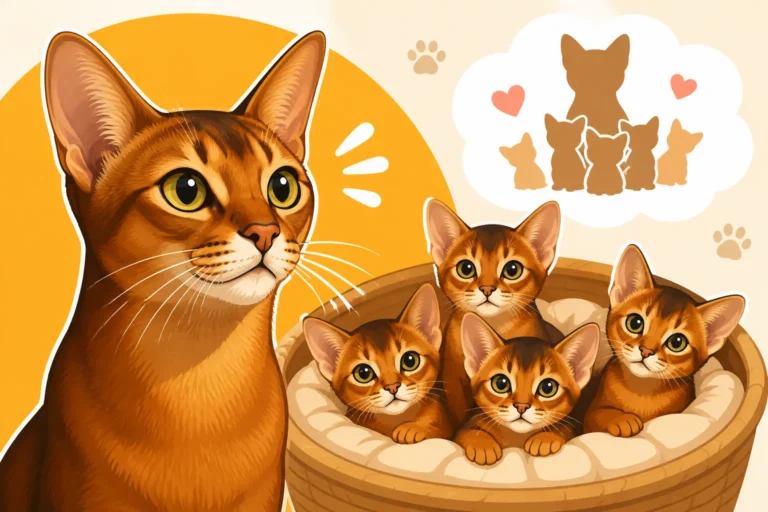
Somalis and Abyssinians are closely related. The Somali’s longer coat comes from a recessive longhair gene that could be carried by shorthaired Abyssinians without being visible. When two cats carrying that gene were bred, a kitten could inherit the combination needed to grow longer fur.
That meant a litter of shorthaired Abyssinian parents could sometimes include a kitten with a noticeably fluffier coat. It wasn’t a sign that the kitten was a different species, or that something had gone wrong during pregnancy. It was an ordinary outcome of inherited variation—one that only became apparent when the right genes met.
The history is explored further in Why the Long Hair Gene Was in Abyssinians All Along. It also helps explain the relationship described in The Somali Is an Abyssinian With Long Hair: the breeds differ in coat length and are recognized separately, but their roots are intertwined.
The coat did not match the show ideal
For breeders focused on producing Abyssinians that matched the accepted standard, a long coat was a mismatch. The desired Abyssinian coat is short and close-lying, with distinctive ticking. A longhaired kitten could be healthy, lively, and beautiful, yet still not be suitable for showing as a standard Abyssinian.
That distinction can sound harsh if you imagine it applying to the kitten’s worth. It was really about how breeders and registries defined a particular breed at the time. A kitten could be considered unsuitable for a breeding or show program without being considered unsuitable for a family home.
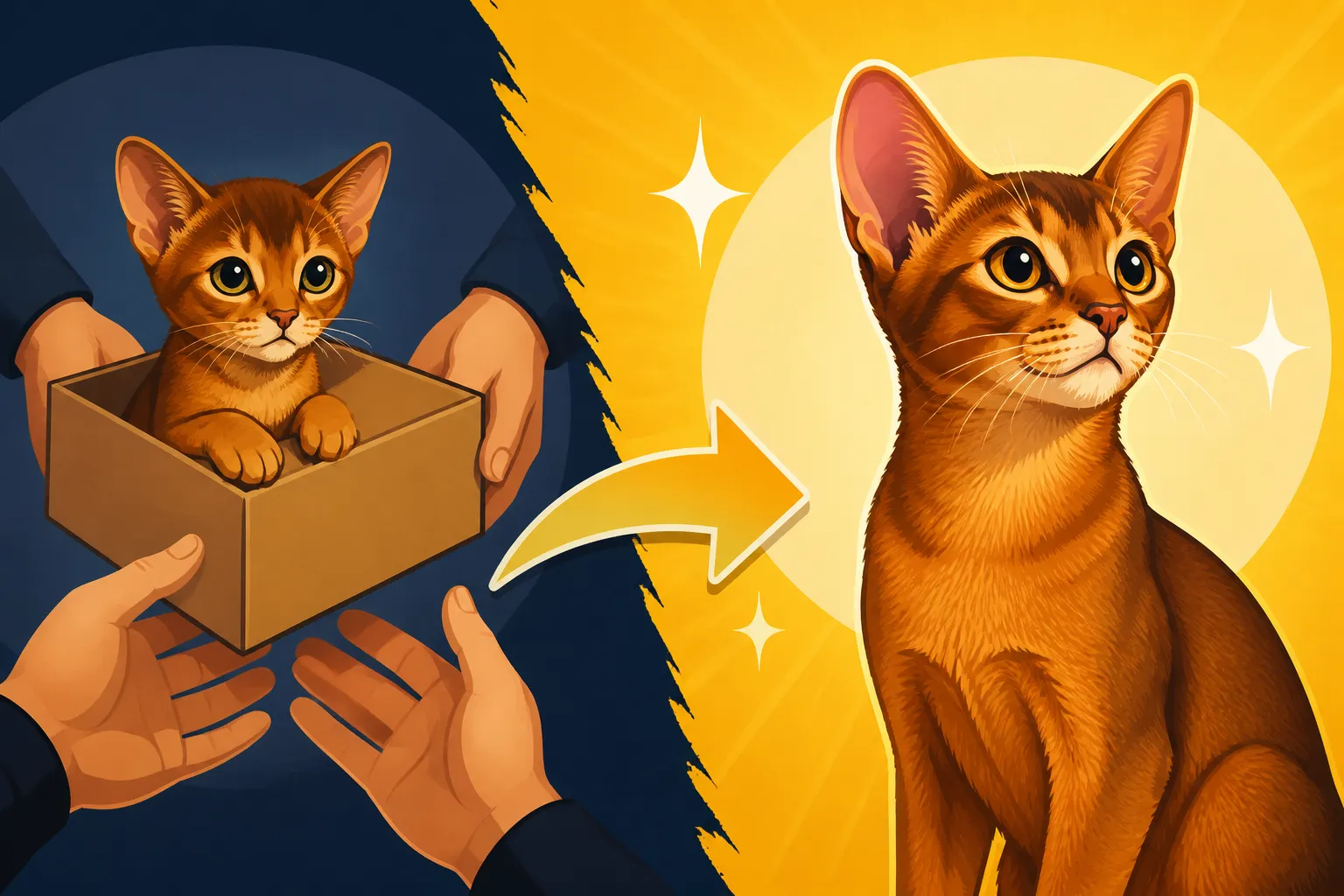
Breeders also had practical reasons to keep their programs predictable. If they were selecting for short coats and specific show traits, a longhaired kitten did not fit the direction of the program. Before there was broad interest in developing a separate longhaired breed, those kittens could be placed quietly as pets rather than advertised as a new kind of Abyssinian.
“Given away quietly” does not mean every kitten was discarded
The phrase can suggest a dramatic story of breeders hiding unwanted kittens or treating them badly. The reality is more nuanced. Practices varied by breeder, place, and period, and a longhaired kitten’s appearance did not automatically mean it was neglected or unwanted. In some cases, the kitten was simply placed with a pet home without much public attention.
Quiet placement made sense in a world where the long coat was seen as a fault in the Abyssinian show ring. Promoting the kitten as an unusual or desirable type could create confusion about what an Abyssinian was supposed to look like, or attract attention to a trait that breeders were not trying to establish.
| What breeders were selecting for | What a longhaired kitten represented then | What it means for a pet home |
|---|---|---|
| A short, close-lying Abyssinian coat | A coat outside the breed standard | A different coat, not automatically a health problem |
| Consistency in a show or breeding program | A kitten not suited to that program’s aims | A possible companion, depending on health and temperament |
| Recognizable breed traits | A variation that could complicate expectations | A cat whose background should be discussed honestly |
How a hidden variation became a recognized breed
Interest shifted from hiding the difference to valuing it
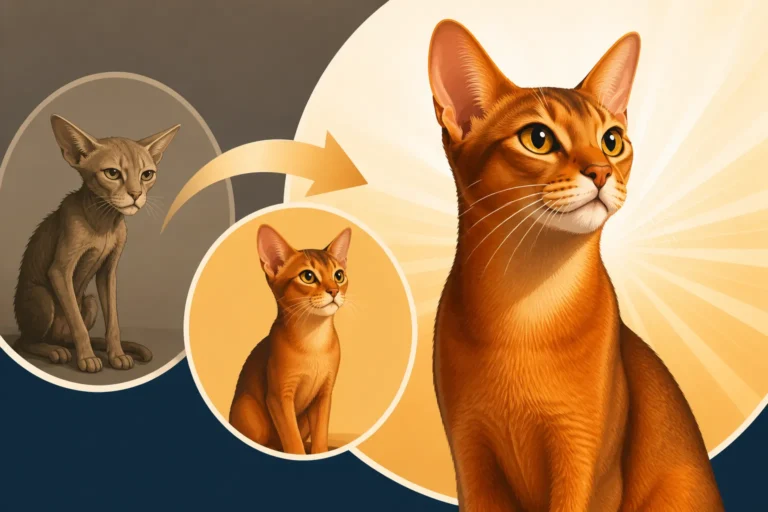
Once breeders and cat enthusiasts began to see longhaired Abyssinian-type cats as appealing in their own right, the conversation changed. Instead of viewing the coat only as a departure from the Abyssinian ideal, some people saw an opportunity to develop and recognize a distinct breed.
That change did not happen overnight, and it wasn’t a simple matter of giving a fluffy kitten a new name. Establishing a breed involves coordinated breeding, agreement about the desired traits, and acceptance by cat registries. The cats had to be presented as a recognizable type rather than as an occasional exception in another breed’s litter.
The transition from quiet pet placements to organized breed development is part of the history covered in Who Bred the First Somali. There is not always one neat origin story: breed development can involve several people, cats, and decisions rather than a single kitten or breeder acting alone.
The name helped create a separate identity
The name “Somali” distinguished the longhaired cats from Abyssinians while acknowledging their close relationship. It was a breed identity, not proof that the cats had originated in Somalia. Breed names can be evocative without being literal records of a cat’s geographic ancestry.
Creating a distinct identity also made it easier to talk about the cats consistently. A long coat no longer had to be described only as an Abyssinian fault or an unexpected variation. It could be a defining feature of a breed with its own standard and community of breeders.
The development of that identity is closely connected to Which Kitten Started the Somali Breed. The question is interesting, but the broader story matters more than finding one supposedly perfect “first” cat: the Somali breed emerged through growing recognition and deliberate breeding work.
Recognition changed how breeders could talk about the cats
As acceptance grew, breeders could present Somalis openly as Somalis instead of placing longhaired kittens under the radar. Breed recognition gave enthusiasts a clearer framework for describing the cats and selecting for the traits they wanted to preserve. It also helped prospective owners understand that the long coat was not simply a coat fault in a shorthaired cat.
Recognition by a registry is not the same as every registry making the same decision at the same time. Breed acceptance develops through formal processes, and different organizations may have their own standards and timelines. When the Somali Got Championship Status looks more closely at that transition.
The cultural shift is worth noticing: a trait once treated as inconvenient could become the feature people sought out. That does not mean the earlier breeders were necessarily trying to suppress a future breed. Many were working within the standards and goals they had at the time.
What this history does and does not tell us
A long coat is not evidence of poor health or poor breeding by itself
A Somali’s long coat reflects inherited variation. Coat length alone does not tell you whether a cat has been raised responsibly, whether its parents received appropriate care, or whether the breeder followed sound practices. Those questions need to be asked separately.
Likewise, a longhaired kitten in an Abyssinian litter is not automatically proof of a dishonest breeder. The important issue is whether the kitten’s background and expected adult appearance are explained clearly. A careful breeder should be willing to discuss the parents, the kitten’s registration status, and how the kitten is being represented.
For a prospective owner, the same common-sense checks apply as with any kitten: ask about veterinary care, living conditions, socialization, and relevant health history. The background to How an Abyssinian Differs From a Somali can help you understand what distinctions are usually made between the breeds, while Whether Abyssinians and Somalis Are Still Bred Together addresses how their breeding relationship is handled.
Historical silence can make old stories sound more dramatic than they were
When a detail is passed down as “they were given away quietly,” it is tempting to fill in the gaps with one universal explanation. But breeding practices were not identical everywhere. One breeder might have placed a kitten discreetly because the coat did not fit a show program; another might have kept one, shared it with a colleague, or contributed to the beginnings of a longhaired line.
The phrase also compresses several different things: breed standards, registration rules, breeder priorities, and personal choices. It is useful as a description of how low-profile some placements could be, but it should not be treated as proof that all longhaired kittens were concealed or that all breeders viewed them the same way.
A more balanced account recognizes both sides. These kittens were outside the shorthaired Abyssinian ideal, which limited their place in some breeding programs. At the same time, they were the source of a feature that later enthusiasts valued and developed into the Somali breed.
What prospective Somali owners can take from the story
Ask how the kitten is being represented
If you are considering a Somali, ask whether the kitten is registered and described as a Somali, and ask about its parents and breeding background. If someone is offering a longhaired kitten as an Abyssinian, ask what they mean by that description. The goal is not to catch a seller out; it is to make sure you understand the cat’s background and what paperwork, if any, comes with it.
It is also reasonable to ask what the breeder prioritizes beyond appearance: how kittens are raised, what veterinary care they have received, and what support is available after they go home. A responsible conversation should leave you with a clearer picture, not pressure to make a quick decision.
Prepare for the coat and the cat in front of you
A Somali’s longer coat needs more attention than an Abyssinian’s short coat, though the amount of grooming varies by individual. A gentle combing routine introduced gradually can help prevent tangles and make handling feel ordinary rather than like a wrestling match. Keep the experience brief and positive, especially with a kitten still learning what grooming is.
Have everyday essentials ready before the kitten arrives: food that can be transitioned gradually, litter supplies, a secure carrier, scratching options, and toys for play. Chewy is one place some owners use to organize basics such as food and litter, but the key is choosing products that suit the kitten and following the breeder’s or veterinarian’s guidance. If you do use a retailer such as Chewy, compare ingredients and product details rather than assuming that a product marketed for a breed is automatically the right fit.
A Somali is not just a long-haired version of a cat in a historical footnote. It is an individual with its own energy, preferences, and health needs. Chewy may also be convenient for replacing routine supplies, but a trusted veterinarian is the right person to advise you about diet changes, preventive care, or health concerns. The same practical rule applies to toys and enrichment: choose safe, engaging options, and pay attention to what your cat actually enjoys.
Let the history add context, not pressure
The story of Somali kittens once placed quietly is a reminder that breed standards can change and that traits valued today may have been treated differently in the past. It is not a reason to romanticize every old breeding practice, nor is it a reason to assume that every current breeder has the same motives or methods.
For owners, the most useful takeaway is straightforward: ask informed questions, look for transparency, and choose a cat whose needs fit your home. A Somali’s coat may have started as a trait some Abyssinian programs did not want to emphasize, but that history does not define the cat’s value as a companion. What matters now is responsible care and a good match between cat and household.
Disclaimer
This article is for general informational purposes only and does not constitute professional advice. Laws, prices and regulations vary by location and change over time. Consult a qualified professional for guidance on your specific situation.