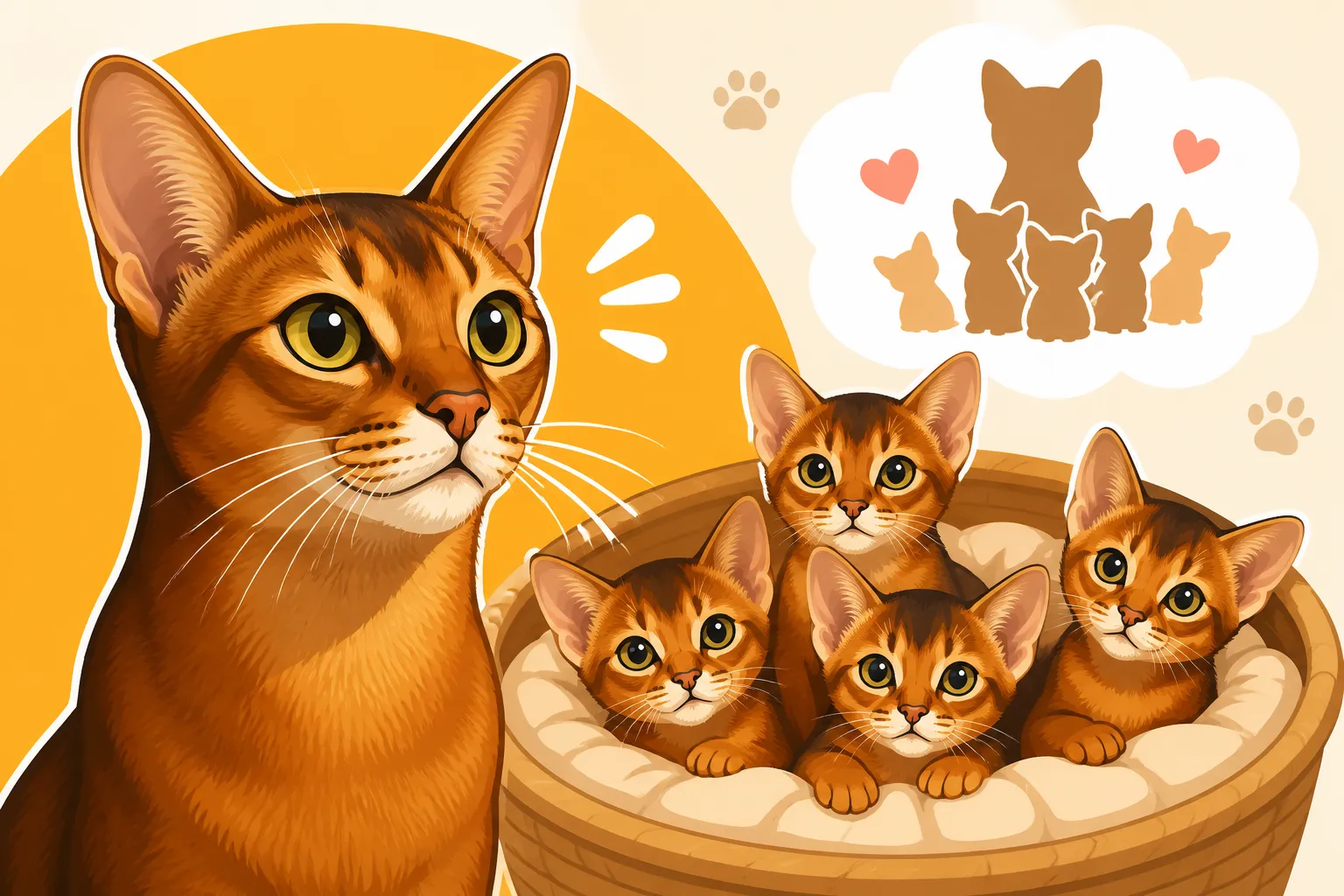
How Many Kittens an Abyssinian Queen Has
An Abyssinian queen usually has a small litter, but there is no reliable number to expect from one pregnancy. A litter may contain only one or two kittens, or several more; age, health, genetics, and chance all play a part. This guide explains what is typical, how to prepare, and when a pregnant cat needs veterinary attention.
How many kittens are in an Abyssinian litter
A small litter is common, but numbers vary
Abyssinians are often described as having small litters, but that is a tendency rather than a rule. A queen may have one kitten, a pair, or a larger litter. Even experienced breeders cannot predict the exact number from the breed alone, and two pregnancies in the same cat can have different outcomes.
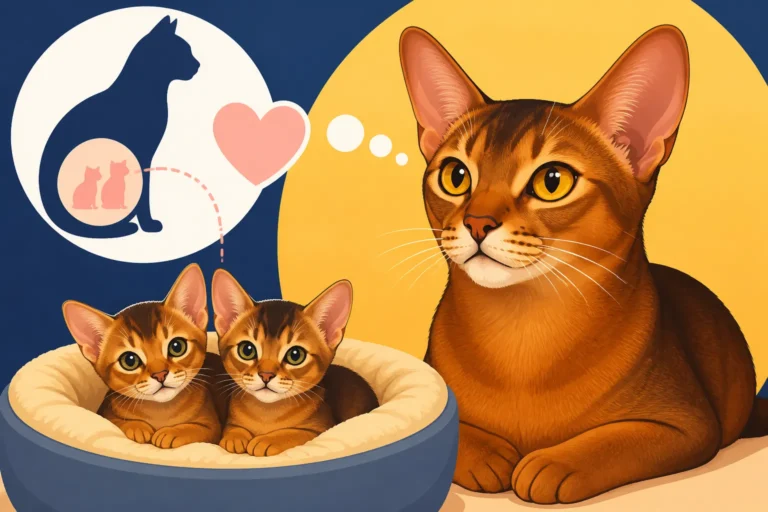
A litter of two or three may be perfectly ordinary for an individual Abyssinian. A larger litter can happen too, though more kittens may mean more competition for nursing and closer monitoring after birth. The number itself does not tell you whether the pregnancy is healthy; the queen’s condition and the kittens’ progress matter just as much.
This variation is one reason not to plan around a promised kitten count. Someone hoping to bring home an Abyssinian may be disappointed if a litter is smaller than expected, while a breeder may need to prepare for extra support if several kittens arrive. For broader context on kitten numbers and breeding, see How Many Kittens an Abyssinian Queen Has and Why Abyssinian Litters Are Small.
How Abyssinians compare with cats in general
Domestic cats commonly have litters of several kittens, but averages can be misleading when applied to one queen or one breed. A general figure does not predict what an Abyssinian will deliver. Individual reproductive history, age, health, and the timing of mating may all influence the outcome, and even then there is no simple formula.
| What you may hear | What it means in practice |
|---|---|
| Abyssinians often have small litters | A small litter is a possibility, not a guarantee |
| A queen had a larger litter before | Her next litter may be smaller or larger |
| The abdomen looks large | Appearance alone does not establish kitten count |
| A first litter is expected | There is no dependable number based on first pregnancy alone |
| The queen seems healthy | Good health is important, but does not determine litter size |
Breed descriptions can help set expectations, but they should not be used to diagnose a pregnancy or judge whether a cat is carrying a particular number of kittens. A veterinarian can assess the queen and advise on appropriate monitoring. A pregnancy may also involve complications that have nothing to do with litter size.
Why one queen’s litter count does not predict another’s
A breeder may have years of experience with a particular line and still see meaningful differences from one queen to another. Cats are individuals, and family history is only one piece of the picture. A queen’s age, overall health, previous pregnancies, and reproductive circumstances can all matter.
It is also easy to confuse a familiar pattern with a guarantee. If a cattery has often had litters of two or three, that history may be useful for planning, but it does not promise the same result next time. Responsible breeders plan for uncertainty rather than assuming a preferred number.
If you are choosing a kitten, ask how the breeder cares for the mother and litter rather than focusing only on how many kittens are expected. A careful breeder should be willing to discuss the queen’s health, veterinary oversight, and the kittens’ early care. How Many Kittens an Abyssinian Queen Has is a useful related read when you want to understand why litter size can vary.
What can affect the number of kittens
Age, health, and reproductive history
A queen’s age and general health may influence fertility and pregnancy, although neither provides a reliable way to predict litter count. A very young cat is still growing and should not be treated as ready to breed simply because she can become pregnant. Older queens may also need more careful veterinary assessment, particularly if they have had previous pregnancy or birth difficulties.
Health matters beyond the number of kittens. A queen who is eating poorly, losing weight, or showing signs of illness needs veterinary attention whether she is carrying one kitten or several. Before breeding, a veterinarian can discuss the queen’s health, vaccinations, parasite prevention, and whether any screening or care is appropriate.
Reproductive history can be informative, but it is not a crystal ball. A queen who has had a small litter before may have more kittens in a later pregnancy, and the reverse can happen too. Breeders should keep clear records of pregnancies and outcomes, but interpret those records alongside veterinary guidance rather than using them to make a firm prediction.
Genetics and chance
Family lines may show patterns, but litter size is influenced by multiple biological factors. It is not a simple inherited trait that can be read from a pedigree and translated into an exact number. A queen’s relatives may provide background, yet a breeder cannot responsibly promise that she will have the same number of kittens as her mother or littermates.
Chance also plays a part. The timing of mating and the biology of conception can affect how many embryos develop, but observing mating does not reveal how many kittens are on the way. In some cases, an embryo may not continue developing, and the pregnancy can still progress. Only veterinary assessment can help determine what is happening in an individual cat.
This uncertainty is another reason to avoid breeding decisions based on hoped-for litter size. A small litter is not automatically a failure, and a large one is not automatically a sign of better breeding. The queen’s welfare, sound health, and the kittens’ well-being should come first. For information about kitten development and early milestones, see How Many Kittens an Abyssinian Queen Has and How Early Abyssinian Kittens Start Climbing.
Why ultrasound or appearance cannot give a perfect count
A veterinarian may use imaging to assess a pregnancy, but counting kittens before birth can be difficult. An ultrasound is useful for evaluating pregnancy and fetal development, but overlapping images can make an exact count uncertain. Later in pregnancy, radiographs may help a veterinarian count visible fetal skeletons, depending on timing and the clinical situation.
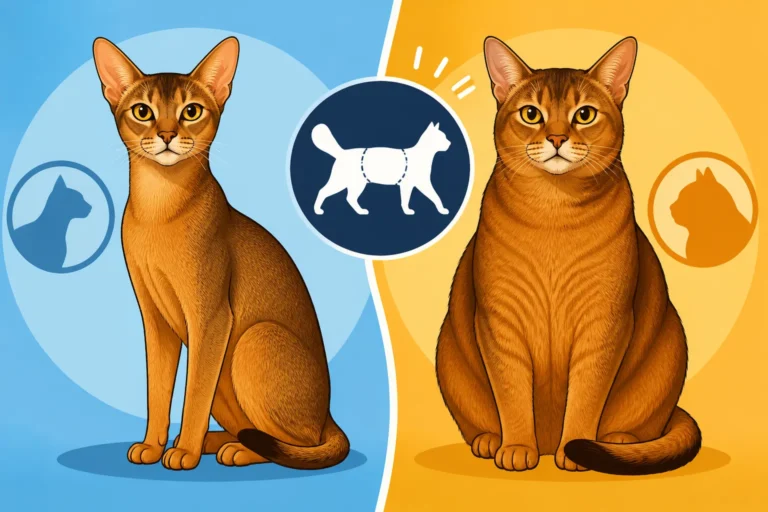
A noticeably rounded abdomen does not reveal how many kittens are inside. Body shape can vary with the queen’s build, her stage of pregnancy, and other factors. A cat carrying a small litter may look quite pregnant, while another carrying more kittens may not appear dramatically larger to an owner.
If knowing the likely number would help with birth planning, ask the veterinarian whether imaging is appropriate and what it can realistically tell you. The goal is not to satisfy curiosity at any cost; it is to make sure the queen and kittens receive suitable care. The vet can explain whether a check is useful and what signs would call for follow-up.
Preparing for birth and caring for the litter
Set up for the queen, not for a predicted count
Because litter size is uncertain, prepare a calm, clean, warm nesting area with enough room for the queen to move comfortably and care for her kittens. Choose a quiet location away from heavy household traffic, other pets, and sudden disturbances. A box or bed with low sides can make it easier for the queen to enter and leave while helping keep very young kittens contained.
Gather essential supplies before the due period rather than scrambling once labor begins. Keep your veterinarian’s contact details available, along with clean towels and a way to record the time of birth and each kitten’s progress. If you are caring for a pregnant cat for the first time, discuss a plan with your veterinarian in advance, including who to call outside normal clinic hours.
Think through what you would do if the litter is larger than expected. You may need extra hands for observation, additional clean bedding, or advice about whether every kitten is nursing adequately. A pet-supply retailer such as Chewy may be one place owners look for basic bedding and feeding supplies, but ask your veterinarian which items are actually suitable for newborn kittens before purchasing specialized products.
Monitor nursing, warmth, and weight after birth
Newborn kittens depend on their mother for warmth, milk, and close care. After birth, watch quietly to see that each kitten can reach a nipple and appears to settle after nursing. A small litter may have less competition, while a larger litter can make it harder to notice that one kitten is consistently missing out.
Weighing kittens regularly with a suitable scale can help identify a kitten that is not gaining as expected. Keep written records so you can compare each kitten’s progress instead of relying on memory. If one is weak, persistently cries, feels cool, cannot latch, or seems less active than its littermates, contact a veterinarian promptly rather than waiting to see whether the problem resolves.
Avoid unnecessary handling or constant interference, which can disturb the queen, but do not leave a struggling kitten unobserved. Ask your veterinarian to show you how to monitor the litter safely and what changes should prompt a call. For more on the early stages of kitten growth, see What an Abyssinian Kitten Looks Like at Eight Weeks and How Many Kittens an Abyssinian Queen Has.
Know when labor or recovery needs veterinary help
Many cats give birth without assistance, but an owner should not assume that every delay or difficulty is normal. Contact a veterinarian if the queen appears distressed, becomes weak, has heavy bleeding, or shows other concerning signs during labor or afterward. If you are unsure whether labor is progressing normally, call for professional advice instead of relying on a general timeline from the internet.
After delivery, keep an eye on the queen as well as the kittens. She should be able to rest, eat, drink, and care for her litter. A sudden change in her behavior, signs of pain, or a kitten that is not feeding deserves attention. The number of kittens does not determine whether the mother is recovering well.
It helps to agree on a plan before birth: which clinic to call, how you will transport the queen if needed, and who can help if you are alone. Keep essential supplies together and make sure the route to the carrier is clear. This kind of preparation is more useful than trying to predict the litter exactly.
Questions to ask an Abyssinian breeder
Ask about the queen’s care and history
If you are waiting for an Abyssinian kitten, ask the breeder how the queen is doing and what veterinary care she has received. You do not need to press for a precise kitten count before it can be known. More useful questions include whether the mother is being monitored by a veterinarian, how the breeder manages pregnancy and birth, and what care the kittens receive in their first weeks.
A responsible breeder should be able to explain that litter size varies and should not promise a specific number as if it were certain. They should also prioritize the queen’s health over producing a particular number of kittens. If a breeder seems focused only on deposits or availability while avoiding questions about the mother’s welfare, take that seriously.
Ask how the breeder will keep you updated if the litter is smaller than expected or if a kitten needs extra care. Small litters can mean fewer kittens are available than anticipated, and ethical breeders may have to adjust plans. Patience is frustrating when you have been looking forward to bringing a kitten home, but clear communication is a better sign than an unrealistic guarantee.
Understand what happens if the litter is small or large
A small litter may mean that fewer kittens are available to place, or that a breeder changes which homes can be matched. A larger litter may require closer observation to confirm that every kitten is nursing and gaining. Neither situation should be treated as a reason to compromise on appropriate care or send kittens to homes before they are ready.
Ask when kittens are expected to leave and what socialization, veterinary checks, and records will accompany them. The breeder should be able to describe a thoughtful process for matching kittens with homes, rather than offering a kitten based only on who asks first. For broader questions about breeder practices, read Which Kitten Started the Somali Breed and Why Abyssinian Litters Are Small.
If you are considering a kitten from a litter, be prepared for the possibility that plans may change. You may wait longer, be offered a different kitten, or decide that the timing no longer works for your household. That uncertainty is part of responsible breeding and animal care; the queen’s needs and the kittens’ readiness come before a buyer’s preferred schedule.
Separate normal variation from warning signs
One or two kittens is not automatically a problem, and a larger litter is not automatically cause for alarm. The number should be considered alongside the queen’s health, the birth itself, and how the kittens are feeding and growing. A veterinarian is the right person to assess concerns about a specific pregnancy or litter.
Be cautious of anyone who claims that every Abyssinian queen should have a particular number of kittens, or who presents a small litter as proof of poor health without examining the cat. Breed tendencies are not diagnoses. Likewise, a breeder’s past experience is helpful context, but it cannot replace appropriate veterinary care.
If you are bringing home a kitten, ask for an honest account of the litter and the mother’s condition, and allow the breeder time to focus on their care. A good match is worth waiting for. For related breed background, see How Many Kittens an Abyssinian Queen Has and Why Abyssinian Litters Are Small.
Disclaimer
This article is for general informational purposes only and does not constitute professional advice. Laws, prices and regulations vary by location and change over time. Consult a qualified professional for guidance on your specific situation.