When an Abyssinian Reaches Full Size
An Abyssinian can look almost grown long before its body has finished maturing, which makes it easy to mistake a naturally lean, leggy teenager for a small adult. This guide explains when most Abyssinians reach adult height, how their weight and muscle develop, and what to track so you can tell healthy growth from a concern worth discussing with your vet.
When an Abyssinian reaches full size
Height and length come before a fully mature body
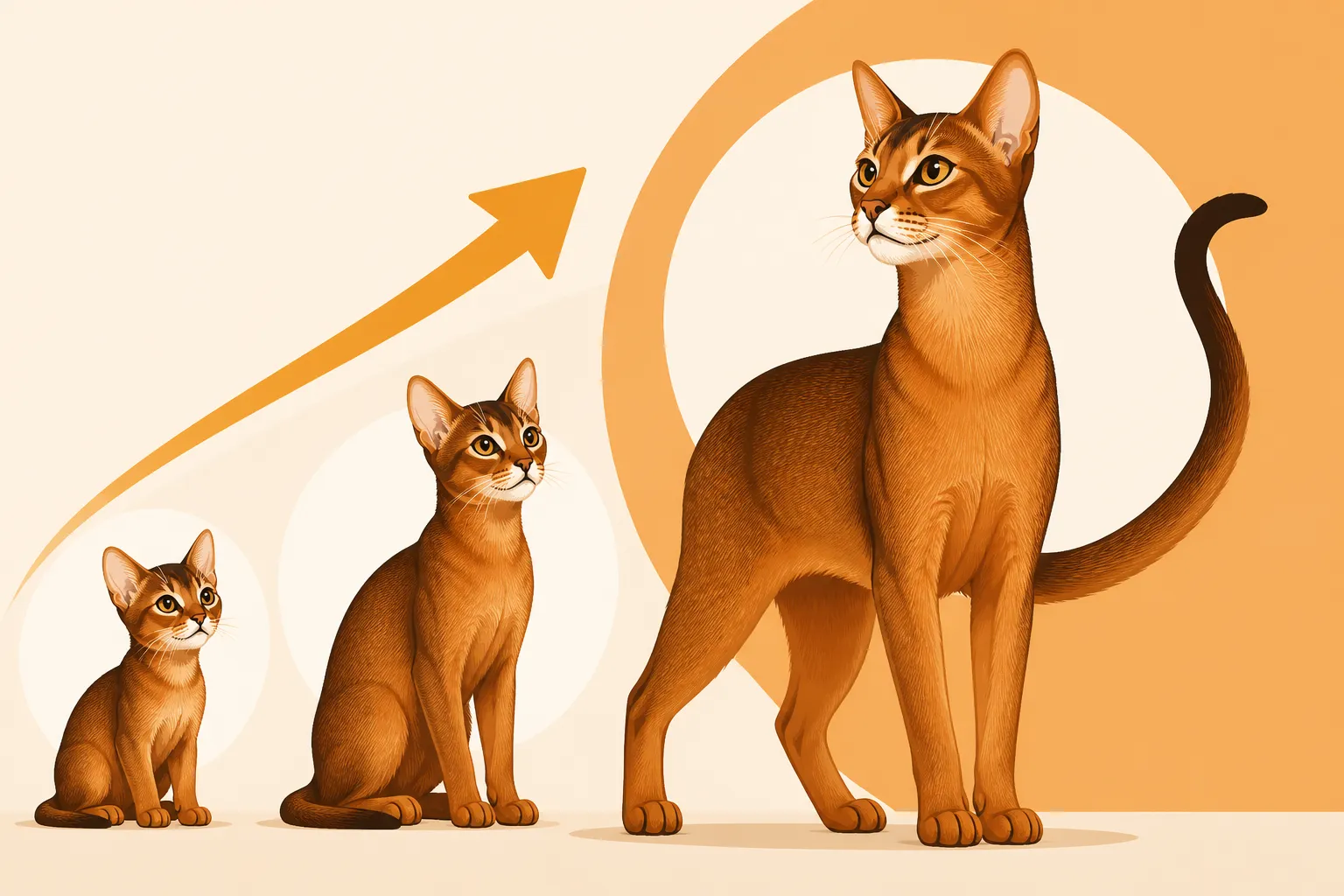
Most Abyssinians are close to their adult height and overall length by around a year old. That doesn’t mean they’re finished growing in every sense. A young cat may have long legs, a narrow waist and an adult-looking outline while still gaining muscle and filling out gradually. Some continue to mature into their second year.
This is especially noticeable in the Abyssinian because the breed is fine-boned and athletic rather than broad and heavy. A kitten can appear tall and rangy, then slowly develop a more substantial chest, shoulders and hindquarters. That later change is often subtle: you may notice it when picking the cat up or comparing recent photos rather than seeing a dramatic jump in size.
So “full size” is best treated as a gradual milestone, not a birthday on which growth suddenly stops. Height may level off while the body continues to develop, and the timing varies with sex, genetics, nutrition and individual health. For a general picture of adult proportions, see How Big an Adult Abyssinian Gets.
Weight varies with build, sex and individual development
Abyssinians are usually lean, active cats, and two healthy adults of the same age can have noticeably different weights. Sex can be one factor: males often have a larger frame than females, but there is plenty of overlap. A smaller adult male may be healthy, just as a larger female may be perfectly well proportioned.
That is why a number on the scale cannot tell the whole story. It needs to be considered alongside the cat’s frame, muscle, appetite and body condition. A kitten who gains steadily on their own growth curve may be doing well even if their weight differs from a breed-average figure. On the other hand, a kitten whose weight stops rising or begins to fall deserves attention, even if they still look lively.
For more context on the usual range, read How Much an Adult Male Abyssinian Weighs and How Much an Adult Female Abyssinian Weighs. These figures are useful reference points, not targets that every cat must hit. Your veterinarian can assess your cat’s build and tell you whether their development looks appropriate.
| Growth stage | What you may notice | What to keep in mind |
|---|---|---|
| Kittenhood | Rapid changes in height, length and weight | Compare progress over time, not against another kitten |
| Around the first birthday | Many cats are near adult height and length | A slim appearance can still be normal for the breed |
| Young adulthood | Muscle and body depth may continue to develop | The scale may change slowly as the cat matures |
| Mature adulthood | Frame and weight tend to become more consistent | A new weight change is more meaningful when compared with the cat’s own baseline |
What changes as an Abyssinian matures
A young adult can look lean without being underweight
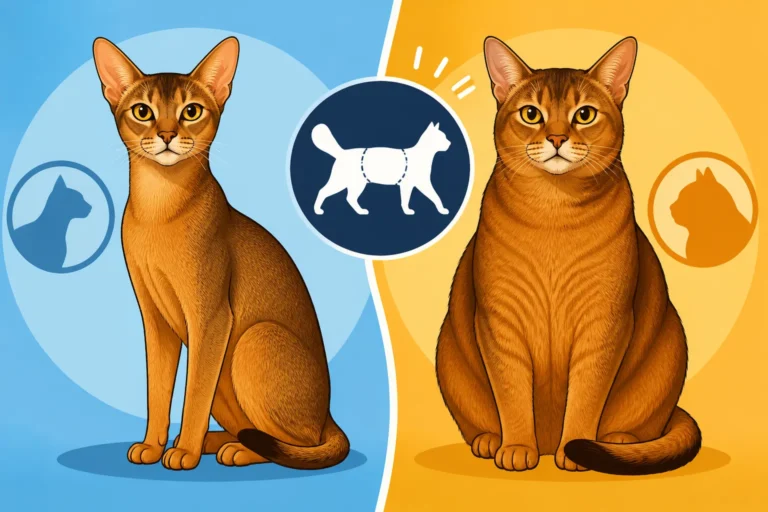
The Abyssinian’s athletic shape can make age-related changes hard to read. A healthy cat may have a visible waist and a tucked-up abdomen, and their coat lies close to the body rather than disguising the outline. That can make them look smaller or thinner than a fluffier breed, especially during adolescence.
Instead of judging by appearance alone, look at overall condition. You should be able to feel the ribs without pressing hard, while they should not be sharply visible. From above, the body usually narrows behind the ribs before widening at the hips. These checks are more helpful when repeated regularly, since you’ll learn what is normal for your own cat. How to Feel an Abyssinian's Waist Under Its Coat and How to Feel an Abyssinian's Ribs Under a Ticked Coat explain what to look for.
Muscle can also make a cat feel different without a major change in weight. As an Abyssinian gets older and more coordinated, regular climbing and play can build muscle through the shoulders and hindquarters. If the cat is eating normally and staying active, that gradual change may be part of maturing. If their shape changes quickly, or they seem thinner despite eating well, contact your vet rather than assuming they are simply finishing their growth.
Coat and kitten proportions can confuse the picture
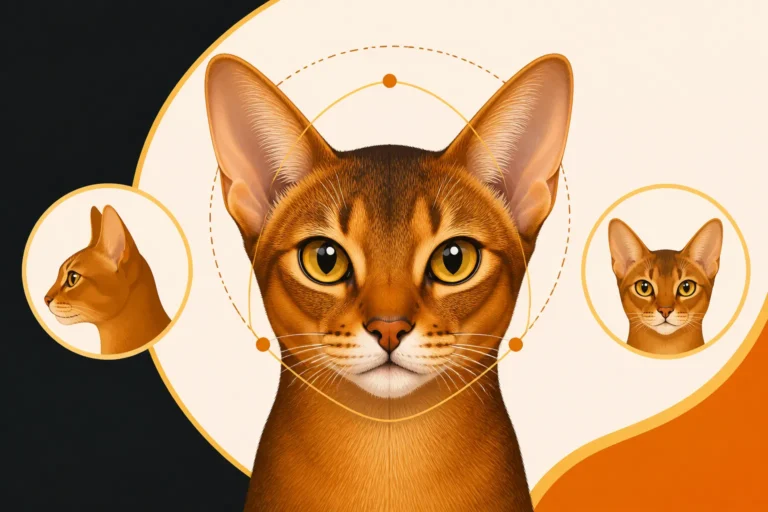
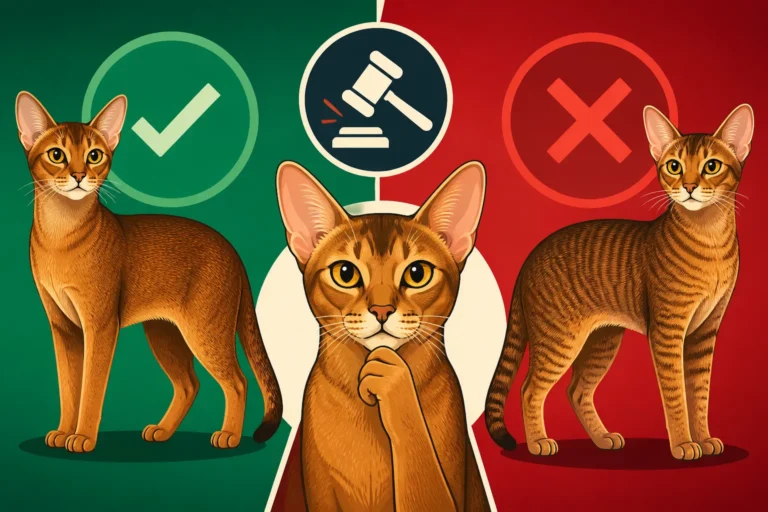
Abyssinian kittens often have proportions that look a little unfinished: large ears, long legs and a slim body. Their coat may also look less even or richly ticked than it will later. A kitten’s early appearance is not a reliable guide to the adult outline they will eventually have. What an Abyssinian Kitten Looks Like at Eight Weeks offers a closer look at that early stage.
As the cat matures, the body often becomes more balanced, while the coat’s color and ticking continue to develop. That can create the impression that the cat has suddenly grown, even when the change is mostly in appearance. Lighting, seasonal coat changes and posture can all affect how large or substantial an Abyssinian looks in a photograph.
Try to compare your cat in similar conditions: standing naturally, viewed from above and from the side, rather than stretched out mid-jump or curled into a tight ball. A few photos taken every month or two can make gradual development easier to notice. They are not a substitute for weighing the cat, but they can help you spot changes that are hard to remember from day to day.
How to track healthy growth at home
Weigh consistently and look for a trend
A single weigh-in is only a snapshot. To understand growth, weigh your kitten on a consistent schedule and record the date and result. A small pet scale can make this easier; if your cat is too wiggly to stand still, you can weigh yourself holding them and subtract your own weight. Use the same method each time so the readings are more comparable.
A simple record helps you notice whether weight is rising steadily, staying stable after maturity or changing unexpectedly. You can jot down appetite, energy and any changes in food alongside the number. Why an Abyssinian's Weight Should Be Recorded at Every Visit explains why keeping that history can help at veterinary appointments, and How Much an Abyssinian Should Weigh at One provides age-specific context without turning one number into a universal goal.
If you shop at Chewy, you can use a notebook or a phone note to keep a growth log alongside reminders about food changes and routine appointments. The important part is not where you buy supplies; it is having a record you can bring to the vet. For a wiggly kitten, weighing at the clinic during a scheduled visit may be more practical than trying to do it at home.
Feed for steady development, not rapid weight gain
A growing kitten needs food formulated for growth, with portions adjusted to their age, activity and body condition. Follow the feeding guidance on the food as a starting point, then ask your veterinarian whether the amount suits your kitten. Kittens do not all grow at the same pace, and a highly active Abyssinian may not follow the appetite pattern of a quieter cat.
Avoid trying to make a naturally slender kitten “fill out” by offering unlimited extra food or switching to richer meals without guidance. More calories are not a shortcut to a healthier adult frame. They can instead lead to excess fat, which is not the same as building muscle. If you are moving from kitten food to an adult diet, make the change gradually and ask your vet about timing for your individual cat.
When comparing foods or arranging regular deliveries, a retailer such as Chewy may help you keep the same diet on hand during a transition. Check the product’s feeding directions and discuss any dietary concerns with your veterinarian. If appetite suddenly drops, meals become difficult, or weight falls, treat that as a health issue rather than a growth-stage quirk.
When a size or weight concern needs attention
A growth plateau is not always a problem, but context matters
As a kitten approaches adult size, weight gain naturally slows. A short period of little change may not signal illness, particularly if the cat is eating, playing and behaving normally. What matters is the broader pattern: whether the kitten has continued to develop, whether their weight is stable or falling, and whether anything else has changed.
Contact your vet if a kitten stops gaining for a sustained period, loses weight, seems weak, eats less, vomits repeatedly or has ongoing diarrhea. A young cat can appear energetic while still having a health problem, so avoid relying on activity alone as reassurance. Your vet may consider diet, parasites, dental discomfort or other medical causes depending on the signs and examination.
There is no need to compare every weekly weigh-in with a strict growth chart unless your veterinarian has asked you to do so. A consistent record is more useful than reacting to small fluctuations, which can happen with meal timing, hydration or differences in the weighing method.
Sudden changes in an adult deserve a fresh look
Once your Abyssinian’s weight has settled, a clear change from their usual shape is worth paying attention to. Weight loss can be easy to miss under a fine, close-lying coat, and a cat may remain playful even as their body condition changes. Take note if the waist becomes sharply pronounced, the spine or hips feel more prominent, or your cat loses muscle along the back and thighs.
Weight gain also merits attention. A heavier cat may have less ease jumping or climbing, and extra weight can place unnecessary strain on the body. Rather than cutting portions abruptly, ask your veterinarian to assess body condition and recommend a safe feeding plan. If the change happened quickly, mention when it began and any accompanying shifts in thirst, appetite, litter-box habits or activity.
Chewy can be a practical place to reorder a familiar food or feeding supplies, but a retailer cannot assess why a cat’s size has changed. A new or persistent weight shift is a reason to book a veterinary appointment, not simply to change brands or adjust food without guidance.
Disclaimer
This article is for general informational purposes only and does not constitute professional advice. Laws, prices and regulations vary by location and change over time. Consult a qualified professional for guidance on your specific situation.