Why a Necklace Marking Faults an Abyssinian
An Abyssinian’s coat should read as an even, finely ticked color, so a dark band around the neck can stand out in the show ring. That marking is often called a necklace, and it can make an otherwise lovely cat look less uniform. Here’s what judges mean by the term, how it differs from ordinary coat shading, and what owners should know about kittens and grooming.
What a necklace marking looks like on an Abyssinian
A band of markings around the neck
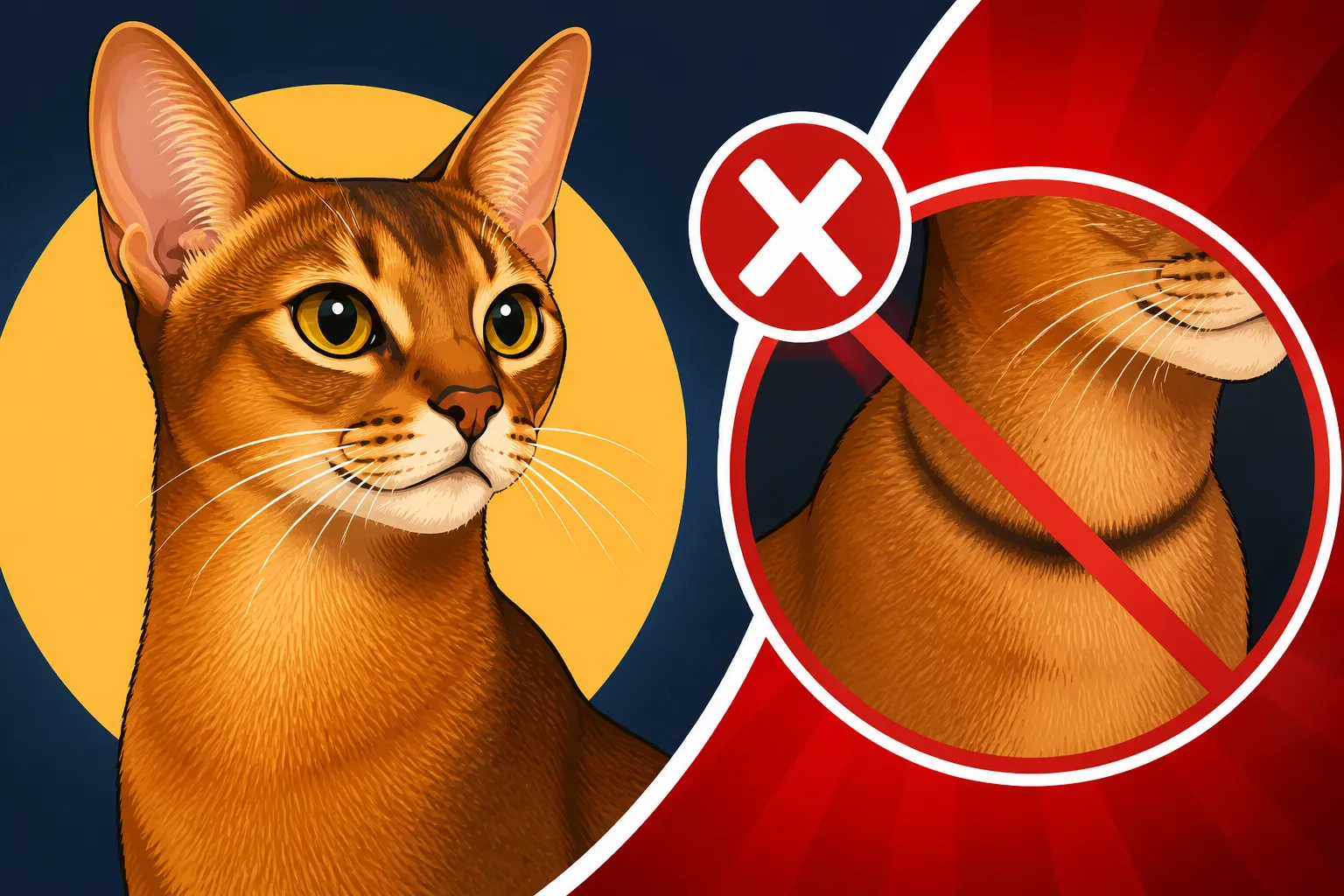
A necklace is a band or series of markings that encircles, or partly encircles, an Abyssinian’s neck. It may look like a dark line beneath the chin, a curved stripe across the throat, or a pair of broken marks that suggest a collar. The shape and visibility vary: some are obvious at a glance, while others show only when the fur parts or the cat turns its head.
The term describes a coat marking, not a physical collar or a skin problem. It is also different from the natural contrast between an Abyssinian’s lighter throat and darker back. A necklace tends to look like a distinct stripe or band, while the coat’s normal color shifts should appear more blended.
A useful way to picture the difference is to imagine the cat as a finely shaded painting. The expected coat has a consistent, softly banded effect; a necklace looks more like a line drawn across that shading. For a broader overview of the breed’s appearance, see What an Abyssinian Looks Like Against the Show Standard.
Why a necklace stands out on a ticked coat
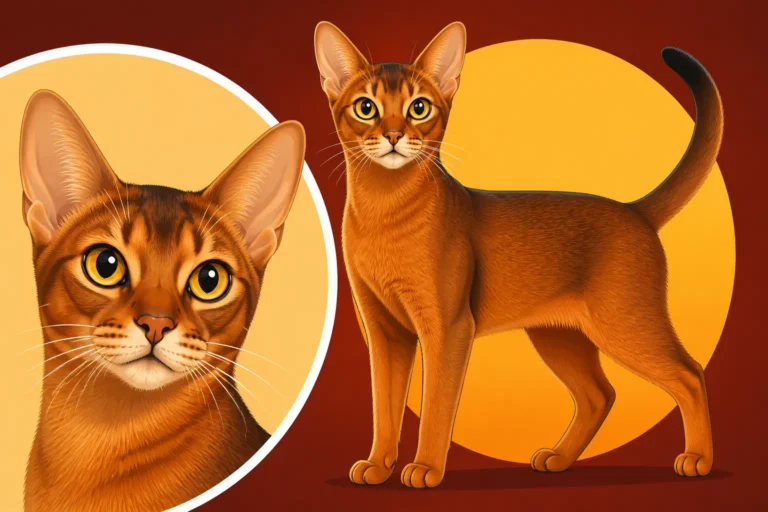
Abyssinians are known for ticking: individual hairs carry alternating bands of color, creating a blended, glowing appearance rather than the obvious stripes seen on many tabby cats. That even impression is central to the breed’s look. A dark neck band interrupts it, drawing the eye to one spot instead of letting the coat appear continuous.
The contrast matters because the breed’s coat pattern is subtle by design. From across a room, an Abyssinian may look nearly solid in color; up close, the bands on each hair create depth and warmth. A necklace can make the throat look more conventionally striped or banded. The distinction between ticking and larger body markings is explored in What Makes an Abyssinian's Coat Ticked Rather Than Striped and Why an Abyssinian Has No Tabby Stripes.
A marking does not tell you whether a cat is healthy, affectionate, or well cared for. It is a matter of appearance and, in the show ring, how closely the coat fits a breed standard. A pet Abyssinian with a necklace can still be an excellent companion.
Why judges consider a necklace a fault
The standard favors a clean, even pattern
Show standards describe the overall appearance judges are looking for, including coat color, texture, and pattern. In an Abyssinian, the desired effect is an even, clear coat with consistent ticking. A necklace is generally considered a fault because it introduces a visible band where the coat should blend smoothly.
That does not mean every dark patch around the throat receives the same evaluation. How noticeable it is, whether it is continuous or broken, and the wording of the registry’s standard can all affect how a judge assesses it. The overall quality of the cat matters too; one coat fault is not necessarily the only feature being considered.
Judges look at the coat in context, not just at a single mark. They may assess ticking, color, texture, and other visible pattern features together. How Judges Check an Abyssinian's Ticking explains why a judge examines the coat closely, while What an Abyssinian's Coat Should Feel Like in the Ring covers another important part of presentation.
A fault is not the same as a disqualification
In everyday language, “fault” can sound severe, but in cat showing it usually means a feature that falls short of the preferred standard. A necklace marking should not automatically be understood as a disqualification. The exact rules depend on the registry and show standard, so exhibitors should check the rules that apply to their show rather than relying on a general description.
It is also worth separating show evaluation from breeding decisions. A single visible marking does not establish a cat’s overall genetic quality or determine every possible breeding outcome. Responsible breeding involves many factors, including health, temperament, pedigree, and the characteristics of both cats. If you are considering a kitten for showing or breeding, ask the breeder how they describe the coat and what expectations are realistic.
| Feature | What it may look like | How to think about it |
|---|---|---|
| Necklace marking | A distinct line or broken band around the throat | A visible coat-pattern fault in the show context |
| Natural throat shading | A gradual shift in color with no clear stripe | Often part of the coat’s overall shading |
| Ticking | Alternating color bands on individual hairs | A defining feature of the Abyssinian coat |
| Ghost marking | Faint patterning that may be more visible in a kitten | Observe how the coat develops; do not assume it will remain unchanged |
| Dirt or loose debris | Surface discoloration that may wipe or brush away | Check gently before deciding it is a coat marking |
Why neck markings can be confusing in kittens
Coat patterns can look different as a kitten grows
A young Abyssinian’s coat may not yet have the clear, finished appearance of an adult’s. Kitten fur can look soft, uneven, or less richly colored, and faint patterning may be easier to see during development. Some owners notice what looks like a necklace or stripe and worry that the cat’s coat is permanently marked.
Take clear photographs in natural light and compare them over time rather than judging the coat from one quick look. Avoid trying to rub or brush a marking away aggressively. If it is part of the hair pattern, scrubbing will not change it and may irritate the skin. If the area is crusted, inflamed, or accompanied by hair loss, that is a different concern and merits veterinary advice.
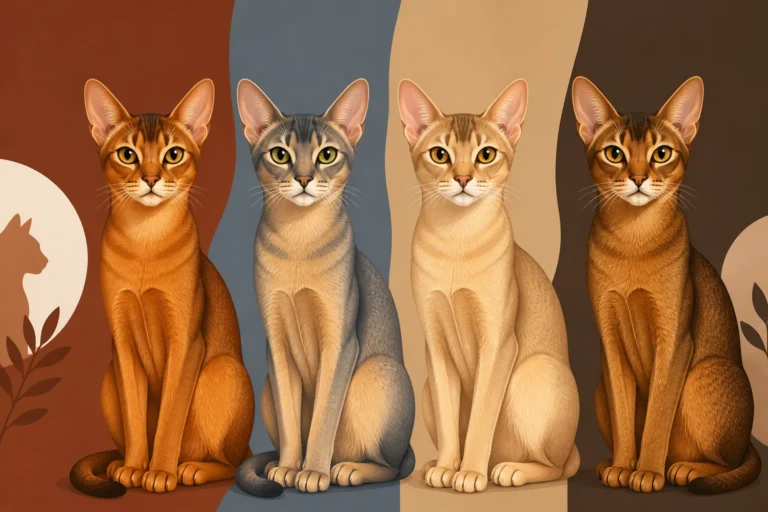
For a show prospect, ask an experienced Abyssinian breeder or the relevant registry how the marking is likely to be viewed. A casual visual impression is not a substitute for an assessment under the specific standard. It can also help to look at the kitten’s coat alongside the breed’s general pattern features, including How an Abyssinian's Coat Color Is Registered.
The coat may look different under different lighting
Warm indoor bulbs, direct sunlight, and camera flash can all change how a coat appears. A dark area can look more pronounced in one setting, while a subtle band may disappear in another. Fur direction matters too: when the coat is parted, the roots and individual hair bands become easier to see than they do when the fur lies naturally.
If you are trying to decide whether a mark is a true necklace, look at the cat in more than one kind of light. Use a calm, familiar setting and avoid repeatedly handling the throat just to inspect it. A relaxed cat with the coat lying naturally often gives a more useful impression than a close-up photo taken with flash. Why an Abyssinian's Coat Looks Different in Every Light offers more context on these shifts in appearance.
What owners should do about a necklace marking
Keep grooming gentle and practical
Grooming cannot remove a marking that is part of the coat’s natural pattern. For an Abyssinian, the goal is usually to keep the short coat clean and in good condition, not to flatten or overwork it. A gentle grooming mitt or soft comb can lift loose hair, but repeated brushing over a neck marking will not make it disappear.
If you shop for basic grooming tools at Chewy or another pet retailer, look for a soft tool suited to a short coat and use a light touch. Check the product’s intended use and follow its instructions. You do not need a harsh deshedding tool to try to correct a pattern marking, and using one too forcefully can irritate the skin or disturb the coat’s natural finish.
Some people mistake a patch of dirt or residue for a marking. If the coat seems soiled, gently wipe the area with a damp, soft cloth and then let it dry. Don’t use human shampoo or household cleaners. If the discoloration remains, or the skin looks uncomfortable, ask a veterinarian before trying additional products. Chewy may carry pet-safe grooming supplies, but a retailer’s product listing is not a substitute for veterinary guidance when there is a skin concern.
Focus on the cat, not just the show-ring detail
For a companion cat, a necklace marking usually calls for no special action. It does not need treatment, and there is no benefit to repeatedly inspecting or trying to alter the coat. Spend your energy on routine care: comfortable handling, appropriate nutrition, regular veterinary visits, and a safe, engaging home.
If showing is your goal, get advice from a breeder or exhibitor familiar with the registry where you plan to compete. They can help distinguish a clear necklace from ordinary shading and explain how the relevant standard treats it. If you are choosing a kitten, ask to see the coat in natural light and discuss any visible markings plainly. A reputable breeder should be comfortable explaining what they see without promising that a kitten will become a perfect show prospect.
When buying a grooming mitt or comb through Chewy, use it for routine coat care rather than as a way to “fix” the marking. The most useful tool is one your cat tolerates and that suits a short, close-lying coat. If the cat resists, keep sessions brief and positive instead of turning grooming into a struggle.
A necklace marking can matter in a show evaluation because it interrupts the smooth, ticked appearance prized in the Abyssinian. For a pet, though, it is simply one detail of the coat—not a health problem or a measure of the cat’s worth. The right response is to understand what you are seeing, check the applicable show standard if needed, and care for the cat gently.
Disclaimer
This article is for general informational purposes only and does not constitute professional advice. Laws, prices and regulations vary by location and change over time. Consult a qualified professional for guidance on your specific situation.