Who Evelyn Mague Was
Evelyn Mague helped turn longhaired Abyssinians from kittens that breeders often overlooked into the foundation of a recognized cat breed. If you have wondered who named the Somali cat, why it is connected to the Abyssinian, or how it moved from an unusual coat type to a breed in its own right, Mague’s story is central.
Evelyn Mague and the Somali cat’s beginnings
Who Evelyn Mague was
Evelyn Mague was an American cat breeder and advocate for longhaired Abyssinians. She is best remembered for helping establish the Somali as a distinct breed and for giving it the name “Somali.” That name points to Somalia, which borders Ethiopia, the country once known in English as Abyssinia. The geographical connection made the name a fitting companion to “Abyssinian,” though it did not mean the breed originated in Somalia.
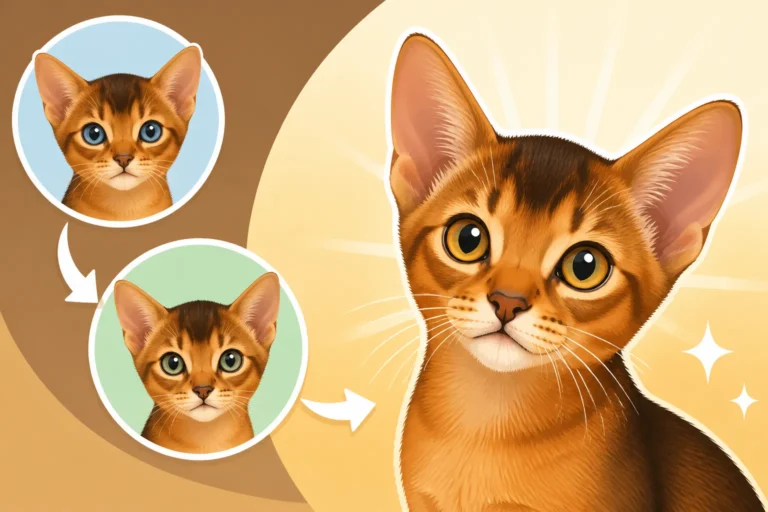
Mague’s work took place when longhaired kittens could appear in Abyssinian litters but were not necessarily welcomed by breeders focused on shorthaired cats. A kitten with a longer, softer coat might be treated as an unwanted surprise rather than as the start of a new breed. Mague saw a different possibility: the kittens had the distinctive look and lively character associated with Abyssinians, but with a flowing coat that deserved attention in its own right.
She was not simply an observer who happened to like a particular kitten. Mague helped organize interest in these cats, encouraged breeders to take them seriously, and worked toward recognition for the emerging breed. In that sense, her contribution was both practical and persuasive: she helped turn scattered interest into a shared breeding and advocacy effort.
The longhaired kitten that caught her attention
The Somali did not begin with a single planned cross between unrelated breeds. Its defining long coat came from a recessive longhair gene that could be carried by shorthaired Abyssinians. When two cats carrying that gene were bred, a kitten could inherit two copies and develop a longer coat. That meant longhaired kittens could appear unexpectedly within otherwise shorthaired breeding programs.
For some breeders, those kittens were difficult to place or were quietly removed from breeding plans. Mague and other enthusiasts instead recognized that the coat could be a feature worth preserving. The story of her involvement is often discussed alongside individual early cats and breeders, but the breed’s development was a gradual effort rather than a simple one-person discovery. You can explore the feline side of that story in Which Kitten Started the Somali Breed and Why Somali Kittens Were Once Given Away Quietly.
Mague’s role mattered because noticing a distinctive kitten is only the first step. A breed needs a group of people willing to document cats, share breeding plans, establish expectations for appearance, and ask cat organizations to recognize them. Her advocacy helped provide that structure. The Somali’s history, then, is not just about one striking coat; it is also about making a case for why those cats should be bred and shown intentionally.
How Mague helped shape the Somali breed
Naming a breed and giving it an identity
Choosing a name helped distinguish the Somali from the Abyssinian while keeping their relationship visible. Somalia lies beside Ethiopia, so the name created a geographical pairing without claiming that the Somali had a separate, independently documented origin there. It was a breed name chosen to signal kinship as well as difference.
That distinction is important because the Somali is not simply an Abyssinian with an unrelated history. The two breeds share a close background, and the long coat is the most obvious difference. The Somali’s coat has longer fur and a fuller appearance, especially around the chest and tail, while the Abyssinian’s coat lies close to the body. Their shared features and differences are explored in How an Abyssinian Differs From a Somali.
A name also gives breeders and cat organizations a way to talk about a consistent type. Once enthusiasts began using “Somali,” they could describe the cats as a group, discuss desired coat and body traits, and build public recognition. Mague’s choice helped make the emerging breed easier to identify—and easier for interested owners to find.
Organizing supporters and promoting recognition
A new breed cannot rely on enthusiasm alone. Breeders need to coordinate, keep records, agree on a standard, and persuade registries that the cats represent a stable type rather than an accidental variation. Mague is associated with organizing Somali supporters and promoting the breed during its early development, helping provide a community around cats that had previously been overlooked.
This kind of work is often less visible than the show-ring milestones that come later. It involves conversations among breeders, decisions about which cats should be bred, and repeated efforts to explain why a longer coat does not make the cats any less connected to Abyssinians. For a small group of advocates, even basic recognition could take patience: the breed had to be understood before it could be accepted.
Mague’s advocacy helped create that groundwork. The later progression toward formal recognition depended on the efforts of many people, not only one breeder. For an overview of the breed’s status and milestones, see When the Somali Reached CFA Championship. The related history of its early advocates is also covered in Who Bred the First Somali.
| Part of the Somali’s history | What it means |
|---|---|
| Longhair gene | A recessive gene could produce longhaired kittens in Abyssinian lines |
| Breed name | “Somali” linked the cats geographically with the Abyssinian name |
| Breeder advocacy | Enthusiasts organized to promote the longhaired cats as a distinct breed |
| Recognition | Cat organizations later evaluated and accepted the Somali as a breed |
Why the Somali’s history is tied to the Abyssinian
The longhair gene was already in the picture
The Somali’s coat did not appear because breeders suddenly introduced a longhaired breed into Abyssinian lines. The longhair gene could be carried without showing in a shorthaired cat. A cat carrying one copy would usually have a short coat but could pass the gene to kittens. When a kitten inherited the gene from both parents, it could develop a long coat.
That genetic pattern helps explain why a longhaired kitten could appear in a litter of Abyssinians even when the parents looked shorthaired. It also helps explain why breeders might have encountered these kittens for some time before a coordinated effort began to establish the Somali. The science behind the shared coat history is discussed in Why the Long Hair Gene Was in Abyssinians All Along.
It is easy to look back and assume that the Somali must have been deliberately created as a planned new breed from the beginning. In reality, the longhair trait could remain hidden across generations, then become visible when the right inheritance pattern occurred. Mague and other advocates helped change how people responded when that happened: instead of treating a longhaired kitten as a breeding mistake, they began to see a possible breed.
A distinct appearance, a shared family history
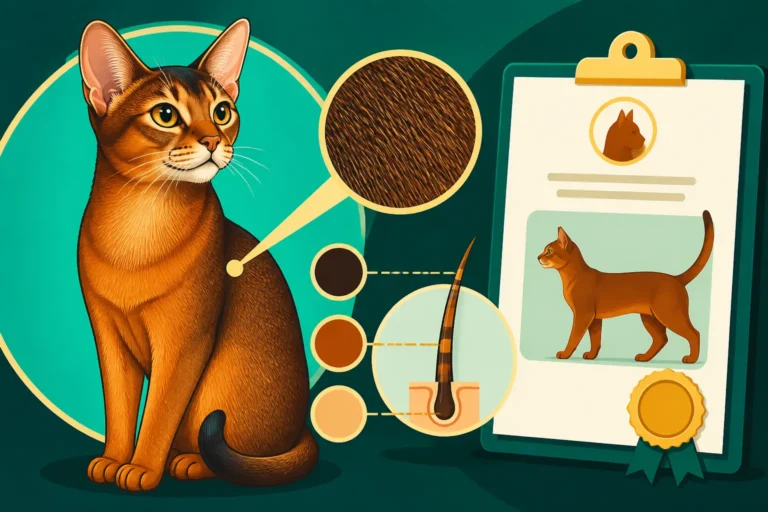
A Somali is not merely an Abyssinian that has been allowed to grow shaggy. Its coat is longer and generally has a soft, full appearance, while the characteristic ticking—the bands of color on individual hairs—connects the two breeds visually. The Somali’s tail and chest ruff can give it a noticeably different outline, but its relationship to the Abyssinian remains central to its history.
The two breeds also share a reputation for being alert, athletic, and curious. Individual cats vary, of course, and no breed description can predict every cat’s temperament. Still, their common background helps explain why Somali enthusiasts often describe them as spirited companions rather than as purely decorative longhaired cats.
Breeding practices have changed and developed over time, so the relationship between the breeds is not best understood as a simple statement that they are always bred together or always kept entirely separate. The details depend on breeding goals and the rules of the relevant registry. For context, Whether Abyssinians and Somalis Are Still Bred Together examines that question, while Why the Somali Was Named After Somalia explains the reasoning behind the breed name.
Evelyn Mague’s legacy and what it means today
From overlooked kitten to recognized breed
Mague’s lasting contribution was helping change the status of longhaired Abyssinians. Before organized advocacy, a longhaired kitten could be treated as an inconvenient surprise. With enthusiasts working to promote the cats, the same trait became the defining feature of a new breed. That shift—from disregarded variation to valued identity—is at the heart of the Somali’s history.
The process also shows why breed development rarely comes down to one dramatic moment. A breeder may notice a kitten, but a breed takes shape through repeated choices: preserving a trait, finding compatible cats, building agreement about type, and seeking recognition. Mague’s role belongs in that broader effort. She helped give the project a name and a public voice, while other breeders and organizations contributed to its continued development.
For anyone interested in cat history, this is a useful reminder that the traits people admire today may once have been considered undesirable. Long coats, unusual markings, and other variations can be treated differently depending on the breeding goals of a particular era. The Somali’s story is a particularly clear example of how advocacy can reshape that judgment.
What prospective owners can take from her story
Knowing the Somali’s history can help prospective owners understand why breed descriptions often compare it with the Abyssinian. The relationship is real, but the Somali is recognized as its own breed, with a longer coat and its own appearance standards. If you are choosing between the two, consider the day-to-day differences that matter to you, including coat care, activity needs, and how well an individual cat fits your household.
A breed’s origin story is interesting, but it should not replace questions about a specific cat. Ask a breeder or rescue about the cat’s health history, temperament, socialization, and everyday care. Spend time with the cat if you can, and pay attention to whether its energy and grooming needs suit your home. Even within a breed, personalities and practical needs differ.
Evelyn Mague is remembered because she helped make a once-overlooked kind of kitten visible and valued. Her role in naming and promoting the Somali connects the breed’s modern identity to the longhaired kittens that appeared in Abyssinian lines. The Somali is now more than an unusual coat in an Abyssinian litter: it is a breed with a shared history, a distinct appearance, and a story shaped by breeders who chose to take those kittens seriously.
Disclaimer
This article is for general informational purposes only and does not constitute professional advice. Laws, prices and regulations vary by location and change over time. Consult a qualified professional for guidance on your specific situation.