Why the Somali Was Named After Somalia
The Somali cat’s name can sound like a claim about where the breed came from, but that is not what it means. The name was chosen because Somalia borders Ethiopia, once widely known as Abyssinia—the country after which the Abyssinian cat was named. Here’s how that geographical link became a breed name, and what it does and does not tell you about the cat’s history.
Why the Somali cat was named after Somalia
The name connects two neighboring countries
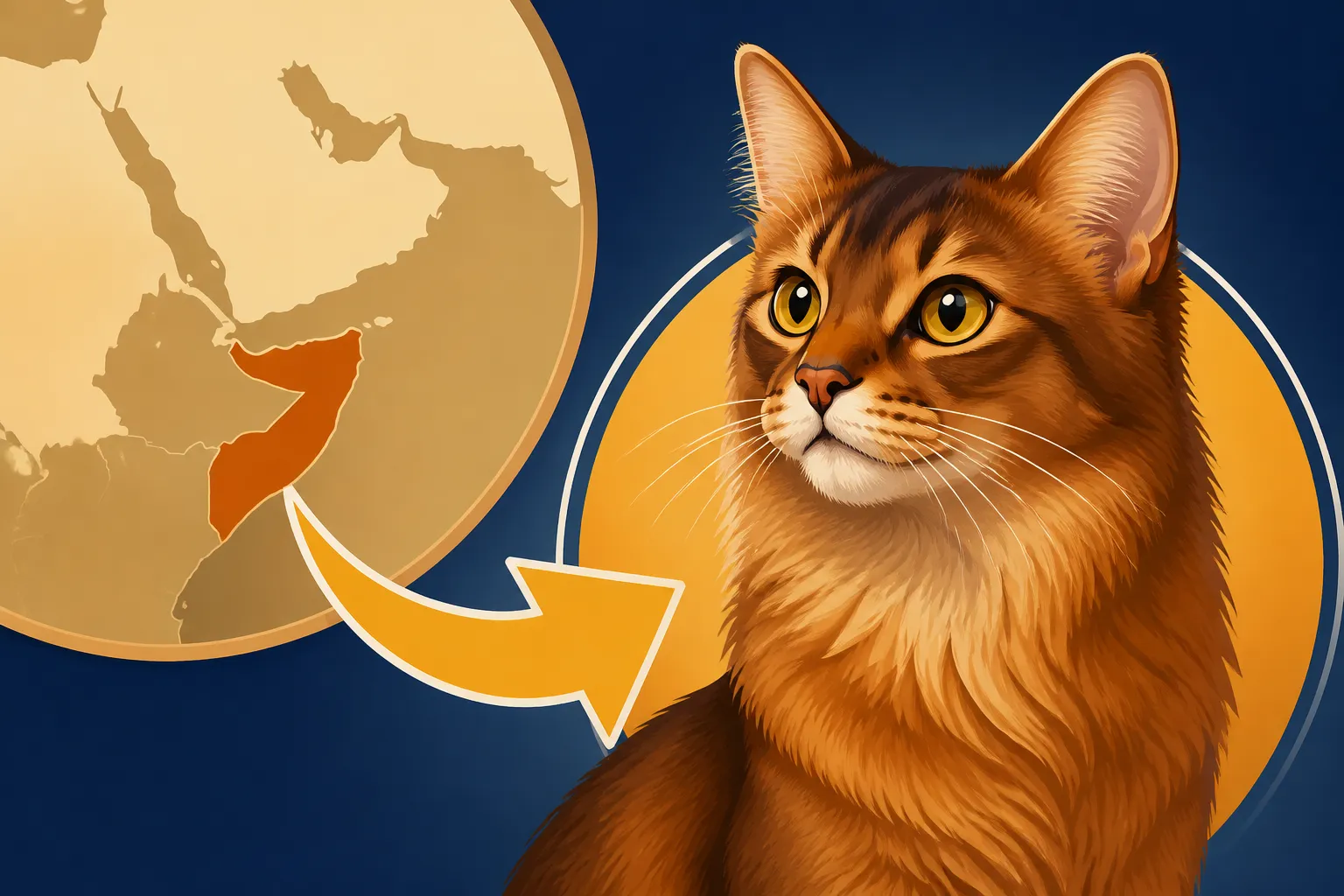
Somalia sits beside Ethiopia in the Horn of Africa. Ethiopia was historically known outside the region as Abyssinia, and the Abyssinian cat already had a name tied to that association. When breeders began establishing a longhaired breed closely related to the Abyssinian, “Somali” offered a neighboring name that complemented “Abyssinian.”
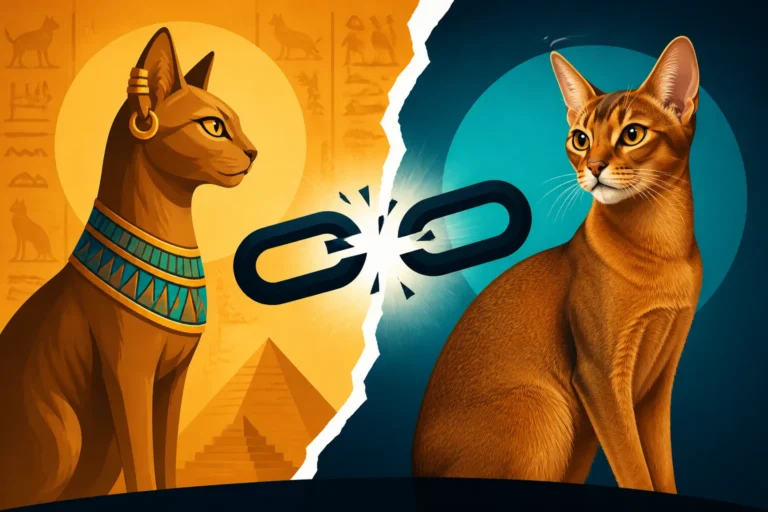
That connection is the central explanation for the Somali’s name. It was a geographical pairing: Abyssinia and Somalia are neighboring places, and Abyssinian and Somali cats are closely related breeds. The name does not mean that the Somali cat originated in Somalia, nor does it establish a documented ancestral link between Somali cats and cats from that country.
It’s an easy distinction to miss. Breed names often sound like precise records of origin, but they can reflect a breeder’s choice, a historical association, or a visual impression instead. In this case, the name makes sense as a companion to Abyssinian, not as proof of Somali ancestry.
The name was a deliberate breed choice
The Somali did not emerge as a separate breed because someone discovered a distinct population of cats from Somalia. Rather, longhaired kittens appeared in Abyssinian breeding lines, and breeders eventually began treating those cats as a breed in their own right. The Somali name helped give that developing breed a recognizable identity.
Breeder Evelyn Mague is widely associated with promoting the name and organizing support for the Somali as a distinct breed in the United States. The name made a tidy connection: the shorthaired Abyssinian had its neighboring-country counterpart in the longhaired Somali. For a breed that needed to be distinguished from its Abyssinian relatives, the name was memorable and meaningful.
For more on how that separate identity developed, see Who Bred the First Somali and When the Somali Got Championship Status. Those histories help explain how a name that began as a geographic reference became part of a formal breed identity.
The name is not evidence of a Somali origin
A cat breed’s name is not the same thing as a reliable family tree. The Somali’s name can prompt questions about the breed’s origins, but it cannot answer them on its own. The connection breeders intended was between neighboring country names and related cat breeds—not a claim that the breed was brought from Somalia.
The same caution applies to the Abyssinian’s own name. Its long-standing association with Abyssinia does not, by itself, establish a clear path from ancient or regional cats to modern pedigreed Abyssinians. Breed histories can contain appealing origin stories that are harder to document than the names suggest.
So, if someone asks whether the Somali is “from Somalia,” the most accurate short answer is: the name refers to Somalia, but the breed’s name was chosen because Somalia borders the region associated with the Abyssinian. It is a naming link, not a confirmed place of origin.
How the Somali and Abyssinian became linked
Longhaired kittens appeared in Abyssinian lines
The Somali’s relationship to the Abyssinian is not merely a naming convenience. The Somali is closely related to the Abyssinian, and its longer coat is associated with a recessive longhair gene found within Abyssinian breeding lines. A recessive trait can be carried by cats that do not visibly show it, which helps explain why longhaired kittens could appear in litters from shorthaired parents.
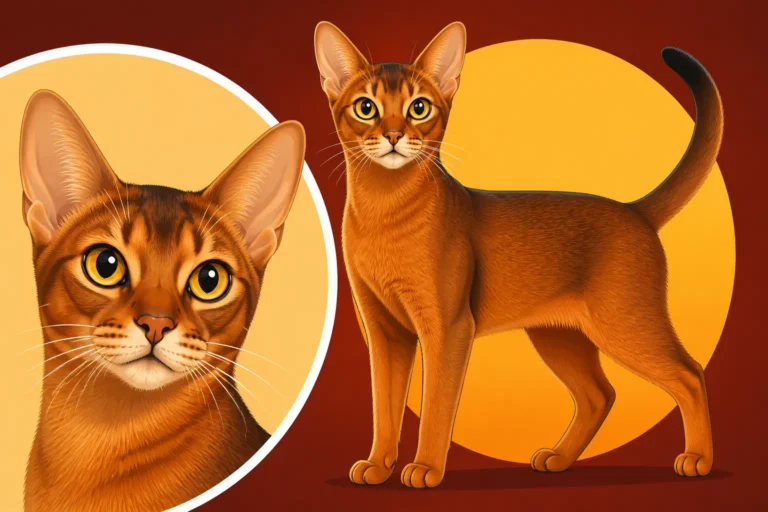
That history is why the Somali is often described as an Abyssinian with long hair, although the two breeds are now recognized as distinct. The Somali’s coat is not simply a longer version of the Abyssinian’s in everyday appearance: its ruff, britches, and fuller tail create a noticeably different silhouette. But the breeds share a close relationship and many recognizable features.
The underlying connection is explored in The Somali Is an Abyssinian With Long Hair and Why the Long Hair Gene Was in Abyssinians All Along. These links are useful if the name raises a second question: why a cat associated with Somalia can have such a direct relationship to Abyssinians.
The long coat became a defining feature
A Somali’s coat gives the cat a soft, plumed appearance, especially around the tail and neck. The Abyssinian’s coat, by contrast, lies closer to the body and is short. Both breeds are known for their ticked coats, in which individual hairs have bands of color rather than clear stripes across the body.
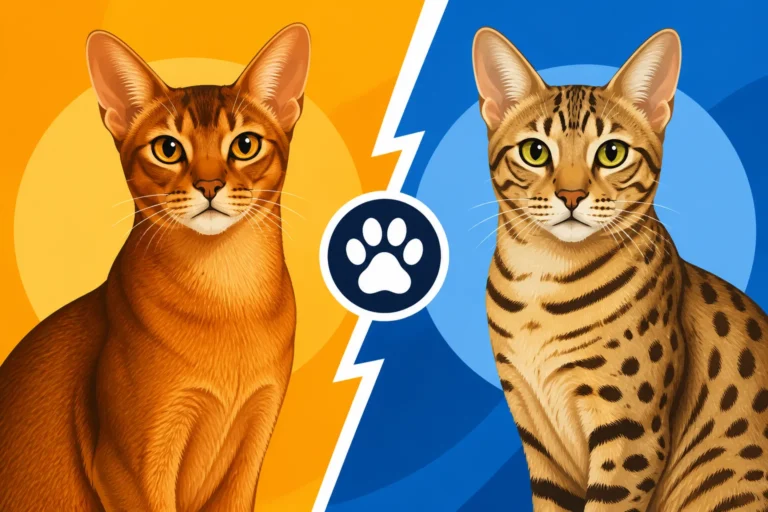
That shared coat pattern can make the family resemblance obvious, even to someone who is not familiar with breed histories. A Somali may look like a more lavishly coated cousin, while the Abyssinian has a sleeker outline. Their facial shape, alert expression, and athletic build can also make the connection apparent.
The physical similarities do not make the breeds interchangeable. Their coat care differs, and their registered breed names remain distinct. For a closer comparison, see How an Abyssinian Differs From a Somali. It’s a helpful way to separate the historical relationship from the details that make each breed its own.
The name helped distinguish the breed
When breeders establish a breed, a distinct name helps people talk about it, register it, and recognize it. “Somali” did that work while preserving a visible connection to Abyssinians. It was different enough to stand on its own, but familiar enough to suggest a relationship.
This is especially useful when a breed develops from a trait that was already present in another breed’s population. A name can clarify that breeders are now selecting for a particular appearance and building a separate identity. In the Somali’s case, the long coat was a major visible difference, and the name helped mark that distinction.
The name also stuck because it is simple to remember. “Somali” and “Abyssinian” sound like a pair, and the neighboring geography gives that pairing a neat explanation. The neatness of the story, however, should not be mistaken for proof of a direct historical journey from Somalia to the modern Somali cat.
What the Somali name does and does not tell you
What the name does tell you
The name tells you that breeders intended a connection to the Abyssinian’s name and its historical association with Abyssinia. Somalia’s location next to Ethiopia made it a fitting companion name for a related cat breed. It also tells you that the Somali was given a distinct identity rather than being referred to only as a longhaired Abyssinian.
In practical terms, the name is a reminder of the Somali’s close breed relationship. If you meet a Somali and notice the ticking, athletic build, and alert expression, those features are not a coincidence. The breed developed in relation to Abyssinians, while its longer coat became central to its own look and recognition.
The name also tells you how much influence a deliberate naming decision can have. Once breeders and cat associations use a name consistently, it becomes part of how the public understands the breed—even when the name is not a literal map of ancestry.
What the name does not tell you
The name does not prove that Somali cats descend from cats native to Somalia. It does not identify a specific Somali cat population that founded the breed, and it does not show that the breed was first developed in Somalia. Those are separate historical claims, and the name alone cannot support them.
It also does not mean that Somali and Abyssinian cats are unrelated. In fact, the breeds are closely connected. Their different names reflect their separate identities, not a lack of shared history. Breeders may continue to make decisions about breeding and registration within the rules of the relevant cat associations, but the names themselves do not explain those practices.
The history of the longhair trait can be confusing because longhaired kittens were not always welcomed as desirable in Abyssinian lines. The story behind that shift is covered in Why Somali Kittens Were Once Given Away Quietly. It adds context to why a distinct breed name eventually mattered.
A quick guide to the naming history
| Question | Clear answer |
|---|---|
| Why is the cat called a Somali? | Somalia borders Ethiopia, historically associated with the name Abyssinia. |
| Is the Somali named after its confirmed place of origin? | No. The name is a geographical association, not proof of origin. |
| Is the Somali related to the Abyssinian? | Yes. The breeds are closely related, and the Somali is associated with longhaired cats from Abyssinian lines. |
| Does the Somali have a different appearance? | Yes. Its longer coat, ruff, britches, and plumed tail distinguish its silhouette. |
| Does the name mean the breed is simply an Abyssinian? | No. The breeds are related but recognized as distinct. |
How to explain the name without repeating a myth
Use the neighboring-country explanation
A clear, careful explanation is: “The Somali was named after Somalia because it borders Ethiopia, historically called Abyssinia, and the Somali is closely related to the Abyssinian.” That captures the intended wordplay without claiming that the breed came from Somalia.
If someone asks whether the name proves Somali ancestry, add that it does not. The Somali’s breed history is tied closely to Abyssinians and the appearance of longhaired kittens in those lines. The country name supplies a neighboring geographical reference, not a documented ancestral route.
This phrasing also avoids dismissing the name as random. It had a purpose: to pair the Somali with the Abyssinian while giving the longhaired breed its own label. That is a more satisfying explanation than either treating the name as literal origin evidence or saying it has no meaning at all.
Keep breed history separate from geography
It helps to keep three ideas separate: the history of the Abyssinian name, the development of the Somali breed, and the geographical relationship between Somalia and Ethiopia. They overlap in the naming story, but they are not the same claim.
The Abyssinian name carries its own complicated history, and the modern breed’s ancestry is not established simply by the country association. The Somali, meanwhile, emerged as breeders developed a separate identity for longhaired cats closely related to Abyssinians. Somalia’s position beside Ethiopia made the name a natural companion.
For the broader background, The Abyssinian Is Probably Not From Abyssinia looks at why the Abyssinian’s name should not automatically be treated as a literal origin label. And Whether Abyssinians and Somalis Are Still Bred Together offers more context on how the breeds’ relationship is discussed in breeding and registration.
The simplest takeaway
The Somali was named after Somalia because it is next to Ethiopia, the country historically linked with the Abyssinian’s name. Breeders used that neighboring-country connection to name a longhaired breed closely related to the Abyssinian. The name is memorable and purposeful, but it is not evidence that the breed originated in Somalia.
That distinction makes the story easier to remember: the Somali’s name is geographical wordplay, while its breed history is rooted in its close relationship with the Abyssinian. The two ideas fit together—but they should not be confused.
Disclaimer
This article is for general informational purposes only and does not constitute professional advice. Laws, prices and regulations vary by location and change over time. Consult a qualified professional for guidance on your specific situation.