Which Abyssinian Color Is Rarest
An Abyssinian’s coat color can make a kitten seem unusual, but “rarest” depends on which colors a registry recognizes and which breeders work with them. Among the four familiar Abyssinian colors, fawn is often the hardest to find. That does not mean every fawn kitten is exceptionally rare—or that rarity should outweigh health, temperament, and responsible breeding.
Which Abyssinian color is usually the rarest
Fawn is often the least commonly seen of the four
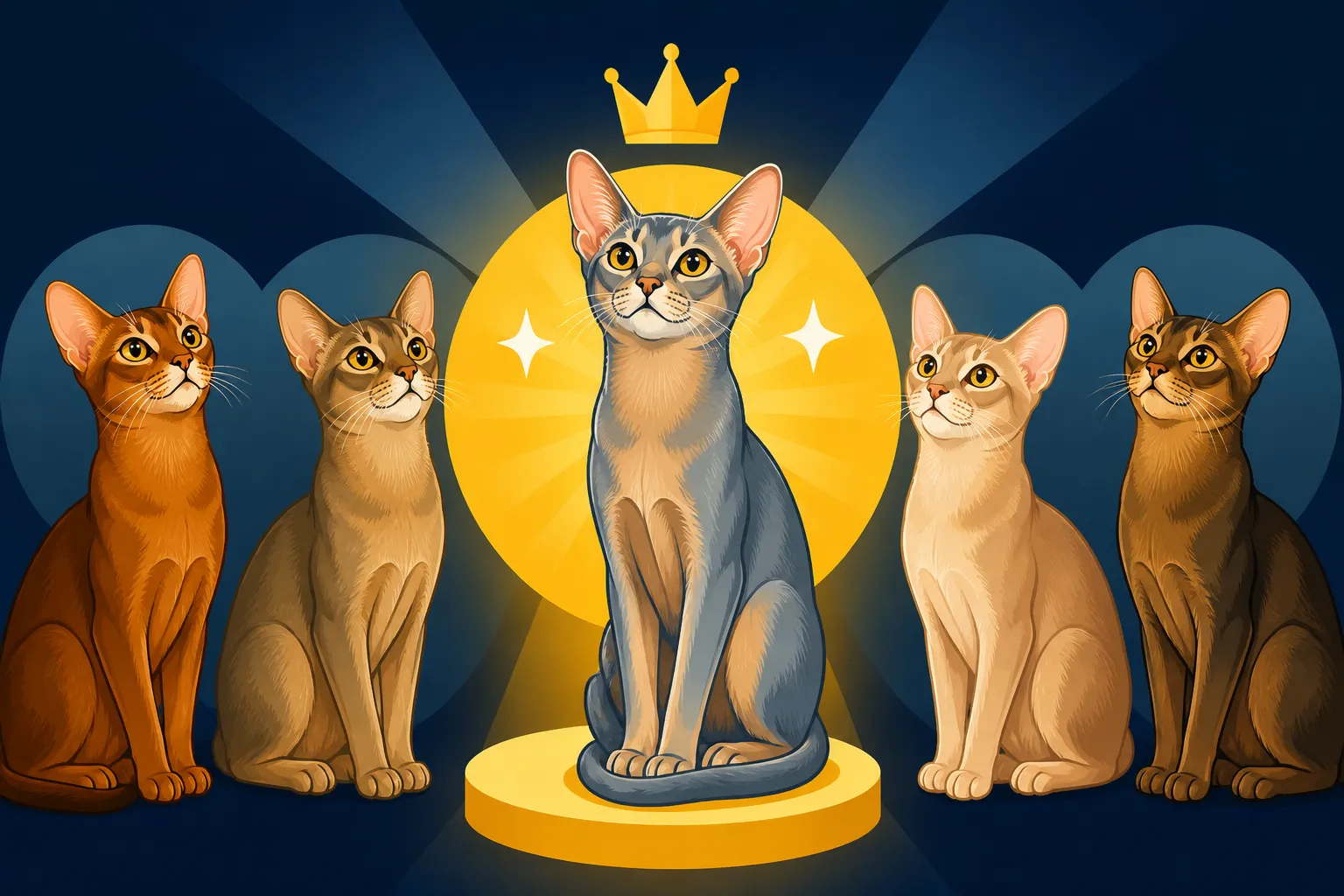
The four familiar Abyssinian colors are ruddy, sorrel, blue, and fawn. Of these, fawn is commonly the least available in many breeder communities. It has a soft, pale appearance, with warm cream and pinkish-beige tones rather than the deeper contrast people may expect from an Abyssinian. For readers comparing the recognized colors, Which Abyssinian Colors CFA Recognizes explains the standard color set in more detail.
That “least available” description is a general observation, not a reliable count of every Abyssinian population. A color’s frequency can differ between countries, registries, and individual breeding programs. One area may have several breeders producing fawns, while another has few or none. A kitten advertised as rare locally may simply be uncommon in that particular breeder’s current litters.
Fawn can also be easy to overlook in photographs. Lighting, camera settings, and the kitten’s age affect how pale or warm the coat appears. A close-up taken in warm indoor light may make the coat look more golden, while daylight can reveal cooler or lighter tones. If you are comparing kittens online, look for several clear photographs taken under different lighting rather than judging from one image.
Rarity is not the same as quality
A rare color is not automatically a better color, a healthier color, or a more desirable companion. The four colors are coat variations within the breed, not a ranking of a cat’s worth. A well-socialized ruddy kitten from a careful breeder may be a far better fit than a poorly raised kitten in a color that is harder to find.
It is also worth separating “rare” from “rarely advertised.” A breeder may have a color available but not promote it as unusual, or may keep kittens back for their own breeding plans. In another case, a seller may use the word “rare” to create pressure to pay quickly. Ask what the breeder means by the claim and request the kitten’s registration information and health records before making a decision.
The same caution applies to unusually colored kittens marketed outside the standard colors recognized by a registry. Coat color alone does not prove that a cat is a purebred Abyssinian or that it has been responsibly bred. If a listing makes a big point of a color being exclusive, ask which registry recognizes it and whether the kitten’s pedigree and registration support that description.
Why fawn can be harder to find
Coat color inheritance affects availability
Abyssinian colors are inherited through combinations of genes. Fawn is a diluted version of sorrel, while blue is a diluted version of ruddy. In simple terms, producing a diluted color requires the appropriate inherited traits to come together in a kitten. A breeder may have cats carrying the relevant traits without producing kittens in that color in every litter.
That helps explain why a color can be present in a breed but still appear less often in a particular cattery. The breeder’s cats, their pedigrees, and the choices made to support health and temperament all shape the possible colors in a litter. Responsible breeders do not select pairings based on coat color alone; they also consider health history, genetic testing where available, temperament, and the welfare of their cats.
For a potential owner, this means a breeder cannot necessarily promise that a specific color will appear in the next litter. If you are set on fawn, you may need to be patient or widen your search. Be cautious if someone guarantees a particular color before a litter is born or uses urgency to discourage you from asking ordinary questions.
Local breeder populations make a difference
Color availability is shaped by geography as well as genetics. If only a small number of Abyssinian breeders are within a reasonable distance, your local options may be limited. A fawn kitten might be relatively easy to find in one region and uncommon in another simply because fewer breeders there work with those lines.
A wider search can help, but it should not mean lowering your standards. Ask about the cattery’s practices, the kitten’s socialization, veterinary care, and the parents’ health information. A breeder should be willing to explain the kitten’s background and answer questions without making you feel that asking is an inconvenience. You can also review What an Abyssinian Show Standard Asks For to understand how breed characteristics are assessed beyond color.
If you are considering a kitten from another region, think through the practical arrangements too. Confirm how the kitten will travel, what records will come with it, and how you will speak with the breeder directly. A longer search is frustrating, especially when listings make a kitten sound like a once-in-a-lifetime find, but a careful process is better than a rushed choice.
How to identify the four familiar colors
Color names can be confusing because everyday descriptions do not always match registry terminology. A breeder should be able to tell you how a kitten is registered and explain what you are seeing in the coat. The table below gives a broad visual comparison rather than a substitute for a registry’s standard.
| Color | General appearance | Common point of comparison |
|---|---|---|
| Ruddy | Warm brown coat with darker ticking | Often described as the classic Abyssinian look |
| Sorrel | Warm red or coppery coat with cinnamon-toned ticking | Lighter and redder than ruddy |
| Blue | Soft blue-gray coat with darker blue-gray ticking | A diluted version of ruddy |
| Fawn | Pale beige or pinkish-tan coat with warmer, darker ticking | Often the least commonly available of the four |
Ruddy and sorrel
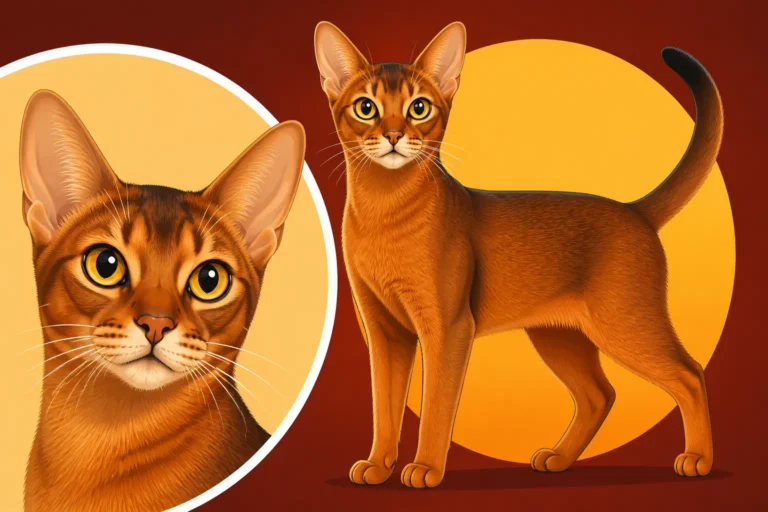
Ruddy is often the color people picture first when they imagine an Abyssinian. The coat has warm brown tones and darker ticking, giving it a rich, contrasting appearance. It is typically the most familiar color in photos and breed descriptions, which can make other colors seem rarer by comparison. For a closer description, see What a Ruddy Abyssinian Actually Looks Like.
Sorrel has a warmer red or coppery overall impression. Its name can be confusing because registries and regions may use different everyday terms for similar colors. In some contexts, “red” is used where another registry uses “sorrel.” If a seller uses a color label that does not match the papers, ask for clarification rather than assuming the kitten is a different or more unusual variety. What a Sorrel Abyssinian Looks Like offers another way to compare its appearance.
Blue and fawn
Blue Abyssinians are not bright blue. The name refers to a muted blue-gray coat, often with darker gray-blue ticking. Because the coat can look different under various lighting conditions, a blue kitten may appear cooler or more gray in one picture and warmer in another. What a Blue Abyssinian Looks Like can help you understand the typical color description.
Fawn is generally paler and softer in appearance, with beige, cream, or pinkish-tan tones. The ticking adds contrast, but it may not look as bold as it does on a ruddy Abyssinian. If you want to compare examples, seek out photographs of adult cats as well as kittens. A kitten’s coat can change as it matures, so an early photo may not show the final adult color clearly.
Registry differences and claims about unusual colors
“Rarest” depends on what is being counted
There is no single worldwide count that makes one Abyssinian color the rarest in every setting. You might be asking which color is least common among registered cats, least often produced by breeders, least available near you, or least familiar to the general public. Those are different questions, and they may not have the same answer.
Registry rules also matter. A color may be recognized by one organization and treated differently by another. When researching an unusual-looking cat, check the registration details rather than relying only on the listing’s wording. Whether a Silver Abyssinian Is Recognized is especially useful if you come across a silver-colored Abyssinian advertised as a rare version of the breed.
Silver is a good example of why rarity claims need context. It is not simply another name for fawn or blue, and recognition can vary by registry. A silver kitten may be less familiar to shoppers, but unfamiliarity does not automatically mean that it is the rarest recognized color. Ask which registry applies and what the cat’s documents actually say.
Questions to ask before choosing a kitten
Before putting down a deposit, ask the breeder to identify the color on the kitten’s registration papers and explain whether the kitten is being sold as pet quality or for breeding or show purposes. Ask to see relevant health information for the kitten and parents, and learn how the kittens are raised and socialized. If you need a starting point for the broader health questions, What an Abyssinian Breeder Should Have Tested Before You Buy is a helpful companion topic.
It is reasonable to ask for current photos and, when possible, to see the kitten and its mother in the environment where they are being raised. A responsible breeder should welcome questions about the kitten’s care and background. Be wary of a seller who refuses to provide basic records, avoids a conversation, or insists that you must act immediately because the color is “too rare to wait.”
You can also prepare for the everyday needs of an active Abyssinian while you are searching. Supplies such as a suitable carrier, food bowls, litter equipment, and toys can be sourced from a local pet shop or retailers such as Chewy. The important part is choosing practical items that suit the kitten and following the breeder’s guidance when changing food or settling the cat into a new home.
Choosing the right Abyssinian for your home
Look beyond the coat
Abyssinians are curious, active cats, and the realities of living with one matter more than whether its coat is ruddy or fawn. Think about how much interaction and play you can offer, how the cat will manage when you are away, and whether your home has safe places for climbing and exploring. A beautiful coat is lovely, but it cannot make a mismatch in household routine easier.
Try to meet the kitten or speak with the breeder about its personality rather than assuming all kittens of one color behave alike. Individual temperament is shaped by more than coat color. Ask how the kitten responds to handling, new sounds, people, and littermates, and whether the breeder has noticed a particularly bold or cautious personality.
Practical preparation helps too. Chewy is one place people may look for everyday supplies such as interactive toys or a scratching post, while local stores can offer the same kinds of basics. Whatever you choose, prioritize safe, sturdy equipment and give the kitten time to adjust rather than overwhelming it with a house full of new things on day one.
Be patient without paying for a label
If fawn is your preference, it is fine to tell breeders that you are willing to wait. A good breeder can explain whether fawn kittens are possible in their program and what the likely timing looks like, without promising a result they cannot control. Keep your decision open enough to consider an individual kitten whose temperament and care history suit you, even if its color is not your first choice.
Do not treat a higher price or dramatic “rare color” language as evidence of better breeding. If a color-related price difference is part of the offer, ask what it reflects and compare the overall terms, records, and breeder practices. A healthy, well-raised Abyssinian with clear documentation is a stronger choice than a kitten selected mainly because a seller has described its coat as scarce.
When you bring a kitten home, keep its routine familiar at first and make changes gradually. Chewy may be a convenient source for some ongoing supplies, but the specific food and care products should suit your cat rather than being chosen because of a color label or advertisement. The goal is a settled, healthy companion—not simply the hardest-to-find coat.
Disclaimer
This article is for general informational purposes only and does not constitute professional advice. Laws, prices and regulations vary by location and change over time. Consult a qualified professional for guidance on your specific situation.