Whether the Abyssinian Descends From Egyptian Cats
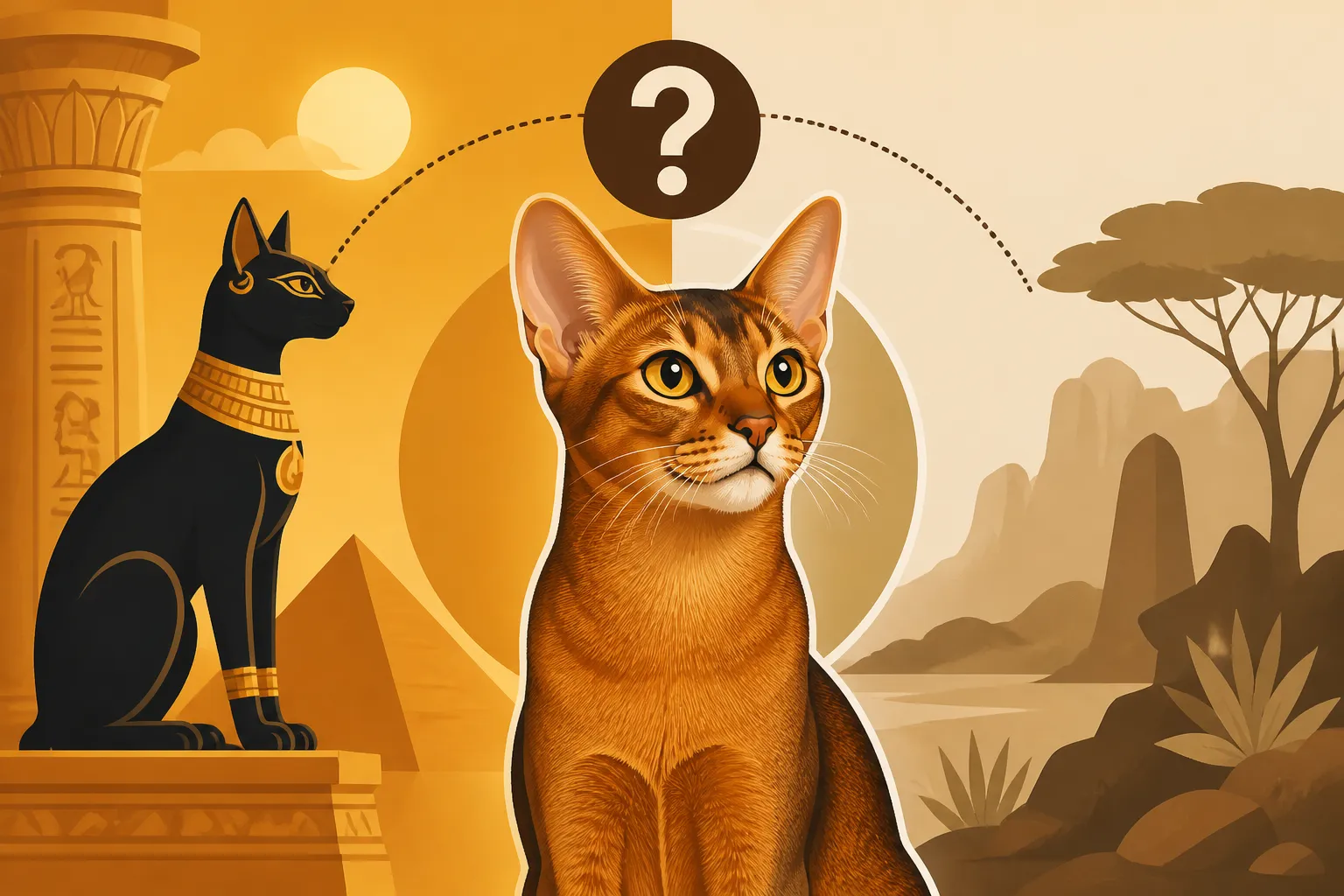
It's a question I hear all the time, and honestly, it's one of the most persistent and romantic myths surrounding our beloved Abyssinian cats: did these regal creatures really descend directly from the sacred felines of ancient Egypt? It's a beautiful thought, envisioning our modern Aby as a living link to the pharaohs, but as much as we might want to believe it, the full story is a little more complex and, dare I say, even more fascinating. This guide is going to dig deep into the facts, the folklore, and the science to finally address whether your Abyssinian truly has an ancestral paw print in the sands of ancient Egypt.
The Enduring Myth of Ancient Egyptian Lineage
For generations, the idea that the Abyssinian cat sprang directly from the temples and tombs of ancient Egypt has captivated cat lovers and breeders alike. It's a narrative steeped in mystique and grandeur, offering a powerful connection to one of history's most cat-revering civilizations. You see paintings, carvings, and statues of sleek, elegant felines with large ears and slender bodies, and if you own an Abyssinian, you can't help but see a resemblance. This visual echo has been the primary fuel for the enduring myth, making it incredibly difficult to shake off.
The Visual Resemblance and Why It Persists
Let's be honest, it's hard to deny the striking visual parallels between the Abyssinian and the cats depicted in ancient Egyptian art. They both share that athletic, medium-sized build, long legs that give them an almost tiptoeing grace, and those captivating, large, almond-shaped eyes often rimmed with a darker pigment. The large, widely set ears are another key feature, giving both the ancient depictions and our modern Abyssinians an alert, intelligent, and almost otherworldly look. When you see an Aby perched regally, surveying its domain, it's easy to imagine it gracing the lap of a pharaoh or guarding a sacred temple.
This visual congruence isn't just a happy coincidence for storytelling; it genuinely makes people feel a profound connection. It taps into a desire for our pets to have a storied, ancient past, elevating them beyond mere companions. The Abyssinian's ticked coat, with its subtle bands of color on each hair shaft, also contributes to this mystique, making their fur shimmer and shift in light in a way that feels inherently wild and exotic, much like the desert cats that might have inspired ancient artists. The sheer elegance and dignified bearing of the Abyssinian aligns so perfectly with the revered status of cats in ancient Egypt that the narrative almost writes itself. Why the Abyssinian Resembles Ancient Egyptian Art goes into more detail about these captivating similarities.
The Story of Zula and the Early Abyssinian
Much of the popular lore linking the Abyssinian to ancient Egypt often traces back to one specific cat: Zula. The story goes that Zula was brought to England in 1868 at the end of the Abyssinian War, purportedly from Abyssinia (modern-day Ethiopia). She was then exhibited at the Crystal Palace Cat Show in London in 1871, sparking public fascination. For many years, Zula was considered the foundational cat of the modern Abyssinian breed, and her alleged origin from "Abyssinia" naturally led to the assumption of a direct link to ancient Egyptian territories, given the region's proximity and historical connections.
This narrative became a cornerstone of the breed's identity, repeated in early breed standards and popular accounts. It lent an exotic, historical cachet to the Abyssinian, making it even more desirable. However, as charming as the tale of Zula is, direct evidence linking her to modern Abyssinians or to ancient Egyptian bloodlines is tenuous at best. The records from that era are often incomplete or anecdotal, and detailed pedigrees were not consistently kept in the same way they are today. While Zula certainly helped popularize the "Abyssinian" name, Zula and the 1868 Story Everyone Repeats offers a deeper dive into the specifics of her story and its impact on the breed's early history. The romanticism of her origin, combined with the visual similarities discussed earlier, cemented the Egyptian connection in the public's imagination, even without concrete proof.
What Historical Records and Early Breeding Tell Us
Peeling back the layers of myth surrounding the Abyssinian's origins requires a critical look at historical records and the actual practices of early cat breeding. What we find is often a blend of speculation, convenience, and selective interpretation that built up the legendary status of the breed without necessarily having hard evidence to back it up. The reality of how cat breeds developed in the 19th and early 20th centuries was far less structured than it is today, and that lack of precise record-keeping contributes significantly to the mystery.
The Lack of Concrete Evidence
When we examine the historical records from the late 19th and early 20th centuries, the period when the Abyssinian breed was truly coalescing, there's a notable absence of definitive proof for a direct Egyptian lineage. While early cat fanciers certainly believed their Abyssinians came from exotic locales, and the name itself implies an African origin, actual documentation is sparse. There are no detailed shipping manifests consistently showing cats being imported directly from Egypt with pedigrees confirming their ancient ancestry. Instead, most early Abyssinians were described as coming from India, or simply as "ticked cats" found in various parts of the British Empire.
The earliest records and articles from publications like Harrison Weir's "Our Cats" from 1889, while mentioning Zula, also show Abyssinians being developed through crosses with British domestic shorthairs and other breeds. There wasn't a strict breeding program solely focused on preserving an "Egyptian" bloodline because, quite frankly, there wasn't a clear, established Egyptian cat population to draw from or refer to in the same way we might think of a modern breed. The narrative was often built retrospectively, projecting an exotic past onto a visually unique cat that was emerging from diverse genetic stock in Europe. The romantic notion often outpaced the verifiable facts, leaving a void where concrete evidence should be.
Early European Breeding Programs and Crossings
The truth of the Abyssinian's early development points far more towards Europe, specifically Great Britain, than the banks of the Nile. During the late 19th and early 20th centuries, dedicated cat fanciers in England took an interest in cats exhibiting the unique ticked coat pattern. These cats, often referred to simply as "ticked" or "bunny cats," likely appeared through natural genetic mutation within various domestic populations or were brought back by sailors and travelers from different parts of the British Empire, including India and Southeast Asia.
To establish the Abyssinian as a distinct breed, these early breeders crossbred the ticked cats with existing domestic shorthairs, and even sometimes with other pedigree breeds, to stabilize desired traits like the body type, head shape, and, crucially, the ticked coat. It was a process of selection and refinement, rather than direct preservation of an ancient, pure Egyptian line. These outcrosses were essential for broadening the gene pool and ensuring the breed's vitality, especially during times when cat populations dwindled, such as during the World Wars. How British Abyssinians Nearly Died Out illustrates the challenges these early breeders faced. The result was a stunning, active, and intelligent cat, but one whose direct ancestors were likely far more cosmopolitan than solely Egyptian. The Abyssinian as we know it today is very much a product of thoughtful European breeding efforts, rather than a direct transplant from antiquity.
The Unveiling Truth: Genetic Studies and Their Revelations
For decades, the mystique of the Abyssinian's "Egyptian" roots held sway, a captivating narrative passed down through generations of cat enthusiasts. But in the modern era, scientific advancements, particularly in the field of genetics, have offered us unprecedented tools to peer beyond the charming stories and into the actual genetic blueprint of our feline companions. What these studies have revealed about the Abyssinian's true origins might surprise those who cling to the pharaonic myth, but it certainly doesn't diminish the breed's unique appeal.
Modern DNA Research and Its Surprising Findings
When scientists began to meticulously analyze the DNA of various cat breeds, including the Abyssinian, they were looking for genetic markers that could trace lineage back through time and geography. The results, quite frankly, threw a wrench in the widely accepted Egyptian origin story. Instead of finding strong genetic links to cat populations in North Africa or the Middle East that would support an ancient Egyptian connection, the DNA evidence pointed overwhelmingly in another direction entirely: Southeast Asia.
Specific genetic markers and haplotypes found in Abyssinians are more commonly observed in cat populations from areas like the Bengal region of India and parts of Southeast Asia. This suggests that the distinctive ticked pattern and the overall genetic foundation of the Abyssinian likely originated not from the Nile Valley, but from further east. This scientific revelation has significantly altered our understanding of the breed's history, moving it away from the romanticized image of Egyptian royalty and towards a more global, albeit still fascinating, journey. What Genetic Studies Say About the Abyssinian's Origin elaborates on these groundbreaking findings, showcasing how science can rewrite historical narratives.
Connecting the Dots to Southeast Asia and the Indian Ocean
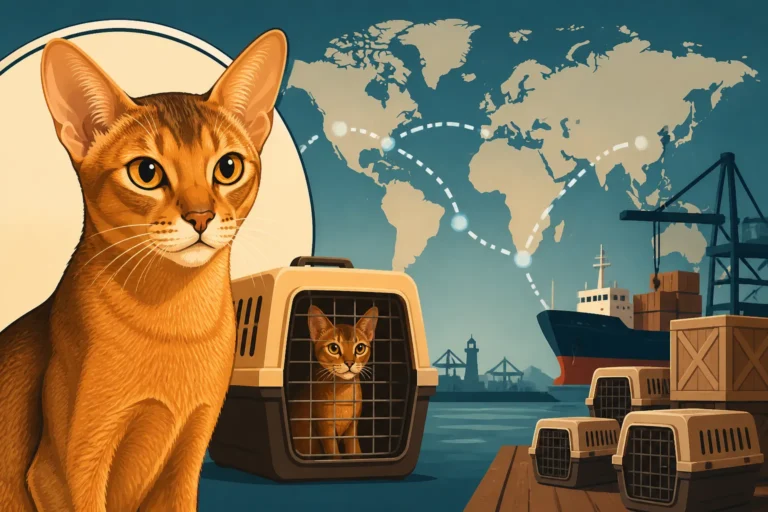
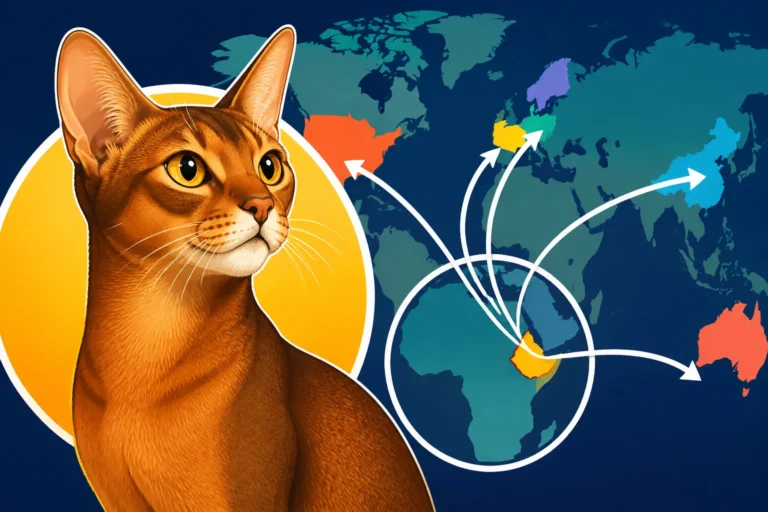
So, if not Egypt, then where exactly did the Abyssinian come from? The leading theory, strongly supported by genetic evidence, suggests that the Abyssinian's ancestors were domestic cats from the coastal regions of the Indian Ocean, particularly around Southeast Asia. These cats would have traveled along ancient trade routes, accompanying merchants and sailors on their ships. The ticked coat pattern, which is the hallmark of the Abyssinian, is relatively common in feral and domestic cat populations in these areas, lending further credence to this theory.
Imagine these early, highly adaptable cats hitching rides on cargo ships, gradually making their way westward across the Indian Ocean, possibly through ports in what is now India, then perhaps the Arabian Peninsula, and eventually arriving in Europe. It's a journey spanning thousands of miles and many generations, a true testament to the remarkable adaptability of felines. The "Abyssinian" name might simply reflect one of the later points of rediscovery or collection along this long journey, or perhaps a misattribution by early European fanciers who associated exotic cats with exotic, distant lands without precise knowledge of their ultimate origins. This narrative of a resilient, adventurous traveler cat is, in its own way, just as compelling as the Egyptian myth, if not more so, because it's grounded in genetic reality. Why the Indian Ocean Coast Fits the Abyssinian's Genes provides more context on this fascinating geographical connection.
Why the Origin Story Matters to Today's Abyssinian Owners
At first glance, you might think, "Does it really matter where my Abyssinian came from, as long as they're healthy and happy?" And honestly, it's a fair point. The love and companionship we share with our cats transcend geographical origins. However, understanding the true history, free from romanticized myths, does offer some valuable insights. It helps us appreciate the breed for what it truly is, rather than what we imagine it to be, and informs how we approach their care and preservation. It's about respecting the factual journey of the breed, not just the folklore.
Beyond Lineage: Understanding the Breed's Unique Traits
Whether an Abyssinian's ancestors roamed ancient Egyptian palaces or scurried aboard trade ships along the Indian Ocean coast, their personality and physical traits remain undeniably unique and captivating. The Abyssinian is known for its incredible athleticism, boundless curiosity, and a highly interactive nature that often earns them the nickname "Aby-sinians of the house." They are intelligent, playful, and demand a lot of engagement from their humans. They love to climb to the highest points, observe everything, and participate in whatever you're doing.
This intense, involved personality isn't tied to a specific geographical origin; it's the result of generations of selective breeding by fanciers who valued these very characteristics. Owners know that an Abyssinian isn't a lap cat in the traditional sense, but they will "help" you with every chore, "supervise" your cooking, and "discuss" your day with chirps and soft trills. Their beauty, with the shimmering ticked coat and expressive eyes, is a wonder to behold, and their playful spirit is truly infectious. Understanding their true history simply deepens our appreciation for the deliberate work that went into shaping these fantastic qualities. The Abyssinian Is the Busiest Cat in the House details just how active and engaging these cats really are.
The Importance of Responsible Breeding and Genetic Health
Moving past the myths also underscores the vital importance of responsible breeding practices today. Instead of relying on romantic notions of ancient lineage, modern breeders focus on concrete genetic health. This means utilizing DNA tests to screen for inherited diseases that can affect the breed, such as Pyruvate Kinase Deficiency (PKD) and Progressive Retinal Atrophy (PRA-rdAc). These are real, tangible health concerns that a cat's "ancient" ancestry won't protect them from.
A responsible breeder prioritizes the health and well-being of their cats by conducting these essential genetic screenings, ensuring they are not passing on known hereditary conditions. This is where scientific understanding truly shines, allowing us to safeguard the future of the Abyssinian breed more effectively than any historical narrative ever could. It’s about making informed decisions based on data, ensuring that the next generation of Abyssinians continues to be as healthy and vibrant as possible. When looking for an Abyssinian, always ask for proof of parental genetic testing. Many reputable breeders will list their available kittens on platforms like Chewy, though direct contact and vetting are always essential. What an Abyssinian Breeder Should Have Tested Before You Buy outlines these crucial health checks.
Distinguishing the Abyssinian from Ancient Art and Other Breeds
The visual appeal of the Abyssinian, with its striking resemblance to ancient Egyptian feline depictions, is undeniable. It's a significant part of the breed's mystique and a major reason why the myth of Egyptian descent has persisted for so long. However, a closer look at both ancient art and other cat breeds with more verifiable connections to the region reveals subtle, yet important, distinctions. Understanding these differences helps us appreciate the Abyssinian for its own unique qualities, rather than just as a historical echo.
Analyzing the Artistic Depictions of Ancient Egyptian Cats
When you gaze upon a wall painting or sculpture from ancient Egypt featuring a cat, the initial impression is often one of profound familiarity if you're an Abyssinian owner. The elegant, slender body, the large ears, the alert expression – it all seems to align perfectly. However, it's crucial to remember that ancient art, while often capturing impressive detail, is also an interpretation. Artists of that era weren't necessarily striving for photorealistic accuracy as we understand it today; they conveyed symbolism, ideal forms, and general characteristics.
Many depictions show cats that are clearly ancestors of our modern domestic cats, likely the African Wildcat ( Felis lybica lybica) or early domesticates. While they share general body types, specific details like eye shape, coat ticking (which is rarely explicitly detailed in two-dimensional art), and even facial structure can vary. The artistic representations are generic enough to resemble many sleek, short-haired cats. The true Abyssinian's "ticked" coat, with multiple bands of color on each individual hair, is a very specific genetic trait. While a general "agouti" or wild-type coat pattern (which is ticked) existed in ancient cats, the refined and uniform ticking of the modern Abyssinian is a product of selective breeding. Therefore, while the essence of the ancient cat is there, it's not a direct, undeniable portrait of an Abyssinian. How the Abyssinian Compares to the African Wildcat explores these ancestral similarities and differences.
Comparing the Abyssinian to Breeds with Actual Egyptian Connections
To further clarify the Abyssinian's origins, it's helpful to compare it to breeds that actually do have stronger, or at least more plausible, ties to ancient Egypt or the region. The most prominent example here is the Egyptian Mau. Unlike the Abyssinian, the Egyptian Mau is a naturally spotted domestic cat, and some evidence suggests its lineage can be traced back to ancient Egypt through historical records and genetic markers more directly linked to local cat populations.
Here's a quick comparison to highlight the key differences:
| Feature | Abyssinian | Egyptian Mau |
|---|---|---|
| Coat Pattern | Ticked (agouti banding on each hair) | Spotted (distinct spots on a ticked background) |
| Head Shape | Modified wedge, slightly rounded | Modified wedge, slightly rounded |
| Eye Shape | Almond-shaped | Large, gooseberry-green, almond-shaped |
| Origin Theory | Genetic studies point to Southeast Asia | Genetic studies suggest Egyptian/Middle Eastern origins; often depicted in ancient art |
| Body Type | Medium, slender, athletic ("foreign") | Medium, muscular, graceful |
| Unique Trait | Ticking; often called "bunny cat" | Natural spotting; "M" mark on forehead |
As you can see from the table, while both are elegant, athletic short-haired cats, their defining coat patterns are entirely different. The Abyssinian's signature is its ticking, while the Mau's is its natural spotting. This fundamental difference in coat genetics is a powerful indicator that they are distinct breeds with separate origins, despite the Abyssinian's historical misattribution. How an Abyssinian Differs From an Egyptian Mau delves deeper into these fascinating distinctions. So, while your Abyssinian might look like it stepped out of a pharaoh's tomb, the scientific consensus suggests its true journey began far to the east, on ancient trade routes across the Indian Ocean. It's a rich history, just a different one than we once believed.
Disclaimer
This article is for general informational purposes only and does not constitute professional advice. Laws, prices and regulations vary by location and change over time. Consult a qualified professional for guidance on your specific situation.