Why the Abyssinian Never Became a Mass Market Breed
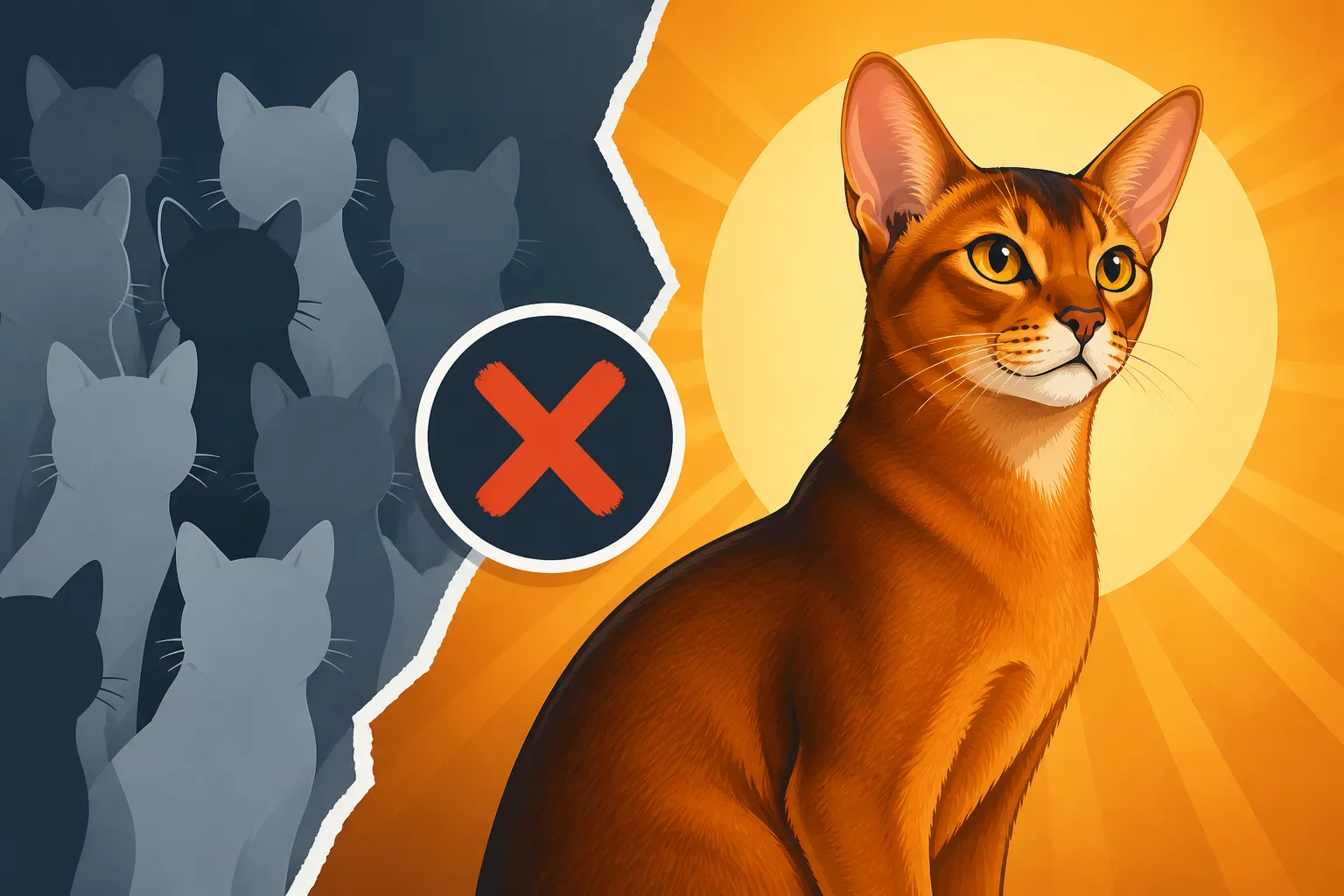
Abyssinians are admired for their glowing, ticked coats and lively personalities, yet they remain a relatively specialized choice rather than a cat found in every household. That isn’t because the breed lacks appeal. Its limited supply, particular needs, and energetic temperament help explain why it has never become a mass-market cat—and why its popularity has stayed more selective.
What “mass market” means for the Abyssinian
Popularity is not the same as broad availability
A breed can be well known and widely admired without being easy to find. The Abyssinian has a long history in cat shows and breed communities, and its distinctive appearance makes it recognizable to many cat enthusiasts. But being recognizable does not automatically mean there are large numbers of kittens available through everyday pet-buying channels.
A mass-market breed usually has broad supply, strong general-public demand, and a temperament that suits many different homes. The Abyssinian’s appeal is more specific. People often seek one because they want an athletic, curious, people-oriented cat—not simply because they want a familiar-looking pet. That narrower match can keep demand concentrated among people who have researched the breed.
The breed’s staying power is a different question from its market size. Abyssinians have remained beloved by dedicated owners for generations, even without becoming a routine choice for every household. Why the Abyssinian Stayed Popular for 150 Years explores that lasting appeal in more detail.
A distinctive cat can still be a niche choice
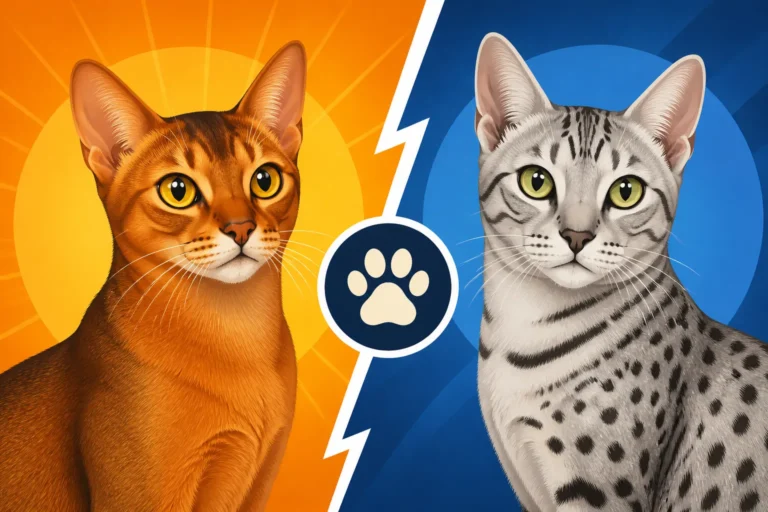
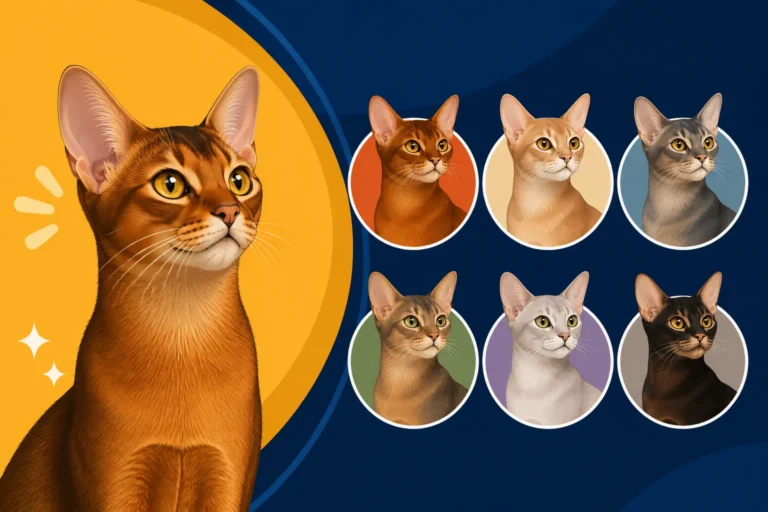
The Abyssinian’s short, close-lying coat has a warm, finely banded look that sets it apart from the solid, spotted, and boldly striped patterns many people already recognize. Its elegant, athletic build and alert expression also give it a particular look. Those qualities attract people who appreciate the breed, but they do not necessarily match every shopper’s idea of a typical companion cat.
There is also a difference between “unusual” and “rare.” Abyssinians are an established pedigree breed, not an unknown novelty. Still, a person looking for a kitten may need to contact breeders, ask about future litters, or consider travelling farther than they would for a more commonly available type of cat. That extra effort naturally limits impulse purchases and casual demand.
In other words, the Abyssinian can be visible in breed books, shows, and online discussions without being a high-volume option. Its market is shaped by deliberate interest: people who know what the breed is like and actively want that particular combination of looks and behavior.
Supply and breeding help limit the numbers
Small litters make availability less predictable
Abyssinian litters are often modest in size, and each kitten is part of a carefully planned breeding program. That means a breeder may have fewer kittens to place than people expect, especially when interest is high. Why Abyssinian Litters Are Small and How Many Kittens an Abyssinian Queen Has explain why litter size can affect availability.
Breeding is not simply a matter of producing as many kittens as possible. Responsible breeders consider health, temperament, pedigrees, and whether suitable homes are available. They may plan pairings well in advance, keep kittens for their own future breeding programs, or place some kittens under different agreements. A litter that exists on paper therefore does not mean every kitten will be available as a pet.
This can make the process feel frustrating. Someone who has just fallen in love with the breed may assume they can choose a kitten immediately, only to learn that a breeder has no current litter or has already matched kittens with families. Waiting is not proof that the breed is artificially scarce; it can reflect the smaller scale and planning involved in responsible breeding.
Responsible breeding favors care over volume
High-volume breeding and careful pedigree breeding do not always share the same priorities. A responsible Abyssinian breeder generally has to pay attention to the health and welfare of the cats, provide early socialization, and make thoughtful placement decisions. Those responsibilities take time and limit how many litters one person or cattery can appropriately manage.
Prospective owners can use that process to learn about the kitten’s background, expected needs, and health history. A breeder who asks about the home is not necessarily making the process difficult for its own sake. They may be trying to ensure that a high-energy cat is going to a household prepared to engage with it. For practical questions to bring to those conversations, see Which Household an Abyssinian Fits Best.
This supply pattern is one reason the breed does not spread through sheer volume. More casual demand might exist, but it cannot be met instantly without affecting how kittens are raised and placed. For a small-scale breed, responsible limits are part of the reality.
| Factor | What it means for availability | Why it matters to buyers |
|---|---|---|
| Smaller, planned breeding programs | Fewer kittens may be offered at a time | Be prepared to contact breeders and wait |
| Careful placement | A breeder may match kittens to homes rather than sell first come, first served | Expect questions about your lifestyle and experience |
| Strong demand among enthusiasts | Interest can cluster around particular breeders or litters | Start researching before you are ready to bring a kitten home |
| Specific activity needs | Not every interested household is a suitable match | Learn about daily play and companionship needs first |
The Abyssinian’s temperament narrows its audience
High energy is wonderful for the right home
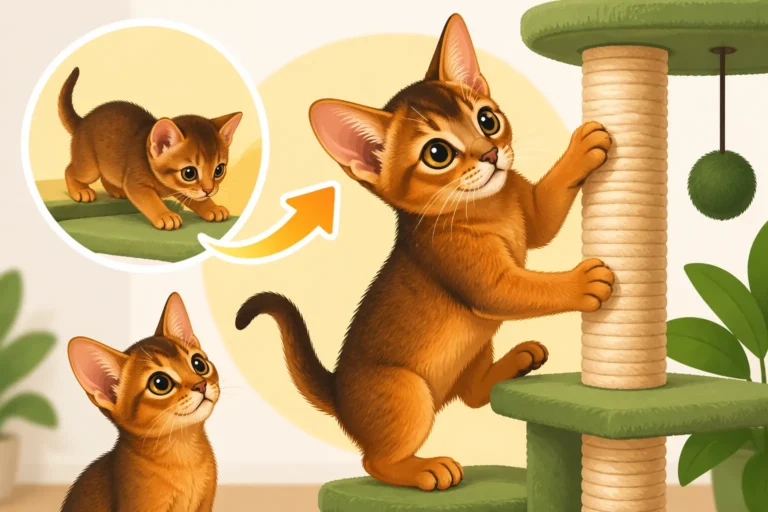
Abyssinians are known for being alert, curious, and involved in household life. Many enjoy climbing, exploring, playing, and keeping track of what their people are doing. For an owner who wants an interactive companion, that personality can be a major attraction. For someone who imagines a cat that spends most of the day quietly resting nearby, it may be a mismatch.
That difference matters to the breed’s popularity. A pet that suits a broad range of schedules and expectations may appeal to more people. An Abyssinian often does best with owners who can offer attention, play, safe climbing routes, and mental stimulation. Why an Abyssinian Is Wrong for a Quiet Household describes why a calm, low-interaction home may not be an ideal fit, while Why an Abyssinian Suits an Active Owner looks at the other side of that match.
A new owner may picture an elegant cat curled on a sofa, then discover a companion that follows them between rooms, investigates open cupboards, and expects play to be part of the day. That behavior is not a flaw; it is one of the breed’s defining charms. But it does ask for more participation than some people are prepared to give.
Owners need to plan for company and enrichment
An Abyssinian’s intelligence and energy can make ordinary household routines surprisingly interesting. A cat left without enough to do may invent its own activities, such as rummaging through accessible storage or demanding attention at inconvenient moments. Providing climbing areas, interactive play, and food puzzles can help give that curiosity a safer outlet.
For example, an owner might set aside short play sessions before work and again in the evening, rotate toys to keep them interesting, and create a stable route to a window perch or cat tree. Basic supplies can be found through pet retailers such as Chewy, but the important part is choosing sturdy, safe equipment that suits the cat and the home. A tall, wobbly structure is not a good enrichment plan simply because it promises height.
A second companion may suit some Abyssinians, but adding another animal is not an automatic solution. Personalities, introductions, space, and household routines all matter. If a cat will regularly be alone for long stretches, it is worth thinking realistically about how that will work before choosing the breed. Whether an Abyssinian Is the Right Cat for You can help prospective owners weigh those expectations.
Why the breed has not become an everyday default
Its needs are more specific than its appearance suggests
The Abyssinian’s short coat can make it seem like an easy, low-maintenance choice, and routine grooming is often simpler than it is for a longhaired cat. But coat care is only one part of ownership. A prospective owner also needs to consider play, climbing, companionship, veterinary care, and the possibility of waiting for a kitten from a responsible breeder.
That can create a gap between first impressions and everyday life. Someone drawn in by the coat may not realize how much engagement the cat expects. Someone else may be well suited to the breed but choose a more readily available cat instead. Either way, a striking appearance does not guarantee that a breed will become a mainstream household choice.
Apartment living alone does not rule out an Abyssinian. A home’s layout, opportunities for safe climbing, daily interaction, and the owner’s routine matter more than whether the home has a yard. Whether an Apartment Suits an Abyssinian offers more context for considering space and setup.
A niche breed can be successful without being everywhere
Mass-market popularity often depends on convenience as much as affection: people choose what they know, what they can find nearby, and what seems likely to fit their household. The Abyssinian asks prospective owners to do more homework. They may need to learn about the breed’s temperament, locate a responsible breeder, and decide whether its activity level suits their lives.
That extra consideration can be a strength. When people choose an Abyssinian because they understand its needs, they are more likely to value the very traits that might overwhelm someone expecting a quieter pet. It also helps explain why the breed has a devoted following without becoming a default choice for first-time shoppers.
If you are considering one, focus less on whether the breed is common and more on whether your daily life is a good match. Ask about the kitten’s health background, temperament, and care. Think through how you will provide play and enrichment, and consider whether your schedule leaves enough time for a social, active cat. For equipment planning, retailers such as Chewy can be one place to look for toys, scratching posts, and feeding puzzles, while a veterinarian or breeder can help you choose what is appropriate for your specific cat.
The Abyssinian never became a mass-market breed because its supply is comparatively limited and its temperament suits a more particular kind of home. That has not stopped it from being admired. It has simply kept the breed’s appeal focused among people who actively want an energetic, curious companion and are ready for the commitment that comes with one.
Disclaimer
This article is for general informational purposes only and does not constitute professional advice. Laws, prices and regulations vary by location and change over time. Consult a qualified professional for guidance on your specific situation.