Which Wild Cat the Abyssinian Is Said to Resemble
The Abyssinian’s lean build, tall ears, long legs and warm, ticked coat can make it look like a small wildcat. The African wildcat is the species most often named as its look-alike, but resemblance is not proof of direct descent. This guide explains which features create that impression, what the coat actually shows, and how to separate appearance from ancestry.
The wild cat the Abyssinian most resembles
Why people compare the Abyssinian with the African wildcat
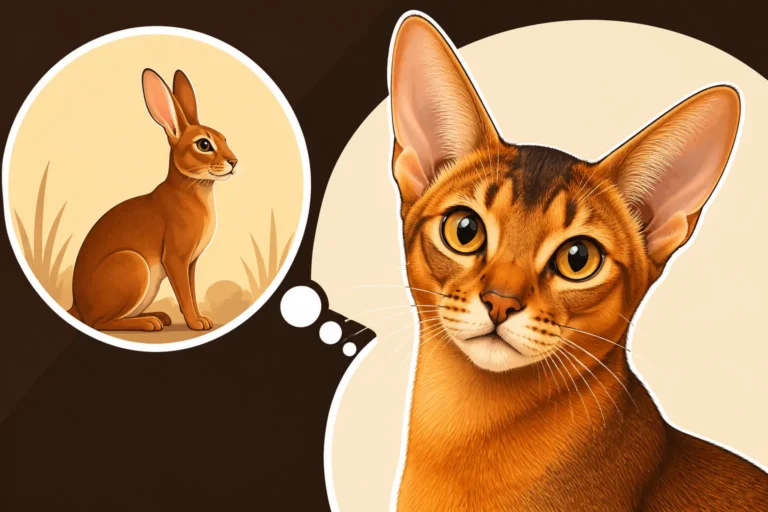
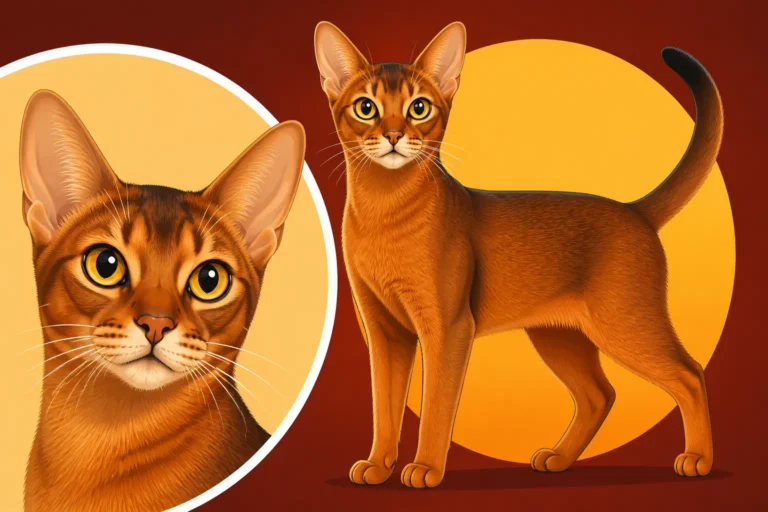
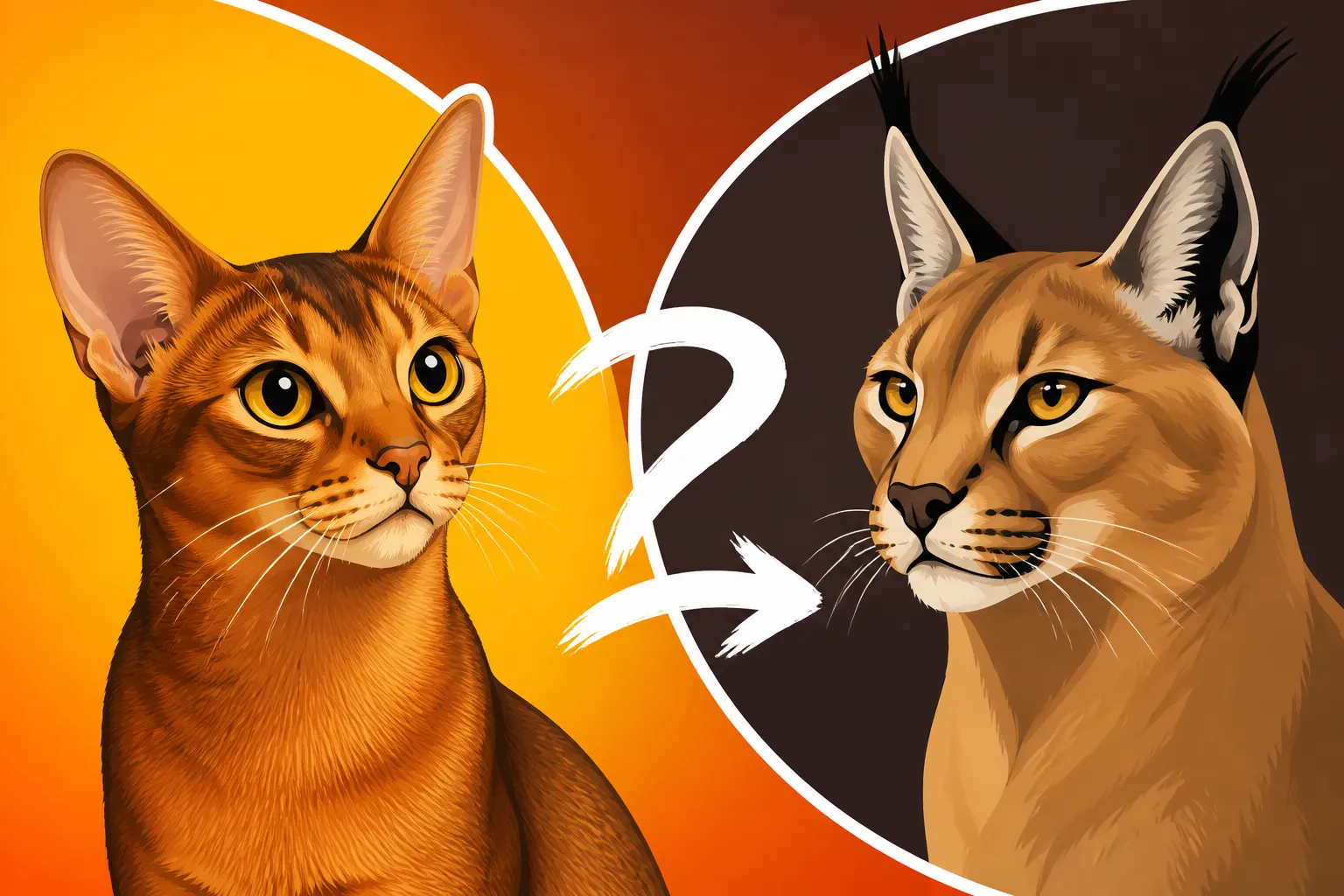
The Abyssinian is most often said to resemble the African wildcat, a small wild feline native to parts of Africa and nearby regions. The comparison comes mainly from the cats’ overall silhouette and coloring: both can have a warm, earthy coat, upright ears, alert eyes and a lithe, athletic build. In profile, an Abyssinian perched on a windowsill can look especially wild, with its long legs and gently arched back.
The coat is a big part of the impression. An Abyssinian’s fur has bands of color on individual hairs, creating a softly blended, sunlit appearance rather than bold stripes or spots. African wildcats also commonly have agouti coloring, in which hairs carry bands of pigment. To someone glancing across a room, those blended shades can suggest the same natural camouflage.
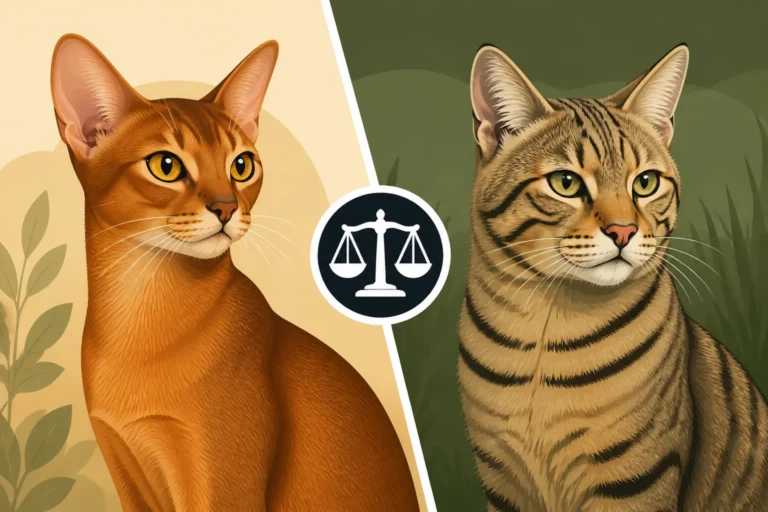
But the similarities have limits. A wildcat’s coat typically includes visible markings, such as stripes on the legs and rings or bands on the tail. The Abyssinian’s ideal coat is more evenly ticked, with minimal body patterning. Its appearance may evoke a wild feline without reproducing the full markings of one. For a closer look at how the breed’s coloring works, see How an Abyssinian's agouti banding works.
A resemblance is not a family tree
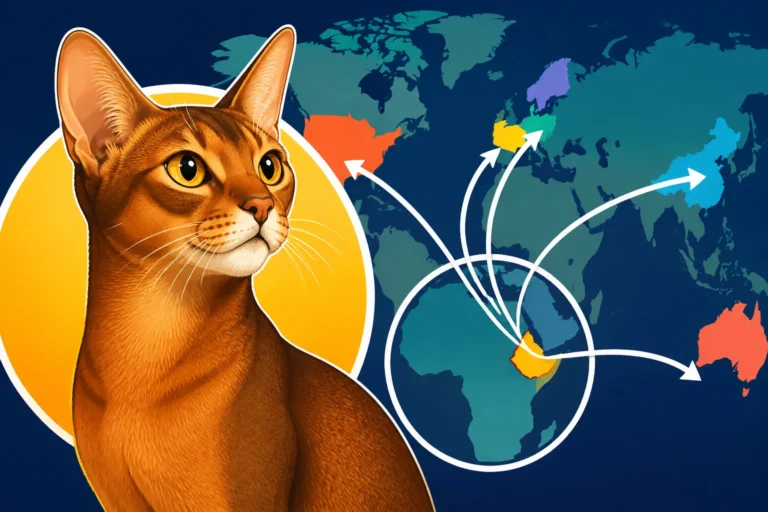
It is easy to turn a visual comparison into a story about ancestry. The Abyssinian is often described as looking like a wildcat or like cats shown in ancient Egyptian art, and those descriptions can sound like evidence that the breed descended directly from a particular wild species. They are not. A cat can share a shape or coat pattern with a wild feline without being a direct descendant of that animal.
The domestic cat’s broader history is associated with the African wildcat, but that does not mean an Abyssinian has a special, recent wildcat origin. Domestic cats share ancestry through the history of domestication, while individual breeds were developed and standardized through human breeding. The Abyssinian’s exact early history is not established by its appearance alone. For more context, read What modern DNA studies found about Abyssinian ancestry and Whether the Abyssinian has any wild ancestry.
That distinction matters because breed lore tends to favor a neat origin story. A familiar claim may say that a cat must come from a particular place because it looks like a local wild species. Yet coat color, body shape and ear size can be influenced by inherited traits, selective breeding and chance. They are not reliable proof of geographic origin or direct descent.
What makes the Abyssinian look wild
Its ticked coat creates a natural, sun-warmed look
Abyssinian hairs are banded with alternating shades, a pattern called ticking. Because many hairs carry multiple colors along their length, the coat looks blended rather than painted with clear stripes. The effect can shift with movement and lighting: a cat may look brighter across the shoulders, darker along the spine or more coppery in warm indoor light.
That soft, layered color is one reason people compare the breed with wild animals. It resembles the kind of coloration often associated with camouflage in nature. Still, the Abyssinian’s coat is not the same as a wildcat’s coat pattern. Breed standards favor clear ticking across the body, while visible body stripes, spots or a necklace-like marking are generally not the desired look.
The recognized coat colors add to the visual variety. Ruddy Abyssinians often have rich reddish-brown tones, while sorrel cats tend toward warmer red shades. Blue and fawn cats have diluted, softer coloring. Each can look strikingly different depending on daylight, the room’s color and the cat’s movement. Learn more in The four colors an Abyssinian comes in.
Long legs, alert ears and a poised stance
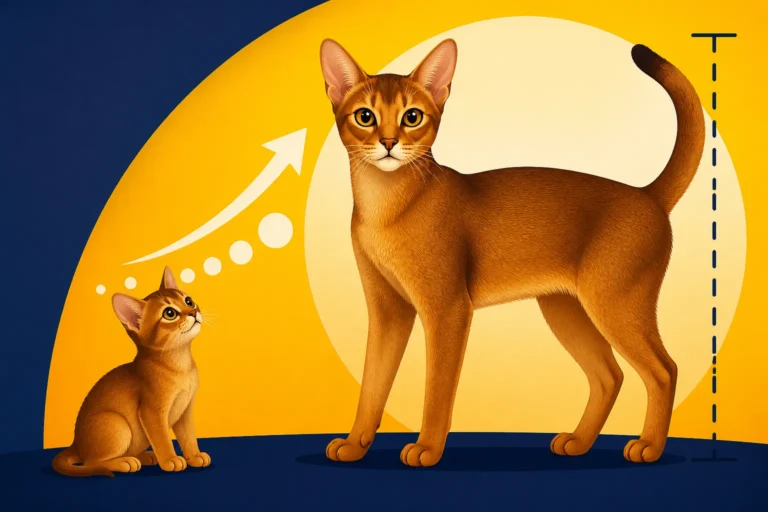
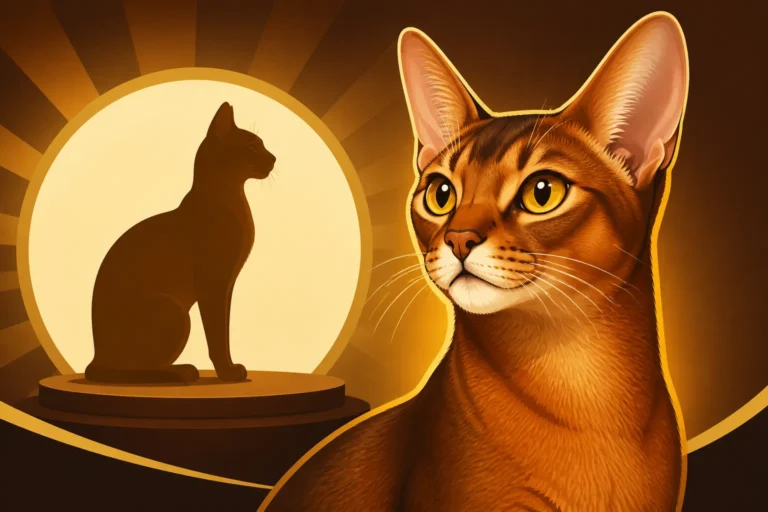
An Abyssinian is a medium-sized, fine-boned cat with a muscular, active body. Its legs are relatively long, and it often stands with a poised, forward-ready stance. The head is gently wedge-shaped, and the ears are large and set wide apart. Together, those features create a profile that can seem more like a small wild feline than a round-faced, heavy-bodied house cat.
The way an Abyssinian moves contributes just as much as its anatomy. These cats are often curious climbers, quick to investigate a sound or follow a person from room to room. When one pauses on a high shelf, ears forward and eyes fixed on a moving object, its posture can look intensely alert. That behavior is still normal domestic-cat behavior, not evidence of wild temperament.
Providing safe places to climb can satisfy that natural activity without encouraging risky leaps onto unstable furniture. A secure cat tree, sturdy shelves or a window perch can give an Abyssinian a good lookout. If you are comparing setups, An Abyssinian needs height more than it needs floor explains why vertical space is useful. For a practical shopping errand, Chewy may be one place to browse cat trees and perches; compare dimensions and stability carefully, since a tall structure needs a secure base.
African wildcat and Abyssinian side by side
Similar features and important differences
The shared visual clues are real, but they do not make the two cats interchangeable. The African wildcat is a wild species; the Abyssinian is a domestic breed shaped by generations of human care and selective breeding. Their needs, behavior and relationship with people differ accordingly. A domestic Abyssinian should not be treated as a wild animal or expected to behave like one.
| Feature | Abyssinian | African wildcat |
|---|---|---|
| Status | Domestic cat breed | Wild feline species |
| Coat impression | Fine, close-lying coat with even ticking | Agouti coloring that may include visible stripes and tail bands |
| Body type | Lean, athletic, long-legged | Lithe build adapted to life in the wild |
| Relationship with people | Bred and kept as a companion animal | Wild animal, not a household pet |
| What resemblance tells you | Shared visual traits | No proof of direct breed ancestry |
The comparison is useful as a visual shorthand, but not as a guide to care. An Abyssinian needs appropriate domestic-cat veterinary care, safe indoor enrichment and a predictable home. It should not be encouraged to roam outside in an effort to honor a supposedly wild nature. Outdoor risks include traffic, fights, infectious disease and getting lost. For more on the breed’s fit in a home, see Whether an Abyssinian is the right cat for you and Why an Abyssinian should not roam outdoors.
Abyssinians can be energetic, inquisitive and interactive, but individual personalities vary. One may want to supervise every household task, while another may be more reserved with visitors. Neither personality makes the cat more or less “wild.” Treating a lively domestic cat as if it were a miniature wildcat can also lead owners to overlook its ordinary needs, such as gentle handling, play, companionship and routine veterinary attention.
How breed descriptions can blur the difference
Words such as “exotic,” “wild-looking” and “primitive” are often used in casual descriptions of cat breeds. They may capture an impression, but they can also make appearance sound like ancestry. A pointed face, long limbs or ticked coat is not a genetic certificate of recent wild-cat crossing. If someone claims an Abyssinian has direct African wildcat ancestry, ask what evidence supports that specific claim rather than relying on a photo or a dramatic description.
Breed history is best understood through documented breeding records and genetic research, not resemblance alone. The Abyssinian’s origin story has been repeated in several forms, and some versions are more romantic than firmly documented. The Abyssinian is probably not from Abyssinia explores why a breed name or visual association should not be mistaken for a proven birthplace.
The same caution applies to photos online. Camera angles can exaggerate a cat’s size, ears or facial shape; sunlight can intensify copper tones; and a particular pose can make any alert cat look especially wild. A realistic comparison considers the whole animal, including its coat markings and domestic context, rather than drawing a conclusion from one dramatic image.
Enjoying the wild look while caring for a domestic cat
Enrichment that fits an active companion
Abyssinians often enjoy climbing, exploring and interactive play. These interests can be supported indoors with sturdy vertical routes, toys that invite chasing and short games that let the cat stalk and pounce safely. Rotate toys if your cat loses interest, and put away string or small objects when play ends so they cannot be swallowed or tangled around a paw.
Think about your home from the cat’s point of view. A tall cat tree near a window can offer a secure lookout, while shelves should be firmly attached and spaced so the cat can move between them safely. Avoid placing a launch point beside a hot stove, open balcony or fragile display. Chewy can be a convenient place to look for basic enrichment items such as wand toys or puzzle feeders, but the right choice depends on your cat’s size, play style and the safety of the product.
Daily interaction matters more than buying an elaborate collection of gear. Try a brief play session before a meal, then offer a chance to settle. If your Abyssinian races through the hallway or investigates every cabinet, it may need more structured activity, not punishment for behaving like a curious cat. The Abyssinian is the busiest cat in the house offers more on channeling that energy constructively.
Keep the focus on health, not a wild image
The breed’s lean shape can make changes in body condition difficult to notice. Check your cat regularly by looking at its outline and gently feeling its ribs, and discuss weight changes, reduced appetite or new behavior with a veterinarian. A cat that stops climbing, hides more than usual or seems unusually quiet may be unwell, even if it still looks sleek and alert.
Routine preventive care should be based on the individual cat’s age, health and lifestyle. Keep up with veterinary visits, dental care and vaccinations recommended by your veterinarian. If you are planning to bring an Abyssinian home, learn what health testing and family-history questions are relevant to the breed; What an Abyssinian breeder should have tested before you buy is a useful place to start.
The most accurate way to appreciate the Abyssinian is to enjoy its wild-looking elegance while recognizing it as a domestic companion. Its ticked coat and athletic outline may call the African wildcat to mind, but resemblance is not proof of a direct lineage. The cat in your home still needs the security, care and companionship that help a domestic animal thrive.
Disclaimer
This article is for general informational purposes only and does not constitute professional advice. Laws, prices and regulations vary by location and change over time. Consult a qualified professional for guidance on your specific situation.