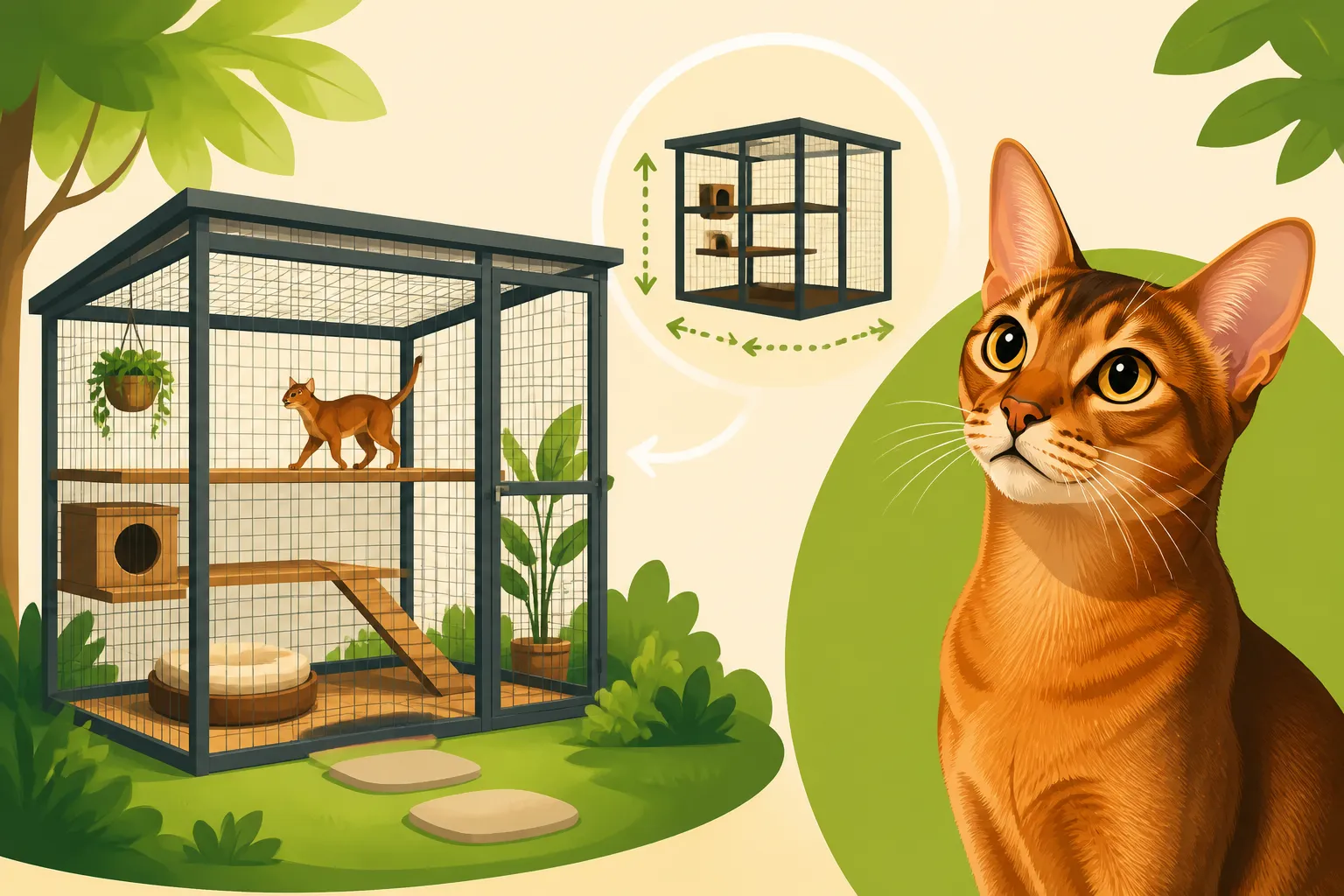
What Size Catio Suits an Abyssinian
You’ve got an Abyssinian, and you know exactly how much boundless energy and curiosity comes packed into that sleek, ticked coat. They are magnificent, active creatures who gaze out windows with a longing for the great outdoors, but letting them roam free comes with a host of undeniable risks. This guide is all about finding the perfect outdoor sanctuary – a catio – and specifically, figuring out just what size catio will truly make your adventurous Abyssinian happy and safe.
Understanding Your Abyssinian's Unique Needs for a Catio
Abyssinians aren't your average couch potato cats. They're built for speed, agility, and exploration, which means their outdoor enclosure needs to reflect that vibrant spirit. If you've ever watched your Aby stalk a fly, scale a bookshelf in a single leap, or methodically open every cabinet door, you know that "just a box" won't cut it.
The Abyssinian's Drive to Explore and Climb
These cats are often described as having dog-like personalities, not just because they're social, but because they have an insatiable drive to investigate everything. Every rustle in the leaves, every bird chirp, every shifting shadow becomes an irresistible call to adventure. They aren't content to simply bask in a patch of sun; they want to be in the action, observing, climbing, and surveying their domain from the highest possible vantage point. This innate curiosity and athleticism means a successful catio isn't just about giving them outdoor access; it's about replicating a stimulating, multi-level environment. They need opportunities to stretch those long, graceful legs and engage their keen minds. They’ll use every inch of vertical space you provide, turning it into their personal climbing gym and observation tower.
Why a Standard Fence Just Won't Do
If you’re thinking a regular garden fence will contain an Abyssinian, think again. These cats are incredible jumpers and problem-solvers. They possess an almost uncanny ability to scale heights, squeeze through gaps, and assess potential escape routes with a calculating gaze. A six-foot privacy fence might deter a less athletic cat, but for an Abyssinian, it's often just another challenge to overcome. How Far an Abyssinian Can Jump is quite astonishing, and many owners have stories of their Aby casually clearing obstacles that seemed insurmountable. This is precisely why a fully enclosed, secure structure like a catio is essential. It provides the outdoor freedom they crave without putting them at risk of traffic accidents, encounters with wildlife, or getting lost.
The Importance of Mental Stimulation Outdoors
An Abyssinian who isn't sufficiently stimulated, whether indoors or out, can quickly become bored, and a bored Abyssinian is a creative, sometimes destructive, Abyssinian. What an Abyssinian Does When It Is Bored can range from meticulously emptying kitchen cabinets to "redecorating" with shredded toilet paper. The outdoor environment of a catio provides a constantly changing landscape of sights, sounds, and smells that indoor life simply can't replicate. The flutter of a butterfly, the scurry of a squirrel, the scent of damp earth after a rain – these are all incredible sources of enrichment that keep their active minds engaged. A well-designed catio isn't just a physical space; it's a mental playground that satisfies their inherent hunting instincts and intellectual curiosity in a safe, contained manner.
Key Considerations for Abyssinian Catio Size
When planning your catio, thinking about "size" isn't just about square footage on the ground. It's about a three-dimensional experience that caters to their specific body type and natural behaviors. You need to consider how they move, where they like to be, and what kinds of activities they'll engage in.
Vertical Space: More Crucial Than Floor Space
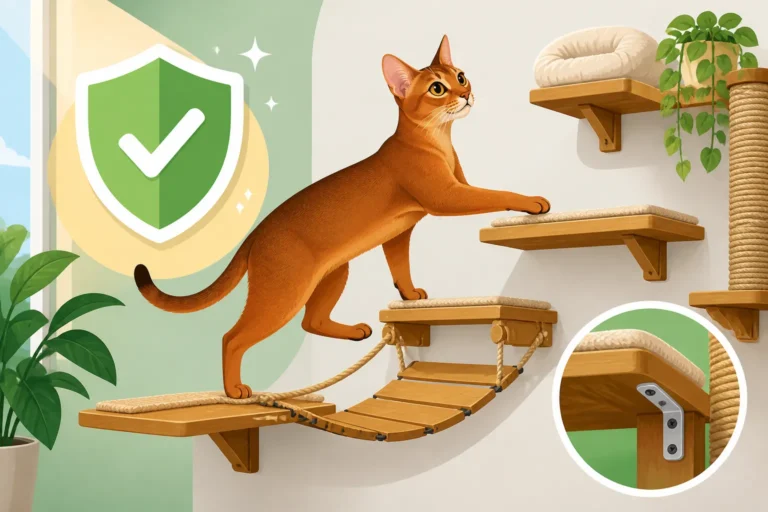
For an Abyssinian, height is paramount. They are arboreal by nature, meaning they love to climb and perch in high places. They survey their surroundings from above, feeling safest and most dominant when elevated. Therefore, a catio with ample vertical space and multiple levels will always be more appealing and enriching than a wide, flat enclosure. Think of it like a multi-story apartment building for your cat. Shelves, ramps, ladders, and sturdy branches all contribute to this essential vertical playground.
A catio that's too short, even if it has a large footprint, will quickly lose its appeal for an Aby. They need to feel like they can truly ascend, observing the world from different vantage points. This isn't just about entertainment; it's deeply ingrained in their psychological well-being. An Abyssinian Needs Height More Than It Needs Floor – this isn't an exaggeration, it's a fundamental truth about the breed's environmental needs. Aim for a minimum of 6-8 feet in height, but if you can go taller, your Abyssinian will thank you for it.
Horizontal Dimensions: Room to Zoom and Stretch
While verticality is king, don't neglect the horizontal aspects. Abyssinians are agile and love to dart, pounce, and stretch out for a good nap in the sun. They need enough length and width to allow for short bursts of speed and playful chases, especially if you have more than one cat. A narrow, tall catio might offer climbing, but it won't allow for the joyful zoomies that Abyssinians are famous for.
Consider a space where they can run a short distance, leap onto a shelf, and then continue their energetic circuit. A minimum width and depth of at least 3-4 feet will generally provide enough room for a single Aby to comfortably move around. If you plan to incorporate a litter box or water station, make sure these don't infringe on their prime exploration space.
Location and Integration with Your Home
The size of your catio will also be heavily influenced by where you can actually put it and how it connects to your home. Do you have a large deck or patio that could host a freestanding structure? Or are you looking for a more modest window box enclosure?
A catio that directly connects to a window or a cat flap allows your Abyssinian to choose when they want to go outside, providing ultimate freedom and enrichment. This might dictate a smaller, more integrated design. If a direct connection isn't possible, you might consider a larger, standalone enclosure that you can escort your Aby to, but remember, the less seamless the access, the less likely they are to use it as freely. Think about the path they'll take from inside to out and ensure it's easy and appealing.
Sizing Your Catio: Practical Guidelines and Examples
Let's get down to some concrete numbers and ideas. While there's no single "perfect" size, there are certainly minimums that will ensure your Abyssinian gets the most out of their outdoor haven.
Minimum Recommended Dimensions for One Abyssinian
For a single Abyssinian, a catio should aim for a balance of verticality and horizontal movement. A good starting point would be something around:
- Height: 6 to 8 feet. This allows for multiple levels of shelving or perches.
- Width: 3 to 4 feet. Enough for them to stretch out and move past obstacles.
- Depth: 4 to 6 feet. Provides a bit of running room and space for furniture.
So, a catio that is, say, 6 feet high, 3 feet wide, and 4 feet deep would be a decent minimum for one energetic Abyssinian, assuming it's well-equipped with climbing opportunities. This allows them to climb, perch, and have a small area to pace. Think of it as a vertical corridor with landings at different heights. This size can often be achieved with pre-fabricated kits you might find on Amazon, or a DIY approach using modular fencing.
Scaling Up for Multiple Abyssinians
If you're lucky enough to have more than one Abyssinian – and let's face it, Whether Two Abyssinians Are Easier Than One is a common question, often answered with a resounding "yes" when it comes to entertainment! – your catio needs will naturally expand. Abyssinians love to play and chase each other, and they'll need more space to do this without feeling cramped.
For two Abyssinians, you should nearly double the horizontal footprint, while maintaining or even increasing the vertical space. They'll appreciate multiple routes up and down, and enough perching spots so that each cat can have their own prime real estate without conflict.
Consider dimensions such as:
- Height: 8 feet (or more). More height means more distinct levels, reducing competition.
- Width: 5 to 6 feet. Allows for passing and parallel lounging.
- Depth: 6 to 8 feet. Gives them space for longer sprints and play.
The goal is to create separate zones for climbing, lounging, and active play, ensuring that all cats can comfortably coexist and enjoy the space simultaneously. A shared perch can be lovely, but independent high points are crucial.
Here's a quick comparison of general size guidelines:
| Feature | Single Abyssinian (Minimum) | Two Abyssinians (Recommended) | Notes |
|---|---|---|---|
| Height | 6-8 feet | 8+ feet | Crucial for climbing & perching. Higher is always better for Abyssinians. |
| Width | 3-4 feet | 5-6 feet | Room to move, pass each other, and stretch out. |
| Depth | 4-6 feet | 6-8 feet | Running space, room for furniture & litter (if applicable). |
| Vertical Levels | 3-4 perches/shelves | 5-6+ perches/shelves | Multiple pathways and resting spots, reducing potential conflict. |
| Access | Single cat flap/window | Multiple access points ideal | Allows independent entry/exit, reducing bottlenecks. |
Custom vs. Pre-fabricated Catios
Your budget and DIY skills will play a big role in whether you go custom or pre-fabricated.
Pre-fabricated Catios: These are fantastic for a quicker, often more affordable solution, especially for smaller spaces or a single cat. You can find a wide variety of modular panels and kits on sites like Amazon that are designed to be relatively easy to assemble. They're great for balconies, small patios, or attaching directly to a window. The main limitation is that you're working within set dimensions, which might not perfectly utilize your available space or cater to extreme vertical desires. Always check the mesh size to ensure it's small enough to prevent escapes and large enough to allow good visibility.
Custom Catios: If you have a specific vision, an unusual space, or want to create a truly expansive, multi-level wonderland, a custom-built catio is the way to go. This allows you to maximize every inch, integrate it seamlessly with your home's aesthetics, and build in features like natural branches, intricate climbing structures, and even tunnels. While often more expensive and time-consuming, the result is a perfectly tailored environment that your Abyssinian will adore. You might source materials from local hardware stores or even find specialist catio builders who can design and construct it for you.
Essential Features Beyond Just Size
A catio's size is just one piece of the puzzle. To truly thrive, your Abyssinian needs a space that is secure, stimulating, and comfortable, no matter the weather.
Security: Keeping Your Abyssinian In and Threats Out
This cannot be stressed enough: a catio must be escape-proof and predator-proof. Abyssinians are clever and agile, and they'll test every weak point. The mesh or wiring needs to be strong and have small enough openings to prevent them from squeezing through. It also needs to be securely fastened to a sturdy frame, preventing predators like coyotes, raccoons, or even large birds of prey from getting in. Double-check all gates and access points to ensure they latch securely. Remember, the goal is peace of mind for you and safe adventure for your cat.
Enrichment Elements: Making it a True Playground
Once you have the structure, it's time to furnish it! Think about what truly engages an Abyssinian.
- Climbing Structures: Shelves, ramps, tree branches (make sure they're secure and safe for climbing), and even sturdy rope ladders. They absolutely love elevation. An Abyssinian still needs its climbing shelves because climbing is not just exercise, it's a core behavioral need.
- Scratching Posts: Essential for claw health and marking territory. Sisal-covered posts are usually a big hit.
- Perches and Hiding Spots: Elevated perches for bird-watching are a must. Also, include a cozy cubby or small shelter where they can retreat if they feel overwhelmed or just want a quiet nap.
- Toys: Rotate a few durable, weather-resistant toys. Catnip spray can refresh old toys and spark new interest. Puzzle feeders can also be a great way to provide mental challenge outdoors.
- Water: Always have fresh water available, perhaps in a heavy ceramic bowl or even a small, animal-safe fountain.
Weather Protection and Comfort
Even the most adventurous Abyssinian won't enjoy their catio if it's baking in the sun or soaking wet.
- Shade: Incorporate areas of shade using shade cloth, a solid roof section, or even strategically placed non-toxic plants. This is vital to prevent overheating, especially during warmer months.
- Shelter from Rain/Wind: A solid roof section is ideal to provide shelter from rain and strong winds. A small, enclosed box or insulated cat house can offer a cozy retreat during cooler weather.
- Bedding: Offer comfortable, washable bedding in their favorite perching and napping spots. This will encourage them to spend more time in their outdoor sanctuary. For colder climates, consider an outdoor-safe heated bed, which you can often find on Amazon, to extend their catio season.
- Access to Indoors: The ultimate comfort and safety feature is direct access back into your home, allowing them to self-regulate their exposure to the elements.
Designing a catio for your Abyssinian is an investment in their happiness and well-being. By focusing on verticality, ample secure space, and plenty of enrichment, you'll create an outdoor haven that satisfies their wild spirit and keeps them safely engaged for years to come.
Disclaimer
This article is for general informational purposes only and does not constitute professional advice. Laws, prices and regulations vary by location and change over time. Consult a qualified professional for guidance on your specific situation.