Why an Abyssinian Empties a Bowl Immediately
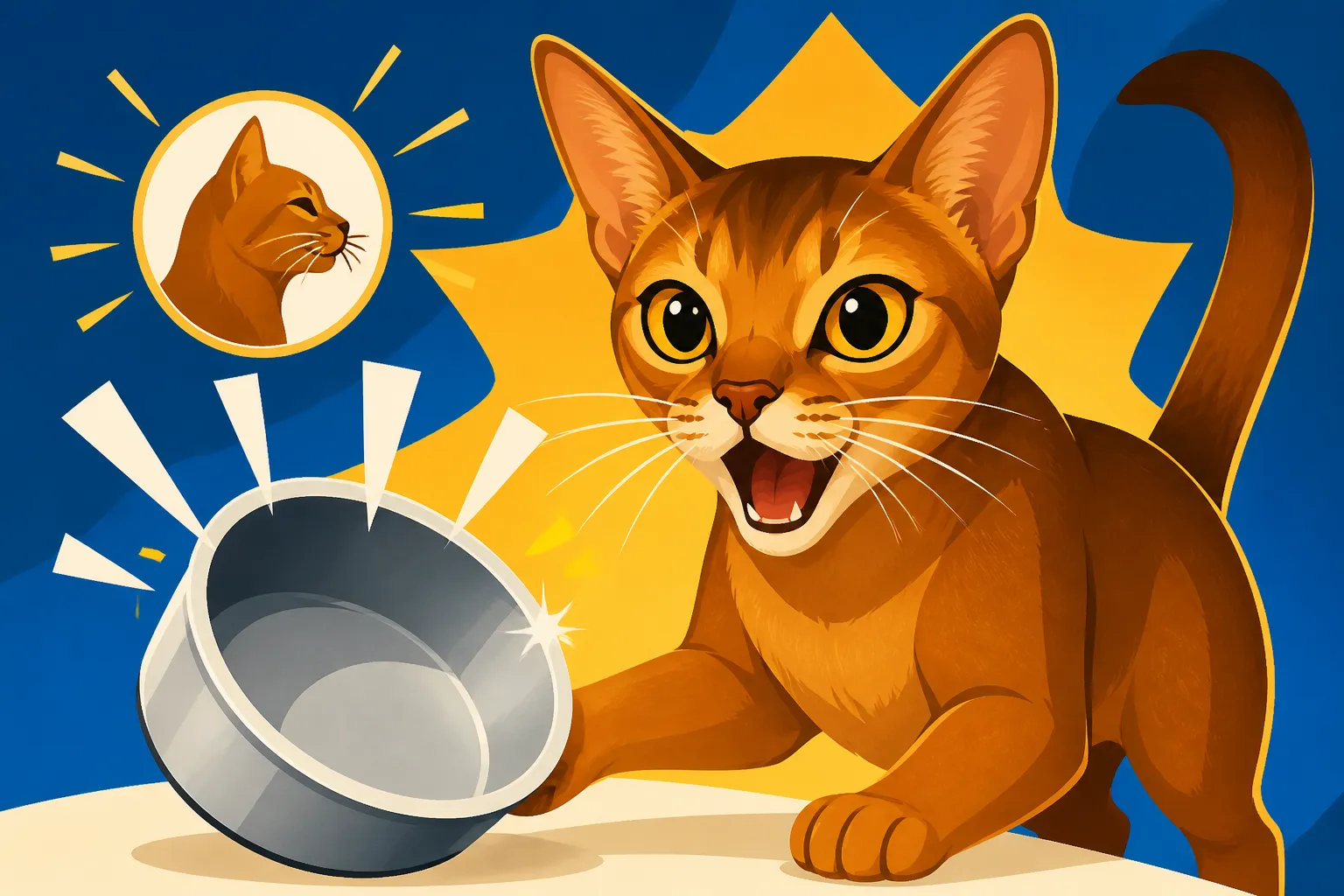
It’s a common scenario for many Abyssinian owners: you put down a fresh bowl of food, and before you can even turn around, it’s completely gone. This isn't just a quirky habit; it can be a genuine concern, leading to issues like regurgitation, tummy upset, or simply leaving you wondering if your energetic companion is truly satisfied. This guide delves into the fascinating reasons behind your Abyssinian's lightning-fast eating and provides practical, empathetic strategies to help them slow down and savor their meals.
The Abyssinian's Natural Metabolism and High Energy Needs
When you watch an Abyssinian, you’re often watching a blur of motion. These cats are known for their boundless energy, their constant exploration, and their incredible athletic prowess. It stands to reason that an animal burning through so much energy would have a different relationship with food than a more sedate feline friend. Their intense activity levels directly influence how they perceive and consume their meals.
A Feline Dynamo: Why Abyssinians Burn Through Calories
Abyssinians are sleek, muscular, and perpetually active. Unlike some chunkier breeds, they maintain a lean physique, which is a hallmark of their energetic nature. This isn't just for show; it means their metabolism is constantly running in high gear. Think of them as tiny, highly efficient sports cars that are always on the go. Every jump, every climb, every dash across the room contributes to a higher caloric expenditure compared to a cat that spends most of its day napping.
This high metabolism translates into genuine hunger. When they see food, their bodies are signaling a real need to refuel. It's not just a desire for a treat; it's a physiological drive to replace the energy they’ve expended. Many owners are surprised to learn that their seemingly small Abyssinian might eat as much, if not more, than a much larger cat. It’s all about efficiency and output. If your Abyssinian is constantly active, they need fuel to match. Understanding How Many Calories an Adult Abyssinian Burns can shed light on just how demanding their energy requirements truly are. This isn’t a cat that can easily skip meals or thrive on low-calorie, filler-laden diets. Their bodies are built for constant motion, and food is the essential fuel for that vibrant life.
Evolutionary Eating: Hunter Instincts at Play
Beyond their metabolic needs, the rapid eating habit of an Abyssinian also taps into deep-seated evolutionary instincts. Abyssinians are often described as having a "wild look" due to their ticked coats and lean build, and this extends to their behaviors too. In the wild, or even as semi-feral cats, food isn't guaranteed. A successful hunt means a meal, but that meal might be contested by other predators or scavengers. The instinct, therefore, is to eat quickly and efficiently before the food source disappears or is taken by a rival. This "feast or famine" mentality, even in a pampered housecat, can be a powerful driver.
While your Abyssinian lives in a safe, food-secure home, these ancient instincts don't just vanish. They can manifest as a perceived urgency around mealtime. They might see the full bowl not as an endless supply, but as a temporary opportunity that needs to be seized. This is particularly true if they experienced any period of scarcity in their early life, or if they grew up in a multi-cat household where competition, even subtle, was present. We've domesticated cats, but we haven't entirely erased millions of years of survival instincts. This explains why foraging activities, like those discussed in Why Foraging Suits an Abyssinian's Mind, are so beneficial—they tap into this natural drive in a controlled, enriching way. They get to "hunt" for their food, satisfying that primal urge without the rush to gorge.
Addressing Underlying Behavioral and Environmental Factors
Sometimes, the way we feed our Abyssinians, or the environment in which they eat, can inadvertently encourage fast eating. It’s not just about their innate drive; external factors play a huge role in shaping their mealtime habits. Examining these elements can often reveal simple, yet effective, ways to make a positive change.
The Psychology of Food Scarcity
Even if your Abyssinian has never truly gone hungry, the perception of scarcity can be ingrained. This is especially prevalent in rescue Abyssinians who may have uncertain pasts, or in homes where there are multiple pets. If a cat has had to compete for food, even if it was just another cat in the house that ate nearby, they might develop a habit of gobbling their meals to ensure they get enough. This isn't necessarily a conscious thought on their part; it's a learned behavior driven by perceived competition. Even in a single-cat household, if meals are infrequent and large, the cat might feel a need to fill up quickly, anticipating a long wait until the next meal.
A rigid, infrequent feeding schedule can inadvertently intensify this feeling. If your Abyssinian is only fed once or twice a day with large portions, their hunger builds up significantly, making them ravenous by mealtime. This creates a powerful drive to empty the bowl as fast as possible. In multi-cat homes, the stress of competition can be very real, even if it's not overtly aggressive. A cat might eat faster just because another cat is in the room, or even just might come into the room. This instinct to secure resources is a strong one. Creating a sense of abundance, even if it's through more frequent, smaller meals, can help alleviate this ingrained "food anxiety." Thinking about Why a Second Cat Suits an Abyssinian also often means considering how to manage their feeding logistics to minimize stress and competition.
Bowl Design and Eating Speed
Believe it or not, the very bowl you use can be a major factor in how quickly your Abyssinian eats. A standard, flat-bottomed bowl presents food in an easily accessible pile, almost inviting your cat to scoop it up as fast as possible. This design offers no challenge, no interruption, and no mental engagement for a cat that's hardwired to work for its food. It's like serving a five-course meal on a conveyor belt; there's no reason not to just gobble it all down.
This is where slow feeder bowls and puzzle feeders come into their own. These aren't just trendy gadgets; they are specifically designed to make eating a more deliberate and engaging activity. Slow feeder bowls typically have ridges, mazes, or pillars that force your Abyssinian to navigate around obstacles to get to their kibble or wet food. This physically slows down their consumption. Puzzle feeders take it a step further, requiring your cat to use their paws or nose to extract individual pieces of food, turning mealtime into a stimulating game. You can find a huge variety of these on sites like Chewy or Amazon, ranging from simple plastic designs to more intricate multi-chambered puzzles. They are a fantastic way to redirect that high Abyssinian intelligence and energy into a productive activity. Finding Which Puzzle Feeders Hold an Abyssinian's Attention is key to making this strategy successful, as some cats prefer different levels of challenge.
The Impact of Routine and Feeding Frequency
The regularity and frequency of your Abyssinian’s meals also have a profound impact on their eating habits. If meals are sporadic or occur only once or twice a day, your cat's hunger levels will naturally peak before each feeding. This creates a scenario where they are genuinely famished, increasing the likelihood of rapid consumption. Think of it from their perspective: if food appears unpredictably, or only after a long wait, the natural response is to eat as much as possible when it finally arrives.
Introducing smaller, more frequent meals can work wonders. Instead of two large meals, consider three or even four smaller portions spread throughout the day. This keeps your Abyssinian's stomach from feeling utterly empty, reducing that intense pre-meal hunger. It also creates a more consistent energy supply, which is ideal for a cat with such a high metabolism. Automated timed feeders, readily available on Amazon or other pet supply retailers, can be incredibly helpful for this. They dispense precise portions at set times, even when you're not home, creating a predictable and regular routine that reinforces a sense of food security. This strategy, as highlighted in Why Three Meals Suit an Abyssinian, can significantly mitigate the "gobbling" tendency by simply removing the incentive to rush.
Nutritional Considerations and Food Choices
Beyond how you feed your Abyssinian, what you feed them plays a crucial role in their satiety and eating pace. Not all cat foods are created equal, and the nutritional composition can greatly influence whether your energetic companion feels full and satisfied, or still hungry immediately after clearing their bowl.
The Importance of High-Quality, Nutrient-Dense Food
Many commercial cat foods contain a lot of fillers – ingredients like corn, wheat, or soy that add bulk but offer little nutritional value. While these might make a cat feel full in the short term, they don't provide the high-quality protein and essential nutrients that an active Abyssinian truly needs. If your cat is eating a food that isn't biologically appropriate, their body might still be craving essential nutrients, leading them to feel unsatisfied even after consuming a large volume. It's like eating a bag of chips versus a steak: both fill your stomach, but only one provides lasting, meaningful nutrition.
For an Abyssinian, who is a true obligate carnivore, a diet rich in animal protein is paramount. This supports their lean muscle mass and high energy levels. When they consume high-quality protein, their body registers a deeper level of satiety, reducing the urge to gorge or immediately seek more food. Look for foods where meat is the first ingredient, and ideally, the first few ingredients. Understanding Which Protein Percentage an Abyssinian Needs in their diet is fundamental to ensuring they are getting the right fuel for their active lifestyle and feeling truly nourished, not just temporarily stuffed.
Wet Food vs. Dry Kibble: A Hydration and Satiety Debate
The type of food – wet or dry – also impacts how quickly an Abyssinian eats and how satisfied they feel afterward. Dry kibble is highly concentrated and lacks moisture. While convenient, a bowl of kibble can be eaten very quickly without providing the same sense of fullness that a more voluminous, moisture-rich food offers. Cats, by nature, are designed to get much of their hydration from their prey, and domestic kibble often leaves them in a state of mild, chronic dehydration.
Wet food, on the other hand, contains a significant amount of water. This added moisture not only helps with hydration – which is incredibly important for Abyssinian kidney health, as discussed in Why Wet Food Protects an Abyssinian's Kidneys – but it also adds volume to the meal without adding extra calories. A bowl of wet food will naturally take longer to eat and will often leave your Abyssinian feeling more satiated simply because their stomach feels fuller. The texture also often requires more chewing and licking, further slowing the process. Many owners find success by incorporating more wet food into their Abyssinian's diet, either as the sole meal or mixed with kibble. Even adding a little water or broth to dry kibble can make a difference, especially when considering How Much Water an Abyssinian's Amyloid Risk Demands to help protect those delicate kidneys.
Practical Strategies to Slow Down Your Abyssinian's Eating
Now that we understand the 'why,' let's focus on the 'how.' There are many practical, easy-to-implement strategies you can use to encourage your Abyssinian to slow down and enjoy their meals without turning it into a stressful ordeal for either of you. Patience and consistency are your best friends here.
Implementing Slow Feeder Solutions
This is often the first and most effective step for fast eaters. Slow feeder bowls, as mentioned before, have internal obstacles that force your cat to eat around them, making it impossible to gulp down large mouthfuls. You can find various designs, from simple dishes with raised patterns to more complex maze-like structures. When choosing one, consider the material (stainless steel or ceramic are often preferred for hygiene) and the difficulty level. Some Abyssinians will quickly figure out a simple design, so you might need to try a more challenging one.
Puzzle feeders are another fantastic option, engaging your Abyssinian's intelligence and natural hunting instincts. These can be as simple as a treat ball they bat around to dispense kibble, or more elaborate multi-compartment puzzles that require pawing and problem-solving. Start with an easy puzzle feeder to build confidence, and as your Abyssinian gets the hang of it, you can gradually increase the difficulty. Sites like Chewy and Amazon offer a wide array, so you can experiment to find what truly captivates your cat. For a more challenging approach, consider scatter feeding: instead of putting food in a bowl, sprinkle small amounts of kibble around a clean, safe room. This forces your Abyssinian to "hunt" for each piece, greatly extending mealtime and providing mental enrichment, much like the advice in How to Make a Puzzle Feeder Harder for an Abyssinian.
Establishing a Consistent and Calm Feeding Environment
The environment where your Abyssinian eats can have a huge impact on their behavior. A noisy, high-traffic area, or one where other pets are frequently present, can increase anxiety and the urge to eat quickly. Imagine trying to enjoy your dinner in the middle of a bustling kitchen during rush hour – it’s not relaxing! Cats appreciate predictability and peace, especially around their food.
Designate a specific, quiet spot for your Abyssinian's meals. This might be a separate room, a high shelf they can access safely, or a corner away from household commotion. If you have multiple pets, feed them in separate rooms to eliminate any perceived competition. Maintain a consistent feeding schedule; cats thrive on routine. When you put the food down, try not to hover. Give them space. While it's tempting to watch them eat, too much attention can sometimes create a performance anxiety or reinforce the idea that their food might be taken away. A calm, consistent routine reinforces a sense of security around food, teaching your Abyssinian that their meals are safe and always available, which can help mitigate the guarding behavior discussed in Why an Abyssinian Guards Its Feeding Time.
Monitoring Weight and Overall Health
While a fast eater can be perfectly healthy, it's always wise to rule out any underlying medical conditions that might contribute to excessive hunger or rapid consumption. Conditions like hyperthyroidism or certain parasites can cause a cat to be constantly hungry, even after eating. If your Abyssinian suddenly starts gobbling their food when they didn't before, or if their rapid eating is accompanied by other symptoms like weight loss (despite eating a lot), vomiting, changes in stool, or unusual thirst, a vet visit is definitely in order.
Regularly monitoring your Abyssinian’s weight and body condition is important for any cat, but especially for an active breed where weight fluctuations can be subtle. Abyssinians are naturally lean, and their sleek coat can sometimes hide changes. Learn How to Read an Abyssinian's Body Condition Through That Coat by gently feeling their ribs and spine. You should be able to feel them easily without them being visibly prominent. Keep an eye on their energy levels, thirst, and general demeanor. Any significant change warrants a professional opinion. A vet can conduct blood work and other diagnostics to ensure your beloved companion isn't hiding any health issues, as Abyssinians are particularly adept at masking illness, a trait discussed in Why a Lean Abyssinian Hides Illness Longer Than a Heavy Cat.
| Strategy Type | Benefit | Considerations |
|---|---|---|
| Slow Feeder Bowls | Physically slows consumption, simple to use. | May need different designs for increased challenge. |
| Puzzle Feeders | Engages mind, extends mealtime, enrichment. | Requires cat to learn, start with easy designs. |
| Frequent Small Meals | Reduces intense hunger, stabilizes energy. | May require automated feeder or more human involvement. |
| High-Quality Food | Provides lasting satiety, better nutrition. | Can be more expensive, gradual transition needed. |
| Increased Wet Food | Boosts hydration, increases meal volume. | May require changes to litter box habits, storage. |
| Quiet Feeding Zone | Reduces anxiety, promotes calm eating. | May require separating pets, finding a dedicated space. |
Ultimately, helping your Abyssinian slow down their eating is a journey of understanding their unique needs and behaviors. It requires a bit of detective work and a willingness to experiment with different approaches. But with patience, a little creativity, and a focus on high-quality nutrition and a calm environment, you can transform mealtime into a more relaxed and enriching experience for your energetic companion.
Disclaimer
This article is for general informational purposes only and does not constitute professional advice. Laws, prices and regulations vary by location and change over time. Consult a qualified professional for guidance on your specific situation.