How to Use a Grooming Mitt on an Abyssinian
Anyone who shares their home with an Abyssinian knows that keeping their magnificent, shimmering coat in prime condition can feel like a delicate dance. You've probably tried various brushes, only to find they either don't pick up enough hair, create static, or worse, seem to flatten that gorgeous ticking that makes an Aby's fur so special. This comprehensive guide will walk you through exactly how to use a grooming mitt, transforming what can be a chore into a beneficial and enjoyable ritual for both you and your agile companion.
The Abyssinian Coat: A Unique Challenge and Why the Mitt Triumphs
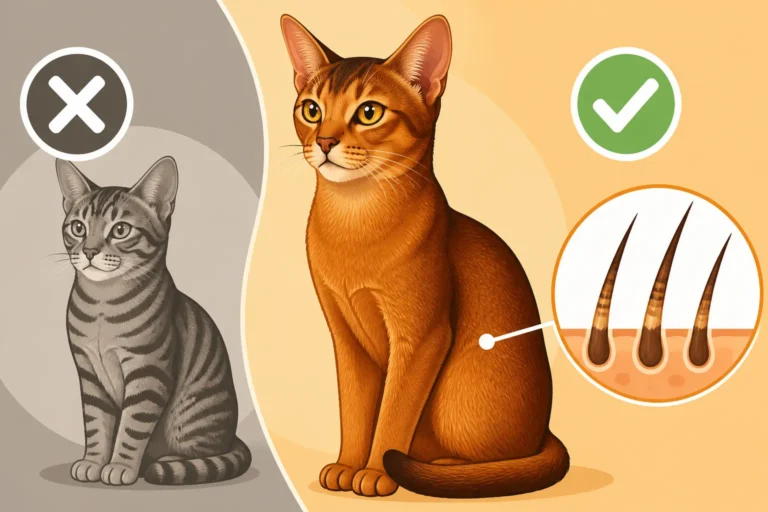
The Abyssinian's coat is truly a marvel, a hallmark of the breed that sets it apart from so many other felines. Unlike many other cats, Abyssinians boast a ticked coat, meaning each individual hair is banded with two to three colors, giving it a vibrant, shimmering appearance that changes with the light. This agouti banding is a key feature, and it's what creates that distinct, badger-like look without any traditional tabby stripes on the body. This unique structure means their fur lies close to the body, is incredibly fine to the touch, and often feels warm.
One of the most defining characteristics of the Abyssinian coat, beyond its beautiful ticking, is its minimal undercoat. Many cat breeds have a dense, woolly undercoat that contributes to shedding and requires specific grooming tools. Your Aby, however, largely bypasses this. Their single, fine coat means they don't shed in great clumps like some long-haired breeds, but they do shed a continuous fine powder of hair throughout the year. This fine hair can still accumulate on furniture and clothing, and if not managed, can dull the coat's natural luster.
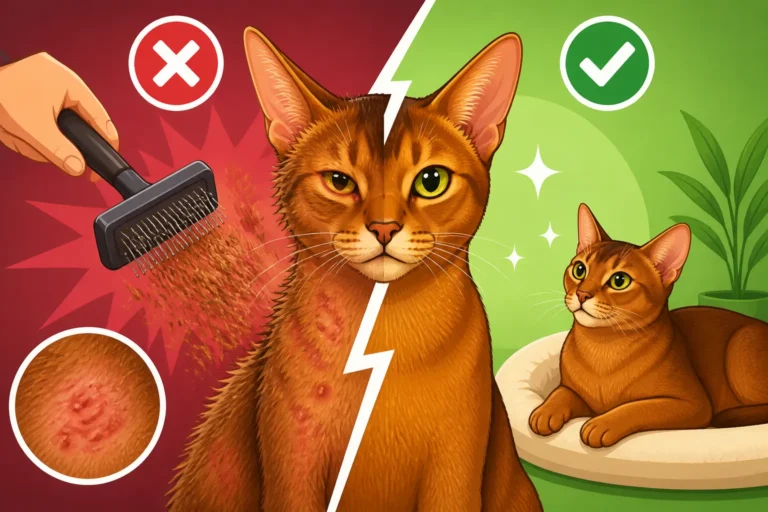
This unique coat structure is precisely why many traditional grooming tools fall short. Slicker brushes, with their stiff wire bristles, can be too harsh for an Abyssinian's delicate skin and sparse undercoat, often causing discomfort or even scratching. They can also flatten the very ticking you want to enhance, making the coat appear dull and less vibrant. Deshedding tools, designed for dense undercoats, are an absolute no-go, as they can strip the Aby's fine guard hairs and damage the coat irrevocably. You want to enhance that shine, not destroy it. As we've explored in Why the Wrong Brush Flattens an Abyssinian's Ticking, tool choice is paramount.
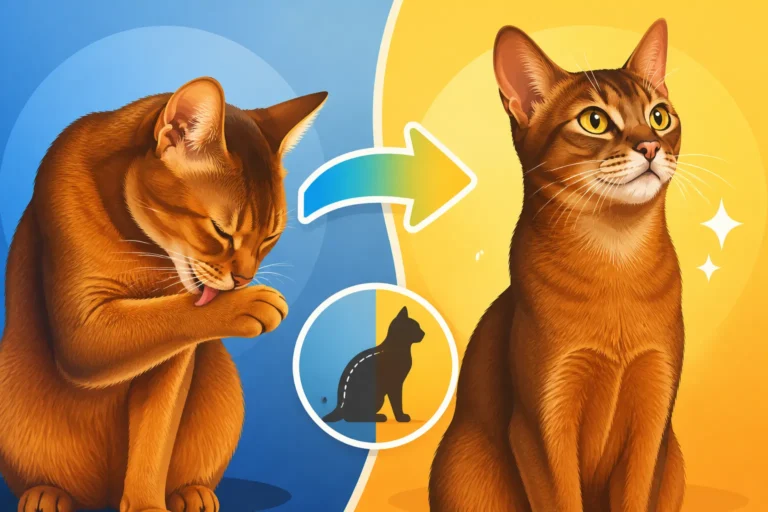
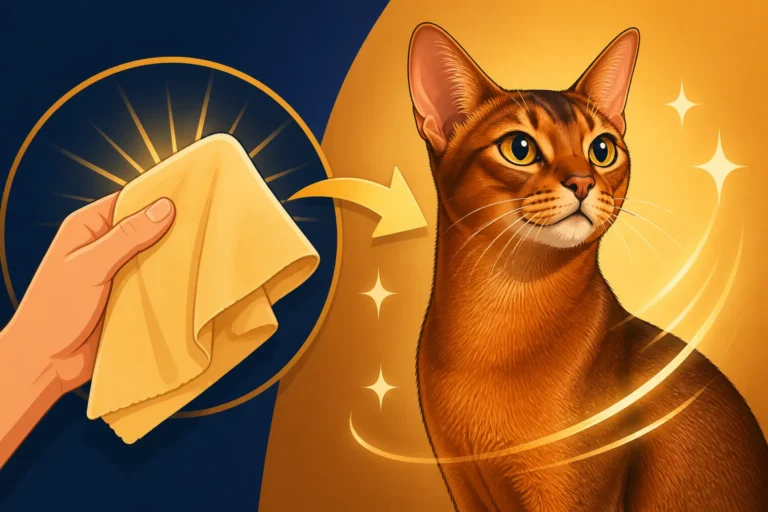
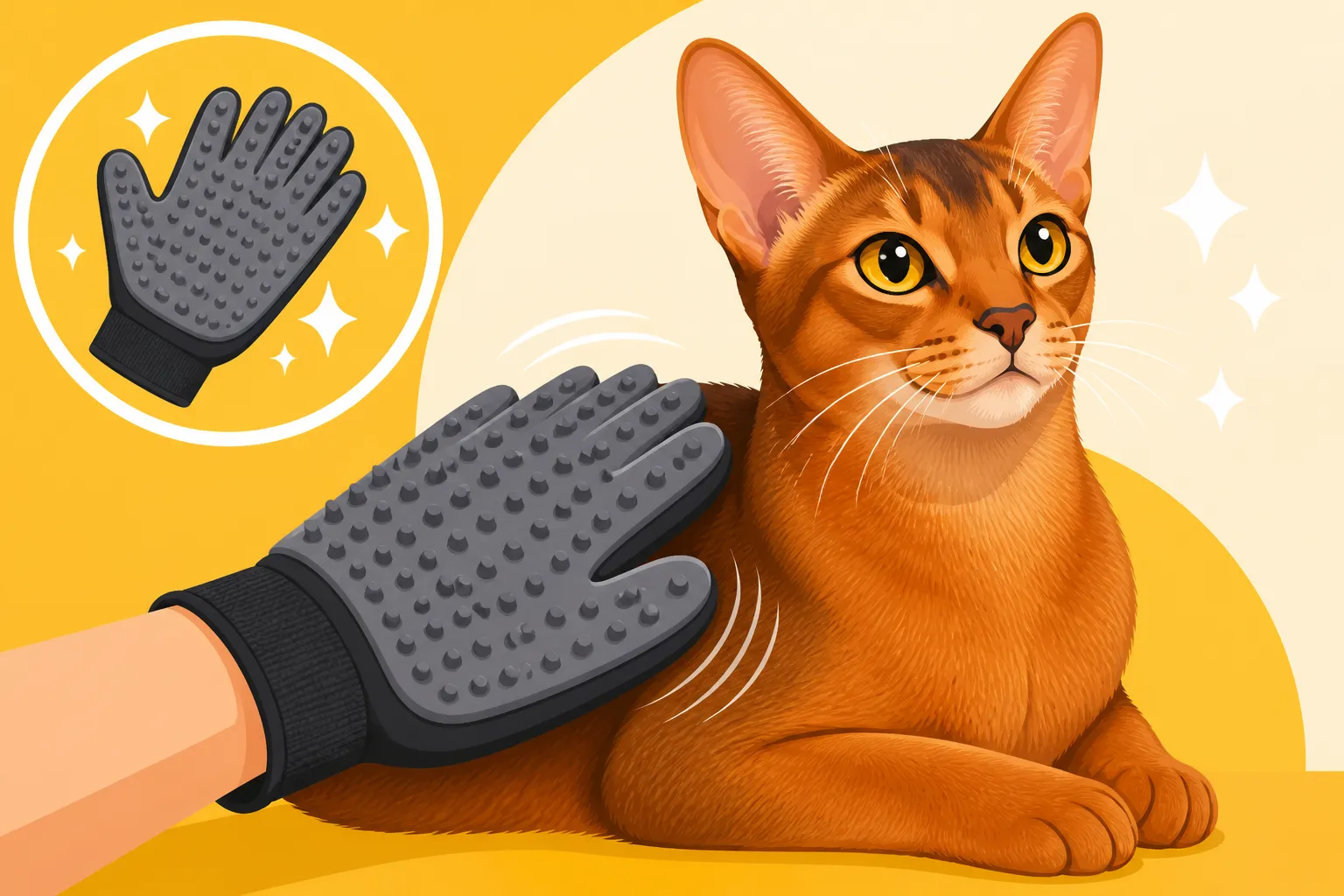
Enter the grooming mitt. This simple yet incredibly effective tool is perfectly suited to the Abyssinian's needs. Typically made of rubber or silicone with nubs or short bristles, a grooming mitt offers a gentle massage while simultaneously capturing loose hairs. It works with the coat's natural direction and texture, stimulating circulation in the skin without irritating it. Think of it less as a brush and more as an extension of your hand, providing a soothing stroke that your Aby will likely come to love, rather than resent. It makes grooming a positive, bonding experience, which is crucial for a breed as sensitive and intelligent as the Abyssinian.
Mastering the Mitt: A Practical Guide to Abyssinian Grooming
Choosing the right grooming mitt for your Abyssinian is the first step, and thankfully, it's not overly complicated. You'll want a mitt that fits comfortably on your hand, allowing for natural, fluid movements. The best ones are usually made of soft rubber or silicone, featuring flexible nubs or short, conical bristles. These materials are gentle on your cat's skin while still being incredibly effective at grabbing loose fur. You can find a fantastic selection from retailers like Chewy or on Amazon, often with different textures or shapes to experiment with. As discussed in Which Grooming Mitt Suits an Abyssinian, finding one that feels good in your hand is half the battle.
Before you even touch your Abyssinian with the mitt, it’s crucial to set the stage for a positive experience. Abyssinians are creatures of habit and sensitive to their environment. Choose a quiet time of day when your cat is relaxed, perhaps after a play session when they're winding down, or just before a meal. Avoid times when they're overly stimulated or sleepy. A calm, comfortable location, like a favorite sunny spot on the couch or a familiar mat on the floor, will help immensely. Have some small, high-value treats on hand to reward good behavior throughout the session. If you have an Aby who isn't keen on being handled, starting small and gradually increasing the duration is key.
Now for the actual technique. Donning the mitt, begin with very light, gentle strokes, moving in the direction of hair growth. Start in areas your Abyssinian typically enjoys being petted, like along their back or sides. The goal isn't to pull or rake, but to softly gather the loose hairs. You'll notice the nubs on the mitt gently massaging the skin, which many cats find quite enjoyable. For those trickier spots, like the chest, belly, or under the chin, you might need to adjust your cat's position slightly or use your free hand to support them. Always be mindful of their reactions; if they tense up or try to get away, ease off the pressure or take a short break. Consistency is key, even if it's just a few minutes at a time initially.
As you continue to groom, you'll see loose hair begin to accumulate on the mitt. This is exactly what you want! Periodically, peel the collected fur off the mitt and discard it. This prevents the mitt from becoming saturated and less effective. Focus on even, continuous strokes rather than short, choppy ones. The Abyssinian's short, fine coat means you won't be dealing with huge clumps, but rather a steady stream of fine hairs. Remember, the mitt is also stimulating the skin and distributing natural oils, contributing to that healthy sheen. Regular use, perhaps once or twice a week, as highlighted in An Abyssinian Needs Brushing Once a Week and No More, is usually sufficient to keep their coat in top condition and manage shedding. If you have an Abyssinian who tends to be a bit of a wriggler, you might find some additional tips in How to Groom an Abyssinian That Will Not Stay Still.
Beyond the Bristles: Holistic Coat Care for Your Abyssinian
Using a grooming mitt effectively goes far beyond just removing loose hair; it's a vital part of your Abyssinian's overall health and your bond with them. Each grooming session provides a fantastic opportunity for a tactile, head-to-tail check-up. As your hand moves over their body, you can feel for any unusual lumps, bumps, or skin irritations that might otherwise go unnoticed. You might detect fleas or ticks, dry patches, or even early signs of discomfort. This regular, hands-on attention helps you become intimately familiar with your cat's normal physique, making it easier to spot anything out of the ordinary early on.
The health of your Abyssinian's coat is a direct reflection of their internal well-being, and diet plays an enormous role. A high-quality diet rich in protein, essential fatty acids (like Omega-3 and Omega-6), and vitamins is crucial for a lustrous, healthy coat and supple skin. Look for cat foods with real meat as the primary ingredient and avoid excessive fillers. Some owners opt for fresh food delivery services that use human-grade ingredients, which can significantly boost coat health. Think of it this way: if their internal engine isn't getting the right fuel, their external presentation won't be as vibrant. A dull, dry, or excessively shedding coat can sometimes be the first indicator that something in their diet, or even their overall health, needs adjusting.
Hydration is another often-overlooked component of coat health, especially for a breed like the Abyssinian. Proper water intake is essential for all bodily functions, including maintaining skin elasticity and a healthy coat. While Abyssinians are typically very active and get a lot of their water from wet food, it's vital to ensure they always have access to fresh, clean water. Consider a water fountain, which often encourages cats to drink more due to the moving water. A cat that is even mildly dehydrated can exhibit a dull coat, dry skin, and increased shedding. For more on this, consider Why Wet Food Protects an Abyssinian's Kidneys, which highlights the importance of moisture.
While the grooming mitt focuses on the coat, remember that a holistic approach to care involves other routine maintenance. Regular nail trims, as discussed in How Often to Check a Climbing Abyssinian's Back Claws, prevent painful overgrowth and reduce the likelihood of your Aby scratching themselves or your furniture. Occasional ear checks and gentle cleaning, if needed, prevent wax buildup and potential infections. Don't forget their teeth either; dental hygiene is paramount for overall health, and a healthy mouth contributes to a healthy body. As we often emphasize, Why Dental Treats Do Not Replace Brushing an Abyssinian and How to Brush an Abyssinian's Teeth From Day One are topics worth exploring for comprehensive care.
It's important to know when a grooming concern might signal something more serious. While an Abyssinian's single coat means Why an Abyssinian's Single Ticked Coat Barely Sheds is generally true, any sudden, excessive shedding, bald patches, persistent dullness, or skin irritation (redness, scabs, flakiness) that doesn't resolve with regular mitt use warrants a veterinary visit. These can be indicators of allergies, parasites, fungal infections, or underlying systemic health issues. Your vet can accurately diagnose the problem and recommend appropriate treatment, ensuring your Aby not only looks magnificent but feels fantastic too.
Disclaimer
This article is for general informational purposes only and does not constitute professional advice. Laws, prices and regulations vary by location and change over time. Consult a qualified professional for guidance on your specific situation.