Why Dental Treats Do Not Replace Brushing an Abyssinian
It's incredibly frustrating when you're trying your best to care for your beloved Abyssinian, investing in all the right products, only to find that some common advice just doesn't quite cut it. Many of us hope that dental treats are a magic bullet, a simple way to ward off plaque and keep those pearly whites gleaming, but for a breed like the Abyssinian, relying solely on them can lead to significant and costly dental problems down the line. This guide will walk you through why dental treats, while having a place, are absolutely no substitute for a consistent toothbrushing routine, especially for a breed prone to specific gum issues.
The Lure of the "Easy Fix" for Abyssinian Dental Health
We've all seen the advertising: happy cats crunching on a treat, sparkling smiles implied, promises of fresh breath and cleaner teeth. It sounds so appealing, doesn't it? A quick snack that does all the hard work for you, saving you the struggle of wrestling your energetic Abyssinian with a toothbrush. But the reality, particularly for our active and often opinionated Abyssinians, is far more complex than a simple chew can address.
The Promise of Dental Treats vs. Reality
Dental treats are often marketed with claims of reducing tartar, freshening breath, and improving overall oral hygiene. The idea is that the abrasive texture of these treats, or sometimes special ingredients, will scrape away plaque and tartar as your cat chews. For some cats, this might provide a minor, superficial cleaning effect on the outer surfaces of the teeth, especially the large chewing molars at the back. It's easy to fall into the trap of thinking you're doing enough, especially when your Abyssinian eagerly devours them. After all, who doesn't want an easy win when it comes to pet care? We're busy people, and the thought of avoiding a difficult brushing session is very tempting.
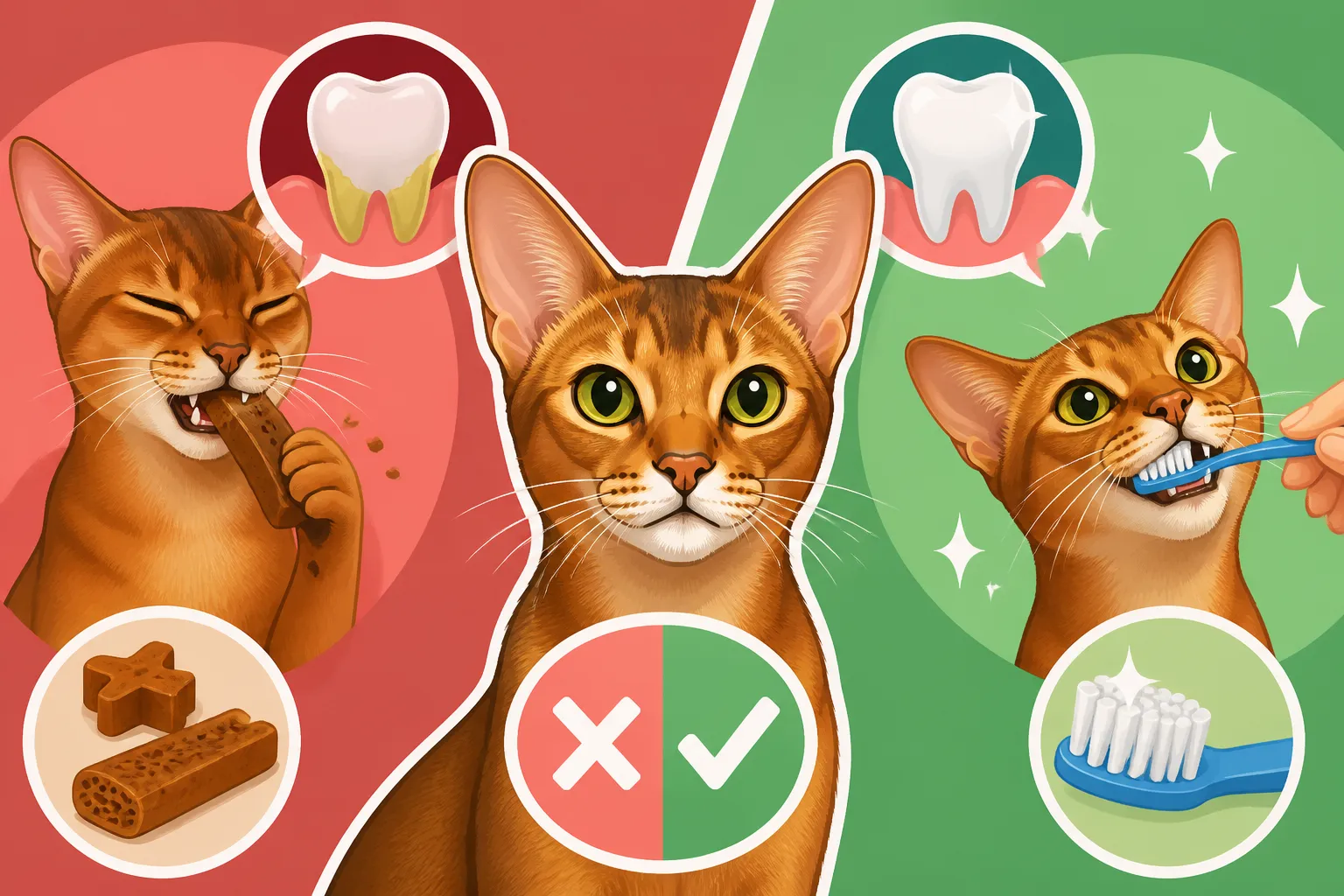
However, the primary issue with dental treats is that they rarely reach the critical areas where dental disease truly begins: along the gumline and in the tiny crevices between teeth. Plaque, a sticky film of bacteria, forms continuously. If not removed, it hardens into tartar, which then irritates the gums, leading to inflammation and infection. While a treat might dislodge some loose food particles or soft plaque from the very tips of the teeth, it simply cannot provide the mechanical scrubbing action necessary to disrupt plaque buildup at the gumline, where it matters most. Think of it like trying to clean your own teeth by just eating a hard biscuit – it’s just not going to do the job your toothbrush does. Many of these treats are designed for a quick crunch rather than sustained chewing that might offer a more significant abrasive effect.
Why Abyssinian Gums Are a Special Challenge
Abyssinians, for all their athletic grace and playful charm, can be particularly susceptible to certain dental issues that make robust oral hygiene non-negotiable. One of the most common and concerning is a condition called juvenile gingivitis. This isn't just your run-of-the-mill gum inflammation; it's an aggressive form that often begins when an Abyssinian kitten is quite young, sometimes around six months of age, just as their adult teeth are fully in. You might notice their gums looking a little red or swollen, and it can progress rapidly. Why an Abyssinian Kitten's Gums Fail at Six Months describes this early onset in detail.
This predisposition means that even a perfectly healthy Abyssinian kitten needs proactive dental care from day one. Relying on treats alone for a cat with a genetic leaning towards early gum inflammation is like trying to put out a bonfire with a water pistol. The problem is too deep-seated and persistent for such a superficial solution. The unique genetic makeup of the breed means their immune system might overreact to the presence of plaque, leading to exaggerated inflammation, overgrown gum tissue, and discomfort that significantly impacts their quality of life. Without dedicated intervention, these issues can escalate into painful periodontal disease, tooth resorption, and even extractions.
Understanding What Dental Treats Can Do (and What They Can't)
It's not to say dental treats are entirely useless, but it's crucial to understand their limitations. They exist in a grey area where marketing often overstates their effectiveness, leaving well-meaning owners thinking they're doing enough when, in fact, they're only scratching the surface of true dental health.
The Mechanics of Dental Chews and Kibble
The primary mechanism by which most dental treats, and even some specialized dental kibbles, claim to clean teeth is through mechanical abrasion. As your Abyssinian crunches on a treat, the idea is that the friction of the treat against the tooth surface will physically scrub away plaque. Some treats are designed to be larger or have a unique texture that encourages more chewing, ostensibly increasing this abrasive action. Ingredients are sometimes added, like enzymes or antiseptics, with the goal of reducing bacterial growth or breaking down plaque components.
While this concept sounds logical, its real-world application is often insufficient. For starters, most cats, including Abyssinians, tend to swallow treats fairly quickly, not engaging in the prolonged, vigorous chewing that would be required for significant abrasive cleaning. Furthermore, the shape and size of the treats often mean they only come into contact with the prominent surfaces of the teeth – the very tips and outer edges. The inner surfaces, the areas closest to the tongue and roof of the mouth, and most critically, the gumline and the spaces between the teeth, are largely untouched. This is where plaque and tartar accumulate most rapidly and where dental disease takes hold. So, while a dental chew might make a slight difference to surface stains, it’s not reaching the root of the problem. You might find a good selection of these types of treats on platforms like Chewy or Amazon, but always remember their limitations.
Where Brushing Excels: Targeting the Gumline Plaque
This is where manual toothbrushing stands head and shoulders above any dental treat. Brushing allows you, the owner, to directly target the gumline – the critical junction where the tooth meets the gum. This is precisely where plaque biofilm loves to accumulate, leading to gingivitis and eventually periodontal disease. A soft-bristled toothbrush, specifically designed for cats, can gently yet effectively disrupt this plaque. The bristles can reach into the tiny sulcus, the shallow groove between the tooth and the gum, where bacteria thrive.
With proper technique, you can sweep away the plaque before it has a chance to harden into tartar. This hands-on approach also ensures that all tooth surfaces are addressed, not just the ones a treat happens to scrape. It's about precision, consistency, and directly engaging with the problem areas. This active removal of plaque at the gumline is the single most effective way to prevent and manage dental disease in cats. No amount of chewing a treat can replicate the thorough, targeted cleaning that even a few minutes of daily brushing can provide. It's the difference between wiping down a countertop and actually scrubbing out the grout between the tiles.
The Unique Dental Woes of the Abyssinian
It bears repeating: Abyssinians are not just any cat when it comes to dental health. Their breed characteristics, while making them incredibly beautiful and engaging pets, also mean they come with specific vulnerabilities that demand extra attention from their guardians. Understanding these predispositions is key to truly protecting their oral health.
Juvenile Gingivitis: A Common Abyssinian Battle
As mentioned earlier, juvenile gingivitis is a significant concern in the Abyssinian breed. This condition is far more aggressive and widespread than the gingivitis seen in many other cat breeds. It often flares up around the time they're getting their adult teeth, anywhere from six months to two years of age. Instead of just a mild redness, you might see very inflamed, bright red gums, sometimes even overgrown tissue that starts to cover parts of the teeth. Why an Abyssinian's Gums Overgrow Its Teeth dives deeper into this specific tissue proliferation. It's not uncommon for these young cats to experience discomfort, leading to reluctance to eat hard food, dropping kibble, or showing sensitivity around their mouths.
The exact cause is thought to be an overactive immune response to plaque bacteria, meaning even a small amount of plaque can trigger a disproportionately severe inflammatory reaction. If left unchecked, this inflammation can become chronic and very painful. This breed-specific issue means that passive methods like dental treats are simply not going to cut it. They might offer a false sense of security while the underlying inflammation silently worsens. Early detection and aggressive management, which unequivocally includes regular brushing, are critical to prevent this from spiraling into more severe periodontal disease.
The Progression from Plaque to Periodontal Disease
It all starts with plaque. Every time your Abyssinian eats, microscopic food particles combine with bacteria in their mouth to form a sticky film. Within 24-48 hours, if this plaque isn't removed, it begins to mineralize and harden into tartar (or calculus). Tartar, being rough and porous, provides an even better surface for more plaque to accumulate, creating a vicious cycle. The tartar itself isn't what directly causes the disease, but it acts as a scaffold for more bacteria, and its rough edges irritate the gum tissue.
This irritation leads to gingivitis – inflammation of the gums. You might notice redness, swelling, and sometimes bleeding when your Abyssinian chews or you touch their gums. If gingivitis is caught early and the plaque/tartar removed, it is reversible. However, if it progresses, the inflammation starts to affect the deeper supporting structures of the tooth. The gums pull away from the tooth, forming pockets where more bacteria, inaccessible to treats or even some brushing, can flourish. This is periodontal disease, and it's irreversible. It can lead to bone loss around the teeth, root exposure, and eventually, tooth mobility and loss. Imagine the pain of loose teeth, infected gums, and exposed roots every time your Abyssinian eats or even yawns. This severe progression is why Abyssinians can sometimes lose teeth much younger than other cats, as detailed in Why an Abyssinian Loses Teeth Younger Than Most Cats. Dental treats do not stop this progression; they barely touch the surface of the problem.
The Gold Standard: Establishing a Brushing Routine for Your Abyssinian
If you're an Abyssinian owner, you know these cats are intelligent, active, and can be quite strong-willed! The idea of brushing their teeth might fill you with dread, but I promise, with patience and the right approach, it's entirely possible and incredibly rewarding for their long-term health. Think of it as another bonding activity, much like their daily play sessions.
Getting Started with Toothbrushing an Abyssinian
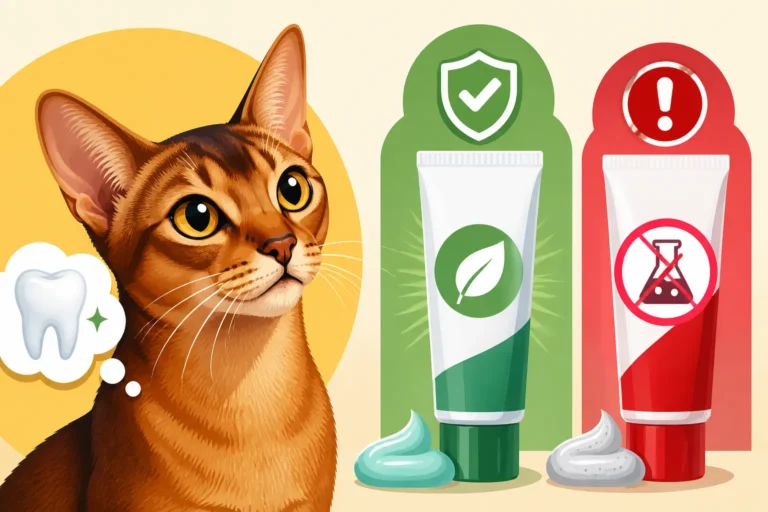
The key to successful toothbrushing with an Abyssinian is to start early and go slow. If you have a kitten, begin as soon as they come home. Even if they're older, it's never too late to try, though it might take more patience. How to Brush an Abyssinian's Teeth From Day One offers great advice on this. The first step isn't even a brush – it's just getting them comfortable with you handling their mouth. Gently touch their muzzle, lift their lips, and maybe even put a tiny bit of cat-specific toothpaste on your finger for them to lick. Cat toothpaste comes in flavors like poultry or fish, which most Abyssinians find irresistible. Never use human toothpaste, as it contains fluoride and other ingredients that are toxic if swallowed by cats.
Once they tolerate having your finger near their mouth, introduce a finger brush or a very soft baby toothbrush. Keep sessions incredibly short – literally just a few seconds at first. Focus on the outside surfaces of the upper canine teeth and the premolars, as these are often the easiest to access and where a lot of disease starts. Use a gentle, circular motion, aiming the bristles towards the gumline. Positive reinforcement is crucial: praise, petting, and a favorite treat immediately after the session. Consistency is far more important than duration in the beginning. Aim for daily brushing, or at least every other day, to prevent plaque from mineralizing into tartar.
Choosing the Right Tools for Abyssinian Dental Care
Having the right tools makes all the difference when you're tackling your Abyssinian's dental care. The market is flooded with options, but a few stand out as genuinely effective for feline mouths. First and foremost, you need a cat-specific toothbrush. These typically have smaller heads and softer bristles than human toothbrushes, designed to fit comfortably in a cat's mouth without causing irritation. You can find these on Chewy or Amazon easily. Finger brushes, which fit over your fingertip, can also be a great starting point, especially for Abyssinians who might be wary of a traditional brush initially. Which Toothbrush Suits an Abyssinian provides more specific recommendations.
Next, invest in good quality enzymatic cat toothpaste. As mentioned, human toothpaste is a no-go. Enzymatic toothpastes often contain enzymes that help break down plaque even after application, adding an extra layer of protection. Flavor is key here – poultry, fish, or malt flavors are usually big hits. You might need to experiment to find your Abyssinian's favorite. Some owners also find dental wipes useful for quick cleanings on days when a full brush isn't feasible, but these, like treats, are only superficial and don't replace the deep clean of brushing. Lastly, having a comfortable, well-lit space where you can gently cradle your Abyssinian will make the experience better for both of you. A non-slip mat can help prevent them from sliding around, giving them a sense of security.
Complementary Dental Care: Beyond Brushing and Treats
While brushing is the cornerstone, a truly holistic approach to your Abyssinian's dental health involves more than just daily scrubbing. It includes professional veterinary intervention and mindful dietary choices, all working in concert to keep their mouth healthy.
Professional Dental Cleanings: A Non-Negotiable for Abyssinians
Even with diligent home brushing, professional dental cleanings under anesthesia are absolutely vital for Abyssinians. Why? Because once plaque hardens into tartar, no amount of brushing or treats will remove it. Tartar is like concrete on their teeth, and it requires specialized veterinary tools to scale it off properly. During a professional cleaning, your vet or a veterinary technician will use ultrasonic scalers and hand instruments to meticulously remove all plaque and tartar above and below the gumline. This subgingival cleaning is crucial because that's where serious periodontal disease often hides, out of sight.
Anesthesia allows the vet to perform a thorough examination, including dental X-rays to assess the health of the tooth roots and jawbone, which are impossible to see on a conscious cat. They can identify painful issues like tooth resorption, fractured teeth, or deep gum pockets that require further treatment, such as extractions. How Often an Abyssinian Needs Its Teeth Cleaned delves into the recommended frequency. For an Abyssinian prone to juvenile gingivitis, these cleanings might be needed more frequently than for other breeds, sometimes even yearly or every other year, starting younger in life. It's a significant investment, both emotionally and financially, but neglecting professional cleanings often leads to far more expensive and painful problems down the road, potentially involving multiple extractions, which are discussed in What Extracting an Abyssinian's Teeth Costs.
Dietary Considerations for Optimal Oral Health
While no diet alone can replace brushing, what you feed your Abyssinian can certainly play a supportive role in their oral health, especially considering their predisposition to gum issues. The common wisdom used to be that hard kibble mechanically cleaned teeth better than wet food, but this is largely a myth. Most kibble is simply too small and too quickly crunched to provide any significant abrasive action that reaches the gumline. In fact, many kibbles are high in carbohydrates, which can stick to teeth and contribute to plaque formation.
A diet rich in high-quality animal protein and lower in carbohydrates is generally beneficial for overall feline health, including dental health. Wet food can be particularly advantageous because it provides more moisture, which is good for kidney health (another concern for Abyssinians as they age, though unrelated to amyloidosis). Some vets advocate for a raw or fresh-food diet, suggesting that the natural enzymes and textures might be more beneficial, but these diets require careful balancing to ensure complete nutrition and safety, and they don't negate the need for brushing. The most important thing is to avoid sugary or sticky treats and ensure their primary diet supports general health, while relying on brushing for direct plaque removal.
Long-Term Outlook: Investing in Your Abyssinian's Oral Health
Caring for an Abyssinian is a long-term commitment, and their dental health is no exception. It's not a "fix it once and forget it" situation, but an ongoing journey that pays dividends in their comfort, health, and lifespan.
The Cost of Neglect vs. Proactive Care
It’s easy to dismiss dental care as just another expense, but truly, neglecting your Abyssinian’s teeth will cost you far more in the long run, both in terms of money and their well-being. A dental treat might seem like a cheaper alternative to a toothbrush and toothpaste, but the reality is that untreated dental disease escalates. What starts as easily manageable gingivitis can become severe periodontal disease, leading to painful infections, multiple tooth extractions, and even systemic health problems as bacteria from the mouth enter the bloodstream. These advanced procedures require extensive anesthesia, surgery, medications, and follow-up care. Why Abyssinian Dental Work Is the Biggest Line in the Budget highlights just how costly these interventions can become.
Compare this to the relatively small, consistent investment in daily brushing and regular veterinary check-ups, which include oral examinations. Early intervention when issues are minor, or even better, preventing them from developing, drastically reduces the need for expensive and invasive treatments. Proactive care means your Abyssinian avoids chronic pain, maintains a healthier appetite, and generally lives a more comfortable life. It’s an investment in their overall health and happiness, preventing a domino effect of issues that stem from a neglected mouth.
A Lifetime Commitment to a Bright Smile
Ultimately, keeping your Abyssinian's teeth and gums healthy is a lifelong commitment. It's about integrating dental care into your daily routine, much like feeding or playtime. Why Home Dental Care Starts Early in an Abyssinian cannot be stressed enough; the earlier you start, the easier it becomes. A consistent routine of brushing, ideally daily, coupled with regular veterinary dental check-ups and cleanings, is the most effective strategy. Dental treats can be a nice little addition, maybe helping with breath or offering a slight surface scrub, but they are merely a supplement, not a solution.
Your Abyssinian relies on you to be their advocate for health. Their bright, energetic personality can mask discomfort, making it even more important for you to be vigilant about their oral health. A healthy mouth contributes significantly to their overall vitality, ensuring they can continue to eat, play, and chirp their way through many happy years by your side. It’s not about perfection, but about consistent, dedicated effort, understanding that this lively breed needs that extra push when it comes to keeping those gums healthy and those teeth sparkling.
Disclaimer
This article is for general informational purposes only and does not constitute professional advice. Laws, prices and regulations vary by location and change over time. Consult a qualified professional for guidance on your specific situation.