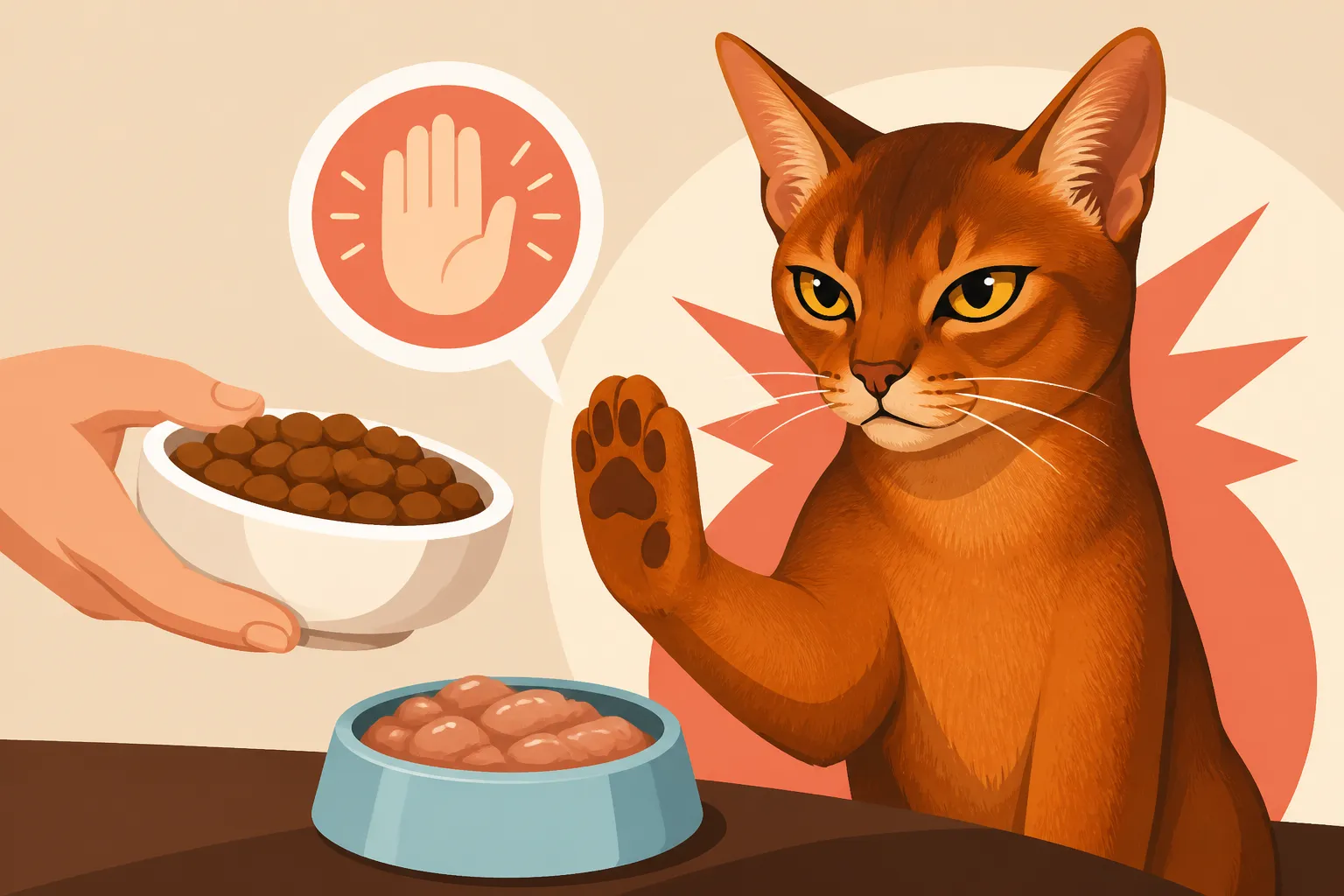
Why an Abyssinian Refuses a Sudden Food Change
It’s incredibly frustrating, isn't it? You spend time researching what you believe is the perfect new food for your active Abyssinian, you open the bag or can with optimism, and your cat looks at it like it's a foreign object from another dimension – or worse, walks away entirely. This guide is here to shed light on why your usually adventurous Abyssinian can become surprisingly stubborn when faced with a sudden change in their diet and how you can navigate this challenge without resorting to desperate measures.
The Abyssinian's Innate Neophobia and Sensitivity
Abyssinians are phenomenal creatures, full of energy, intelligence, and an almost dog-like loyalty. They’re curious, constantly exploring, and seem to embrace novelty in many aspects of their lives. Yet, when it comes to their dinner bowl, many Abyssinian owners encounter a stark contrast to this adventurous spirit. This isn't just "pickiness" – it’s often rooted in deep-seated feline instincts and the unique sensitivities of the breed.
Why Abyssinians Are Naturally Wary of New Things
Cats, by their very nature, are creatures of habit. While Abyssinians might seem to defy this with their boundless curiosity, this instinct for routine is particularly strong around food. In the wild, a sudden change in diet could signal that their usual food source is tainted, scarce, or even dangerous. This survival instinct, known as neophobia (fear of new things), is hardwired into their DNA. It’s a defense mechanism that kept their ancestors safe, and it's still very much active in our modern house cats.
For your Abyssinian, this manifests as a deep distrust of anything unfamiliar in their bowl. They might sniff it, paw at it, or simply turn their back, communicating quite clearly that this is not what they signed up for. It’s not a personal affront; it’s just them being a cat, albeit a very discerning one. They prefer predictability, especially when it comes to something as fundamental as sustenance. When you present a new food, even if it's ostensibly healthier or tastier, their first instinct is often caution and rejection. It's a natural, albeit sometimes inconvenient, part of their charm. You might have noticed a similar cautious approach when introducing new toys or even a new piece of furniture. They need time to assess, evaluate, and deem it safe. Food is no different, and in many ways, it's even more critical in their ancient survival programming.
The Role of Scent and Texture in an Abyssinian's Food Preference
When we choose a new cat food, we often focus on ingredients, nutritional analysis, and perhaps even branding. However, for an Abyssinian, it often comes down to two very primal senses: smell and texture. Cats have an incredibly acute sense of smell, far more developed than our own. A new food, even if the ingredients are largely similar to their old one, will have a different scent profile. This subtle difference can be enough to trigger their "danger" alarm.
Imagine if your favorite meal, which you've eaten for years, suddenly smelled just slightly off. You'd be hesitant, right? For an Abyssinian, that slight difference in aroma can be overwhelming. They might detect artificial flavors, different preservatives, or simply a novel combination of natural smells that their brain doesn't recognize as safe or palatable. The beautiful packaging and glowing reviews mean nothing to their highly refined olfactory system.
Texture is equally important. Some Abyssinians prefer a crunchy kibble, while others are all about a smooth pâté. Some might enjoy shredded meat, but recoil from chunks in gravy. Even the size and shape of kibble pieces can matter. If the new food feels different in their mouth – too hard, too soft, too crumbly, or just plain weird – they might refuse to eat it, even if the smell was acceptable. It's a full sensory experience for them, and if any part of that experience is unsettling, they're likely to reject it. This particularity can make even seemingly small changes, like a new flavor from the same brand, a big hurdle. They might even approach the food, bat at it with a paw, and then walk away, indicating their dissatisfaction with the feel of it.
Common Mistakes in Transitioning Abyssinian Food
It’s easy to make mistakes when trying to change your Abyssinian’s diet, especially when you’re dealing with their inherent wariness. Many of these errors stem from a human perspective rather than understanding the unique feline psychology at play. The consequences can range from temporary hunger strikes to more serious health issues, reminding us that patience truly is a virtue with these magnificent animals.
The "Cold Turkey" Trap and Its Consequences
One of the most common pitfalls owners fall into is the "cold turkey" approach. You’ve got the new food, you think, "They’ll eat it when they’re hungry enough," and you swap out the old food entirely. While this might work for some less discerning cats, it is almost guaranteed to backfire with an Abyssinian. Their neophobia, combined with their strong preferences for scent and texture, makes this method highly stressful and potentially dangerous.
When faced with an entirely new food and no fallback, an Abyssinian is far more likely to go on a hunger strike than to grudgingly accept the change. Cats are not like dogs; they cannot simply go without food for extended periods without serious health risks. A cat that doesn't eat for more than 24-48 hours can develop a condition called hepatic lipidosis, or fatty liver disease. This is a severe and life-threatening condition where the liver becomes overwhelmed with fat, leading to organ failure. It’s a terrifying prospect for any pet owner and a stark reminder of why a sudden, complete food swap is never a good idea for an Abyssinian. How Fast an Abyssinian Drops Weight When Ill can be truly alarming, and a hunger strike can quickly lead to such rapid decline.
Beyond the immediate health dangers, a cold turkey approach causes immense stress for your cat. They might become withdrawn, anxious, or even display behavioral issues as they grapple with the perceived threat of starvation. This stress alone can weaken their immune system and make them more susceptible to other ailments. Their sensitive digestive systems, accustomed to a specific diet, can also react poorly to a sudden change, leading to vomiting, diarrhea, or constipation, further compounding their discomfort and reluctance to eat.
Underestimating the Abyssinian's Intelligence and Willpower
If you live with an Abyssinian, you already know they are incredibly intelligent and often, quite willful. They are master problem-solvers when it suits them, whether it’s figuring out how to open a cabinet door or getting to the highest shelf in the house. This intelligence and determination extend to their eating habits. If they decide they don't like the new food, they will employ every tactic in their feline playbook to get their old food back.
You might think you can "outlast" them, but an Abyssinian’s willpower can often rival yours. They are experts at communicating their displeasure, often with dramatic flair. They might sit by their bowl and stare at you pointedly, vocalize their complaints, or simply ignore the food for days, hoping you'll give in. And often, because you love them and don't want them to suffer (or worse, get sick), you do. This teaches them a powerful lesson: if they hold out long enough, they get what they want. This makes future food transitions even harder, as they've learned that perseverance pays off.
It’s crucial to understand that their refusal isn't always "stubbornness" in a malicious sense; it’s a deep-seated instinct combined with their keen intelligence. They aren't trying to annoy you; they are responding to what their instincts tell them is an unsafe food source. However, once they've learned that their "hunger strike" tactic works, it becomes a learned behavior that makes subsequent attempts at dietary changes much more challenging. This is why careful planning and a nuanced approach are essential. Why a Lethargic Abyssinian Needs Blood Work Fast if they start to show other signs of illness alongside a food strike, as their intelligence can sometimes mask pain until it's quite advanced.
The Right Way to Introduce New Food to an Abyssinian
Transitioning your Abyssinian to a new food doesn’t have to be a battle of wills. With the right strategy, rooted in understanding their sensitive nature, you can successfully introduce new dietary options and ensure their continued health and happiness. The key is patience, observation, and a methodical approach.
A Gradual Approach: The Golden Rule
When it comes to changing an Abyssinian's food, the single most important rule is to do it gradually. This isn't a suggestion; it's a necessity for both their physical and mental well-being. A slow transition allows their digestive system to adjust to new ingredients without upset and helps their cautious mind accept the new scent and texture without triggering their neophobia.
Here’s a general guideline for a gradual food transition:
| Day Range | Old Food Percentage | New Food Percentage | Notes |
|---|---|---|---|
| Days 1-3 | 75% | 25% | Mix thoroughly. Observe for any digestive upset or reluctance to eat. |
| Days 4-6 | 50% | 50% | If all is well, increase the new food. Monitor stool consistency. |
| Days 7-9 | 25% | 75% | If they're eating eagerly, you're on the home stretch! |
| Days 10+ | 0% | 100% | If your Abyssinian is comfortable, they should now be on the new food. |
This table is just a suggestion, of course. For some extremely sensitive Abyssinians, you might need to extend each phase to a week or even longer. The goal is to make the change so subtle that they barely notice it. Mix the new food in thoroughly with the old, ensuring they can't easily pick out the familiar pieces. If at any point your Abyssinian shows signs of digestive upset (vomiting, diarrhea, constipation) or a significant decrease in appetite, revert to the previous step or even solely to the old food for a day or two before attempting to re-introduce the new food at an even slower pace. Remember, consistency is important, but flexibility based on your cat's response is even more so. This method protects their gut health and their mental comfort. How to Move an Abyssinian Onto a New Food truly emphasizes this gradual process.
Enhancing Appeal: Tips and Tricks
Sometimes, even with a gradual approach, your Abyssinian might need a little extra encouragement. This is where you can get creative and use a few tricks to make the new food more enticing.
One simple trick, especially for wet food, is to warm it slightly. Just a few seconds in the microwave (check for hot spots!) can release the aroma, making it much more appealing to their keen sense of smell. You can also try adding a tiny bit of something they absolutely adore to the mixture. This could be a sprinkle of nutritional yeast, a pinch of crushed treats, or even a small amount of warm, unseasoned chicken broth. These familiar, high-value scents and tastes can mask the new food's unfamiliarity and encourage them to eat. Many pet supply stores, like Chewy, offer a wide range of flavor enhancers and food toppers specifically designed for picky eaters.
Consider the presentation as well. If your Abyssinian is used to a specific bowl, continue using it. Some cats are finicky about the shape or depth of their food dish. For kibble, try using a puzzle feeder or a slow feeder bowl, which can turn mealtime into a game and distract them from the novelty of the food. Which Puzzle Feeders Hold an Abyssinian's Attention can be a great resource for ideas. You can find many options on sites like Amazon, from simple treat balls to more elaborate multi-compartment feeders. Turning eating into an activity can sometimes make a new food more acceptable because the focus shifts from the food itself to the challenge of getting it.
Lastly, make sure the eating environment is calm and consistent. Feed them at the same times each day, in the same quiet spot. Reduce any potential stressors around mealtime. Sometimes, even the presence of another pet too close to their bowl can deter a cautious Abyssinian. Providing them with a secure, elevated feeding spot, perhaps on one of those vertical cat shelves they love so much, can make them feel safer and more inclined to eat. Remember, their high energy means Which Food Budget Suits a High Energy Abyssinian needs to be nutritionally dense, so getting them to eat it is paramount. If you're considering a fresh food option, remember to apply these same gradual transition principles, as even the highest quality new food can be rejected without care.
When a Food Refusal Signals More Than Pickiness
While Abyssinian stubbornness with food changes is common, it's vital to recognize when a refusal to eat might be more than just a preference issue. Our cats are masters at hiding discomfort and illness, and a sudden, complete aversion to food can be one of the earliest and most critical warning signs that something is genuinely wrong.
Recognizing Health Concerns Behind Food Aversion
It’s easy to dismiss a cat not eating as being "picky," especially with Abyssinians. However, if your Abyssinian completely refuses to eat any food, even their old favorite, or shows other concerning symptoms, it's time to put aside the idea of stubbornness and consider a potential health problem. A sudden, unexplained loss of appetite can be a symptom of a wide range of illnesses, some of which can escalate quickly.
Look out for accompanying signs:
- Lethargy: Is your usually active Abyssinian unusually quiet, sleeping more, or lacking their typical zest for play? This is a huge red flag.
- Vomiting or Diarrhea: Any digestive upset, especially if persistent, needs immediate veterinary attention.
- Weight Loss: Even a slight, rapid weight loss can be significant in a lean cat like an Abyssinian. Why an Abyssinian's Weight Loss Is Never Minor cannot be overstated; it's often an indicator of underlying issues.
- Changes in Drinking or Urination: Increased thirst or changes in litter box habits can point to kidney problems or other metabolic diseases.
- Hiding or Withdrawal: Abyssinians are usually social and engaged. A sudden retreat or hiding behavior often signals pain or illness.
- Pain or Discomfort: Pawing at the mouth, drooling, or reluctance to chew could indicate dental problems. Why an Abyssinian Kitten's Gums Fail at Six Months can sometimes be an early indicator of future dental issues that might lead to food refusal later in life.
If you observe any of these symptoms in conjunction with food refusal, do not delay in contacting your veterinarian. Cats can go downhill very quickly when they stop eating, and early intervention can make a significant difference. Your vet will be able to perform a thorough examination, including blood work and other diagnostics, to pinpoint the root cause and begin appropriate treatment.
The Impact of Environment and Stress on Eating Habits
Beyond physical illness, your Abyssinian's refusal to eat new food (or even old food) can often be a direct result of environmental stress or changes in their routine. Abyssinians thrive on stability, and while they're adaptable, significant shifts can throw them off balance and impact their appetite.
Consider recent changes in your household:
- New People or Pets: A new baby, a new roommate, or another animal (even a new fish tank!) can be a source of stress. What Changes an Abyssinian's Behavior Overnight are often subtle but can profoundly affect their eating.
- Moving: A change of residence is one of the most stressful events for a cat. New sights, sounds, and smells can overwhelm them.
- Changes in Routine: Have your work hours changed? Is someone new feeding them? Even subtle alterations to their daily schedule can be unsettling.
- Loud Noises or Construction: Ongoing noise, either inside or outside the home, can create a constant state of anxiety.
- Litter Box Issues: If their litter box isn't clean enough, is in a new location, or the type of litter has changed, this stress can manifest in food aversion.
To help mitigate stress-related food refusal, try to create a calm, predictable environment around meal times. Ensure their feeding station is in a quiet, undisturbed area where they feel safe. Consistent feeding times can also provide a sense of security. Providing plenty of vertical space, like tall cat trees and wall shelves, can help reduce stress by giving them places to observe their environment safely. Why an Abyssinian Needs More Vertical Furniture Than Most Cats isn't just for play; it's crucial for their sense of security. Sometimes, a frightened or anxious Abyssinian will refuse to eat simply because they don't feel secure enough in their environment to be vulnerable while eating. If stress is a persistent issue, consulting with your vet or a certified feline behaviorist can provide strategies to help your Abyssinian feel more secure and, in turn, more willing to eat.
Disclaimer
This article is for general informational purposes only and does not constitute professional advice. Laws, prices and regulations vary by location and change over time. Consult a qualified professional for guidance on your specific situation.