Which Toothbrush Suits an Abyssinian
It’s a frustrating reality for many Abyssinian owners: you know how important dental hygiene is, but getting your active, intelligent cat to cooperate with a toothbrush can feel like trying to herd a group of wild toddlers. Their zest for life and often delicate gums make routine brushing a unique challenge. This guide will walk you through understanding your Abyssinian's specific dental needs and choosing the right toothbrush to make home dental care a successful, even enjoyable, part of your shared life.
Understanding Your Abyssinian's Unique Mouth
The Abyssinian is a magnificent breed, known for its sleek body and captivating eyes, but their mouths, like all cats, have specific characteristics that impact dental care. What works for a human or even a dog simply won't cut it for your Aby. Getting familiar with their oral landscape is the first step toward effective brushing.
The Abyssinian's Oral Anatomy
Compared to many larger cat breeds, Abyssinians tend to have somewhat smaller mouths and jaws. Their teeth are sharp and pointed, designed for tearing meat, not grinding. This means they have many tiny surfaces and crevices where plaque and tartar can accumulate quickly, especially on the outer surfaces where food debris often settles. Their agile nature means they use their mouths for all sorts of exploration, which can sometimes lead to minor irritations, but primarily, it's the structure itself that predisposes them to certain issues. You might notice their gums look a little more delicate or sensitive than you'd expect, which makes gentle handling paramount.
Because of their energetic and often playful temperament, they might not appreciate having a large, clumsy tool shoved into their mouths. A toothbrush that's too big can cause discomfort, make the experience traumatic, and set back all your training efforts. Think about trying to clean your own teeth with a brush designed for a horse – it simply wouldn't work, and you'd likely resist strongly. The same principle applies to your Abyssinian; precision and appropriate sizing are absolutely essential.
Common Abyssinian Dental Issues
Abyssinians, unfortunately, can be particularly prone to certain dental conditions that make regular home care, and the right toothbrush, even more critical. One of the most common issues we see, especially in younger Abyssinians, is a condition known as juvenile gingivitis. This isn't just a little bit of redness; it's a significant inflammation of the gums that can start surprisingly early in their lives, sometimes even before their first birthday. You might notice When an Abyssinian Kitten's Gums First Go Red, turning from a healthy pale pink to an angry red, often along the gumline.
This gingivitis can progress, leading to other serious problems such as gum overgrowth, where the gum tissue actually starts to swell and cover part of the tooth. This creates little pockets where bacteria can thrive, making the inflammation even worse. It's a vicious cycle that can be incredibly painful for your cat and, if left untreated, can lead to tooth loss or even systemic health issues. Understanding these predispositions highlights why choosing the correct toothbrush and starting a routine early is not just a nice idea, but a vital component of your Abyssinian's long-term health and comfort. Regular veterinary check-ups are key to catching these issues early, but daily home care is your front-line defense. You can learn more about how this troublesome condition develops in How Juvenile Gingivitis Starts in an Abyssinian Kitten and Why an Abyssinian's Gums Overgrow Its Teeth.
What Makes a Good Cat Toothbrush for an Abyssinian?
Choosing the right toothbrush for your Abyssinian isn't just about grabbing the first "cat toothbrush" you see on the shelf. It requires careful consideration of its size, the type of bristles, and how it feels in your hand and, more importantly, in your cat's mouth. The goal is effectiveness without causing discomfort or fear.
Size and Shape Considerations
When it comes to an Abyssinian's mouth, smaller is almost always better. Their dental arches are compact, and their cheeks aren't as forgiving as a dog's, meaning a bulky brush will be difficult to maneuver, especially around those back molars where plaque often loves to accumulate. Look for a toothbrush with a very small head – no bigger than your pinky fingernail, ideally. Some brushes are designed with a tapered head, making it easier to reach into tighter spots and navigate the curves of their gums and teeth.
The handle also matters. While a long handle might seem practical for reaching, a handle that's too long or inflexible can make it difficult to control the brush and apply gentle pressure. Shorter, slightly angled handles often provide better dexterity, allowing you to clean each tooth surface meticulously without accidentally jabbing your cat's delicate gums. Remember, the key is to make the experience as comfortable and non-threatening as possible, and the right size and shape play a huge role in that.
Bristle Firmness and Material
This is perhaps the most crucial factor for an Abyssinian's sensitive mouth. You absolutely need ultra-soft bristles. Anything firm or stiff will not only be uncomfortable but can actually damage their gums, especially if they are already prone to gingivitis. Imagine brushing your own inflamed gums with a stiff-bristled brush – it would be agony! Cat gums are far more delicate than ours, and Abyssinians, with their potential for gum issues, require the gentlest touch.
Look for toothbrushes marketed specifically for cats with "soft" or "extra-soft" bristles. The material is typically nylon, but the important distinction is the fineness and density of the bristles. They should feel incredibly pliable and gentle against your fingertip. Some brushes even feature silicone nubs, which can be a good alternative if your cat absolutely refuses traditional bristles, as they provide a massaging action that can help stimulate gums and remove some debris, though they may not be as effective at scrubbing as very soft nylon bristles. Prioritizing softness will ensure the brushing experience is effective at plaque removal without causing pain or aversion, which is paramount for long-term success.
Types of Toothbrushes for Abyssinians
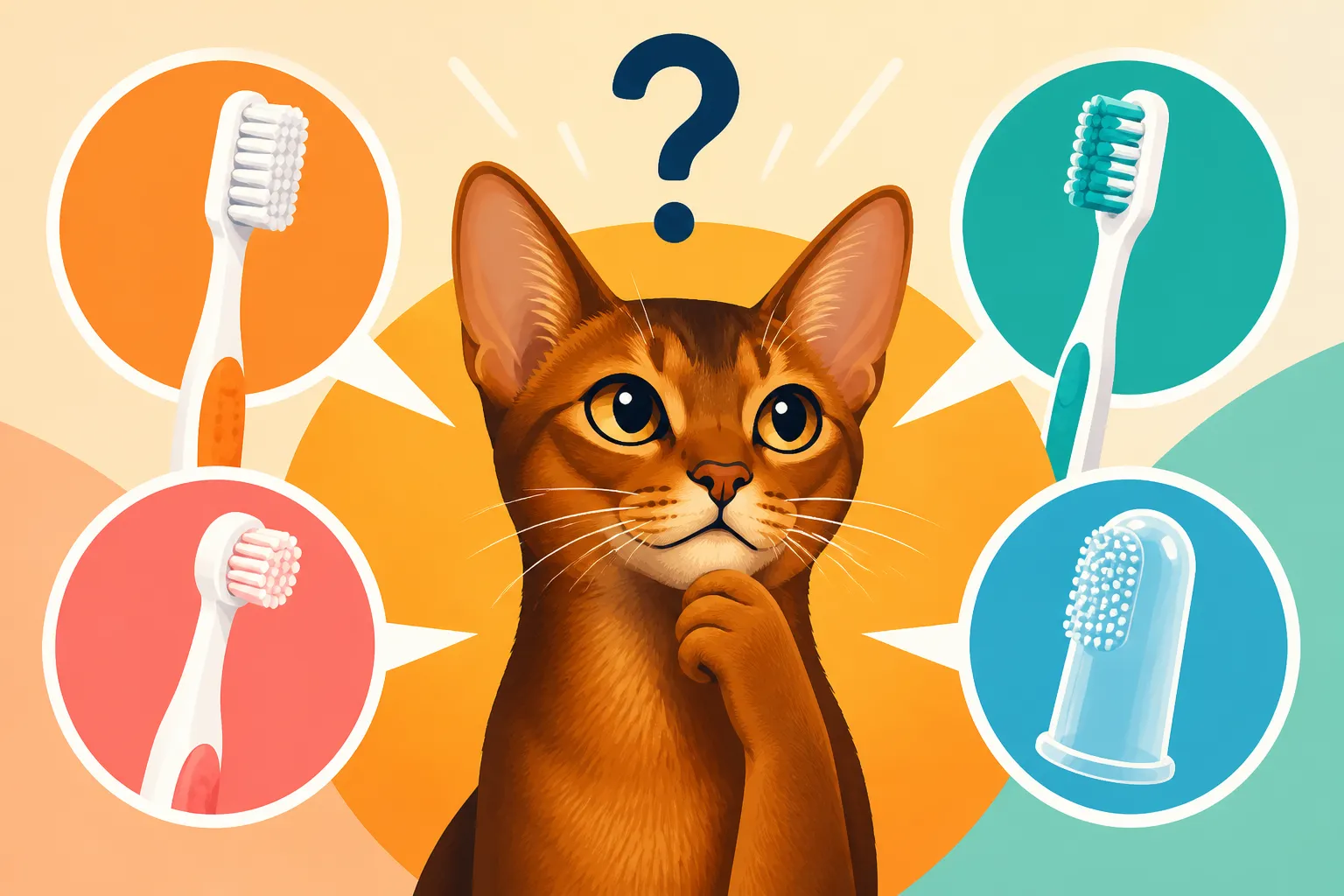
With the specifics of Abyssinian oral care in mind, let's look at the different kinds of toothbrushes available. Each has its own advantages and disadvantages, and what works best will often come down to your individual cat's temperament and your comfort level.
Finger Brushes: Pros and Cons
Finger brushes are often the starting point for many cat owners, and they can be a great option for Abyssinians, especially when you're just introducing them to the idea of having their teeth cleaned. These are typically small silicone or soft-bristled caps that fit over your finger.
The main advantage of a finger brush is the direct tactile feedback you get. You can truly feel what you're doing, controlling the pressure and angle precisely. This can be incredibly reassuring when you're navigating a small, sometimes resistant, mouth. For an Abyssinian that might be wary of a rigid handle, the softness and flexibility of a finger brush can be less intimidating. It also means you're close to your cat, making it feel more like a pet and less like a procedure. Many Abyssinians, being so people-oriented, respond better to this direct, hands-on approach. You can usually find these easily at your local pet store or online retailers like Chewy.
However, finger brushes also have their drawbacks. While great for the front teeth and easily accessible areas, reaching the very back teeth and outer surfaces can be quite challenging, especially if your cat has a small mouth or is particularly squirmy. The silicone nubs on some varieties, while gentle, might not provide the same scrubbing power as traditional bristles for stubborn plaque. They can also feel a bit awkward if you have larger fingers, making it difficult to maintain control. They're excellent for initial conditioning and getting your cat used to the sensation, but you might find yourself needing a more specialized brush for a thorough cleaning as your Abyssinian grows accustomed to the routine.
Traditional Pet Toothbrushes: Single vs. Dual-Headed
Once your Abyssinian is more tolerant, you might graduate to a traditional pet toothbrush. These come in two main configurations: single-headed and dual-headed.
Single-headed brushes are essentially scaled-down versions of human toothbrushes, designed with a small head and ultra-soft bristles. For an Abyssinian, these are fantastic for targeting individual teeth and reaching those tricky nooks and crannies. The smaller head allows for precise cleaning, and you can focus on the gumline, where plaque builds up most aggressively. They offer better scrubbing action than most finger brushes and are typically more effective at dislodging tartar and plaque. When choosing a single-headed brush, make sure the head is truly miniature and the bristles are soft enough for delicate feline gums.
Dual-headed toothbrushes have two heads of different sizes, one at each end of the handle. The idea is that the larger head can be used for bigger teeth or more accessible areas, while the smaller head tackles tight spots and smaller teeth. For Abyssinians, the smaller head is almost always the go-to, as the larger one will likely be too cumbersome. While offering versatility, sometimes the handle can feel a bit long, making precise control a challenge if your cat is squirming. The benefit of having two sizes is that you have options, which can be useful as your cat grows or as you gain more confidence in your brushing technique. Both types can be found at pet supply stores and online, often with good reviews from cat owners.
Specialty Brushes
Beyond the standard options, there are a few specialty brushes or tools that might cross your path. While less common for daily home use, it's worth knowing about them.
One such option is the ultra-soft gauze pad or dental wipe. These are essentially textured cloths or pads infused with dental enzymes that you wrap around your finger and gently wipe your cat's teeth and gums. They're even less intimidating than a finger brush and can be an excellent first step for a very timid Abyssinian. They offer a gentle massage and some enzyme delivery, making them good for early acclimation or for cats who simply won't tolerate a brush. However, their abrasive action is minimal, meaning they are less effective at mechanically removing plaque and tartar compared to bristles. Think of them as a "better than nothing" option or a gentle precursor to real brushing.
Another specialty item, though usually for professional veterinary use, might be ultrasonic toothbrushes for pets. These use high-frequency vibrations to break down plaque and tartar, often without the need for scrubbing. While incredibly effective, they are typically expensive and require specialized training to use correctly and safely. They're not a practical daily home solution for most owners, but it's good to be aware that such advanced tools exist for professional dental care. For regular home maintenance, sticking to the small, soft-bristled brushes is the most practical and veterinarian-recommended approach for your Abyssinian.
| Toothbrush Type | Pros | Cons | Ideal For |
|---|---|---|---|
| Finger Brush | Excellent tactile feedback, gentle intro. | Hard to reach back teeth, less scrubbing power. | Introducing brushing, timid cats, front teeth cleaning. |
| Single-Headed | Precise cleaning, good scrubbing action. | Can be intimidating initially, requires good control. | Thorough cleaning, targeting specific teeth, intermediate users. |
| Dual-Headed | Versatility (two head sizes), effective. | One head often too large, handle can be long. | Owners wanting options, cats tolerant of a handled brush. |
| Dental Wipes | Least intimidating, gentle massage. | Minimal plaque removal, limited reach. | Very timid cats, initial acclimation, light daily freshening (supplemental). |
Starting Your Abyssinian's Toothbrushing Routine
Okay, so you've got the perfect small, soft toothbrush for your energetic Abyssinian. Now comes the trickier part: actually getting them to accept it. Patience, consistency, and positive reinforcement are your secret weapons here. Remember, an Abyssinian's intelligence means they'll quickly learn if something is a chore or a positive interaction.
Early Introduction is Key
I cannot stress this enough: the earlier you start, the better. If you have an Abyssinian kitten, begin familiarizing them with mouth handling from the moment they come home. This isn't about immediate brushing; it's about making their mouth a non-sensitive zone. Gently touch their lips, lift them to look at their teeth, and touch their gums with your finger. Make it a super positive experience, always followed by praise, a favorite treat, or a short play session. This process of desensitization is crucial. You want them to associate having their mouth touched with good things, not stress or punishment. You can read more about starting this early routine in How to Brush an Abyssinian's Teeth From Day One.
Even if your Abyssinian is an adult, it's never too late to start, though it might take a bit more time and patience. The principle remains the same: baby steps, positive associations, and never forcing the issue. If your adult cat has never had their teeth brushed, you're essentially undoing years of not having this interaction, so adjust your expectations accordingly. A few seconds of gentle lip lifting is a victory in the beginning. Remember, Abyssinians are bright and they learn quickly, but they also resent being coerced.
Gradual Acclimation Techniques
When you're ready to introduce the toothbrush itself, break the process down into tiny, manageable steps.
- Introduce the Toothpaste First: Most pet toothpastes come in appealing flavors like chicken, beef, or even malt. Put a tiny dab on your finger and let your Abyssinian lick it off. Many cats absolutely adore the taste, and this immediately creates a positive association with the "dental" flavor. You can find safe, enzymatic toothpastes at any well-stocked pet store or through online retailers like Amazon.
- Finger Pasting: Once they're happy with the taste, put a tiny amount of toothpaste on your finger and gently rub it along their gumline, starting with just one or two teeth. Don't worry about scrubbing yet; the goal is just to get the toothpaste on their teeth and for them to tolerate your finger in their mouth. Keep sessions very short, just a few seconds, and always end on a positive note with praise and a treat.
- Introduce the Brush: Now, put a tiny bit of toothpaste on the brush you've chosen. Let your Abyssinian lick the toothpaste off the brush without you putting it in their mouth. This helps them get used to the feel and smell of the brush. Once they're comfortable with that, gently try to touch the brush to one or two teeth, again, without scrubbing. Just a light touch, followed by immediate reward.
- Gentle Brushing: Over several days or weeks, gradually increase the number of teeth you touch and eventually, the very gentle scrubbing motion. Focus on the outer surfaces of the teeth, especially the canine teeth and the back molars, as these are primary plaque zones. Don't worry about the inside surfaces; your cat's tongue and saliva do a decent job there. Keep sessions brief – aiming for 30 seconds to a minute total is fantastic for an Abyssinian. If your cat gets agitated, stop immediately and try again later or the next day. A negative experience can set you back significantly. Consistency is key, even if it's just a quick swipe every day.
Remember that an Abyssinian's energy and intelligence mean they thrive on routine and positive interaction. Make it a game, a special treat time, or a ritual that they look forward to. Never chase them down or try to restrain them aggressively; this will only teach them to fear the toothbrush and hide from you. Patience will pay off, allowing you to effectively care for your Abyssinian's dental health and potentially avoid more serious issues down the line.
Beyond the Brush: Other Dental Care Tools
While the toothbrush is the hero of home dental care, it’s not the only tool in your arsenal. A comprehensive approach to your Abyssinian's oral health involves several complementary strategies, all aimed at reducing plaque and supporting healthy gums. These are especially important for a breed prone to specific dental challenges.
Enzymatic Toothpastes
This is non-negotiable for brushing your Abyssinian's teeth. Human toothpaste contains fluoride and detergents that are toxic to cats if swallowed, and trust me, your cat will swallow it. Pet-specific toothpastes are formulated to be safe for ingestion and often contain enzymes that help break down plaque and bacteria, even if the scrubbing action isn't perfect.
The flavor is also a huge selling point. As mentioned before, chicken, beef, or malt flavors are often a big hit, turning brushing into a tasty reward rather than a punishment. Always ensure the toothpaste you select is specifically marked for pets. Brands like Virbac C.E.T. or Petrodex are widely available and well-regarded, often stocked at your vet's office or online at retailers like Chewy and Amazon. The enzymatic action continues to work even after brushing, providing an extra layer of protection against plaque and tartar buildup, which is crucial for managing potential issues like Why an Abyssinian's Gums Overgrow Its Teeth.
Dental Water Additives and Treats
These can serve as supplemental tools, but it's important to understand their limitations. Dental water additives are liquids you put into your cat's drinking water that contain ingredients designed to reduce plaque and freshen breath. The idea is that every time your cat drinks, they're getting a dose of dental hygiene. For a cat like an Abyssinian, who might be a bit finicky about new tastes in their water, you'll need to introduce it slowly to ensure they continue to drink enough. Some cats don't mind it at all, while others will refuse to drink from a bowl with the additive, which could lead to dehydration – a bigger health concern. Always choose products with the Veterinary Oral Health Council (VOHC) seal, which indicates they meet certain standards for plaque or tartar control.
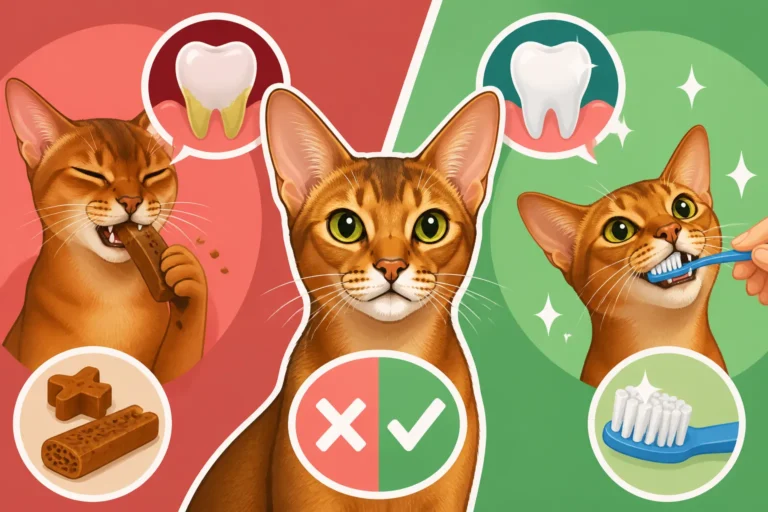
Dental treats are another popular option. These treats are designed with a specific texture or active ingredient to help scrape plaque off teeth as your cat chews them. Again, look for the VOHC seal for genuine effectiveness. While treats can be helpful, they are not a substitute for brushing. They primarily work on the outer surfaces of a few teeth and don't provide the thorough cleaning that mechanical brushing offers, especially at the critical gumline. They can be a nice daily supplement, particularly if your Abyssinian struggles with brushing, but they shouldn't be your only line of defense. Remember, these are complements, not replacements.
Professional Dental Cleanings
Even with the most diligent home care, professional dental cleanings are an unavoidable and essential part of your Abyssinian's long-term oral health. Just like humans need regular dental check-ups, cats accumulate tartar that can only be removed through a professional scaling and polishing under anesthesia. This allows your veterinarian to examine every tooth, identify issues like tooth resorption (which Abyssinians can be prone to), and perform necessary extractions or treatments.
Think of home brushing as daily maintenance, preventing rapid buildup, while professional cleanings are the deep-clean, reset button. Your vet will advise on the frequency, but many Abyssinians benefit from a cleaning every one to three years, depending on their individual dental health and the effectiveness of your home routine. This is a significant line item in your What an Abyssinian Costs to Keep Every Year budget, but it is an investment in their overall health and comfort. Regular home care with the right toothbrush helps extend the time between these professional cleanings and can minimize the severity of issues found during them, saving you money and your cat discomfort in the long run. Don't skip these vital vet visits; they are a cornerstone of keeping your Abyssinian healthy and happy.
Disclaimer
This article is for general informational purposes only and does not constitute professional advice. Laws, prices and regulations vary by location and change over time. Consult a qualified professional for guidance on your specific situation.