How to Stop an Abyssinian Waking the House
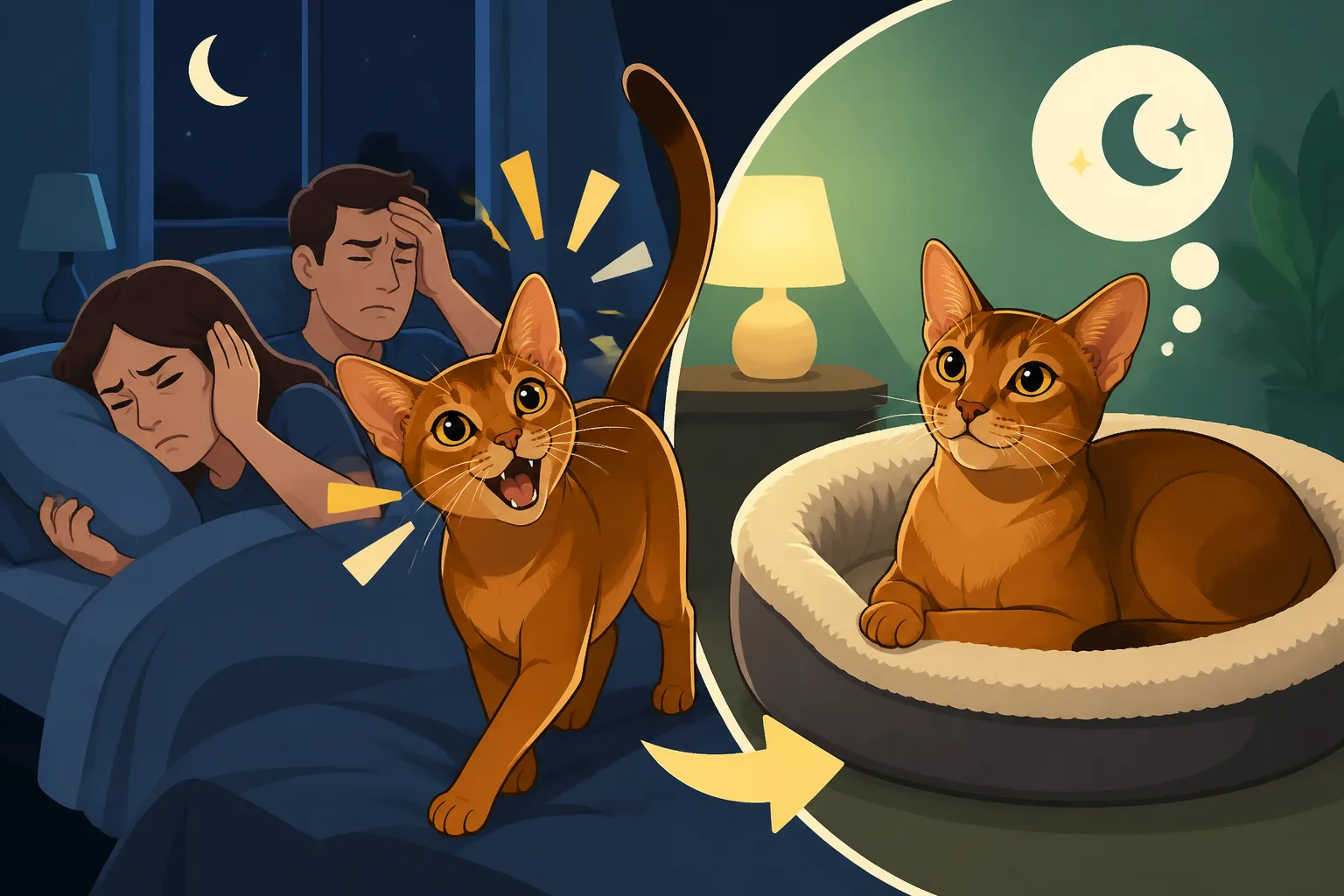
There’s almost nothing more jarring than being jolted awake by a furry, insistent little creature determined that it’s time for you to be up, whether the sun is fully risen or not. For Abyssinian owners, this scenario is often a daily reality. Their boundless energy and insatiable curiosity, while charming during the day, can transform into a relentless alarm clock in the wee hours. This guide will walk you through understanding why your Abyssinian has decided your sleep schedule is merely a suggestion, and more importantly, how to implement strategies to reclaim your peaceful nights.
Understanding Why Your Abyssinian Becomes a Dawn Alarm Clock
It's easy to feel like your Abyssinian is deliberately trying to deprive you of sleep. You might lie there, eyes closed, listening to the incessant chirping or the rhythmic thump of a paw against your face, and wonder if they just don't like you sleeping in. But the truth is, your Abyssinian isn't being malicious; they're simply being an Abyssinian. Their hardwiring and environment conspire to create these early morning wake-up calls. Understanding the root cause is the first step toward finding a solution that works for both of you.
The Deep-Seated Instinct to Hunt at Dawn
Abyssinians, with their lean, athletic builds and endless curiosity, are creatures deeply connected to their wild ancestry. While domesticated for centuries, many of their natural instincts remain incredibly strong, and one of the most prominent is their crepuscular nature. This means they are most active during dawn and dusk. In the wild, these are prime hunting times when prey animals are also most active. Your Abyssinian isn't just bouncing off the walls for fun; they're responding to an innate biological urge to "hunt" or explore when their bodies tell them it's optimal. This isn't something you can simply tell them to switch off. When you're lying in bed, you might hear the tell-tale chirps and trills, the pitter-patter of paws, or even the distinct sound of toys being batted around with intense focus. They're not just playing; they're practicing. For a deeper dive into their early morning antics, you might find Why an Abyssinian Wakes You at Five insightful.
This primal urge is often exacerbated by the quiet stillness of your home in the pre-dawn hours. The lack of human activity means there are fewer distractions, and their senses are heightened. They might pick up on subtle sounds from outside, or even the shift in ambient light, triggering their internal clock. This isn't just about food; it's about engagement and fulfilling their purpose. If they're not actively hunting prey (which, thankfully, most indoor Abyssinians aren't), they'll seek out other forms of stimulation, and often, that stimulation involves you, their favorite giant cat toy. This is why a gentle nudge with their head or a persistent paw tap feels like a personal affront to your right to sleep. They're just trying to get the party started.
Boredom and a Lack of Mental Stimulation
An Abyssinian that's bored is a destructive Abyssinian, and a bored Abyssinian at 4 AM is a particularly annoying Abyssinian. These cats are incredibly intelligent and need constant mental and physical engagement throughout the day. If their daytime hours are dull, with too much time spent napping or staring out the window, they'll be bursting with pent-up energy when the sun comes up. They're not content to just exist; they need to do things. A lack of stimulating play, enriching environments, and interactive challenges can quickly lead to an Abyssinian who decides that waking you is the most exciting game available. They see you as the ultimate source of entertainment, and if you're not providing it during their waking hours, they'll come looking for it when they deem it appropriate.
This isn't just about a few minutes with a wand toy; it's about a holistic approach to their daily life. An Abyssinian needs to work their brain as much as their body. Think of a child who hasn't had enough playtime or educational activities during the day – they're often wired and difficult to settle at night. The same applies to your Aby. If they haven't "solved" enough problems, "hunted" enough toys, or "explored" enough new scents or textures, that energy and mental capacity will find an outlet, and your bed is often ground zero. They might start by exploring your bedroom, knocking things off shelves, or simply making loud noises until you respond. It's a cry for engagement, even if it feels like a cry for help for your sleep schedule. You might also notice that when you do finally get up, they're immediately ready for action, not a slow stretch.
The Simple Demand for Food or Attention
While instinct and boredom play a huge role, sometimes an Abyssinian's early morning wake-up call boils down to something more straightforward: they want food, or they want your attention. Often, these two things are intertwined. If your Abyssinian knows that a certain amount of persistent meowing or pawing will eventually lead to you getting up and feeding them, then congratulations, you've successfully trained your cat to be an alarm clock. Cats are brilliant at operant conditioning, and if a behavior gets them a desired outcome, they will repeat it relentlessly. This becomes particularly problematic if you're inadvertently reinforcing the behavior by giving in "just this once" for a moment of peace.
It's a tricky cycle to break, because who can resist those adorable, insistent chirps, especially when you're half-asleep and just want five more minutes of quiet? However, even a small reward, like getting out of bed to go to the bathroom and your cat following you, can be enough validation for them that their efforts were successful in rousing you. Many Abyssinians also thrive on interaction, and for some, any attention is good attention. If they feel neglected during the evening or overnight, they'll absolutely try to fill that void with an early morning "hello" that involves batting at your face or running zoomies over your chest. How an Abyssinian Signals It Wants Something can give you clues on deciphering their demands.
Strategic Daytime Management for Quieter Nights
The key to stopping your Abyssinian from waking you up is rarely about what you do in the five minutes before they start their antics. It’s almost always about what you do during their waking hours. A well-exercised, mentally stimulated, and content Abyssinian is far more likely to respect your sleep and their own internal clock. Think of it as front-loading their day with all the fun and activity they crave, so they don't feel the need to create their own excitement (at your expense) when you're trying to sleep. This requires a dedicated approach, but the payoff of uninterrupted sleep is immeasurable.
Maximizing Play and Physical Exertion
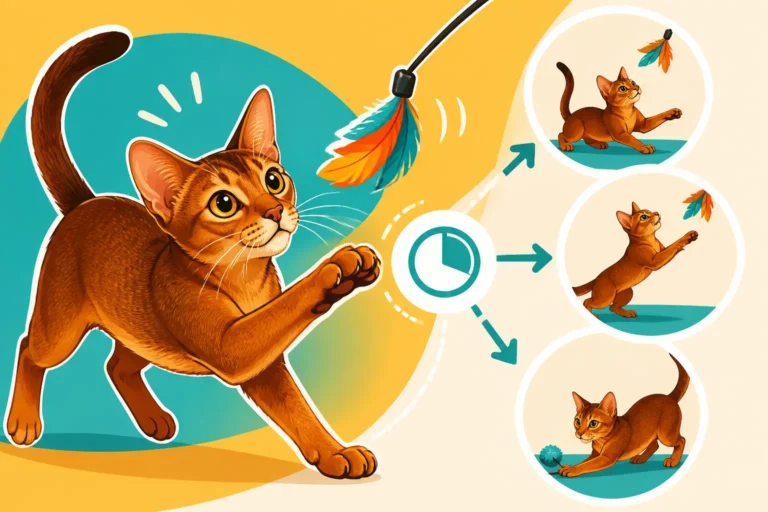
Abyssinians are not built for idleness. They have an incredible amount of energy, and if it's not appropriately channeled, it will manifest in ways you don't appreciate. This means vigorous, interactive play sessions are non-negotiable. Aim for at least two, preferably three, substantial play sessions daily, with one crucial session right before bedtime. These aren't just gentle swats at a toy; these are full-on "hunt, chase, pounce, kill" simulations. Use wand toys with feathers or realistic prey attachments, like those found on Amazon, to engage their predatory instincts. Make them run, jump, and climb until they are genuinely winded. A good indicator of a successful play session is when they're panting slightly and then collapse for a good grooming session or a nap.
Don't just wave the toy around; make it move like real prey. Hide it, make it dart under furniture, let them stalk it, and then allow them to "catch" it at the end of the session. Success is important for their mental satisfaction. Many people make the mistake of playing for five or ten minutes and thinking that's enough. For an Abyssinian, that's just a warm-up. You might need to play for 20-30 minutes per session. It's a commitment, but it’s vital for burning off that boundless energy. Check out How Much Play an Abyssinian Needs Each Day and How to Split an Abyssinian's Play Into Sessions for more detailed strategies on structuring their playtime. Remember, an Abyssinian who has truly exhausted their physical energy during the day is far less likely to be doing laps around your bed at dawn.
Engaging Their Minds with Puzzle Feeders and Foraging
Physical play is crucial, but mental stimulation is equally important for an Abyssinian. Their intelligent minds need challenges, and if they don't get them, they'll invent their own (like trying to open your cabinets or systematically knocking items off shelves). Puzzle feeders are fantastic tools for this. Instead of simply putting their meals in a bowl, make them work for their food. There are many types available, from simple treat balls to more complex feeders that require multiple steps to access the kibble. You can find a wide variety of these on Amazon to suit your cat's skill level. Start easy and gradually increase the difficulty to keep them engaged.
Beyond puzzle feeders, embrace the concept of foraging. Hide small portions of their daily kibble allowance in various spots around the house: on cat trees, inside empty toilet paper rolls, under blankets, or even within crinkle balls. This encourages them to "hunt" for their food, mimicking a more natural feeding behavior and providing mental enrichment. This activity can keep them occupied for significant periods throughout the day, especially when you're not actively able to play with them. Which Puzzle Feeders Hold an Abyssinian's Attention and How to Hide Food Around the House for an Abyssinian offer excellent tips for incorporating these activities into their routine. This "work" tires them out mentally, making them more inclined to sleep soundly through the night.
Creating an Enriching Environment
An Abyssinian needs a stimulating environment that caters to their natural instincts. This means more than just a few toys scattered on the floor. These cats are climbers, jumpers, and observers, and they thrive when given ample vertical space. Invest in tall, sturdy cat trees that allow them to survey their domain from on high. Wall-mounted shelves and cat walkways are even better, transforming your walls into an exciting, navigable landscape. These elevated pathways provide both physical exercise and mental engagement as they navigate their territory. An Abyssinian Needs Height More Than It Needs Floor emphasizes just how important this vertical dimension is for their well-being.
Windows with a view are also vital. A comfortable window perch allows them to observe the world outside, providing endless entertainment as they watch birds, squirrels, and passersby. Consider installing a bird feeder outside a favored window to give them a natural "cat TV" program. These small additions can make a huge difference in keeping their minds engaged during the day, reducing the likelihood of them seeking stimulation from your sleeping form. You can find durable window perches and cat wall furniture kits on Amazon that are perfect for an energetic Abyssinian. A rich environment encourages independent play and exploration, reducing their reliance on you for constant entertainment and, by extension, reducing their need to wake you up.
Evening Routines and Bedtime Boundaries
Once you've maximized their daytime enrichment, the next step is to solidify your evening routine. Just like children, cats thrive on predictability. A consistent wind-down routine helps signal to your Abyssinian that night is for sleeping, not for demanding attention. This phase focuses on direct actions you can take in the hours leading up to bedtime and throughout the night to reinforce desired behaviors. Breaking the cycle of early morning wake-ups requires patience and unwavering consistency.
Implementing a Consistent Bedtime Routine
A solid bedtime routine for your Abyssinian should ideally culminate in a final, intense play session. About an hour or two before you plan to go to bed, engage them in their most vigorous play of the day. Really get them running, jumping, and chasing until they are truly exhausted. After this session, give them their final meal of the day. This timing is critical because cats in the wild often eat after a successful hunt, and a full belly followed by a period of calm is a natural precursor to rest.
Once they've eaten, engage in a calm, quiet wind-down. This isn't the time for exciting new toys or boisterous play. Instead, perhaps a gentle grooming session with a soft brush, or simply some quiet cuddles if your Abyssinian is amenable to them. The goal is to gradually lower their energy levels, signaling that the active part of the day is over. Consistency is paramount here. Do this every single night, even on weekends. Your Abyssinian will start to associate these actions with the coming of night and a period of rest, making them less likely to stir early. Changing their internal clock takes time, but a routine helps immensely. For more on shifting schedules, check out How to Shift an Abyssinian's Morning Schedule.
Managing Food and Water Schedules
One of the most common reasons Abyssinians wake their owners is for food. If your cat knows that pestering you leads to breakfast, they will continue that behavior. To break this association, consider using an automatic feeder. Program it to dispense a small portion of their breakfast at your desired wake-up time, or even 30-60 minutes before, to preempt their cries. This decouples you from the act of feeding and trains them to associate the sound of the feeder with breakfast, rather than your physical presence. Make sure the feeder is sturdy enough to withstand an Abyssinian's investigative tendencies; some models can be quite easily breached by a determined cat.
Ensure they have access to fresh water throughout the night, perhaps in a quiet corner away from your bedroom. While Abyssinians are usually good drinkers, especially with their kidney health in mind (though this article won't dive into that, it's a good general care tip), an empty water bowl could certainly prompt a wake-up call. Why an Abyssinian Guards Its Feeding Time might also shed some light on their relationship with food. The goal is to remove any immediate, solvable reasons for them to disturb you, shifting the responsibility for early morning sustenance away from you.
Setting Clear Boundaries Around Your Sleep Space
This is often the hardest part, especially for those of us who adore our furry alarm clocks. However, if your Abyssinian is waking you up by physical means – pawing, climbing on your head, nibbling your hair – you need to set firm boundaries. The most effective way to do this is to make your bedroom a no-go zone during the hours you intend to sleep. Close the door firmly before you go to bed. Many Abyssinians absolutely detest a closed door and will voice their displeasure. Why an Abyssinian Hates a Closed Door is a testament to this particular trait. They may scratch, meow, or even try to open the door if they've learned how. This is where your resolve truly comes into play.
Do not give in. Do not open the door, even for a moment, to tell them to be quiet. Any interaction, positive or negative, reinforces their belief that their actions get your attention. It will be tough, and you might lose a few nights of sleep initially as they test the boundaries. You might need to use earplugs. But if you remain absolutely consistent, they will eventually learn that this behavior does not get them what they want. You might need to place a door protector on your bedroom door to prevent scratching damage, or use sticky tape that cats dislike to deter them. Over time, the goal is for them to understand that once that door closes, you are unavailable until morning. Consistency is your only weapon here, and it’s a powerful one.
| Common Abyssinian Waking Behavior | Underlying Reason | Recommended Solution Strategy |
|---|---|---|
| Persistent Meowing/Chirping | Hunger, attention seeking | Automatic feeder, ignore until desired wake-up time, increase daytime play |
| Pawing at face/climbing on bed | Attention seeking, seeking interaction | Close bedroom door, redirect to toys/puzzle feeders, vigorous play before bed |
| Zoomies around the house/bed | Pent-up energy, boredom | Maximize daytime play, puzzle feeders, environmental enrichment |
| Bumping/knocking items off surfaces | Seeking attention, boredom, exploring | Secure loose items, increase mental stimulation, ignore if safe |
| Chewing hair/nibbling extremities | Seeking attention, playful interaction | Close bedroom door, ensure dental health, redirect to appropriate chew toys |
When to Seek Veterinary Advice
While many early morning wake-up calls from your Abyssinian are behavioral and can be resolved with consistent training and environmental changes, it's always wise to rule out any underlying health issues. A sudden change in behavior, including an increased insistence on waking you, can sometimes be a subtle sign that something isn't quite right with their health. It's important to approach these situations with a critical eye and consult your veterinarian if you have any doubts.
Ruling Out Underlying Health Issues
If your Abyssinian's early morning antics have suddenly escalated, or if you notice other changes in their behavior, appetite, thirst, or litter box habits, a vet visit is absolutely in order. Certain medical conditions can cause increased activity, discomfort, or an altered sense of time, which might manifest as demanding behavior at odd hours. For example, hyperthyroidism can lead to increased energy, restlessness, and a ravenous appetite, making a cat more likely to wake you for food. Dental pain, urinary tract issues, or even early stages of kidney disease can cause discomfort that disrupts their sleep cycle and makes them seek attention or comfort.
Don't dismiss these changes as "just typical Abyssinian behavior" if they are new or intensified. A thorough physical examination and potentially some diagnostic tests (like bloodwork or a urinalysis) can help rule out these possibilities. It’s always better to be safe than sorry, and addressing any health concerns proactively will make your behavioral interventions far more effective. A healthy cat is a happier cat, and a happier cat is more likely to respect your sleep schedule.
Consulting a Feline Behaviorist
If you've diligently implemented all the strategies mentioned – maximizing play, using puzzle feeders, creating an enriching environment, and sticking to a strict bedtime routine and boundaries – and your Abyssinian is still an unyielding alarm clock, it might be time to bring in a professional. A certified feline behaviorist can offer tailored advice and identify nuances in your cat's behavior or your environment that you might have overlooked. They can assess the situation in your home, observe your cat's interactions, and help you develop a highly specific plan to address the issue.
Sometimes, ingrained behaviors can be particularly challenging to extinguish, or there might be subtle triggers you're not aware of. A behaviorist can help you understand the deeper motivations behind your Abyssinian's actions and guide you through the process of counter-conditioning or desensitization. This specialized expertise can be invaluable in complex cases, ultimately leading to a more harmonious household for everyone, including your energetic Abyssinian. They can help you understand if your Abyssinian truly is waking you deliberately, or if it's an unconscious habit.
Disclaimer
This article is for general informational purposes only and does not constitute professional advice. Laws, prices and regulations vary by location and change over time. Consult a qualified professional for guidance on your specific situation.