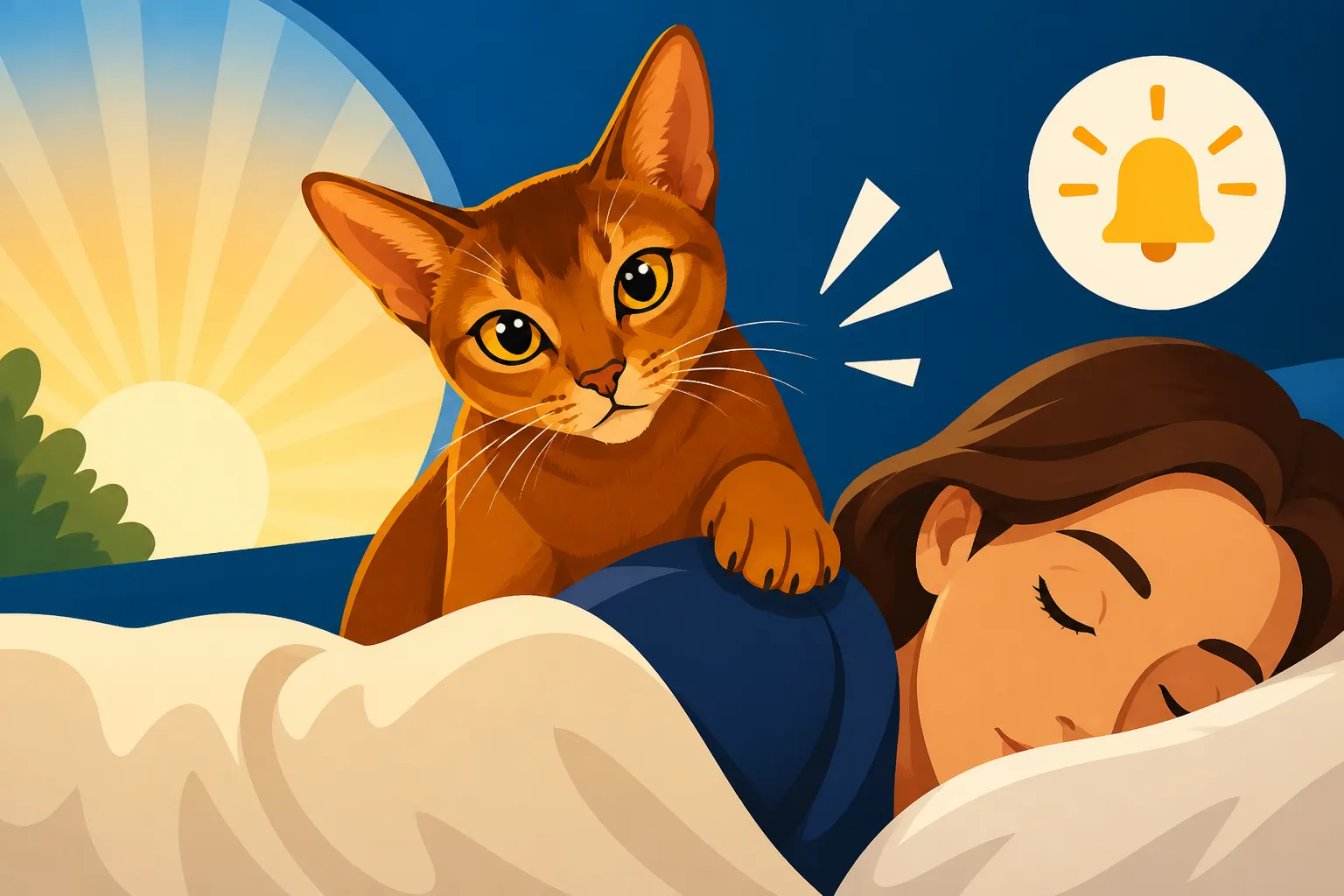
Whether an Abyssinian Wakes You Deliberately
There's nothing quite like being jolted awake at 4 AM by a tiny, furry dynamo pouncing on your head, systematically batting objects off your nightstand, or serenading you with insistent chirps right by your ear. If you're a proud Abyssinian parent, you know this scenario all too well, and you've probably wondered: "Is my Abyssinian deliberately trying to wake me up, or is there something else going on?" This guide will dive deep into the fascinating (and sometimes frustrating) world of Abyssinian morning rituals, exploring why they do what they do and, more importantly, how you can gently encourage them to let you sleep a little longer.
Understanding the Abyssinian's Internal Clock and Your Sleep Cycle
It's easy to take it personally when your beloved Aby decides your face is a trampoline at an ungodly hour. But understanding their natural instincts and how they perceive the world can help you shift your perspective from "they're doing this to me" to "they're just being a cat, a very energetic one at that!"
The Abyssinian's Natural Activity Rhythms
Abyssinians are known for their boundless energy and playful nature, earning them the nickname "clowns of the cat world." Unlike us, who generally operate on a diurnal (day active) schedule, cats are crepuscular. This means they are naturally most active during dawn and dusk. Think about it: this is when their wild ancestors would have been hunting, as visibility is low enough to stalk prey but light enough for them to see clearly. So, that burst of energy your Aby gets right when the sun is thinking about rising? That's not them being malicious; it's them being perfectly, instinctively feline. They're wired for bursts of intense activity followed by periods of rest, not one long, uninterrupted block of sleep like we crave. This natural rhythm often means that around Why an Abyssinian Wakes You at Five, they're ready to seize the day – and expect you to join them.
Why Your Sleep is an Opportunity for Them
From an Abyssinian's point of view, your unconscious, still form isn't a sleeping human who needs rest. It's a large, warm, stationary object that, upon showing the slightest sign of life, provides food, playtime, and attention. Your quiet bedroom becomes a playground, a hunting ground for dust bunnies, or a stage for their vocal performances. They don't have a concept of "sleep" in the human sense, only periods of rest and periods of activity. When they see you resting, especially if you've been busy all day, they might interpret it as an opportune moment for interaction. It's like finding a giant, unmoving toy that occasionally dispenses treats and cuddles. The minute you stir, or even unconsciously groan, they perceive it as an opening.
The Learned Behavior Loop
Here's the kicker: as much as we love our Abyssinians, we often inadvertently train them to wake us up. Every time you respond to their early morning antics – whether it's giving in and feeding them, getting up to play, scolding them, or even just groaning and moving your hand to pet them – you're reinforcing the behavior. They learn: "If I do X (pounce on human, chirp loudly, knock over lamp), then Y happens (human wakes up and gives me attention/food)." This creates a powerful learned behavior loop. Even negative attention, like a frustrated "No!" can be seen as a form of interaction. They don't necessarily differentiate between positive and negative attention; they just want any attention. Breaking this cycle requires immense patience and consistency, but it’s entirely possible to shift How to Shift an Abyssinian's Morning Schedule.
Common Reasons Your Abyssinian Might Be Waking You (Beyond "Deliberate")
While it might feel like a personal affront, your Abyssinian is usually waking you for very practical, feline reasons. It's rarely about being truly "deliberate" in a human sense of malice, but rather about meeting their needs or expressing their boredom.
The Hunger Games at Dawn
Hands down, the most common reason for early morning wake-up calls is food. Abyssinians are metabolically active and can burn through calories quickly due to their high energy levels. They quickly learn that the appearance of a human often precedes the appearance of breakfast. If you’ve established a routine where they get fed shortly after you wake up, they’ll naturally try to expedite your waking process. They’re smart and opportunistic. A rumbling tummy combined with a clear association between your waking and their meal is a potent motivator. This is particularly true if you free-feed them during the day and then suddenly restrict food overnight, creating a feeling of scarcity in the morning. They know Why an Abyssinian Guards Its Feeding Time, and they're going to make sure that time comes around.
A Cry for Connection and Play
Abyssinians are incredibly social and highly intelligent. They thrive on interaction and need a significant amount of mental and physical stimulation. If they're not getting enough during their waking hours, especially in the evening, they'll seek it out when they can – and for a crepuscular cat, that's often when you're trying to sleep. A bored Aby is a destructive Aby, or at least, a very insistent Aby. They might start playing with your feet under the covers, batting at your hair, or simply running "zoomies" around the room, which often sounds like Why an Abyssinian Races Through the House at Night. This isn't just about physical activity; it's about mental engagement. If they've been left alone for long stretches during the day, or if evening playtime isn't robust enough, they'll demand their due. How Much Play an Abyssinian Needs Each Day is often more than owners realize.
The Call of Nature (Litter Box Issues)
While less common than hunger or play, a full or dirty litter box can absolutely be a reason your Abyssinian is pestering you. Cats are meticulously clean animals, and Abyssinians are no exception. If their litter box isn't up to their standards, they might try to get your attention to rectify the situation. This could manifest as persistent meowing, scratching at the door, or even attempts to "bury" imaginary messes near you. It's their way of saying, "Hey, human, my facilities are unacceptable!" It's always a good idea to ensure their litter boxes are clean and accessible before bed, especially if this behavior is new.
Seeking Comfort or Attention
Sometimes, it's as simple as wanting to be close to you. Abyssinians, for all their independence, are deeply affectionate cats. They might not be traditional lap cats, preferring to perch on your shoulder or follow you from room to room, but they do crave connection. They might jump on the bed and purr loudly, nudge your hand for pets, or simply curl up near your head. This isn't necessarily a demand for food or play, but a desire for proximity and warmth. If your Aby is generally quite independent during the day, they might use the quiet hours of morning to reconnect.
Strategies to Encourage Your Abyssinian to Let You Sleep
Okay, so you understand why they do it. Now for the crucial part: how do you get them to stop? It's not an overnight fix, but with patience and consistency, you can shift their schedule and encourage better sleep habits for everyone in the house.
Shifting the Feeding Schedule
One of the most effective ways to combat early morning hunger calls is to adjust their feeding schedule. Instead of feeding them immediately when you wake up, try to decouple your waking from their mealtime. Consider using an automatic feeder, readily available on platforms like Amazon, that dispenses a small meal right around the time they usually start pestering you, but before you're actually awake. This teaches them that the feeder, not you, is the source of early breakfast. Gradually shift their last meal of the day later and their first meal later, so they're not going as long without food. For example, give them a good portion of their daily wet food right before you go to bed. This fills their stomach for the longest stretch. Over time, you can push that auto-feeder time back later and later.
Increasing Evening Enrichment
A tired cat is a quiet cat, especially an Abyssinian. Dedicate a solid 15-20 minutes of intense play right before bed. Use a wand toy to mimic hunting, letting them "catch" the toy multiple times. This engages their predatory instincts and physically exhausts them. After play, offer a small meal or use a puzzle feeder. Puzzle feeders, easily found on Amazon, are fantastic because they make your Aby "work" for their food, engaging their intelligent minds. Consider getting a variety of Which Puzzle Feeders Hold an Abyssinian's Attention to keep things interesting. The goal is to send them to bed physically satisfied and mentally drained. If they are accustomed to long periods of being home alone, consider Whether an Abyssinian Copes With a Nine Hour Day and plan extra enrichment.
Creating a "No Response" Zone
This is often the hardest part, and it requires steely resolve. When your Abyssinian tries to wake you up, you must ignore them. No talking, no petting, no looking, no getting up, no pushing them off the bed. Turn your back, pull the covers over your head, and pretend you're still asleep. Even a frustrated sigh or a firm "No!" can be perceived as attention. They are looking for a reaction, and if they consistently get none, the behavior will eventually extinguish. It might get worse before it gets better, as they try increasingly desperate measures, but if you hold firm, they will eventually give up. Consistency is absolutely key here – one slip-up can undo days or weeks of progress.
Environmental Adjustments
Sometimes, the simplest changes can make a big difference. Blackout curtains can prevent the early morning light from signaling "wake up" to your Aby, which helps for those sensitive to natural light cues. If your Abyssinian loves to knock things off your nightstand, simply remove the tempting objects or secure them. Childproof latches, often used for toddlers, can be incredibly effective for securing cabinets that your clever Aby has learned to open. For tips on cat-proofing, you might find How to Secure a Cupboard Against an Abyssinian useful. Consider a sturdy, tall cat tree or wall-mounted shelves in another room where they can expend energy without bothering you. If all else fails and you need undisturbed sleep, consider keeping your Abyssinian out of the bedroom overnight. This might involve a difficult transition, but with comfortable bedding, water, litter, and toys in their designated overnight space, they will adjust.
When Early Morning Waking Might Signal Something More
While most early morning antics are behavioral, it's crucial to distinguish between a demanding cat and a cat trying to tell you something important about their health. Abyssinians are stoic and can hide illness well, often maintaining their high energy levels even when unwell. So, if the early morning wake-ups are a new or sudden development, it's worth a closer look.
Sudden Changes in Behavior
If your Abyssinian has always been a decent sleeper, and suddenly starts waking you up with frantic energy or unusual vocalizations, pay attention. A sudden shift in behavior, especially if accompanied by other subtle changes, should prompt a vet visit. Abyssinians can be surprisingly good at masking discomfort, and sometimes their "demanding" behavior is a cry for help. If you notice What a Quiet Abyssinian Is Telling You and your normally boisterous cat is suddenly subdued, that's an even bigger red flag.
Increased Hunger or Thirst
If your Abyssinian is waking you up specifically for food, and seems excessively hungry even after eating, this could be a symptom of an underlying medical condition. Conditions like hyperthyroidism, diabetes, or even kidney disease can lead to an increased appetite and thirst. If you've also noticed them drinking more water, or if their litter box output has increased, don't delay a vet visit. The Abyssinian breed is particularly prone to certain kidney issues, and Why an Abyssinian's Kidneys Fail Before Its Coat Dulls can be insidious. Catching these conditions early is vital for effective management.
Excessive Vocalization or Restlessness
Beyond typical playful chirps and meows, if your Abyssinian is exhibiting persistent, anxious, or unusually loud vocalizations in the early hours, it could be a sign of discomfort, pain, or even cognitive dysfunction in older cats. If they seem unable to settle, are pacing, or appear disoriented, these are definite reasons to contact your veterinarian. Abyssinians are known for their lively personalities, and a shift from typical "chatty" to "distressed" is a clear signal. Remember, Why an Abyssinian Hides Pain Behind Its Energy, so any change in their usual demeanor warrants investigation, especially as they enter their senior years, which for an Aby is generally around When an Abyssinian Counts as Senior.
Waking up to an Abyssinian can be an endearing, albeit exhausting, part of ownership. By understanding their natural instincts, consistently applying behavioral strategies, and remaining vigilant for any signs of underlying health issues, you can cultivate a more peaceful morning routine for both you and your energetic companion.
Disclaimer
This article is for general informational purposes only and does not constitute professional advice. Laws, prices and regulations vary by location and change over time. Consult a qualified professional for guidance on your specific situation.