Why an Abyssinian Guards Its Feeding Time
Abyssinian food guarding stems from ancient survival instincts, high metabolisms, and early kittenhood competition for meals.
Change the room, not the cat.
Litter box avoidance, scratching and furniture, multi-cat tension and night activity — and the vertical space, play routines and feeding puzzles that solve more than correction does.
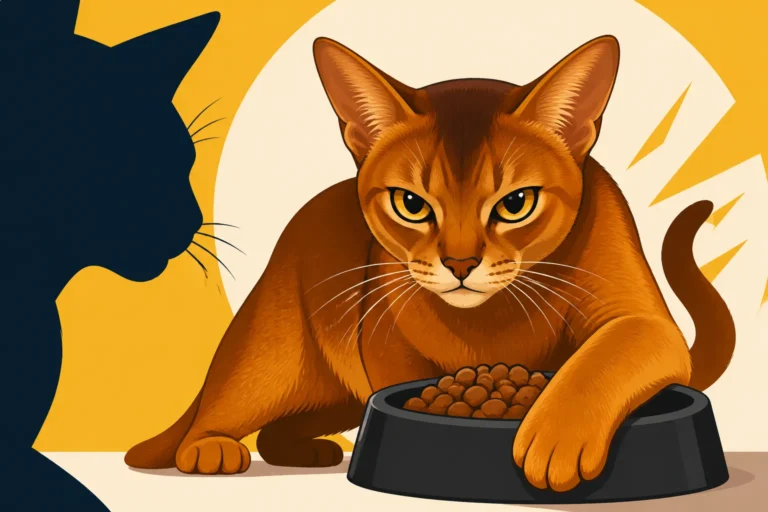
Abyssinian food guarding stems from ancient survival instincts, high metabolisms, and early kittenhood competition for meals.
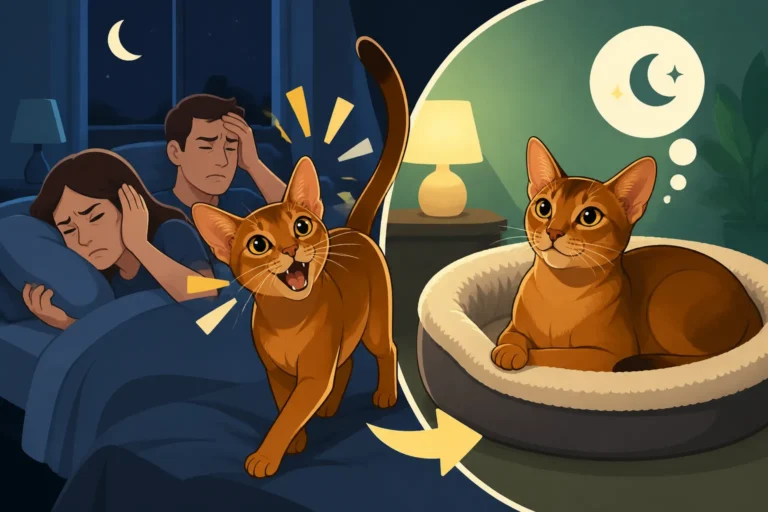
An Abyssinian cat waking the house early responds to hunting instincts, boredom, and food demands requiring strategic management.
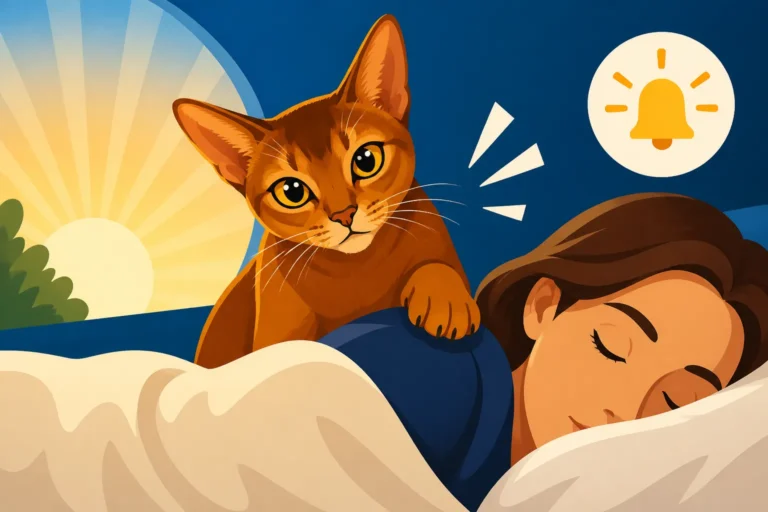
Abyssinian morning wake-up calls stem from natural crepuscular instincts, high energy levels, and learned behavior loops reinforced by humans.
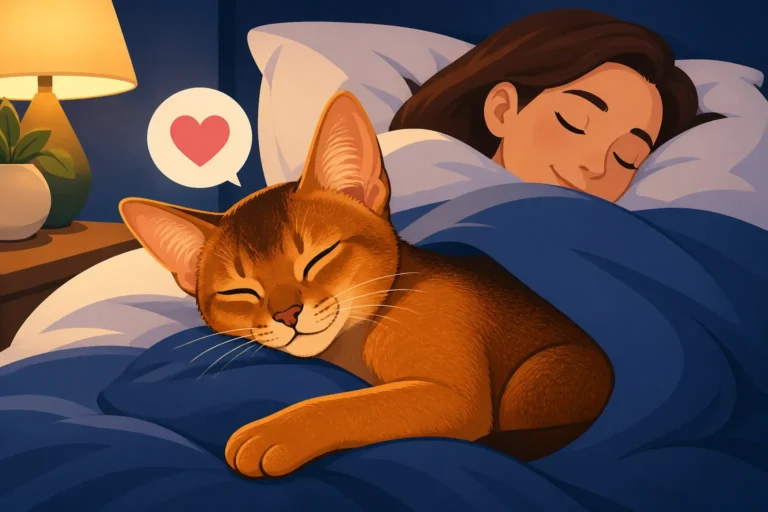
Abyssinian cats seek the warmth and security of your bed because their thin coats lack an undercoat and they view humans as their pride.
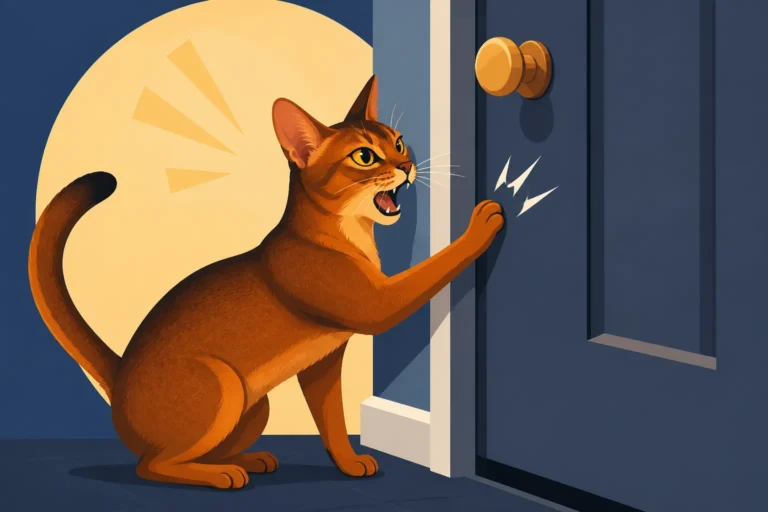
Abyssinian cats protest closed doors through vocalizations and door manipulation due to their natural curiosity and desire for constant involvement.
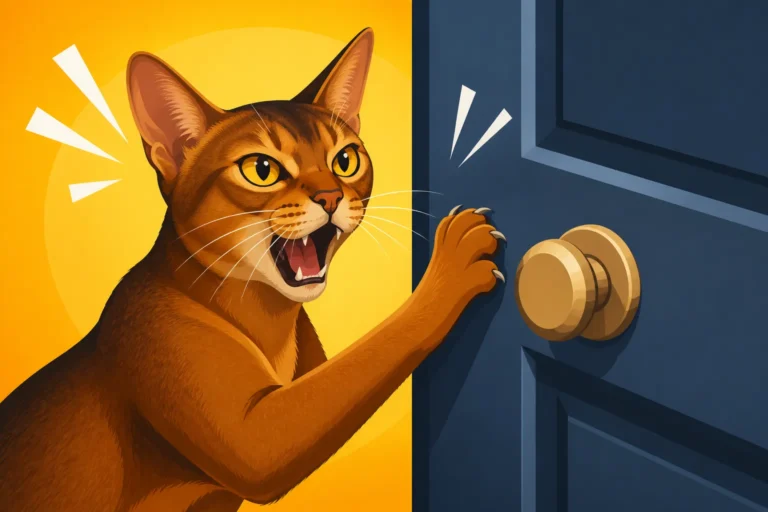
An Abyssinian cat hates closed doors due to intense curiosity, social instincts, and fear of missing out on family activities.
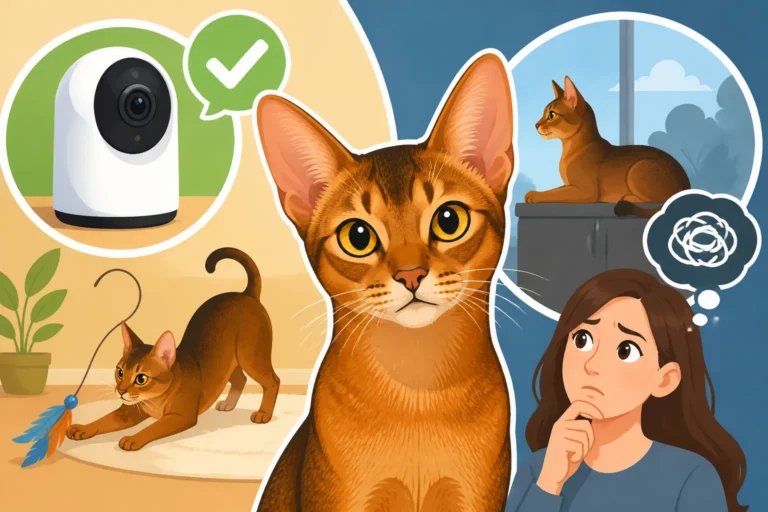
Pet cameras help owners track active Abyssinians, monitor vertical movements, and spot early health issues and behavioral changes.
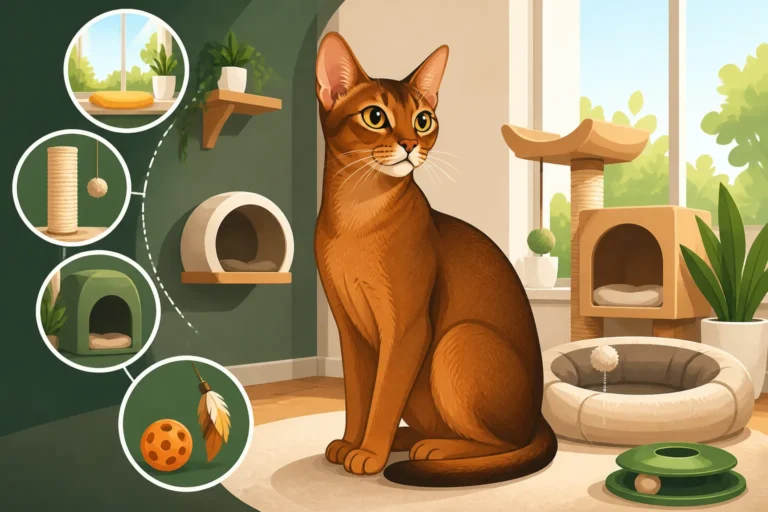
Proper Abyssinian room setup includes vertical climbing space, puzzle feeders, and secured hazards to keep cats safe and happy alone.
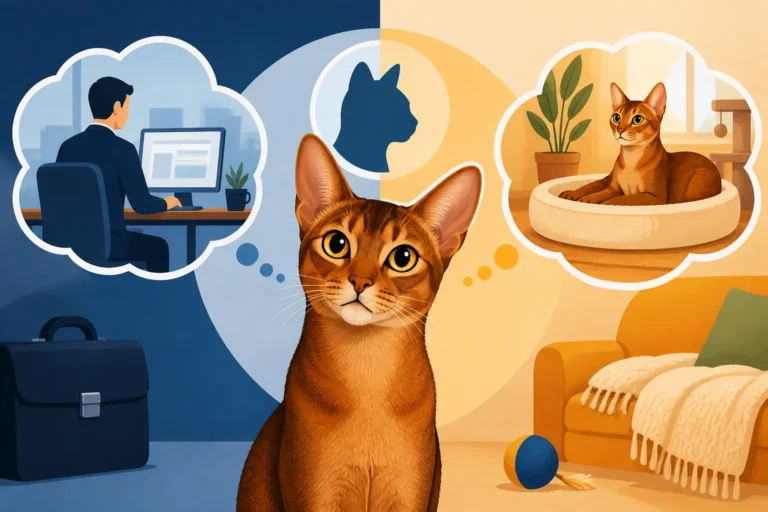
Full-time workers can successfully own an Abyssinian cat by using daily play routines and environmental enrichment strategies.
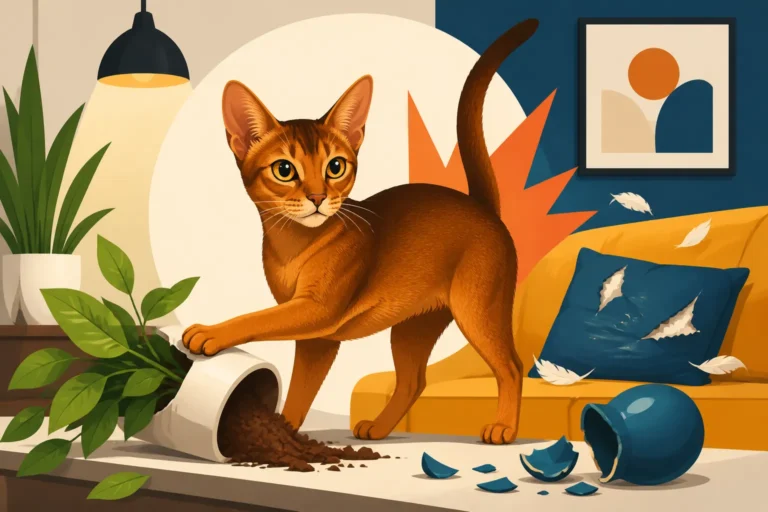
An Abyssinian cat left alone redecorates homes due to high energy and boredom, but daily interactive play and puzzle feeders stop this.