Whether an Abyssinian Uses Its Claws in Play
Abyssinian claw use in play, including instinctive hunting behaviors, management strategies, and how to prevent painful scratches during sessions.
Change the room, not the cat.
Litter box avoidance, scratching and furniture, multi-cat tension and night activity — and the vertical space, play routines and feeding puzzles that solve more than correction does.
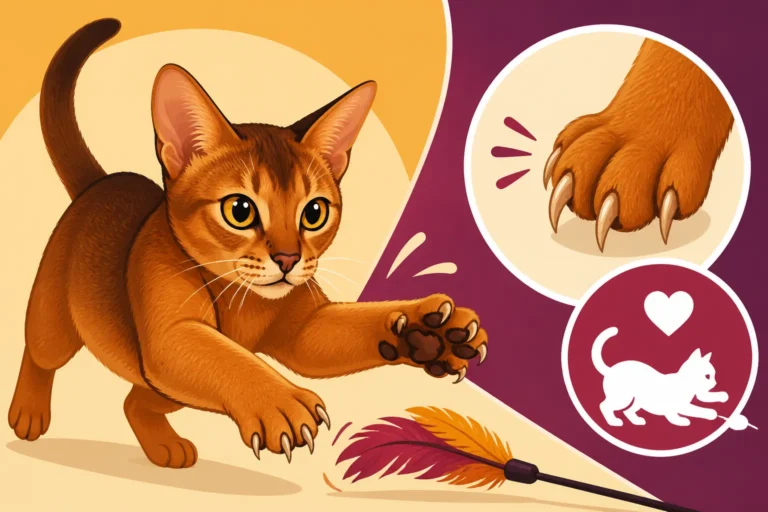
Abyssinian claw use in play, including instinctive hunting behaviors, management strategies, and how to prevent painful scratches during sessions.
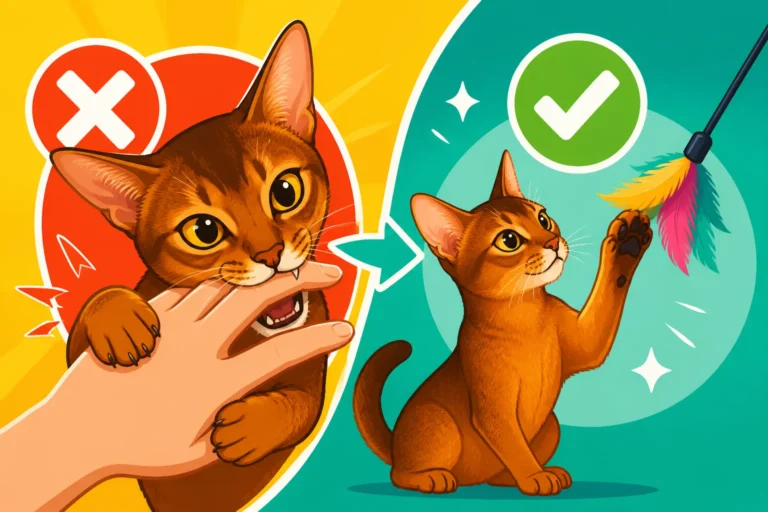
Abyssinian play biting can be stopped by using a sharp ouch sound, disengaging immediately, and redirecting your cat to wand toys.
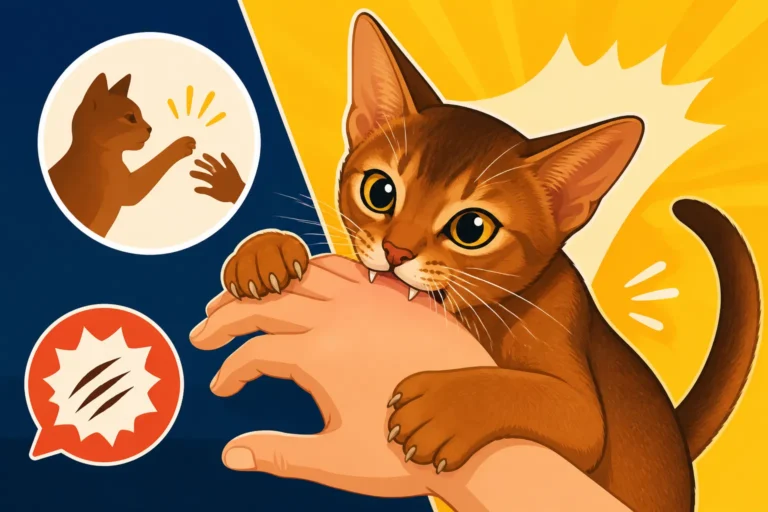
Abyssinian play biting stems from natural hunting instincts, overstimulation, and a lack of early bite inhibition training.

Abyssinian play style, natural hunting instincts, and energy levels explained, offering practical strategies to manage rough behavior.

Abyssinian cats match the energy and noise of older children, engaging in interactive play and appreciating vertical spaces like tall cat trees.

Preparing an Abyssinian cat for a new baby requires gradual scent exposure, adjusted daily routines, and safe escape zones.
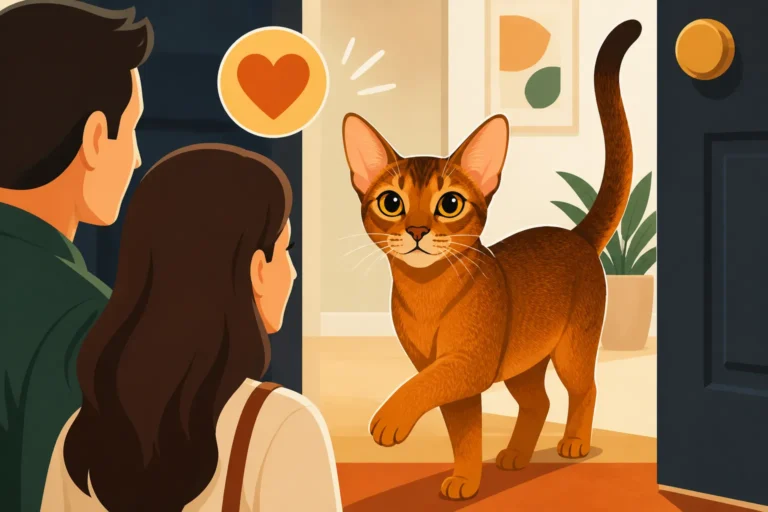
Abyssinian cat behavior explains why this confident feline races to greet visitors at the door instead of hiding under beds.

Abyssinian trust timelines vary, influenced by early socialization, past experiences, individual personality, and guest temperaments during visits.

Abyssinian adjustment strategies include a safe room, scent swapping, and gentle routines to reduce moving stress and build confidence.

Abyssinian travel habits depend on energy levels, early socialization, routine sensitivity, and individual personalities.