Which Cue an Abyssinian Learns First
Abyssinian cat training explains the easiest first cues like sit and come, using clickers and high-value treats to build reliable behavior.
Change the room, not the cat.
Litter box avoidance, scratching and furniture, multi-cat tension and night activity — and the vertical space, play routines and feeding puzzles that solve more than correction does.

Abyssinian cat training explains the easiest first cues like sit and come, using clickers and high-value treats to build reliable behavior.

Clicker training timelines for an Abyssinian range from one day to several weeks, depending on consistency and the trick.
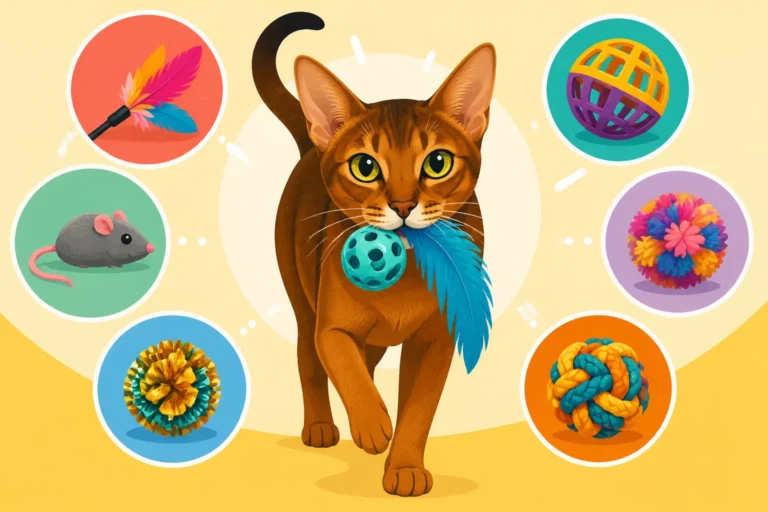
Abyssinian fetch toys like crinkle balls, felt mice, and springs match this active cat breed’s natural hunting and retrieving instincts.
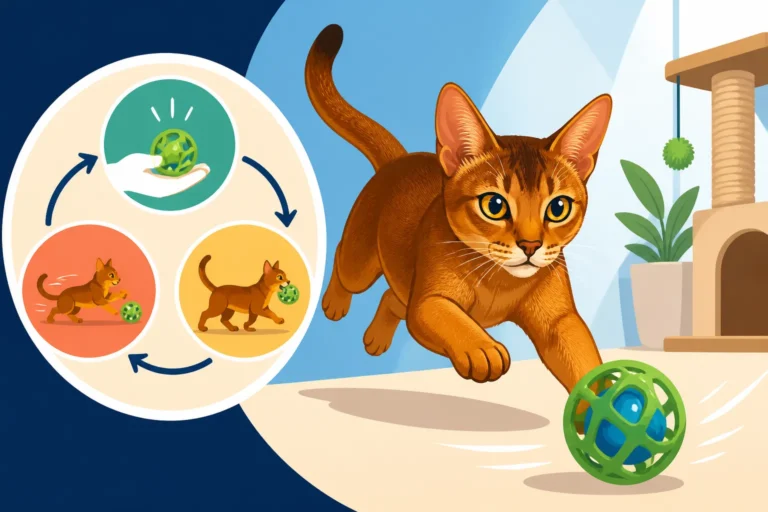
Abyssinian fetching routines fulfill natural hunting instincts through positive reinforcement, toy variety, and clicker training methods.
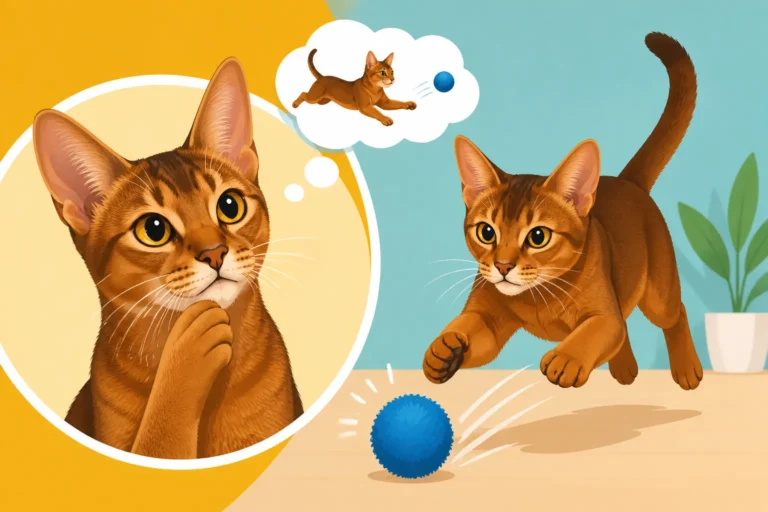
Abyssinian cats possess natural hunting instincts that owners can train into a fun fetching routine with positive reinforcement.

Abyssinian thievery explains why these energetic cats hide items and helps owners track down secret stashes under furniture and high perches.
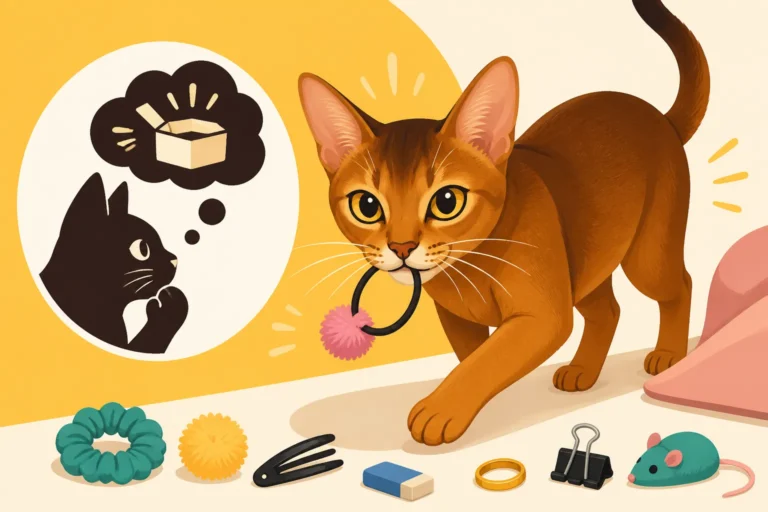
Abyssinian cat stealing behavior stems from intense hunting instincts, chronic boredom, and a clever need for attention.
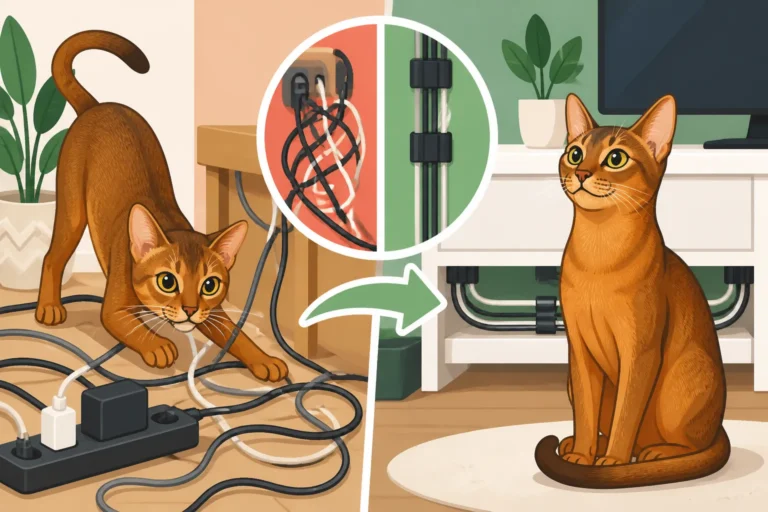
Cable sleeves, management boxes, and bitter apple sprays protect your inquisitive Abyssinian from dangerous electrical wires.
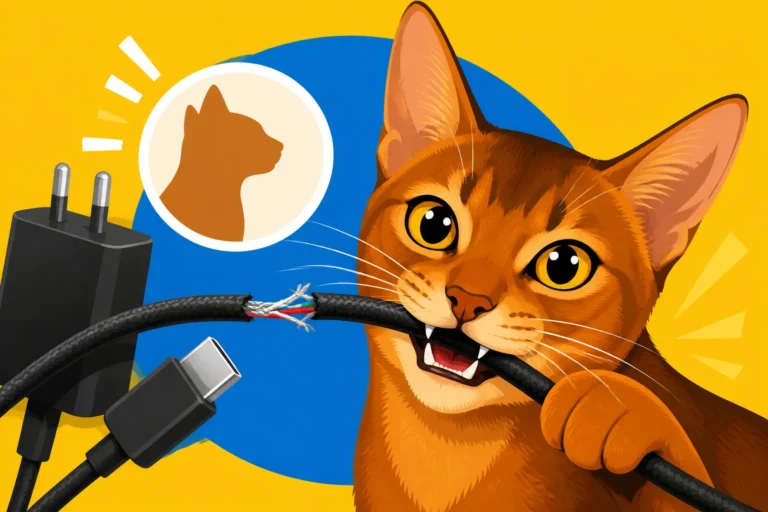
Natural instincts, boredom, and anxiety drive Abyssinian cable chewing, creating electrical hazards and costly electronic damage.

Abyssinian curiosity leads these cats to destroy long, leafy houseplants, but owners can protect greenery using strategic placement and cat grass.