How an Abyssinian Behaves in the Car
Abyssinian car travel behavior requires understanding their curiosity, preparing carriers properly, and managing anxiety during trips safely.
Change the room, not the cat.
Litter box avoidance, scratching and furniture, multi-cat tension and night activity — and the vertical space, play routines and feeding puzzles that solve more than correction does.
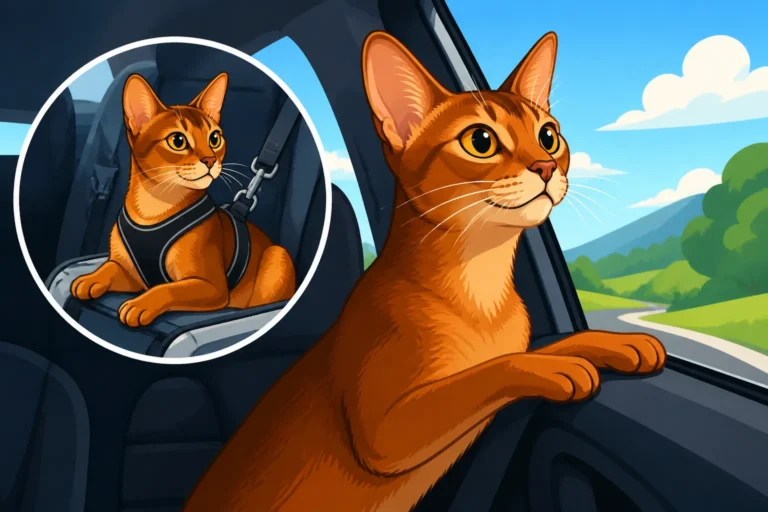
Abyssinian car travel behavior requires understanding their curiosity, preparing carriers properly, and managing anxiety during trips safely.
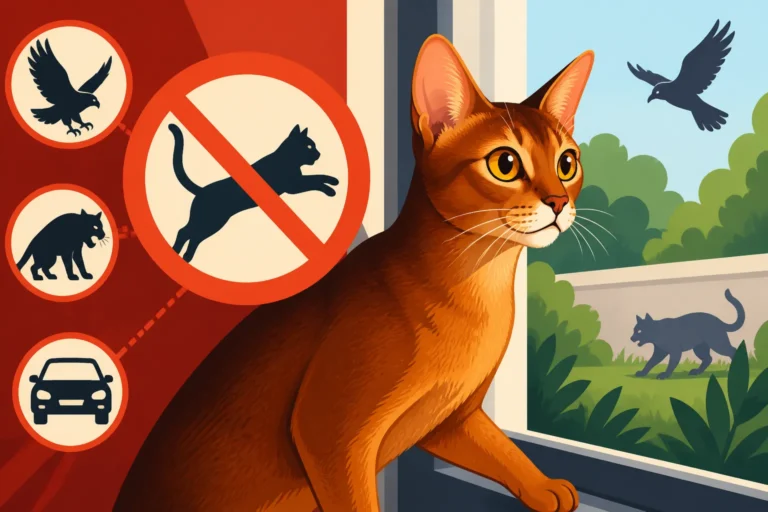
Outdoor freedom for Abyssinians creates serious risks like traffic, diseases, and predators, while indoor enrichment keeps them safe.

Abyssinian outdoor walking safety requires knowing breed energy, managing high jump abilities, and using secure escape proof harnesses.
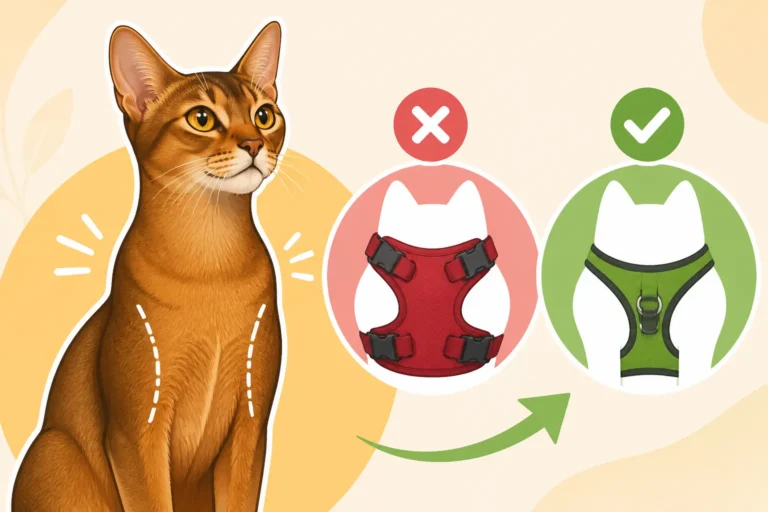
Abyssinian harnesses need adjustable neck and chest straps, breathable mesh materials, and secure buckles to prevent escapes.

Harness training an Abyssinian requires a secure vest and positive reinforcement steps to ensure safe outdoor adventures.

Abyssinian cat behavior explains why intelligent pets ignore owners and respond only when motivated by their curiosity and strong prey drive.

Abyssinian recall training requires positive reinforcement and high-value treats to overcome an independent feline mindset.

Hunger drives Abyssinian training success by leveraging high metabolisms and sharp intelligence to turn food into a powerful reward.

Abyssinian trick training uses high-value treats and clicker sessions to teach smart cats how to lift paws on verbal command.

Abyssinian sit training uses high-value treats and clickers in short three to five minute sessions to teach energetic cats.