Which Cue an Abyssinian Learns First
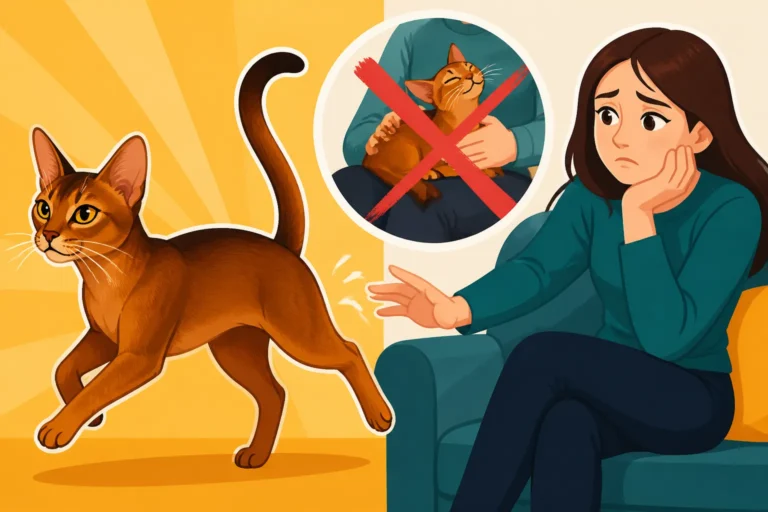
Oh, the Abyssinian! If you've ever owned one of these glorious, energetic creatures, you know they're probably the smartest cat you'll ever encounter, but also arguably the most independent. Trying to teach them a cue can feel like an exercise in futility, akin to herding smoke or convincing a squirrel to share its nuts. They're intelligent enough to understand exactly what you want, but whether they choose to comply is another matter entirely. This guide will delve into the Abyssinian's unique brain and help you discover which cues are the easiest to teach first, setting you and your clever cat up for a successful and fun training journey.
Understanding the Abyssinian Mindset for Training
Before we even talk about specific cues, it’s crucial to understand what makes an Abyssinian tick. These aren't your typical couch potatoes. They are highly active, curious, and possess a remarkable intellect that sometimes feels like it's challenging your own. This combination means they can learn incredibly fast, but also get bored even faster if the training isn't engaging or rewarding enough for them.
Why Abyssinians are Quick Learners (and a Little Stubborn)
Abyssinians are often described as being more dog-like in their personality, and there's a good reason for that. They thrive on interaction, exploration, and mental stimulation. Their natural curiosity makes them eager to investigate new things, which can be a huge asset in training. If you can make a cue or a trick seem like an interesting puzzle or a fun game, they'll often jump right in. They pick up patterns and associations with incredible speed.
However, this intelligence comes with a healthy dose of independence. An Abyssinian isn't looking to please you; they're looking for what's in it for them. If a reward isn't compelling enough, or if the process feels repetitive and uninteresting, they'll simply disengage. You might find them staring at you with an almost amused expression, wondering why you're bothering them with such trivialities when there's a bird outside the window that needs monitoring, or a cabinet that needs opening. Their natural hunting instincts also mean they have short attention spans for things that don't directly benefit their immediate, primal urges. This means your training sessions need to be short, sharp, and highly rewarding.
The Power of Positive Reinforcement
Forget anything you've ever heard about punishing a cat. It simply doesn't work with an Abyssinian and will likely damage your bond and make them even less cooperative. With these sensitive and proud felines, positive reinforcement is not just the best method; it's the only method. This means rewarding desired behaviors, rather than correcting undesired ones. When your Abyssinian does something you like, even if it's just a tiny step in the right direction, you need to mark that moment with something they love.
This "something they love" is usually a high-value treat – something they don't get all the time, like tiny pieces of cooked chicken, salmon, or a specialized cat treat. Enthusiastic praise and petting (if they enjoy it) also play a role, but the food reward is usually the primary motivator. The key is to deliver the reward immediately after the desired action. This instant gratification helps them connect their action with the positive outcome.
This is where a clicker truly shines. A clicker is a small device that makes a distinct, consistent sound. Once you've "charged" it by pairing the click with a treat a few times, the click itself becomes a secondary reinforcer. It acts as a precise marker, telling your Abyssinian, "THAT'S exactly what I wanted!" the instant they perform the correct behavior, even if the treat takes a moment longer to deliver. Many people find that Why Clicker Training Works on an Abyssinian is because of this immediate, clear communication, cutting through any potential confusion your clever cat might have about what they're being rewarded for.
Identifying the First Easy Cues for Your Abyssinian
When embarking on the training journey with your Abyssinian, it's natural to wonder where to start. You don't want to pick something so complex that it leads to frustration for both of you. Instead, we want to leverage their natural behaviors and intelligence to build confidence and make training a fun, rewarding experience.
The "Come" Cue: A Lifesaving First Step
For many Abyssinian owners, teaching their cat to "come" is not just a party trick; it's a vital safety measure. Imagine your Abyssinian, who is probably already halfway up the curtains or trying to figure out how to open the door to the garage, suddenly darting towards an open window or a precarious situation. A reliable "come" cue can be the difference between a minor scare and a serious incident. Beyond safety, it significantly enhances your bond and makes daily interactions smoother, whether it's for mealtime, vet visits, or just cuddles.
To teach "come," start in a quiet room with minimal distractions. Have a handful of those high-value treats ready. Get down to their level and say their name, followed by the cue word "come!" in a bright, enthusiastic voice. The instant they take even a single step towards you, click and offer a treat. Don't wait for them to reach you completely at first. The goal is to reward any movement in your direction. As they start to understand, gradually increase the expectation – they need to take more steps, then eventually reach you, before getting the click and treat. Practice this several times a day in short bursts, maybe five minutes at a time. Over time, you can start practicing in different rooms, and eventually, in slightly more distracting environments. This builds a robust recall that can be a real game-changer. Learning How to Recall Train an Abyssinian can truly strengthen your relationship.
The "Sit" Cue: Building Foundation Behaviors
The "sit" cue might seem simple, but it's a fantastic foundation for more complex behaviors and can provide a moment of calm and control in a busy household. It's often one of the easiest cues for an Abyssinian to pick up because you can easily lure them into the position, making it very clear what you want.
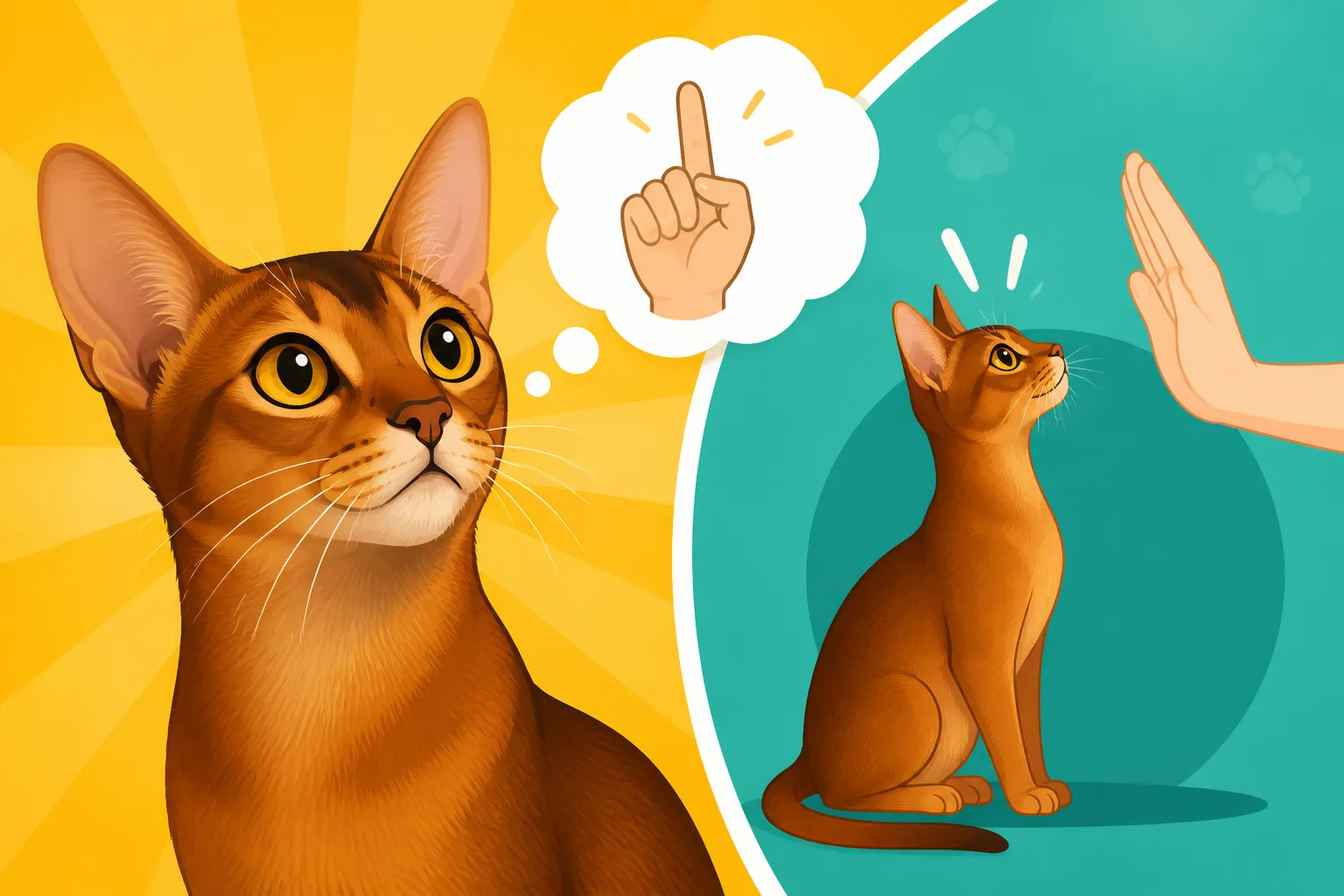
Here’s how to do it: Have a treat in your hand. Hold it near your Abyssinian's nose, then slowly move the treat up and back over their head. As their nose follows the treat, their rear end will naturally lower into a sit. The instant their bottom touches the ground, click and give them the treat. Say "Sit!" as they go into the position. Repeat this a few times until they consistently sit when you move the treat. Then, start trying it without the treat, just using the hand motion, and eventually, just the verbal cue. Remember to always follow through with the click and treat once they perform the action. If you're wondering How to Teach an Abyssinian to Sit, this lure-and-reward method is incredibly effective. Keep sessions short, maybe 2-3 minutes, and end on a positive note.
Targeting: The Gateway to More Complex Tricks
Targeting is a brilliant foundation behavior that, while not a direct "cue" in the traditional sense, can unlock a whole world of possibilities for an Abyssinian. It involves teaching your cat to touch a specific object – usually your finger, a spoon, or a target stick – with their nose or paw. Abyssinians are inherently curious and love to investigate, making this a natural fit for their personality.
To teach nose targeting, simply extend your finger (or a target stick you can find on Amazon) towards your Abyssinian's nose. The moment their nose touches it, click and reward. They’ll likely sniff it out of curiosity, so you're just capturing a natural behavior. Repeat this many times. Once they reliably touch your finger, you can start moving your finger further away, to different heights, or even around objects. You can use targeting to guide them through obstacles, into carriers, or even onto scales at the vet. Paw targeting works similarly, often by placing your hand flat on the ground and waiting for them to tap it with a paw, clicking and rewarding immediately. From simple targeting, you can progress to more impressive feats, like teaching your Abyssinian to How to Teach an Abyssinian to High Five or even closing a door! The possibilities are endless once they understand the concept of touching a specific target.
Mastering the Art of Abyssinian Training Sessions
You've got your smart Abyssinian, you understand positive reinforcement, and you've picked your first cues. Now, let's talk about making those training sessions truly effective and enjoyable for both of you. Because with an Abyssinian, it’s not just about what you teach, but how you teach it.
Leveraging Their Natural Motivation (and Hunger!)
Abyssinians are highly food-motivated, which is a fantastic advantage in training. The timing of your training sessions can significantly impact their engagement. Trying to train a cat right after they've had a huge meal is often an exercise in futility; they're full and content, with little reason to work for treats. This is why many trainers recommend scheduling training sessions just before their regular meal times. An Abyssinian who is a little bit hungry will be much more focused on earning those tasty rewards. This is exactly Why an Abyssinian Learns Faster When It Is Hungry.
When it comes to treats, quality over quantity is key. You'll want high-value treats that are small, easy to eat quickly, and highly palatable. Think freeze-dried chicken, tiny pieces of cooked fish, or specially formulated soft treats. A variety pack of cat treats from Amazon can help you discover your Abyssinian's absolute favorites. Keep sessions short and sweet – think 1-3 minutes, maybe five minutes at the absolute maximum. Abyssinians have an immense amount of energy, but their attention span for repetitive tasks can be surprisingly brief. Keeping sessions brief and ending them on a high note (with a successful trick and a big reward!) ensures they stay eager for the next session. This also ties into How Much Play an Abyssinian Needs Each Day – mental stimulation through training can be just as tiring and satisfying as physical play.
Essential Tools for Success
While you don't need a massive array of gadgets to train your Abyssinian, a few key tools can make a world of difference.
- The Indispensable Clicker: As mentioned before, a clicker is a game-changer for clear communication. It provides that instant "yes!" that tells your Abyssinian they've done exactly what you wanted. You can find simple, ergonomic clickers in multi-packs on Amazon, often bundled with wrist coils so they're always handy.
- High-Value Treats: We’ve already covered this, but it bears repeating. Having a readily available supply of your cat's favorite, irresistible treats is paramount. You might even consider keeping a designated "training treat" that they only get during these sessions, making it even more special.
- Target Stick: While your finger works fine for initial targeting, a target stick (available on Amazon or at most pet stores) can be useful for extending your reach and maintaining consistency. It’s also great for teaching more complex sequences, like guiding your Abyssinian over or around objects.
- A Comfortable Harness: If you ever plan to How to Leash Train an Abyssinian, a properly fitting harness is essential. Abyssinians have a sleek, slender build, so finding a harness that fits their narrow chest comfortably and securely without allowing escapes can be a bit of a quest. Many online retailers, including Amazon, offer a range of harnesses designed for cats, so you can measure your Abyssinian and find one that's a good match.
Consistency is Key: Making Cues Stick
Just like us, cats learn through repetition and consistency. If you only practice a cue once a week, it's going to take your Abyssinian much longer to grasp and retain it. Aim for multiple short sessions throughout the day, every day. This doesn't mean you need to dedicate hours; even two or three one-minute sessions can be more effective than one long, drawn-out session.
It's also important that everyone in the household uses the same cues and rewards. If one person says "come" and another says "here," or if rewards are inconsistent, your Abyssinian will get confused. Make sure all family members are on the same page regarding the chosen cue words, hand signals (if you use them), and the types of rewards offered. Practice in different locations and with slight variations in distractions. This helps your Abyssinian generalize the behavior, meaning they'll respond to the cue regardless of where they are or what else is happening around them. Understand that progress isn't always linear; some days your Abyssinian will seem like a genius, and others, they might act like they've never heard the word "sit" in their life. Don't get discouraged! This is normal. Remember that How Long It Takes to Clicker Train an Abyssinian can vary significantly from cat to cat and depends heavily on consistency.
Troubleshooting and Moving Forward
Even with the best intentions and the most brilliant Abyssinian, training can hit a few bumps. It’s important to stay patient and adaptable, always remembering that you’re working with a highly intelligent but independent creature.
When Your Abyssinian Just Isn't Getting It
If your Abyssinian seems to be struggling with a cue, or suddenly stops responding, don’t take it personally. It’s rarely about defiance and usually about a breakdown in communication or motivation. First, re-evaluate the reward. Is the treat still high-value enough? Maybe they’re bored with it. Try a different treat. Next, check your timing. Are you clicking and rewarding immediately when they perform the desired action? Even a second or two delay can confuse a cat.
If the issue persists, you might have moved too fast. Break the cue down into even smaller, easier steps. For "come," maybe you only reward them for looking at you at first, then for taking one step. For "sit," ensure they’re reliably following the lure before trying to fade it. Reduce distractions in your training area. Sometimes, simply going back to basics and rebuilding confidence with easy wins can restart the process. And remember, sometimes your Abyssinian might just not be in the mood. They're not robots. If they're clearly uninterested, end the session on a positive note (even if it's just rewarding them for looking at you) and try again later. Your patience will pay off.
Expanding Their Repertoire
Once your Abyssinian has mastered a few basic cues, you'll likely find that Training an Abyssinian Is Easier Than Stopping It. They start to understand the game, anticipating that a specific action from them will lead to a reward from you. This is where the fun really begins! You can gradually introduce new cues, building on the foundation you've already established.
Consider teaching them to fetch (many Abyssinians do this naturally!), or more complex targeting sequences to navigate agility courses you build with household items. You can even chain behaviors together, asking them to "sit," then "high five," then "come" for a jackpot reward. Always keep it positive, always keep it fun, and always remember that your Abyssinian is a partner in this endeavor, not a subordinate. The more you engage their minds and bodies in a constructive way, the happier and better-behaved your Abyssinian will be. Enjoy the journey of discovery with your phenomenal feline!
Disclaimer
This article is for general informational purposes only and does not constitute professional advice. Laws, prices and regulations vary by location and change over time. Consult a qualified professional for guidance on your specific situation.