How to Make an Abyssinian’s Climbing Route Safe
Abyssinian climbing routes require secure furniture anchoring, stable wall shelves, and hazard removal to prevent injury during active vertical exploration.
Change the room, not the cat.
Litter box avoidance, scratching and furniture, multi-cat tension and night activity — and the vertical space, play routines and feeding puzzles that solve more than correction does.
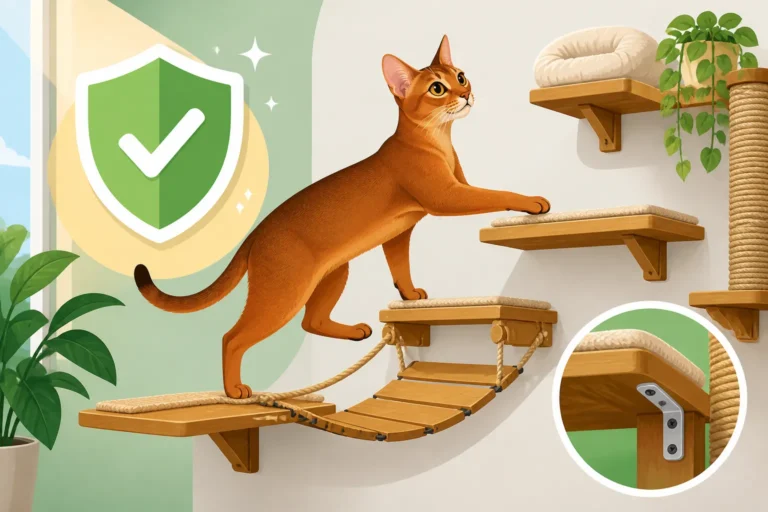
Abyssinian climbing routes require secure furniture anchoring, stable wall shelves, and hazard removal to prevent injury during active vertical exploration.

Abyssinian climbing behavior explains why these athletic cats reach high places using their jumping ability and wild instincts.

Healthy adult Abyssinians achieve six to eight foot vertical jumps and four to six foot horizontal leaps from a standstill.
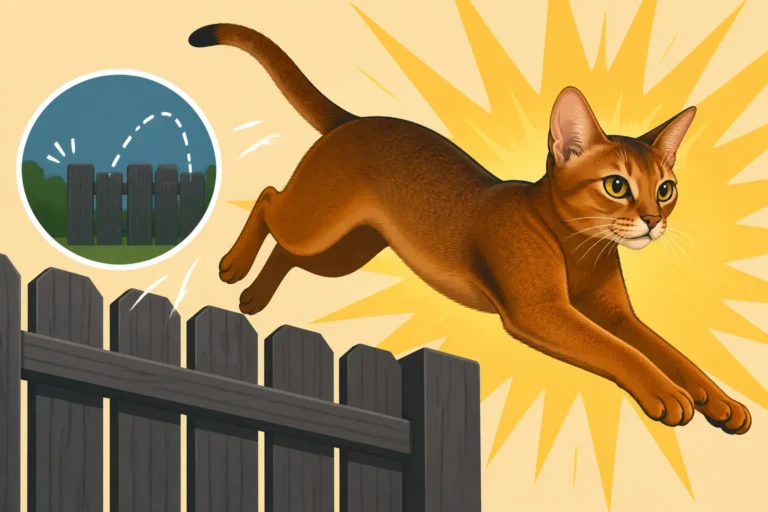
Abyssinian cats easily bypass standard fences due to their remarkable agility, high intelligence, and relentless desire to explore.
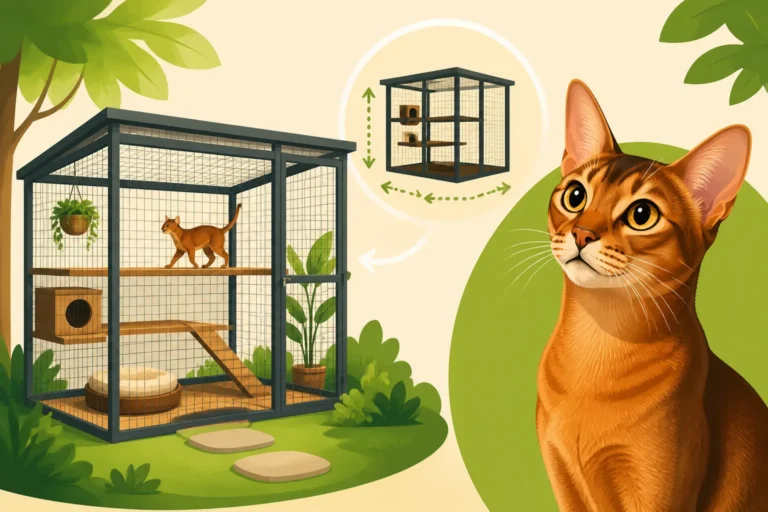
Abyssinian cat enclosure sizing guidelines explain how height, horizontal space, and vertical perches satisfy the active breed.
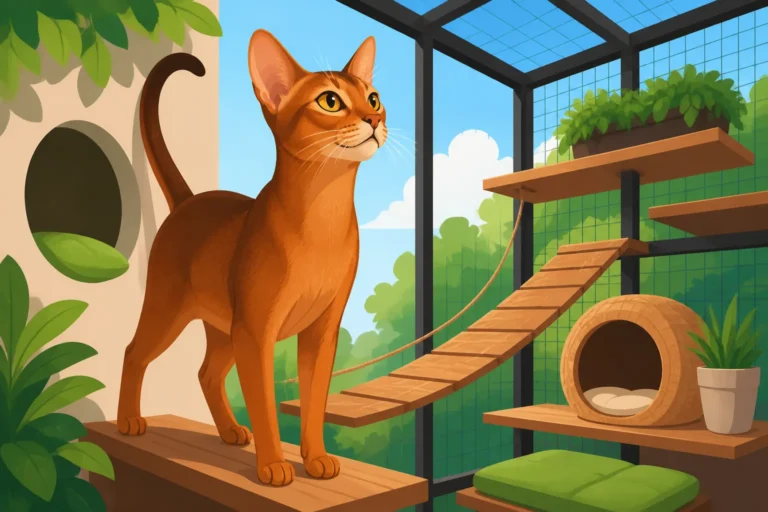
Abyssinian cats use a multi-level catio for climbing, sensory observation, physical exercise, and safe outdoor exploration.

Window bird feeders provide safe visual enrichment for curious Abyssinians, satisfying innate hunting instincts indoors.
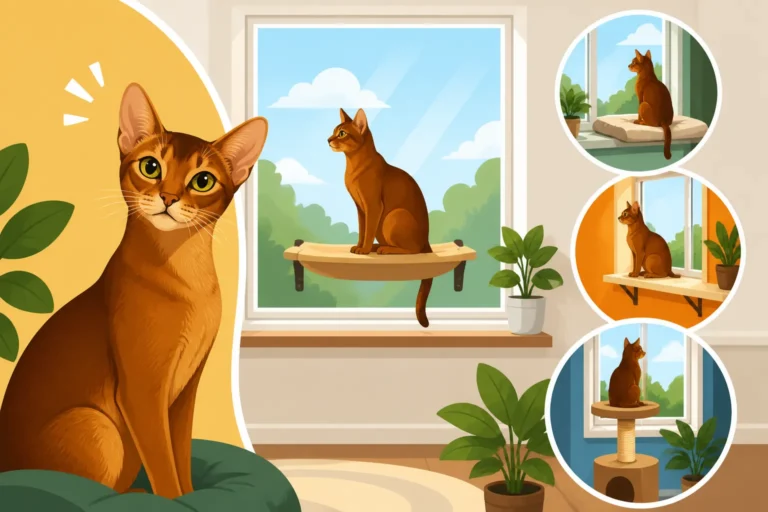
Proper window seat placement for an Abyssinian cat prevents boredom and provides height, sunlight, and a stimulating outdoor view.
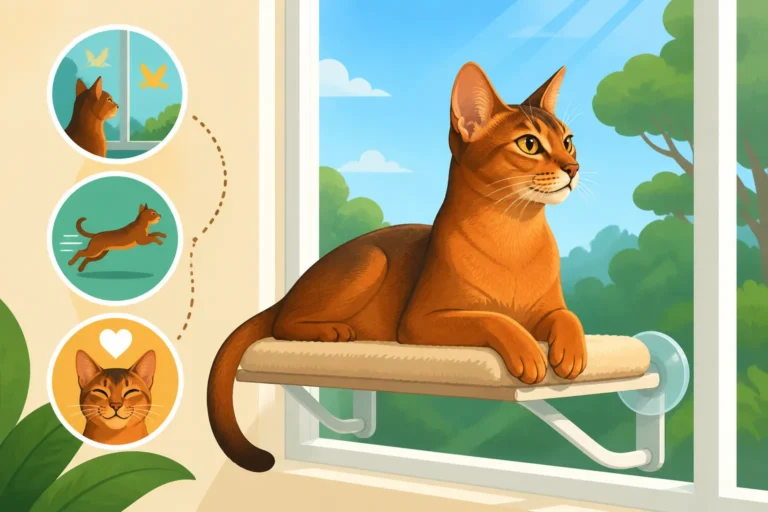
An Abyssinian window perch provides mental enrichment, security, and an outlet for high energy, preventing destructive boredom.

Abyssinian cat engagement with videos depends on prey instincts. This explanation helps owners choose proper visual enrichment and real alternatives.