Why an Abyssinian Marked as a Carrier Is Still Fine
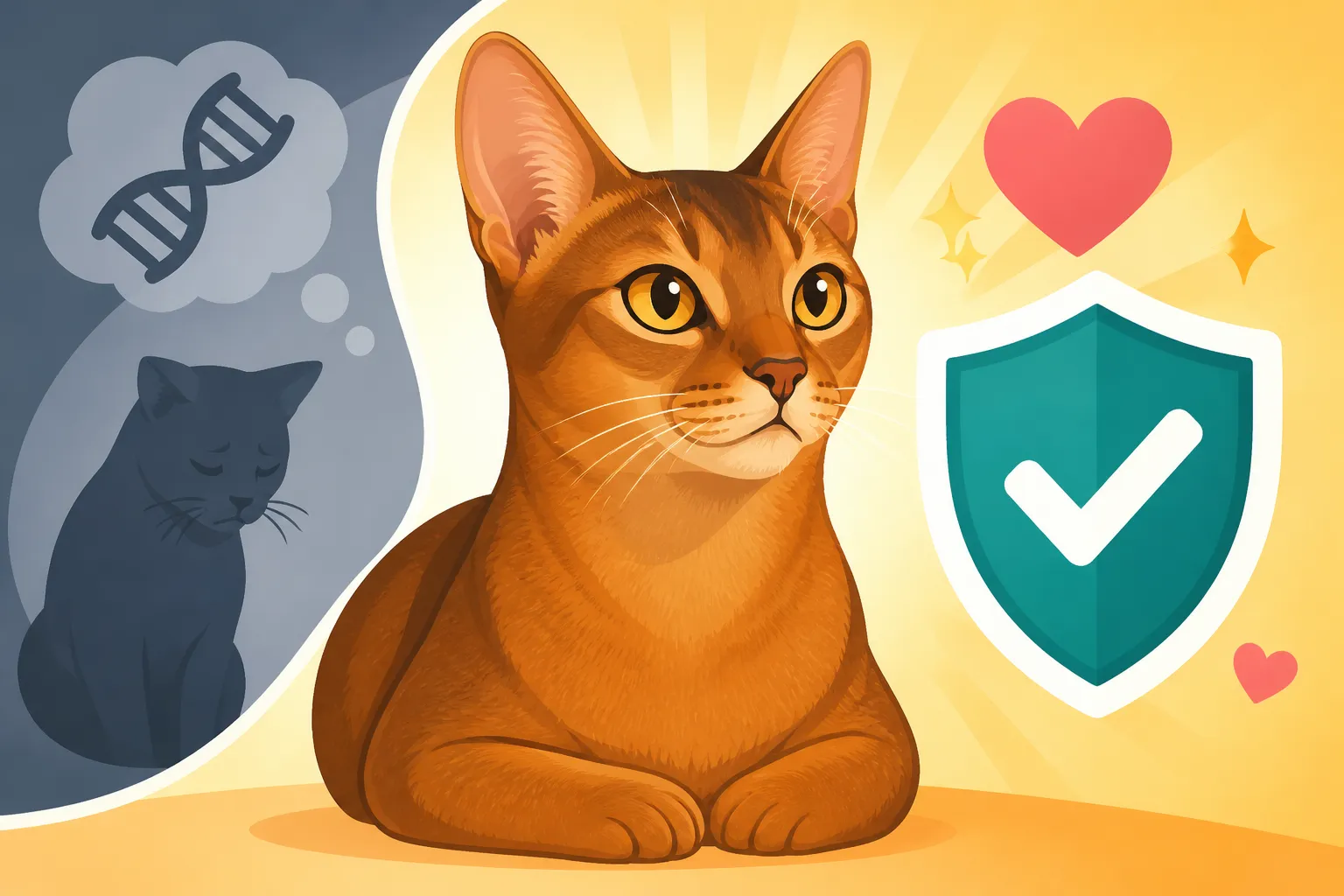
It’s completely understandable to feel a pang of worry when you receive genetic test results for your beloved Abyssinian, especially if you see the word "carrier." Many owners immediately jump to the conclusion that their cat is sick or destined for health problems, which can be incredibly frightening. This guide aims to demystify what being a genetic carrier actually means for an Abyssinian, reassuring you that a carrier cat is, in almost all cases, perfectly healthy and capable of living a long, vibrant life.
Understanding Genetic Carrier Status in Abyssinians
When we talk about genetic diseases in cats, especially purebreds like Abyssinians, it’s a complex landscape of inherited traits. The term "carrier" refers to a specific genetic status that many people misunderstand, often leading to unnecessary anxiety.
What Does "Carrier" Really Mean?
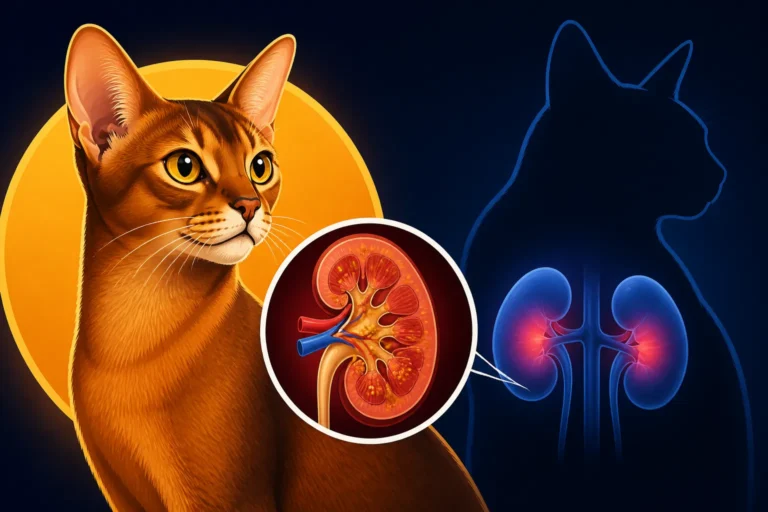
At its core, being a "carrier" for a genetic condition means that your Abyssinian has inherited one copy of a mutated gene that could cause a disease, but also one normal, healthy copy of that same gene. For most genetic diseases, particularly those that are autosomal recessive, a cat needs two copies of the mutated gene (one from each parent) to actually develop the illness. If they only have one mutated copy and one healthy copy, the healthy copy acts as a "backup," stepping in to do the job properly and preventing the disease from manifesting.
Think of it like this: your cat has two instruction manuals for a specific body function. One manual has a typo (the mutated gene), but the other manual is perfectly clear and correct (the healthy gene). As long as the cat has that good manual to refer to, everything works just fine, and they don't experience any issues. They just carry the manual with the typo. This concept is vital for understanding conditions like Pyruvate Kinase Deficiency Is the Abyssinian's Best Known Test.
Common Genetic Conditions with Carriers
Abyssinians, like many purebred cats, have a few genetic predispositions that responsible breeders test for. The two most common conditions for which an Abyssinian might be a carrier are:
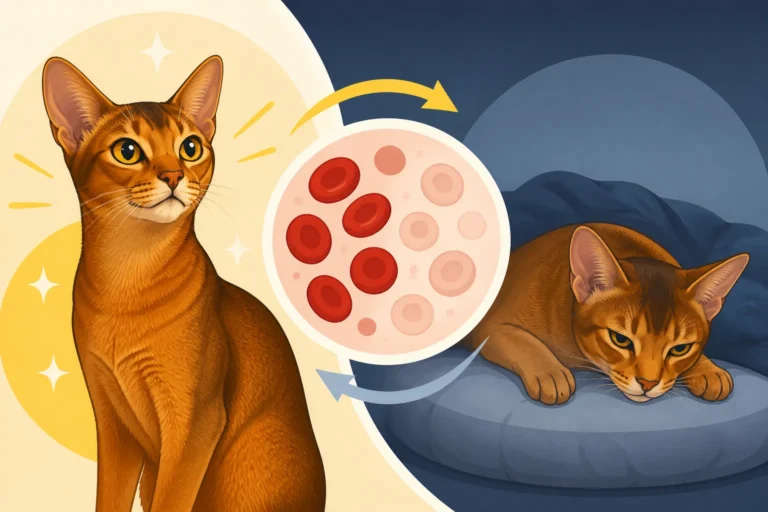
- Pyruvate Kinase Deficiency (PKD or PK-def): This is a red blood cell disorder that, in affected cats, leads to intermittent anemia. A carrier cat, however, produces enough healthy pyruvate kinase enzyme from its one good gene copy that it typically never shows symptoms of the disease. You can learn more about Which Four Diseases the Abyssinian Actually Carries, and specifically, What PK Deficiency Does to an Abyssinian's Red Cells.
- Progressive Retinal Atrophy (PRA-rdAc): This condition causes the retina to degenerate over time, eventually leading to blindness in affected cats. Similar to PK-def, an Abyssinian who is a carrier for PRA-rdAc has one normal gene copy that ensures their vision remains perfectly fine throughout their life. PRA-rdAc Takes an Abyssinian's Sight by Five in affected cats, but not in carriers.
It's important to note that these are recessive conditions. There are other types of genetic conditions, but for the most common ones in Abyssinians that are DNA testable, the carrier status works in this reassuring way.
The Difference Between a Carrier and an Affected Cat
This distinction is perhaps the most crucial takeaway. A carrier cat has one copy of the faulty gene and one normal copy. The normal copy compensates, and the cat does not get sick. It lives a normal, healthy life with no symptoms. The only "issue" is that if bred with another carrier, some of their kittens could inherit two faulty copies and become affected.
An affected cat, on the other hand, has inherited two copies of the faulty gene (one from each parent). Because there is no healthy gene to compensate, the cat will develop the symptoms of the disease. For PK-def, this means episodes of anemia, and for PRA-rdAc, it means progressive vision loss leading to blindness.
Understanding How a Carrier Abyssinian Differs From an Affected One can truly put your mind at ease. Your carrier Abyssinian isn't secretly suffering; their body is functioning just as it should, thanks to that healthy gene.
Why a Carrier Abyssinian Is Usually Healthy
The science behind why a carrier remains healthy is quite elegant and is the primary reason you shouldn't worry about your Abyssinian's well-being if they're only a carrier.
The Role of the "Good" Gene
As mentioned, recessive genetic conditions require two copies of a mutated gene for the disease to express itself. When an Abyssinian is a carrier, they possess one normal, functional copy of the gene and one non-functional (mutated) copy. The single functional copy is usually more than sufficient to produce the necessary proteins or enzymes, or perform the cellular function, required for normal health.
For instance, with PK Deficiency, the healthy gene ensures enough pyruvate kinase enzyme is produced to maintain the red blood cells’ integrity and energy. Your Abyssinian won't experience the red blood cell breakdown that leads to anemia because their body is still effectively performing this vital function. It's a testament to the robustness of genetics that one good copy is often all that's needed for perfect health. This is why knowing How the PKLR Mutation Reaches an Abyssinian is important for understanding inheritance, but not necessarily for the individual carrier's health.
No Symptoms, No Disease Progression
This is a key point: a carrier Abyssinian will not develop symptoms of the disease they carry. There is no "mild" form of PK Deficiency or PRA-rdAc for a carrier. They simply don't get the disease at all. Their energy levels will be normal, their appetite healthy, and their eyes clear and functioning.
Imagine you have a genetic predisposition for freckles, but you only inherit one copy of the gene, and the other copy means you don't actually develop freckles. You carry the potential, but it doesn't manifest. It's the same principle here, but with much more significant health implications for affected cats. This knowledge should bring immense relief to owners who discover their Abyssinian is a carrier.
Living a Full, Normal Lifespan
Because carrier Abyssinians do not develop the associated genetic disease, their lifespan and quality of life are not negatively impacted by their carrier status. They will live as long and as happily as any non-carrier Abyssinian, provided they receive appropriate general care, nutrition, and veterinary attention. Many carrier Abyssinians go on to be cherished family pets for their full Twelve to Fifteen Years an Abyssinian Usually Gets.
The only scenario where carrier status could become relevant to their health is if they were bred with another carrier, producing affected offspring. But for an individual pet Abyssinian, spayed or neutered, being a carrier is a non-issue for their personal health trajectory. Reputable pet insurance providers like Healthy Paws, for example, understand the distinction between a carrier and an affected cat, and a carrier status alone typically wouldn't impact coverage unless the animal actually developed symptoms of a genetic condition (which, as we've established, doesn't happen for carriers of recessive diseases).
The Importance of Testing and Ethical Breeding
While a carrier Abyssinian is personally healthy, understanding their genetic status is incredibly important for breeders who are striving to maintain the health of the breed.
Why Breeders Test for Carrier Status
Breeders test their cats not to identify sick animals, but to make informed decisions about breeding pairs. By knowing which cats are carriers, breeders can prevent inadvertently pairing two carriers, which would lead to the birth of affected kittens. This is a crucial part of ethical breeding and contributes to reducing the incidence of these diseases in the Abyssinian gene pool.
For instance, a breeder might use a DNA test to confirm How the CEP290 Test Clears an Abyssinian for PRA-rdAc. They might also test to understand How Many Abyssinians Carry the PK Mutation globally. Testing isn't about shaming carriers; it's about safeguarding future generations.
Responsible Breeding Practices
A responsible breeder will never breed two carrier Abyssinians together for a recessive disease. If both parents are carriers, there's a 25% chance with each kitten that it will inherit two copies of the faulty gene and become affected. There's also a 50% chance it will be a carrier like its parents, and a 25% chance it will be completely clear.
Instead, a breeder might carefully mate a carrier with a "clear" (non-carrier) cat. In such a pairing, all kittens will be either clear or carriers, but none will be affected by the disease. This allows valuable genetic diversity to be maintained within the breed, as not all carriers need to be removed from breeding programs, just managed responsibly. This is why Two Clear Abyssinian Parents End the Problem of affected kittens, but a clear parent with a carrier parent can still maintain genetic diversity without producing affected offspring.
Here's a simple table illustrating the outcomes of different breeding pairs for a recessive genetic condition:
| Parent 1 Status | Parent 2 Status | Offspring Probabilities | Affected Kittens? |
|---|---|---|---|
| Clear (N/N) | Clear (N/N) | 100% Clear | No |
| Clear (N/N) | Carrier (N/M) | 50% Clear, 50% Carrier | No |
| Carrier (N/M) | Carrier (N/M) | 25% Clear, 50% Carrier, 25% Affected | Yes |
| Carrier (N/M) | Affected (M/M) | 50% Carrier, 50% Affected | Yes |
| Affected (M/M) | Affected (M/M) | 100% Affected | Yes |
N = Normal gene copy, M = Mutated gene copy
As you can see, the key is to avoid mating two carriers, or a carrier with an affected cat, to prevent producing affected kittens.
What to Ask Your Breeder
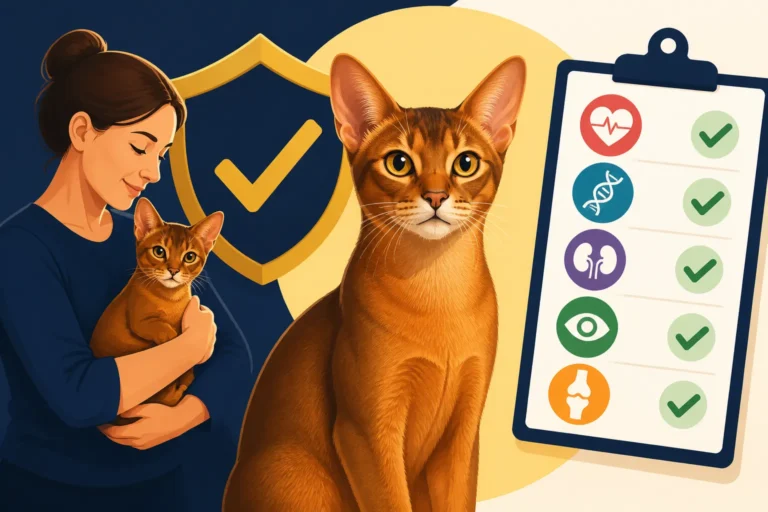
When acquiring an Abyssinian kitten, always ask your breeder about the genetic testing status of both parents. A reputable breeder will be transparent about their cats' health and genetic test results, openly sharing certificates for PK Deficiency and PRA-rdAc. They should be able to explain what "carrier" means and how they use this information in their breeding program.
Don't shy away from asking tough questions like, "What an Abyssinian Breeder Should Have Tested Before You Buy?" or "Why a Rescue Abyssinian Should Still Be PK Tested." A good breeder values these questions because it shows you care about the health of the breed and are committed to responsible pet ownership. They should be proud to show you their documentation.
Caring for Your Carrier Abyssinian
If you find out your Abyssinian is a carrier for a genetic condition, the good news is that your day-to-day care routine won't need to change one bit due to this specific status.
Standard Abyssinian Care is Sufficient
Your carrier Abyssinian thrives on the same excellent care as any other Abyssinian. This means a high-quality, protein-rich diet, plenty of fresh water, regular exercise and interactive play to satisfy their energetic nature, and routine veterinary check-ups. They don't need special diets, medications, or extra vet visits just because they are a carrier. Continue to provide them with stimulating environments that cater to their climbing instincts, and engage them with plenty of play sessions.
Focus on overall wellness: keeping their teeth clean (Why an Abyssinian Needs Dentals More Often), monitoring their weight (Why an Abyssinian's Weight Loss Is Never Minor), and ensuring they have ample opportunities to express their natural behaviors. These are the cornerstones of caring for any Abyssinian, carrier status notwithstanding.
The Peace of Mind in Knowing
While carrier status doesn't impact your cat's health, having the genetic test results offers immense peace of mind. You know precisely what conditions your Abyssinian might pass on if they were to breed, and more importantly, you know they are personally safe from developing these specific diseases. This knowledge empowers you as an owner.
It also means that if, hypothetically, your cat did develop unexplained anemia or vision problems later in life, you'd know definitively that it wasn't due to PK Deficiency or PRA-rdAc, allowing your vet to pursue other diagnostic avenues without delay. This kind of certainty is invaluable for managing your cat's health throughout their lifetime.
Financial Considerations and Insurance
Genetic testing is a responsible step, but the costs associated with it are usually borne by the breeder. For an owner, the diagnosis of carrier status typically doesn't lead to additional financial burdens for care, as no special treatments or medications are required.
When considering pet insurance, policies from providers like Healthy Paws generally cover unexpected illnesses and accidents. While pre-existing conditions are usually excluded, a carrier status (without the manifestation of the disease) would typically not be considered a pre-existing condition that would lead to exclusion, because the cat isn't actually sick. It's always best to clarify with your specific insurance provider, but the distinction between a healthy carrier and an affected animal is usually recognized. Insuring your Abyssinian early, ideally before any health issues arise, is always a wise decision to help cover unexpected future veterinary costs.
A carrier Abyssinian is a healthy Abyssinian. The term "carrier" sounds daunting, but in the context of recessive genetic diseases, it's a marker for breeders, not a prognosis of illness for your beloved pet. Enjoy your active, intelligent Abyssinian, knowing that their carrier status doesn't mean a thing for their personal health and happiness.
Disclaimer
This article is intended for informational purposes only and does not constitute veterinary advice. Always consult with a qualified veterinarian for any health concerns or before making any decisions about your pet's medical care.