Why Two Carrier Abyssinians Should Never Be Bred
The decision to bring new Abyssinian kittens into the world is a joyful, hopeful one, filled with dreams of beautiful, healthy little bundles of energy. However, it's also a decision that carries immense responsibility, especially when it comes to genetic health. Many aspiring or even established breeders often grapple with the complexities of genetic testing, and a common question arises: what if both my potential parent Abyssinians are carriers for a genetic disease? This guide is here to clarify, unequivocally, why breeding two Abyssinian cats that are both carriers for the same recessive genetic condition is a choice that can lead to heartbreak and avoidable suffering for their offspring.
Understanding What "Carrier" Status Truly Means for an Abyssinian
When we talk about an Abyssinian being a "carrier" for a genetic disease, it's easy to get confused or think it's not a big deal because the cat itself appears perfectly healthy. But "carrier" status is a crucial piece of information, particularly for recessive genetic conditions common in the breed. These aren't just abstract scientific terms; they represent real health risks that can profoundly affect a kitten's life.
The Science Behind Carrier Genes in Cats
Imagine a specific gene, let's call it Gene X, that's responsible for a particular function in the cat's body. For some diseases, there's a "normal" version of this gene and a "mutated" version that causes illness. A cat inherits two copies of every gene, one from each parent.
In the case of recessive genetic diseases, a cat only becomes ill if it inherits two copies of the mutated gene – one from its mother and one from its father. If a cat inherits one normal copy and one mutated copy, it's considered a "carrier." The normal gene usually compensates for the mutated one, so the carrier cat shows no symptoms of the disease whatsoever. They live happy, healthy lives, often completely unaware they carry this genetic secret. This is why a cat marked as a carrier is still perfectly fine as a pet and can even be part of a carefully managed breeding program.
Common Recessive Conditions in Abyssinians
Abyssinians are known to carry a few specific genetic conditions that can be recessively inherited. Two of the most prominent are Pyruvate Kinase Deficiency (PK Deficiency) and Progressive Retinal Atrophy (PRA-rdAc).
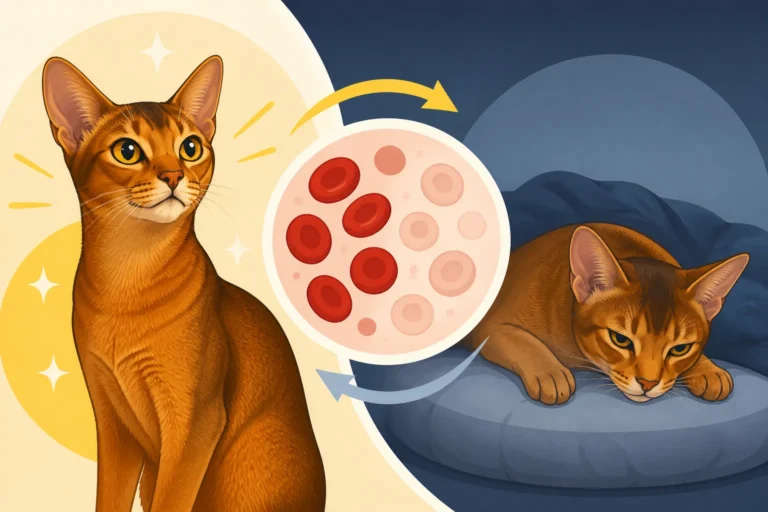
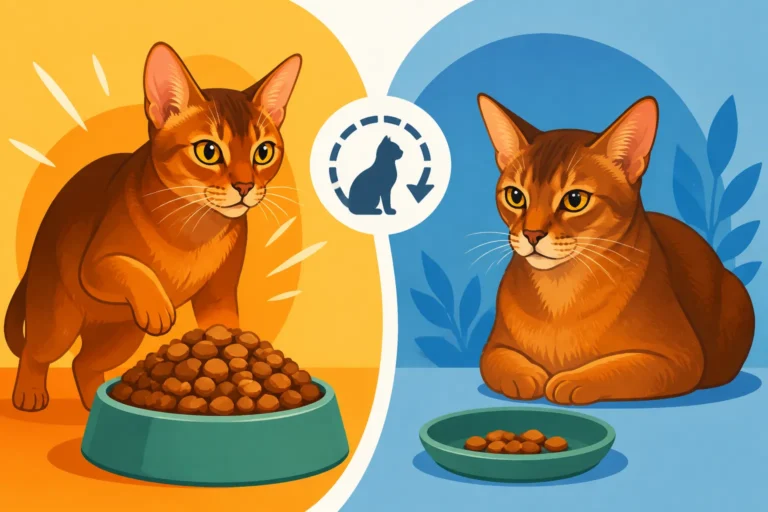
- Pyruvate Kinase Deficiency (PK Deficiency): This condition affects the red blood cells, leading to anemia. Cats with PK Deficiency often experience intermittent lethargy, weakness, and pale gums because their red blood cells break down too quickly. You can learn more about what PK Deficiency does to an Abyssinian's red cells to grasp the severity.
- Progressive Retinal Atrophy (PRA-rdAc): This is a genetic eye disease that causes the photoreceptor cells in the retina to degenerate over time, ultimately leading to blindness. For Abyssinians, PRA-rdAc typically takes an Abyssinian's sight by five years of age, sometimes earlier.
Both of these conditions are devastating for affected kittens and their future families. The good news is that we have reliable DNA tests available now. These tests can identify if an Abyssinian is clear (two normal copies), a carrier (one normal, one mutated), or affected (two mutated copies). Knowing how the Abyssinian's DNA panel is ordered is the first step in responsible breeding.
The Unacceptable Risk: When Two Carriers Breed
Now, let's get to the heart of the matter. If you have two Abyssinians, both of whom are perfectly healthy but are carriers for the same recessive genetic disease, what happens if you breed them together? This is where the genetics can become quite stark and challenging for breeders.
The 25% Chance of an Affected Kitten
When two carriers are bred, the genetic odds break down like this:
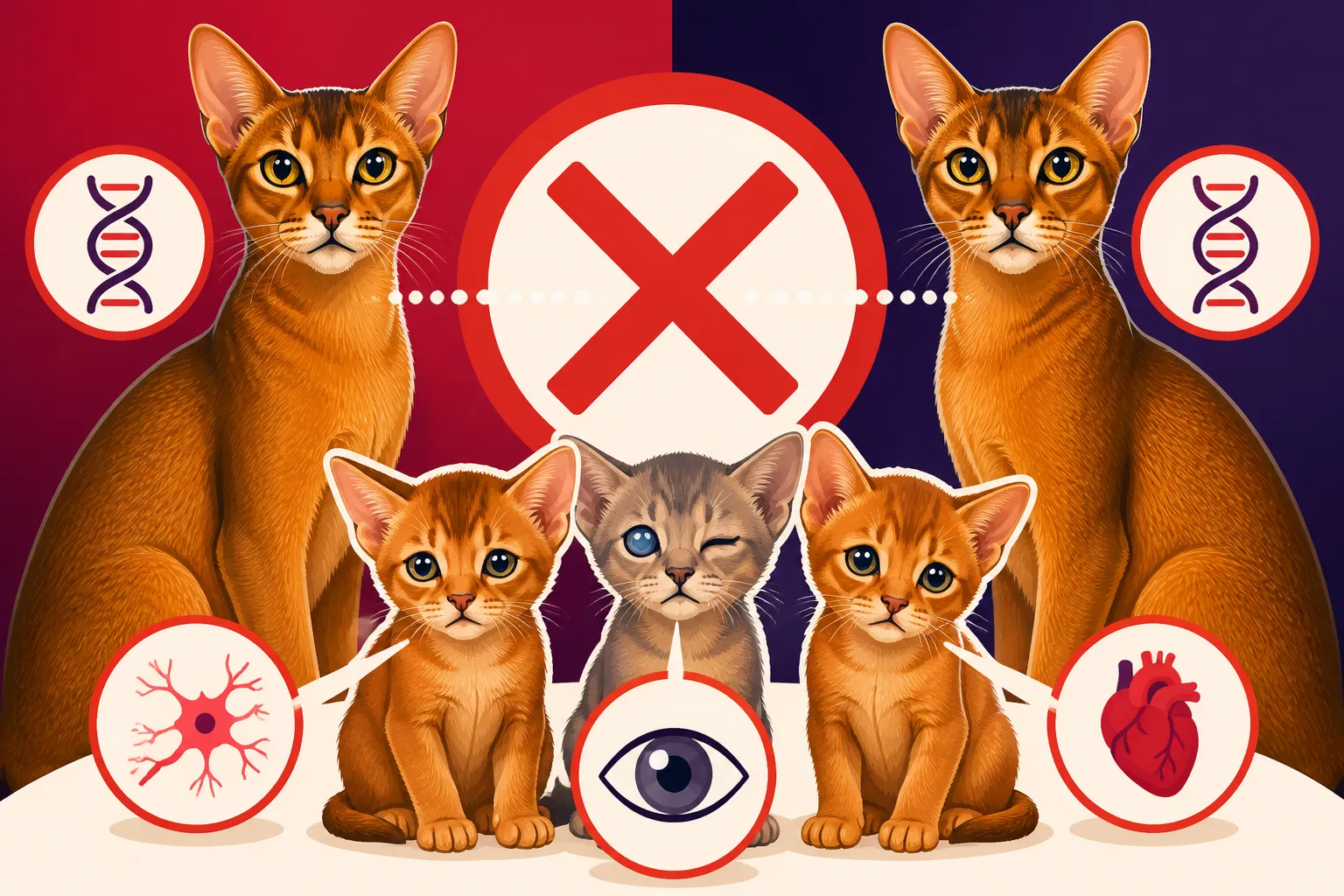
- 25% Chance of an Affected Kitten: One-quarter of the kittens in the litter will, on average, inherit two copies of the mutated gene – one from each carrier parent. These kittens will be affected by the disease. This means they will develop PK Deficiency or PRA-rdAc, experiencing the full impact of the illness. This isn't just a slight possibility; it's a statistical certainty over multiple litters.
- 50% Chance of Carrier Kittens: Half of the kittens will, on average, inherit one normal copy and one mutated copy, making them carriers, just like their parents. While they won't develop the disease, they will be able to pass it on if bred irresponsibly in the future.
- 25% Chance of Clear Kittens: One-quarter of the kittens will, on average, inherit two normal copies of the gene, meaning they are completely clear of the mutation and cannot pass it on.
This 25% chance of an affected kitten is the critical factor. It means that for every litter produced by two carrier parents, you are knowingly creating a situation where some of your kittens will suffer from a preventable genetic disease.
The Heartbreak and Burden of Affected Offspring
Imagine the joy of a new litter, only to watch a kitten grow and eventually succumb to severe anemia from PK Deficiency, requiring ongoing veterinary care, blood transfusions, or even a splenectomy just to cope. Or envision a playful kitten slowly losing its sight to PRA-rdAc, bumping into furniture long before anyone notices the subtle signs, and eventually becoming completely blind.
The emotional toll on the new owners of these kittens is immense. They fall in love with their new family member, only to face a lifelong struggle with a chronic, sometimes fatal, condition. The financial burden can also be staggering. While pet insurance providers like Healthy Paws can offer some relief for unexpected medical costs, the reality of managing a chronic genetic illness is a heavy one for any family. Prevention, through responsible breeding, is always the kindest path.
It's not just about the numbers; it's about the lives involved. Every single kitten born with a preventable genetic disease represents a failure in responsible breeding practice.
Responsible Breeding Practices and Essential Testing
The good news is that preventing these heart-wrenching scenarios is entirely within a breeder's control through diligent testing and careful pairing. Responsible breeding isn't just about producing beautiful cats; it's about producing healthy ones.
Mandatory DNA Testing for All Breeding Cats
Before any Abyssinian cat enters a breeding program, comprehensive DNA testing for known breed-specific genetic diseases is absolutely non-negotiable. This includes PK Deficiency and PRA-rdAc. Labs like Optimal Selection or Wisdom Panel offer full genetic panels for cats, making it easy to get a complete picture of your cat's genetic health.
The results will clearly state whether your cat is "Clear," "Carrier," or "Affected" for each tested condition. This information is invaluable and forms the cornerstone of any ethical breeding decision. What an Abyssinian breeder should have tested before you buy is crucial for ensuring a kitten's long-term health.
Smart Breeding Pairings to Avoid Disease
Once you know your cats' genetic status, you can make informed decisions about breeding pairs. The goal is simple: never produce an affected kitten.
Here are the safe and responsible pairings:
- Clear x Clear: This is the ideal scenario. All offspring will be genetically clear and cannot pass on the mutated gene. This is often the goal for breeders looking to reduce the prevalence of these genes in their lines.
- Clear x Carrier: This pairing is acceptable and often necessary to maintain genetic diversity within the breed, especially for less common lines. On average, 50% of the kittens will be clear, and 50% will be carriers. Crucially, no kittens from this pairing will be affected by the disease. The carrier kittens can then be responsibly bred with clear mates in the next generation. This ensures that while the carrier gene persists, no animal suffers from the disease itself. Breeders must be transparent about this, so new owners understand why an Abyssinian marked as a carrier is still fine, but their offspring must be carefully considered.
- Clear x Affected: While less common, breeding an affected cat with a clear cat would result in all offspring being carriers. Again, no kittens would be affected by the disease themselves.
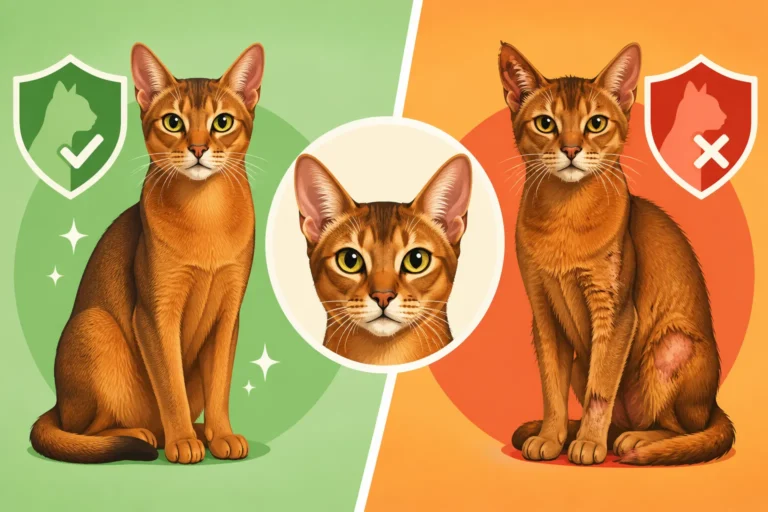
The pairing to always avoid is Carrier x Carrier. This is the only pairing that has a statistical 25% chance of producing affected kittens. By consciously making this pairing, you are actively choosing to gamble with the health and well-being of innocent lives. The aim of responsible breeding is to reduce, and eventually eliminate, the incidence of these diseases, and knowing why two clear Abyssinian parents end the problem highlights the best practice.
The Ethical Imperative: Safeguarding the Abyssinian Breed's Future
The responsibility of a breeder extends far beyond producing adorable kittens. It encompasses a deep commitment to the health, welfare, and long-term viability of the entire Abyssinian breed. Ignoring genetic risks for convenience or perceived desirable traits is a disservice to the breed's future.
Maintaining Genetic Diversity vs. Eradicating Disease
Some breeders express concern that removing all carriers from the breeding pool too quickly could lead to a reduction in genetic diversity. This is a valid concern, but it's a balancing act. The strategy of breeding a carrier only with a clear mate allows for the continuation of desirable traits carried by the carrier cat, while simultaneously ensuring no affected kittens are born. Over generations, this careful management can gradually reduce the prevalence of the mutated gene without drastically narrowing the gene pool.
For instance, understanding which four diseases the Abyssinian actually carries helps breeders prioritize testing and strategize their breeding programs. The focus should be on informed breeding, not simply breeding blindly.
The Breeder's Role in Transparency and Education
Ethical breeders are transparent about their cats' genetic test results. They will readily share the DNA panel results for both parent cats with prospective kitten buyers. They also educate new owners about the implications of carrier status if a kitten is sold as a carrier. This open communication builds trust and ensures that future generations of Abyssinian owners are well-informed.
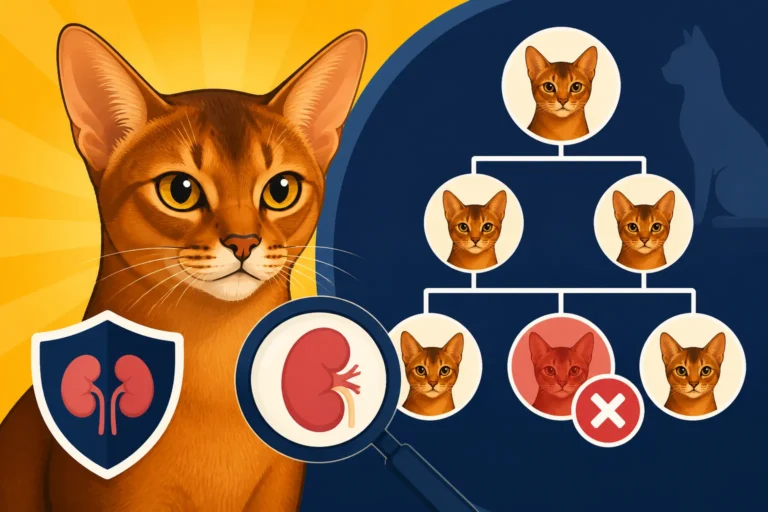
It's also crucial for breeders to track the health outcomes of their lines. While DNA tests cover specific conditions, issues like renal amyloidosis have no gene test and require careful attention to family history. Knowing why Abyssinian lines are judged on family history instead for conditions like amyloidosis emphasizes the holistic approach required.
What to Do with Carrier Cats in a Breeding Program
If you have a beautiful Abyssinian that tests as a carrier, don't despair! This cat can still be a valuable part of a responsible breeding program, but only if paired with a clear mate. This ensures that the gene isn't lost from the gene pool if it's linked to other desirable traits, but it safeguards against producing affected offspring. Many breeders will utilize carrier cats for a limited number of litters with clear mates, then responsibly spay or neuter them and place them in loving pet homes.
The key is to always think several generations ahead. Every breeding decision today impacts the health and vitality of Abyssinians for years to come. By making the responsible choice to never breed two carrier Abyssinians together, breeders can ensure that the beloved Abyssinian continues to thrive as a healthy, vibrant companion for many more generations.
Breeding Outcomes at a Glance
To illustrate the genetic outcomes when considering carrier status, here's a simple table:
| Parent 1 Status | Parent 2 Status | Offspring (Approximate % Distribution) | Risk of Affected Kittens? |
|---|---|---|---|
| Clear (NN) | Clear (NN) | 100% Clear (NN) | None |
| Clear (NN) | Carrier (Nn) | 50% Clear (NN), 50% Carrier (Nn) | None |
| Clear (NN) | Affected (nn) | 100% Carrier (Nn) | None |
| Carrier (Nn) | Carrier (Nn) | 25% Clear (NN), 50% Carrier (Nn), 25% Affected (nn) | HIGH (25%) |
| Carrier (Nn) | Affected (nn) | 50% Carrier (Nn), 50% Affected (nn) | HIGH (50%) |
| Affected (nn) | Affected (nn) | 100% Affected (nn) | VERY HIGH (100%) |
(Note: N represents the normal gene, n represents the mutated gene)
This table clearly demonstrates that only the "Carrier x Carrier" and "Carrier x Affected" (or "Affected x Affected") pairings carry the significant and unacceptable risk of producing kittens that will actually suffer from the genetic disease. Knowing how many Abyssinians carry the PK mutation and how many Abyssinians carry rdAc worldwide underscores the importance of this careful planning.
Disclaimer
The information provided in this article is for educational purposes only and should not be considered a substitute for professional veterinary advice. Always consult with a qualified veterinarian or a certified feline geneticist regarding specific health concerns or breeding decisions for your Abyssinian cats.