Why a Blind Abyssinian Still Needs Its Climbing Shelves
It’s a heartbreaking moment when you realize your vibrant Abyssinian, known for their boundless energy and graceful leaps, is starting to lose their sight. Many owners assume that once a cat goes blind, their climbing days are over, and all those beloved cat trees and wall shelves become dangerous obstacles. But this couldn't be further from the truth. In fact, keeping those vertical spaces accessible and safe is absolutely crucial for your blind Abyssinian's well-being, helping them maintain their joy, confidence, and physical health.
Understanding the Abyssinian's Innate Need for Vertical Space
Abyssinians are not your average lap cats; they are natural athletes, explorers, and observers. Their very nature demands elevation, a place to survey their kingdom, feel secure, and satisfy their intrinsic curiosity. Losing sight doesn't magically erase these deeply ingrained instincts, it just changes how they experience them.
The Abyssinian's Drive to Climb and Observe
From the moment they’re tiny kittens, Abyssinians are driven by an insatiable urge to climb. They’re often called the "clowns of the cat world" precisely because of their aerial antics and their desire to be at the highest point in any room. This isn't just for fun; it's a fundamental part of their being. In the wild, height offers safety from predators and a prime vantage point for hunting. Even as domesticated pets, this instinct persists. They feel safer when elevated, better able to monitor their surroundings even without sight, and it gives them a sense of control over their environment.
Think about your Abyssinian before their vision started to fade. They were likely scaling bookcases, perching on top of doors, and navigating the highest shelves with effortless grace. This behavior isn't just a quirky habit; it's a core component of their mental and physical stimulation. Removing these opportunities when they lose their sight would be akin to removing a crucial part of their identity and daily routine, leading to frustration and a decline in their quality of life. They inherently need height more than they need floor, and this need doesn't diminish with blindness.
How Blindness Doesn't Erase Natural Instincts
It’s easy to assume that a cat who can’t see will simply stop wanting to do things like climb. But an Abyssinian’s energy levels and prey drive are legendary. They are the busiest cat in the house, constantly on the move, investigating every nook and cranny. When sight is lost, other senses, particularly hearing and smell, become incredibly heightened. They still hear the subtle sounds of the house, the footsteps of family members, the rustle of a toy, and their powerful sense of smell helps them map their territory with remarkable accuracy.
While they may no longer visually track a bird outside from a high window perch, they can still feel the sun, smell the fresh air through a screen, and listen to the outdoor sounds. These sensory inputs are vital for their mental health and enrichment. Taking away their climbing structures would force them to spend all their time on the ground, potentially increasing their feelings of vulnerability and confusion, and robbing them of the rich sensory experience that vertical spaces provide. They still want to feel powerful and in control, and elevation helps achieve that.
Adapting Vertical Spaces for a Blind Abyssinian
The key isn't to remove their climbing shelves, but to make them safe and navigable. With a little thought and some strategic modifications, you can ensure your blind Abyssinian continues to enjoy their favorite elevated spots with confidence.
Creating a Safe and Consistent Layout
The most important aspect of adapting your home for a blind Abyssinian is consistency. Cats, especially those who can't see, rely heavily on their spatial memory and a predictable environment. If your cat had established climbing routes before losing their sight, try to keep these as unchanged as possible. Any new climbing structures should be introduced slowly and strategically, always in the same place. Imagine trying to navigate a familiar room with your eyes closed – you’d manage if everything was where you left it, but a moved chair could cause a nasty bump. The same principle applies here.
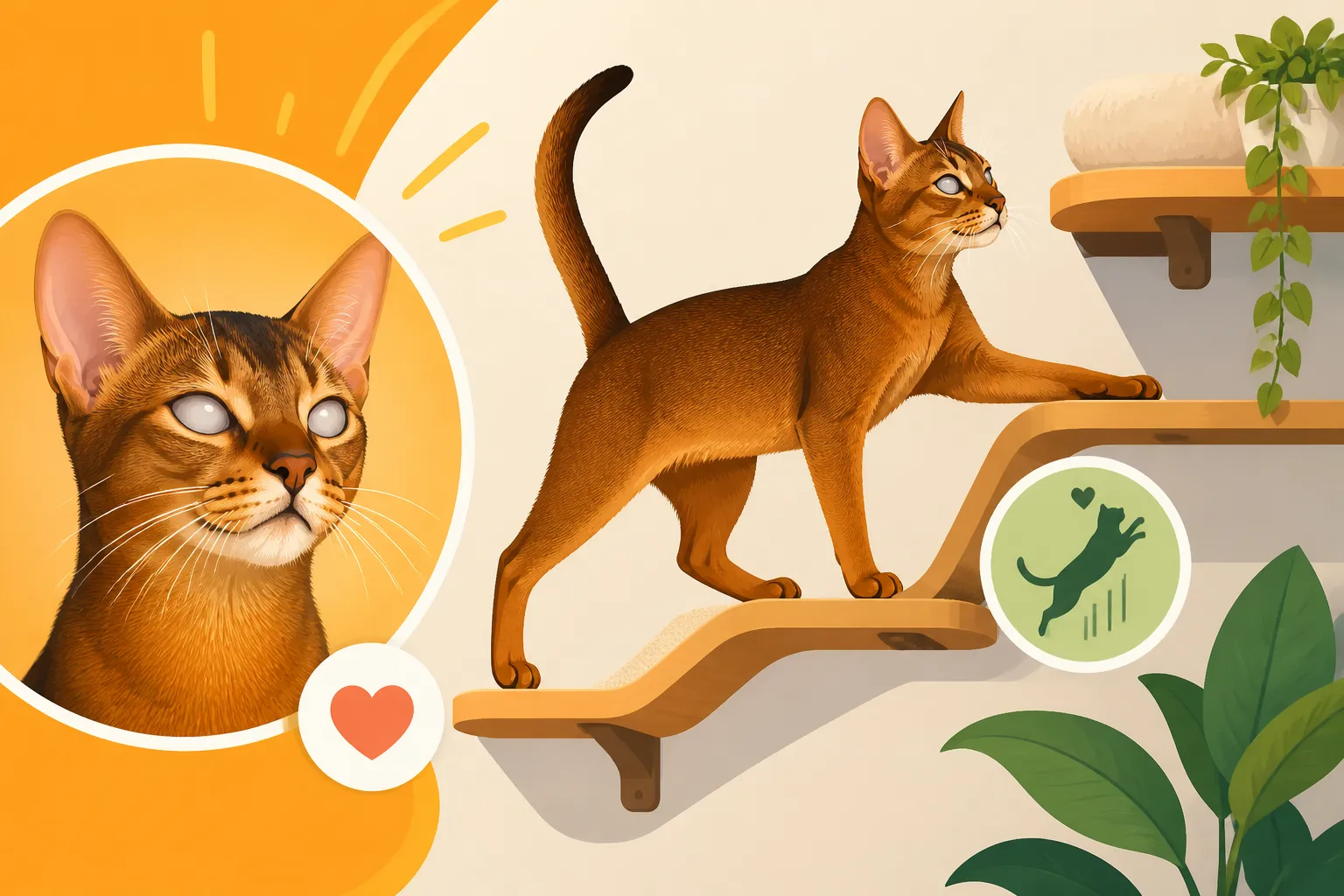
Start by assessing your existing cat trees and wall shelves. Are they sturdy? Do they wobble? A blind cat needs absolute stability. Consider anchoring larger cat trees to the wall. For wall shelves, ensure they are securely fastened and can bear your cat’s weight without any give. Think about the path to and from these elevated spots. Are there clear, unobstructed routes? Remove any clutter from the floor leading up to their favorite climbing areas. This meticulous attention to detail helps them create a mental map of their territory, allowing them to move with surprising grace.
Adding Sensory Cues and Non-Slip Surfaces
Since visual cues are out, we need to lean into other senses. Texture is incredibly important. Consider adding different textures to various levels or steps of your climbing structures. For example, a sisal rope post might lead to a carpeted platform, which then leads to a soft fleece-covered bed on the top shelf. These distinct textures act as tactile markers, helping your Abyssinian orient themselves and understand where they are on their climbing journey. You can even use different scents, like a dab of their favorite Feliway spray on a specific platform, to guide them.
Beyond cues, safety is paramount. Slippery surfaces are a huge no-go for a blind cat. Their paws are incredibly sensitive, and they need to feel secure with every step. Replace any smooth, hard surfaces on platforms or steps with non-slip materials. Carpet remnants, rubber mats, or even textured adhesive strips can work wonders. Ensure the edges of platforms are clearly defined, perhaps with a slight lip or a change in material, to prevent accidental falls. For example, a narrow ledge or a carpet runner along the edge could give them a physical boundary to feel with their paws. Investing in pet-friendly non-slip mats, easily found online or at pet supply stores, can make all the difference. Many pet owners find that a comprehensive pet insurance plan, like one offered by Healthy Paws, can alleviate financial stress if an accidental slip or fall does occur, ensuring immediate vet care without hesitation.
Consider adding small "bumpers" or soft edges to any sharp corners on shelves or platforms. Foam pipe insulation, for instance, can be cut and secured around exposed edges to cushion any accidental collisions. For cats that have lost their sight due to conditions like PRA-rdAc takes an Abyssinian's sight by five, maintaining a consistent environment and safe climbing options can significantly improve their quality of life.
| Feature | Sighted Abyssinian Climbing Shelves | Blind Abyssinian Climbing Shelves |
|---|---|---|
| Placement | Can be introduced freely, often with visual appeal in mind. | Must be consistent, stable, and part of an established, unchanging route. |
| Surfaces | Smooth, hard surfaces (wood, plastic) are often fine. | Crucially non-slip; carpet, rubber, textured mats are essential. |
| Edges | Less critical, minor bumps are usually navigated visually. | Clearly defined, often with a lip, texture change, or soft bumpers. |
| Stability | Good stability is always preferred but minor wobbles may be tolerated. | Absolute, rock-solid stability is non-negotiable; anchor securely. |
| Cues | Primarily visual (location, color). | Primarily tactile and olfactory (different textures, scents). |
| Navigation | Swift, agile, relying on visual scanning. | Slower, deliberate, relying on paw-feel, whiskers, and memory. |
| Introduction | Can explore new structures independently. | Requires slow, guided introduction with positive reinforcement. |
The Psychological and Physical Benefits of Climbing for Blind Cats
Keeping vertical spaces available and safe offers far more than just a place to sit; it’s vital for their mental stimulation, physical health, and overall happiness. A blind Abyssinian isn’t a broken cat; they’re an Abyssinian who experiences the world differently.
Maintaining Mental Stimulation and Reducing Stress
A bored Abyssinian is often a destructive Abyssinian, and boredom can be amplified when their primary sense of sight is gone. Climbing provides immense mental stimulation. Each ascent, each careful paw placement, each sniff of the elevated environment is a puzzle for their brilliant minds to solve. It keeps their brains active, encouraging problem-solving and reinforcing their spatial awareness. This mental engagement is key to preventing frustration, anxiety, and depressive behaviors that can arise from a lack of environmental enrichment.
Furthermore, elevation offers a sense of security and reduces stress. From a high perch, even a blind cat can sense the layout of the room, feeling less vulnerable to unexpected movements from people or other pets. This psychological comfort can significantly lower their stress levels, making them feel more at ease in their home. Think of it as their safe haven, a familiar lookout where they can simply be, without constantly needing to navigate the bustling ground level. This can be especially important if you have other pets or children, as a high perch offers them a retreat.
Promoting Physical Health and Preventing Obesity
Abyssinians are lean, muscular cats built for activity. Even when blind, they retain their need for physical exercise. Climbing is an excellent way to maintain muscle tone, joint flexibility, and cardiovascular health. If a blind cat is confined to ground level, they might become less active, leading to muscle atrophy, weight gain, and a host of associated health problems. Why an Abyssinian's weight loss is never minor, but weight gain can also pose significant risks, especially as they get older.
Encouraging climbing ensures they continue to stretch, balance, and use their entire body. This regular, low-impact exercise is crucial for their longevity and quality of life. An Abyssinian should never be allowed to get heavy, and keeping them active through climbing helps prevent this. It also helps manage their energy levels, which remain incredibly high even without sight, helping them to sleep better and feel more content. Just like sighted cats, they need to burn off that Abyssinian energy. Regular movement and activity also contribute to overall well-being, which is something a pet insurance provider like Healthy Paws understands. Their plans are designed to support your pet's health through all life stages, covering accidents and illnesses that might arise, ensuring you can always prioritize their physical activity and well-being.
Maintaining Safety and Confidence on Elevated Platforms
Guiding your blind Abyssinian to confidently use their climbing shelves involves patience, positive reinforcement, and a keen eye for safety details. It’s a partnership where you provide the secure environment, and they bring their incredible adaptability.
Guiding Your Abyssinian to Their Platforms
When you first introduce a blind Abyssinian to a modified or new climbing structure, or even reacquaint them with an old one, gentle guidance is essential. Don't just place them on a high shelf and expect them to figure it out. Instead, start by guiding them with your hand, letting them sniff and feel each step and platform. Use treats as positive reinforcement, placing them on each level to encourage exploration. Verbal cues, consistently used, can also be incredibly helpful. For example, a gentle "up, up, up" or "good cat" when they make a successful climb.
Repeat this process several times a day in short, positive sessions. Abyssinians are intelligent and learn quickly, but patience is key. Over time, they will build a mental map of the structure and its surrounding environment. You might be amazed at how quickly they adapt. It’s also vital to ensure that what not to move around a blind Abyssinian, especially any furniture that forms part of their usual navigation path to their shelves. Consistency is their superpower.
Ensuring Ongoing Security and Regular Checks
Even after your Abyssinian is confidently using their climbing shelves, ongoing security is paramount. Regularly check the stability of all structures. Are the wall mounts secure? Are the carpeted surfaces still non-slip? Are there any frayed edges or loose parts that could snag a claw or cause a trip? These routine checks are crucial for preventing accidents and maintaining your cat’s confidence. If a shelf starts to wobble or a surface becomes worn, address it immediately.
For older blind Abyssinians, their agility might naturally decline. You may need to consider adapting the structures further, perhaps adding more gradual ramps or wider steps. An old Abyssinian needs lower steps to make climbing less strenuous. It’s also wise to consider their overall health. If your cat is dealing with something like kidney failure, they might be weaker or less coordinated. A vet manages an Abyssinian in kidney failure by addressing various aspects of their health, including mobility. Similarly, if you notice your Abyssinian hesitating or appearing uncertain, consider whether their pain is hiding behind its energy or if arthritis might be setting in. A visit to the vet for a check-up, possibly covered by pet insurance like Healthy Paws, can help rule out any underlying health issues that might affect their balance or willingness to climb.
Remember, a blind Abyssinian still needs its climbing shelves because it provides physical exercise, mental stimulation, and a critical sense of security. It's about empowering them to live a full and enriched life, adapting to their capabilities rather than limiting their world.
Disclaimer
This article is intended for informational purposes only and is not a substitute for professional veterinary advice. Always consult with a qualified veterinarian regarding your Abyssinian's health, particularly concerning any changes in their vision or behavior.