When PK Deficiency First Shows in an Abyssinian
One of the most concerning challenges for Abyssinian cat owners and breeders alike is the unpredictable nature of Pyruvate Kinase (PK) Deficiency. This genetic blood disorder can manifest in subtle, confusing ways, making its early detection a real struggle. This guide aims to demystify when PK Deficiency first shows up in an Abyssinian, helping you recognize the critical signs and understand why early intervention is so vital for their health and well-being.
Understanding Pyruvate Kinase Deficiency in Abyssinians
Pyruvate Kinase Deficiency (PK Deficiency) is a hereditary condition that directly impacts a cat's red blood cells, causing them to break down prematurely. It’s a significant health concern within the Abyssinian breed, and understanding its underlying mechanisms is the first step toward recognizing its early signs.
What is PK Deficiency and How it Affects Red Blood Cells
At its core, PK Deficiency is a metabolic disorder caused by a mutation in the PKLR gene. This gene is responsible for producing the enzyme pyruvate kinase, which plays a crucial role in the glycolysis pathway – essentially, how red blood cells produce energy. Without sufficient, functional pyruvate kinase, these vital red blood cells can't maintain their structure and function properly. They become fragile, leading to their premature destruction, a process known as hemolysis.
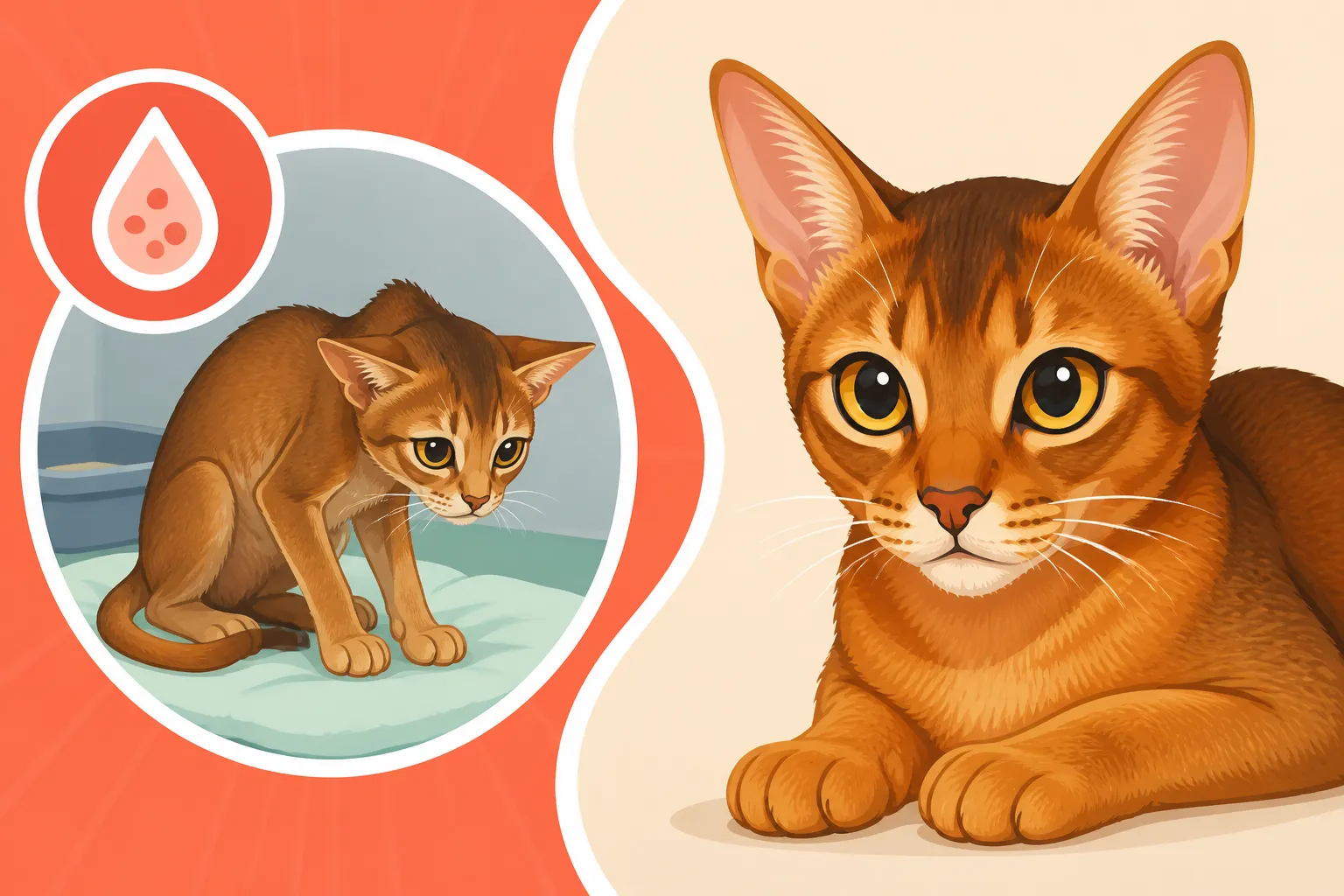
When red blood cells are destroyed too quickly, the body can't produce new ones fast enough to replace them. This results in hemolytic anemia, which is the primary clinical manifestation of PK Deficiency. Imagine your cat's red blood cells as tiny delivery trucks carrying oxygen all over their body. If these trucks are constantly breaking down, less oxygen gets delivered, leading to fatigue and a host of other symptoms. This constant breakdown and attempted regeneration of red blood cells also puts a massive strain on the liver and spleen, which are responsible for filtering out the damaged cells and producing new ones. It’s a vicious cycle that can severely impact an Abyssinian's quality of life. For a deeper dive, you can learn more about What PK Deficiency Does to an Abyssinian's Red Cells.
The Genetic Inheritance of PK Deficiency
PK Deficiency is an autosomal recessive disorder. What this means for Abyssinian owners and breeders is quite important: a cat must inherit two copies of the mutated gene (one from each parent) to actually develop the disease. If a cat inherits only one copy of the mutated gene and one normal copy, they are considered a "carrier." Carriers typically do not show any symptoms of PK Deficiency themselves because their single normal gene copy is usually sufficient to produce enough functional pyruvate kinase. However, a carrier cat can absolutely pass the mutated gene on to their offspring.
This genetic pattern is why testing is so incredibly important for responsible breeding. Two carrier Abyssinians bred together have a 25% chance of producing affected kittens, a 50% chance of producing carrier kittens, and a 25% chance of producing clear kittens. It’s a genetic lottery that can have devastating consequences if not managed. This is also why understanding How a Carrier Abyssinian Differs From an Affected One is crucial, as carriers look perfectly healthy. Reputable breeders will always test their breeding cats to ensure they don't unwittingly perpetuate this painful condition. In fact, Pyruvate Kinase Deficiency Is the Abyssinian's Best Known Test for this reason.
The Subtle Early Signs of PK Deficiency
Recognizing the early signs of PK Deficiency can be incredibly challenging because Abyssinians are naturally energetic, playful cats. Their high-energy demeanor can often mask initial symptoms, making owners dismiss subtle changes as just "being a cat."
Why Early Symptoms Can Be Missed
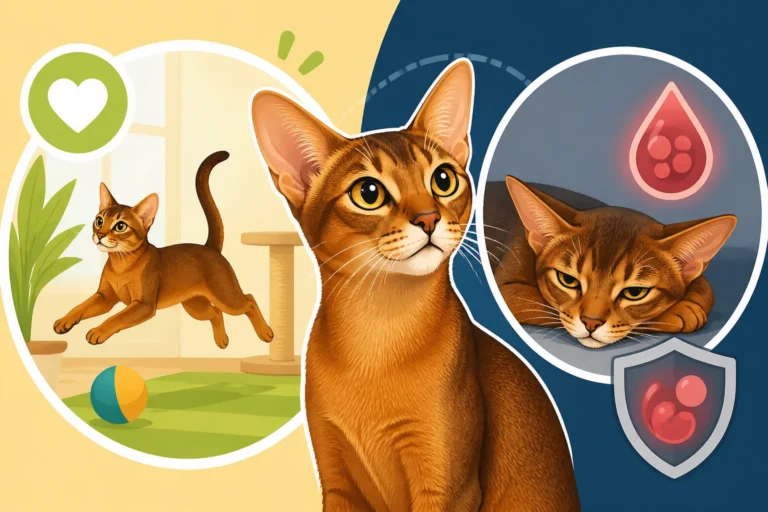
Abyssinians are known for their boundless energy and inquisitive nature. They are often described as the "clowns of the cat world" because they are constantly on the go, exploring, climbing, and playing. This vibrant personality, while endearing, can unfortunately be a double-edged sword when it comes to detecting illness. An Abyssinian might be feeling lethargic due to anemia, but their innate drive to explore or play might push them to mask this fatigue. They might still participate in play sessions, albeit with less enthusiasm or for shorter durations, which can easily be overlooked as simply having an "off day."
Furthermore, the anemic episodes in PK Deficiency are often intermittent. This means that an affected Abyssinian might experience periods of feeling unwell, followed by periods where they appear to be perfectly normal. This waxing and waning pattern makes diagnosis particularly tricky, as owners might only notice symptoms sporadically. A cat might seem tired one week, then back to their usual self the next, giving a false sense of security. It’s a frustrating cycle for owners trying to pinpoint what’s wrong, as the symptoms don't always follow a linear progression. This intermittent nature means you need to pay close attention to subtle behavioral shifts, even if they don't seem consistent day to day.
Intermittent Lethargy and Reduced Activity
Given the Abyssinian's high-octane personality, even a slight dip in their usual energy levels can be a red flag. Intermittent lethargy is one of the most common early indicators of PK Deficiency. While all cats nap, an Abyssinian that is sleeping more than usual, seeming less interested in playtime, or not engaging in their typical high-flying antics, warrants attention. They might still follow you from room to room, but instead of scampering and jumping, they might walk a little slower or prefer to observe from a comfortable perch rather than actively participate.
This isn't always a sudden collapse, but a gradual, subtle decrease in their zest for life. They might start avoiding their favorite climbing tree, or they might not initiate games with their toys as frequently. Perhaps they are less vocal, or their chirps and trills are quieter than usual. It's about noticing a change from their normal. If your Abyssinian, typically a whirling dervish, suddenly opts for more couch time, or cuts play sessions short, it could be a sign that something is amiss internally. This kind of nuanced behavioral change can be easily dismissed if you're not acutely aware of your cat's baseline energy. This is precisely What Intermittent Anemia Looks Like in an Abyssinian and why it's so hard to catch early.
Recognizable Physical Indicators of PK Deficiency
While behavioral changes can be subtle, PK Deficiency also manifests through several physical signs that are more tangible, though still require a keen eye to spot, especially in the early stages.
Pale Gums and Mucous Membranes
One of the most telling physical signs of anemia, and therefore PK Deficiency, is the pallor of an Abyssinian’s mucous membranes. The easiest place to check this is their gums. Healthy cat gums should be a vibrant, healthy pink color. To check your Abyssinian’s gums, gently lift their upper lip. If the gums appear pale pink, off-white, or even bluish-white, it’s a strong indicator of anemia. This paleness is due to the reduced number of red blood cells circulating, meaning less oxygenated blood reaches these tissues.
It’s important to do this check in good lighting and to compare it to what your cat's gums usually look like when they are healthy. Don't panic if they are slightly lighter after a nap; consistency is key. However, persistent paleness should prompt an immediate vet visit. Other areas to check, though often harder to assess, include the insides of their eyelids (gently pull down the lower lid) and even the paw pads, though these can naturally vary in color. Regularly checking these areas as part of your routine grooming can help you establish a baseline and quickly identify any changes. Understanding How Pale Gums Show Up on an Abyssinian can be a critical life-saving skill.
Yellowing of Skin or Eyes (Jaundice)
Jaundice, characterized by a yellowing discoloration of the skin, whites of the eyes (sclera), or mucous membranes, is another potential sign of PK Deficiency. This symptom arises because the rapid destruction of red blood cells releases bilirubin, a yellow pigment, into the bloodstream faster than the liver can process and excrete it. As bilirubin accumulates, it stains the body tissues yellow.
In an Abyssinian, whose coat colors range from ruddy to blue and fawn, a yellow tint to the skin might be difficult to spot, especially under their dense ticking. This is where checking the whites of their eyes or the inside of their ears can be more helpful. A subtle yellow tinge in these areas, even if slight, is a serious indicator that the liver is struggling to cope with the hemolytic process. Jaundice often signals a more advanced stage of red blood cell breakdown and is never something to ignore. If you notice any yellowing, seek veterinary attention immediately.
Enlarged Abdomen and Spleen
In some cases of PK Deficiency, chronic hemolysis can lead to an enlarged spleen. The spleen is a critical organ in the immune system, responsible for filtering blood and removing old or damaged red blood cells. When red blood cells are consistently breaking down at an accelerated rate, the spleen has to work overtime, often becoming enlarged (splenomegaly) as it tries to keep up with the demand. This enlargement can sometimes be felt upon palpation by a veterinarian, and in more severe cases, it might even cause a noticeable distension or swelling in your Abyssinian's abdomen.
An enlarged spleen isn't always visible to the naked eye, particularly in the early stages, but a change in your cat's abdominal contour or sensitivity when touched might be a clue. Coupled with lethargy and pale gums, an abdominal distension should raise concerns. It’s also worth noting that the body may try to compensate for the anemia by increasing red blood cell production in other organs, like the spleen and liver, further contributing to their enlargement. This is a sign that the body is under significant stress and requires prompt veterinary assessment.
When to Suspect PK Deficiency in an Abyssinian Kitten or Young Adult
The age at which PK Deficiency symptoms appear can vary, but it typically emerges during specific life stages, making vigilance during these periods particularly important.
Typical Age of Onset for Symptoms
While PK Deficiency is a congenital condition, meaning a cat is born with the genetic predisposition, the clinical signs usually don't appear immediately at birth. Most affected Abyssinians will start to show symptoms anywhere from six months of age to around five or six years old. There have been instances where symptoms emerged as early as a few weeks post-weaning, but it's more common to see them developing as the cat transitions into adolescence and early adulthood.
The variation in onset age is one of the puzzling aspects of the disease. Some cats might experience a severe anemic crisis early in life, while others might have milder, intermittent episodes that only become more pronounced later on. This is why Why an Abyssinian With PK Deficiency Comes and Goes can be so confusing for owners. It's crucial to understand that even if your Abyssinian kitten seems perfectly healthy during their first few months, they are not necessarily out of the woods if they are genetically affected. Any changes in energy, appetite, or physical appearance during these formative years should be discussed with your vet, especially if you know there's PK Deficiency in their lineage.
The Importance of Breeder Testing and Kitten Screening
Given the genetic nature of PK Deficiency and its potentially late onset, proactive screening is the single most effective way to manage and eventually eradicate this disease from breeding lines. Responsible Abyssinian breeders are acutely aware of this and prioritize genetic testing for all their breeding cats. Before you even consider bringing an Abyssinian kitten home, you should be asking the breeder for proof of genetic testing for both parent cats. They should be able to provide clear certificates confirming that the parents are "clear" or at least "carrier" (with careful breeding practices to avoid affected offspring).
A "clear" result means the cat does not carry the mutated gene at all and cannot pass it on. A "carrier" cat, while healthy, should only be bred with a "clear" cat to ensure no affected kittens are produced. If a breeder cannot provide these test results, or seems evasive about them, it should be a significant red flag. Investing in a kitten from a breeder who performs thorough genetic screening not only gives you peace of mind but also supports ethical breeding practices that work towards healthier generations of Abyssinians. This goes beyond just PK Deficiency; understanding Why an Abyssinian Breeder Should Have Tested Before You Buy covers a range of crucial health considerations. Genetic testing is a small cost upfront that can save thousands in vet bills and heartache down the line.
Differentiating PK Deficiency from Other Conditions
Many symptoms of PK Deficiency, such as lethargy and anemia, can mimic other feline health issues. Therefore, proper diagnostic testing is crucial to pinpoint the exact cause of your Abyssinian’s symptoms.
Similarities with Other Anemic Conditions
Anemia itself isn't a disease; it's a symptom of an underlying problem. While PK Deficiency causes hemolytic anemia, there are numerous other reasons an Abyssinian might become anemic. For instance, certain parasitic infections, like flea infestations (especially in kittens), can lead to significant blood loss and subsequent anemia. Autoimmune diseases can cause the body to mistakenly attack its own red blood cells, much like PK Deficiency, but through a different mechanism. Nutritional deficiencies, chronic kidney disease, or even certain cancers can also lead to anemia.
Because the symptoms are so non-specific (lethargy, pale gums, reduced appetite), your vet will need to perform a thorough diagnostic workup to rule out other potential causes. This typically starts with a comprehensive physical examination and a detailed discussion of your cat's history. It’s vital to provide your vet with as much information as possible about when you first noticed symptoms, how they've progressed, and any relevant family history regarding PK Deficiency. This comprehensive approach is essential to avoid misdiagnosis and ensure your Abyssinian receives the correct treatment. This is why Which Four Diseases the Abyssinian Actually Carries is a good resource for understanding the breed's broader health landscape.
The Role of Diagnostic Testing
When PK Deficiency is suspected, your veterinarian will typically recommend a series of diagnostic tests. The first step is usually a complete blood count (CBC) to confirm the presence and severity of anemia and to look for signs of red blood cell regeneration. If anemia is regenerative, it indicates the bone marrow is trying to compensate by producing new red blood cells, which is typical for hemolytic anemia. This helps differentiate it from non-regenerative anemia caused by bone marrow issues.
The definitive diagnostic test for PK Deficiency is a genetic DNA test. This test can be performed on a simple cheek swab or blood sample and will determine if your Abyssinian has two copies of the mutated PKLR gene, confirming they are affected. It can also identify carriers. Many specialized veterinary laboratories offer this specific genetic panel. For example, testing through a reputable lab like Optimal Selection or Wisdom Panel can provide clear results. If you suspect your Abyssinian is showing signs, it's really important to get them checked out quickly. Why a Lethargic Abyssinian Needs Blood Work Fast cannot be overstated, as early diagnosis can significantly impact management and prognosis.
Living with an Abyssinian Diagnosed with PK Deficiency
Receiving a diagnosis of PK Deficiency can be disheartening, but it's not necessarily a death sentence. With proper management and a dedicated care plan, many affected Abyssinians can still lead fulfilling lives.
Management and Prognosis
Unfortunately, there is no cure for PK Deficiency in Abyssinians, as it is a genetic disorder. However, the condition can often be managed, focusing on supportive care during anemic crises. The specific prognosis varies greatly depending on the severity of the disease and how frequently anemic episodes occur. Some cats experience very mild, infrequent episodes and can live a relatively normal lifespan, while others have more severe, life-threatening crises.
Treatment during an anemic crisis often involves hospitalization, intravenous fluids to maintain hydration, and sometimes blood transfusions to rapidly boost red blood cell count. In more chronic cases, a splenectomy (surgical removal of the spleen) might be considered. The spleen is a major site of red blood cell destruction, and removing it can sometimes reduce the rate of hemolysis, improving the cat’s quality of life and reducing the need for transfusions. However, a splenectomy doesn't cure the underlying genetic defect and carries its own risks. It's a complex decision that needs to be made in close consultation with your veterinarian, weighing the potential benefits against the surgical risks. You can read more about Whether an Abyssinian With PK Deficiency Can Live Normally.
Proactive Care and Monitoring
Managing an Abyssinian with PK Deficiency is a lifelong commitment that requires vigilant proactive care. Regular veterinary check-ups are paramount, even when your cat seems well, to monitor their blood work and overall health. Your vet might recommend routine blood tests to keep an eye on their packed cell volume (PCV), which is a measure of red blood cell concentration. Any downward trend could indicate an impending crisis.
Owners must become attuned to their Abyssinian's subtle cues. Keeping a daily log of their activity levels, appetite, water intake, and gum color can help you identify changes quickly. A sudden decrease in energy, a loss of appetite, or noticeable paleness in their gums should prompt an immediate call to your vet. Providing a calm, low-stress environment is also beneficial, as stress can sometimes trigger or worsen anemic episodes. Ensuring a high-quality, nutritious diet and consistent hydration (perhaps with a water fountain) supports overall health. While managing a chronic condition can be costly, having pet insurance like a policy from Healthy Paws can significantly alleviate the financial burden of ongoing veterinary care, medications, and potential emergency treatments. This kind of planning makes sure you can always prioritize your Abyssinian's health without hesitation.
The Broader Impact of PK Deficiency on Abyssinian Breeding
Understanding PK Deficiency isn't just about managing affected cats; it's about safeguarding the future health of the entire Abyssinian breed. Responsible breeding practices are the cornerstone of this effort.
How Genetic Testing Shapes Breeding Decisions
Genetic testing has revolutionized how breeders approach hereditary diseases like PK Deficiency. Breeders committed to the health of the Abyssinian line utilize DNA tests as a non-negotiable part of their breeding program. By testing all potential breeding cats, they can identify carriers and clear cats, allowing them to make informed decisions. The goal is always to reduce the incidence of affected kittens. This means avoiding breeding two carriers together at all costs.
A responsible breeder might choose to breed a carrier cat with a clear cat. In this scenario, while none of the offspring would be affected by the disease, approximately 50% of the kittens would still be carriers. These carrier kittens would then need to be tested before being sold as breeding cats, or ideally, sold as pet-only with a spay/neuter contract. The ultimate aim is to phase out the carrier gene responsibly without severely limiting the genetic diversity of the breed. This meticulous approach ensures that genetic disease traits are steadily reduced across generations.
The Success of Screening Programs in Reducing Incidence Rates
The widespread adoption of genetic testing for PK Deficiency by responsible Abyssinian breeders has had a profoundly positive impact. Over the years, the incidence rate of affected Abyssinians has significantly decreased. Many registries and breed clubs now require proof of PK Deficiency testing for cats to be registered or shown. This collective effort demonstrates how dedicated breeders, guided by scientific understanding, can make a real difference in the health of a breed.
However, the work is never truly done. It's a continuous commitment to screen, educate, and make ethical breeding choices. Owners purchasing Abyssinians have a role to play too, by always insisting on seeing genetic test results for the parents. Supporting breeders who actively test helps reinforce these crucial health initiatives. While it might seem like a lot of information, knowing How Many Abyssinians Carry the PK Mutation shows just how vital this ongoing screening truly is for the breed's future.
Beyond the Diagnosis: Long-Term Care and Quality of Life
A diagnosis of PK Deficiency can be a shock, but it doesn't mean your Abyssinian can't live a joyful, if carefully managed, life. It shifts your focus from prevention to optimizing their quality of life.
Adjusting Your Abyssinian's Lifestyle
Living with an Abyssinian affected by PK Deficiency means making certain lifestyle adjustments to minimize stress on their system. Since anemia can cause fatigue, it’s important to respect their energy levels. While Abyssinians are known for their athleticism and love for climbing, an affected cat might need modifications. Provide easy-access ramps or lower shelves to their favorite high spots, reducing the effort required to reach them. Ensure their environment is consistent and predictable to minimize anxiety.
Nutritional support is also key. Your vet might recommend specific diets or supplements to support red blood cell production and overall health. Adequate hydration is always essential for kidney health and general well-being. During periods of low energy, ensure their food and water bowls are easily accessible, perhaps even elevated if they're struggling to bend down comfortably. Remember, a quieter Abyssinian is often an unwell Abyssinian, so keep an eye on their typical playful routine. If your pet insurance, like Healthy Paws, covers chronic conditions, it can help with the costs of specialized diets or ongoing supplements, which can add up over time.
The Role of Regular Veterinary Oversight
Ongoing, regular veterinary care is non-negotiable for an Abyssinian with PK Deficiency. Beyond routine check-ups, your vet will help you establish a monitoring schedule for blood work, particularly PCV, to track their anemia. They can also advise on the best course of action during anemic episodes, whether it involves supportive care at home, medications, or hospitalization. Establishing a strong, trusting relationship with a vet who understands the nuances of PK Deficiency is invaluable.
It's about having a proactive partnership. Your vet can educate you on recognizing subtle signs of a downturn, empower you with knowledge about their condition, and guide you through difficult decisions, such as whether a splenectomy is appropriate. They are your primary resource for managing this condition effectively and ensuring your beloved Abyssinian maintains the best possible quality of life for as long as possible. The dedication to consistent medical care, supported perhaps by a robust pet insurance plan like those from Healthy Paws, ensures that you can respond quickly and effectively to any changes in your Abyssinian’s health, maximizing their comfort and lifespan. How an Anemic Abyssinian Is Treated goes into more detail about the specific interventions vets use.
Disclaimer
This article is intended for informational purposes only and does not constitute veterinary advice. Always consult with a qualified veterinarian for any health concerns or before making any decisions about your pet's medical care.