Why an Abyssinian Should Not Roam Outdoors
It's completely understandable to look at your vivacious Abyssinian, bounding with energy and curiosity, and think, "Wouldn't they just love to explore the great outdoors?" Many of us have felt that pang of guilt or that desire to give our beloved cats the 'freedom' of nature. But the truth is, while your Abyssinian is a whirlwind of activity, allowing them to roam freely outside exposes them to an astonishing array of dangers that drastically outweigh any perceived benefits. This guide will walk you through the very real, often heartbreaking reasons why an Abyssinian is simply not built for unsupervised outdoor adventures, and how to keep their adventurous spirit thriving safely indoors.
The Instincts vs. Reality: Why an Abyssinian's Nature Isn't Suited for Outdoor Roaming
Abyssinians are incredibly active, intelligent, and curious cats, often described as the clowns of the cat world. They possess a keen sense of adventure and a seemingly endless well of energy. It's easy to project human ideas of "freedom" onto them, imagining them gracefully hunting in fields or exploring vast territories. However, their very nature, which makes them so delightful indoors, can become a significant liability when they are exposed to the uncontrolled environment of the outdoors. They're built for speed and agility, yes, but not necessarily for the harsh realities of modern suburban or rural life.
Prey Drive Meets Urban Dangers
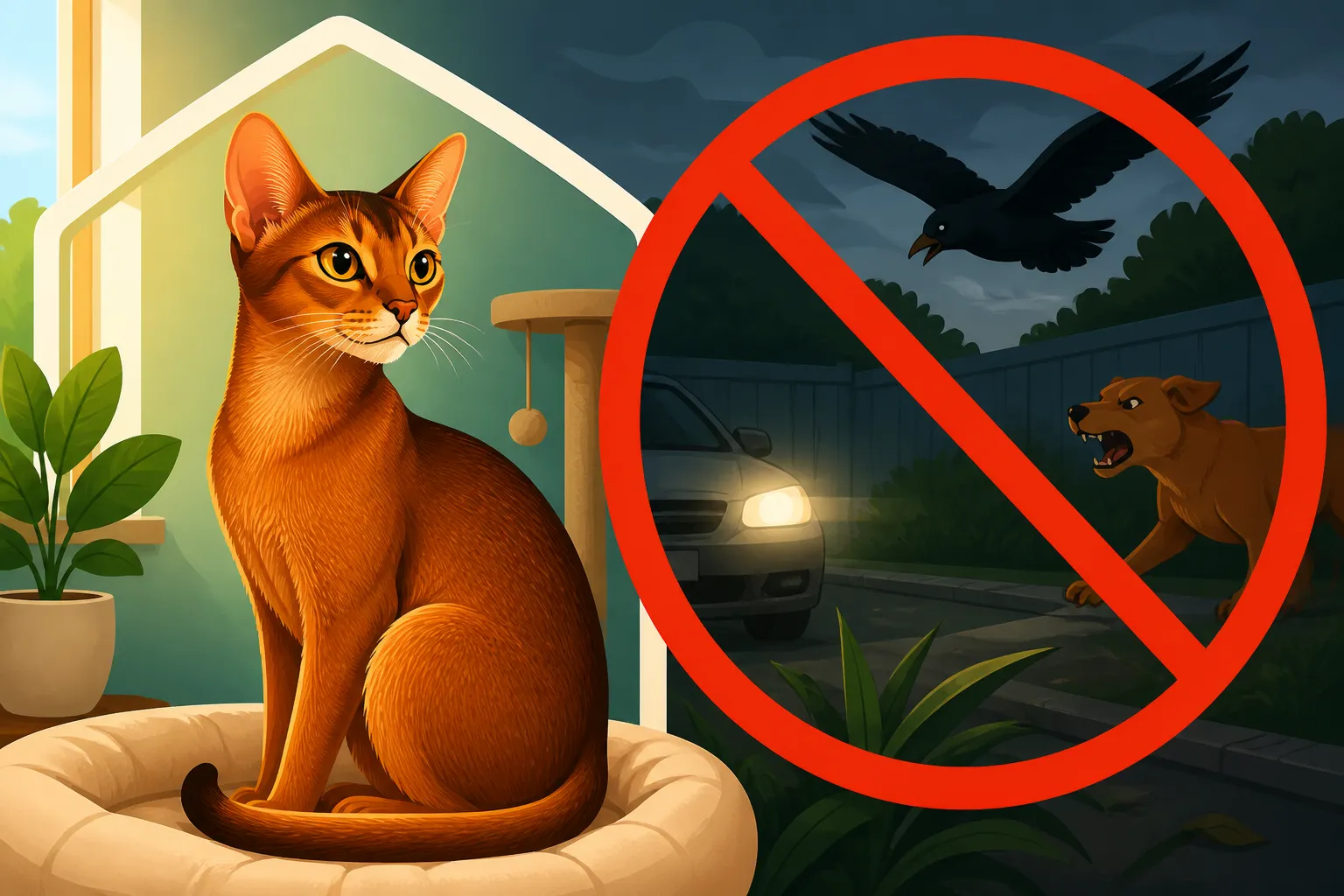
Your Abyssinian has an incredibly strong prey drive. Those intense, focused eyes and twitching tail when a fly buzzes past are not just for show; they're echoes of generations of skilled hunters. This instinct, while fascinating to watch with a wand toy, becomes a genuine hazard outside. A scurrying mouse, a chirping bird, or even a fluttering leaf can trigger that primal chase response, sending your cat hurtling across roads, through thorny bushes, or into unfamiliar territories without a second thought for their own safety. They're so engrossed in the hunt that they lose awareness of their surroundings.
Imagine your Aby, mid-chase, darting into the street without looking. Cars are a cat's number one killer in many areas, and an Abyssinian's speed and agility, which might help them evade a slower predator, are often no match for a fast-moving vehicle. They're also often quite bold and don't instinctively fear humans or other animals they haven't encountered, which can lead them into dangerous situations with unfriendly dogs or even people who don't have their best interests at heart. Their striking looks can also make them targets for theft, a chilling thought for any owner. This combination of powerful instinct and lack of fear for artificial dangers makes outdoor roaming a gamble no Aby owner should take.
The Lure of Exploration and the Lack of Fear
Abyssinians are explorers by nature. They want to be involved in everything you do, inspecting every new grocery bag, supervising every chore, and scaling every available height. This innate curiosity and drive to explore means that if given the opportunity, they will wander far from home. A standard garden fence, which might contain a less adventurous cat, is often just a suggestion for an Abyssinian. They are renowned for their climbing prowess and their ability to figure out how to open doors and gates. How High an Abyssinian Will Climb is truly astonishing, and they'll apply this skill to any boundary.
This boundless curiosity, coupled with their inherent lack of fear of the unknown, can lead them into all sorts of predicaments. They might climb trees and get stuck, explore derelict buildings, or venture into neighbors' yards where they are not welcome. They don't inherently understand property lines or the dangers posed by aggressive territorial cats, dogs, or even pest control traps set for other animals. Their intelligence means they learn quickly, but sometimes the lessons they learn outdoors come with painful consequences. It's a tough balance to strike, wanting to satisfy their inquisitive minds while keeping them safe, but the unsupervised outdoors is simply too unpredictable for a cat so eager to investigate.
Unseen Threats: Health Risks and Parasites Lurking Outdoors
Beyond the immediate physical dangers, allowing your Abyssinian to roam outside opens them up to a host of health risks that can range from irritating to life-threatening. An indoor cat, particularly one from a reputable breeder, typically enjoys a much healthier life free from many common feline ailments. The outdoor environment, unfortunately, is a petri dish of potential problems, many of which are invisible until your cat is already suffering.
Viruses and Bacterial Infections
The outdoor world is a communal space for cats, both wild and domesticated, and with that comes the sharing of illnesses. Your Abyssinian could easily come into contact with a sick cat, or even just contaminated surfaces, and contract a serious viral or bacterial infection. Feline Leukemia Virus (FeLV) and Feline Immunodeficiency Virus (FIV) are devastating, incurable diseases spread through bites and close contact, common among outdoor cat populations. While vaccines exist for some, they aren't 100% effective, and the risk of exposure is dramatically higher for outdoor cats. Which Vaccines an Indoor Abyssinian Actually Needs is a shorter list than what an outdoor cat would need, and even then, some diseases have no vaccine.
Beyond the big two, there's Feline Infectious Peritonitis (FIP), upper respiratory infections, panleukopenia (feline distemper), and a host of other debilitating conditions. Treating these diseases can be incredibly expensive and emotionally taxing, often leading to prolonged suffering for your beloved pet. The stress of illness can also impact their famously high energy levels, and Why a Lean Abyssinian Hides Illness Longer Than a Heavy Cat means you might not even notice the symptoms until the disease is quite advanced. Keeping them indoors dramatically reduces their exposure to these silent, yet deadly, threats.
The Constant Battle Against Parasites
Even if your Abyssinian avoids fights and diseases, the battle against parasites is relentless for outdoor cats. Fleas, ticks, ear mites, and various internal parasites (worms) are ubiquitous outdoors. While monthly preventatives can help, they are not foolproof, and the sheer volume of exposure can overwhelm even the best medications. Fleas can cause intense itching, skin infections, and even transmit tapeworms. Ticks carry diseases like Lyme disease or anaplasmosis, which can be difficult to diagnose and treat in cats.
Internal parasites are often contracted from hunting small prey like rodents or birds, or simply by ingesting contaminated soil or feces. These worms can cause weight loss, vomiting, diarrhea, and in severe cases, even organ damage. Imagine the constant worry, the regular deworming schedules, and the potential for these parasites to infest your home. It’s a never-ending cycle that an indoor Abyssinian rarely, if ever, has to contend with. Investing in a robust flea and tick preventative, available on platforms like Amazon, for an indoor-only cat might seem less urgent, but for an outdoor rover, it's a desperate, constant need.
The Dangers of the Wild (and Not-So-Wild) World
The romantic notion of a cat "living free" often glosses over the harsh realities of what "free" actually entails. It means freedom to face dangers alone, freedom to starve, freedom to be injured, and freedom to be at the mercy of unpredictable elements and beings. For a breed as precious and distinctive as the Abyssinian, these risks are amplified.
Predators, Cars, and Human Malice
While your Abyssinian is a swift and agile creature, they are still relatively small and vulnerable in the grand scheme of the outdoor food chain. Coyotes, foxes, large birds of prey, and even aggressive dogs can view a free-roaming cat as prey. These encounters are often swift and brutal, leaving little chance for escape. Beyond direct predators, the constant threat of cars is omnipresent. Even in seemingly quiet residential areas, a moment of distraction, a sudden chase, or simply misjudging the speed of a vehicle can lead to tragedy.
And then there's the unfortunate reality of human malice. Not everyone is a cat lover. There are individuals who might intentionally harm cats, or who might not be careful with poisons, traps, or even just their own pets. There are also well-meaning people who might mistake your Abyssinian for a stray and take them in, effectively stealing your pet. The unique appearance and high value of an Abyssinian make them particularly attractive targets for theft. What an Abyssinian Costs Over Fifteen Years is a significant investment, both financially and emotionally, and allowing them to roam exposes that investment to incredible risk.
The Risk of Getting Lost or Stolen
Abyssinians are curious and adventurous, traits that can lead them far from home. Their excellent sense of direction might not be enough to navigate complex suburban landscapes, or if they are startled and run in a panic, they can become disoriented. If they wander too far, or if someone intentionally takes them, finding them can be incredibly difficult, even with microchips and local posters. They don't wear collars well, given their active nature and ability to get caught on things, making it harder for someone to identify them as a beloved pet.
The grief of a lost cat is profound, and for an Abyssinian, whose unique appearance makes them stand out, the fear of theft is a constant shadow. Stories abound of pedigree cats being taken for breeding purposes or simply for their monetary value. While we all hope for the best in people, the reality is that the unsupervised outdoors offers too many opportunities for bad things to happen. This is why many Abyssinian breeders include clauses in their contracts specifying that the cat must be kept indoors. The Test Results an Abyssinian Breeder Owes You often come with the implicit understanding that you'll protect that investment.
Why Indoor Enrichment is Not a Compromise, But a Necessity
It's tempting to think that keeping an Abyssinian indoors is depriving them, but for this breed, a carefully curated indoor environment provides a safer, more stimulating, and ultimately more fulfilling life. Rather than limiting their world, you are enhancing it by controlling the variables and catering to their specific needs. It’s about channeling their natural behaviors into safe, acceptable outlets.
Creating a Vertical Paradise Indoors
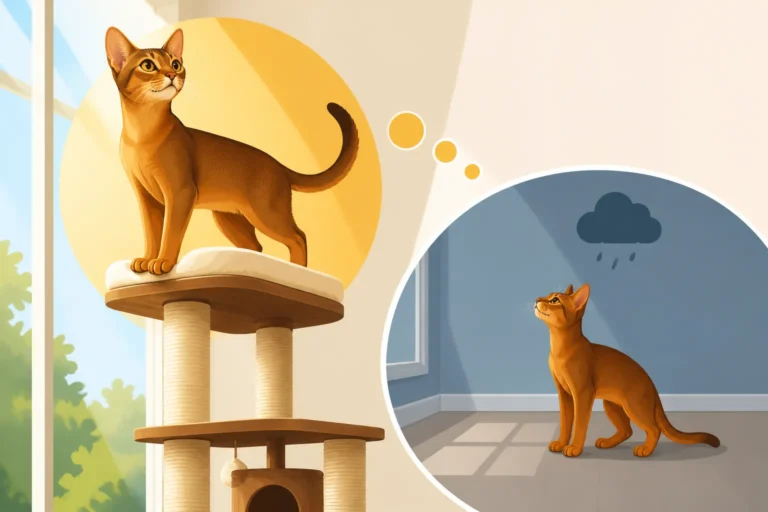
Abyssinians thrive on vertical space. Their love of climbing and perching on high points is legendary. Rather than letting them scale trees outdoors, which comes with risks of falling or getting stuck, you can create an indoor "vertical paradise." Tall cat trees, wall-mounted shelves, and clear pathways to the tops of bookcases or cabinets are essential. They want to oversee their domain from above, and providing these opportunities satisfies their instinctual need for height and vantage points. A multi-level cat tree, perhaps something robust you found on Amazon, can become their personal mountain range.
These climbing opportunities not only provide physical exercise but also significant mental enrichment. They allow your Abyssinian to explore, survey, and feel secure in their territory. Rotate toys, use puzzle feeders, and engage in interactive play sessions with wand toys to keep their sharp minds engaged. An Abyssinian Needs Height More Than It Needs Floor is a mantra to live by for this breed, and embracing it indoors is key to their happiness.
The Joy of Supervised Outdoor Access
If you still feel your Abyssinian needs a taste of the outdoors, there are safe and controlled ways to provide it. Supervised outdoor access means you are present and actively monitoring their environment. This could involve leash training your Abyssinian and taking them for walks in a safe, enclosed yard or a quiet park. It takes patience and the right kind of harness – a secure, escape-proof one is crucial for an Aby – but many Abyssinians take to it wonderfully. It provides mental stimulation from new sights, sounds, and smells, without the inherent dangers of free-roaming.
Another fantastic option is a "catio" or outdoor enclosure. These secure, predator-proof spaces allow your Abyssinian to enjoy fresh air, sunshine, and the sounds of nature without any risk of escape or exposure to dangers. They can be elaborate custom-built structures or simpler modular units, available from various pet retailers including Amazon. A well-designed catio provides all the sensory benefits of the outdoors while keeping your precious Abyssinian completely safe. How an Abyssinian Uses a Catio is a beautiful demonstration of how they can enjoy the best of both worlds, safely and happily.
Comparative Table of Indoor vs. Outdoor Abyssinian Lifestyles
To really drive home the differences, let's look at a quick comparison:
| Feature/Risk Factor | Indoor Abyssinian Lifestyle | Outdoor Roaming Abyssinian Lifestyle |
|---|---|---|
| Average Lifespan | 12-15+ years; protected from many dangers. | Often significantly shorter (2-5 years common) due to risks. |
| Exposure to Illness | Minimal; typically limited to household exposure. | High risk of FeLV, FIV, URIs, fungal infections, etc. |
| Parasite Load | Low; easily managed with preventatives if exposure occurs. | Constant battle with fleas, ticks, mites, and worms. |
| Accidental Injury | Low risk; primarily from household hazards. | High risk from cars, falls, fights, traps. |
| Predator Threat | Virtually none within the home. | High risk from coyotes, foxes, large birds, aggressive dogs. |
| Getting Lost/Stolen | Very low, unless they escape. | Significant risk of becoming lost or intentionally taken. |
| Environmental Control | Fully controlled; temperature, hazards, safety. | Uncontrolled; weather, toxins, unkind humans. |
| Enrichment Source | Owner-provided toys, vertical spaces, interactive play. | Hunting, exploring, but also constant threat avoidance. |
| Vet Costs | Primarily preventative and routine care. | Often involves emergency care, complex disease treatment. |
This table clearly illustrates why prioritizing an indoor-only lifestyle, with safe outdoor enrichment options, is truly the most responsible and loving choice for an Abyssinian.
Disclaimer
This article is for general informational purposes only and does not constitute professional advice. Laws, prices and regulations vary by location and change over time. Consult a qualified professional for guidance on your specific situation.