How to Turn an Abyssinian’s Fetching Into a Routine
Does your Abyssinian dash through your home, picking up various objects and then giving you that mischievous, wide-eyed look before tearing off? If so, you're not alone! These energetic, intelligent cats often have a natural inclination for fetching, but it can sometimes feel less like a game and more like a high-speed chase. This guide is all about harnessing that natural drive and transforming it into a delightful, enriching routine that benefits both you and your Abyssinian.
The Natural Fetcher: Why Abyssinians Love the Game
Abyssinians are not your average couch potato cats. They are renowned for their boundless energy, their intense curiosity, and a keen intelligence that demands constant stimulation. This isn't a breed content to merely watch the world go by from a sunny windowsill, though they certainly enjoy a good sunbath. Their inherent need for activity and interaction makes them prime candidates for interactive games, with fetching often rising to the top of their list of favorites. It's a game that speaks to their very nature.
Tapping into their Instinctive Play
Think about the wild ancestors of our domestic cats – they were hunters, driven by instinct to stalk, chase, pounce, and retrieve their "prey." While your Abyssinian is far removed from the savanna, those primal instincts are still very much alive and well, just adapted for a modern home. Fetching, at its core, simulates a hunting sequence: the visual stimulus of the moving toy, the thrill of the chase, the "capture," and then, ideally, the return of the prize. When an Abyssinian engages in fetching, they're not just playing; they're fulfilling a deep-seated biological drive in a safe and enriching way. It's truly a beautiful thing to witness their focus and agility in action. You might even find that Whether an Abyssinian Fetches Naturally is a question with a resounding "yes" for many of them.
The Joy of Interaction
Beyond the raw instinct, fetching provides a fantastic opportunity for bonding. Abyssinians thrive on interaction with their human companions. They want to be involved in whatever you're doing, and a game of fetch offers a structured, positive way for them to connect with you. It's not just about tossing a toy; it's about mutual engagement, shared excitement, and the positive reinforcement that comes from your praise and attention. When you consistently engage with your Abyssinian through fetching, you're building trust and strengthening your relationship. It’s a language of play that both of you can understand and enjoy, reducing boredom and potential destructive behaviors that can arise from an unfulfilled need for engagement.
Building the Foundation: Steps to a Consistent Fetch Routine
Turning spontaneous toy-chasing into a reliable routine takes patience and consistency. Remember, your Abyssinian is incredibly smart, but they're also independent thinkers. We're not "training" them in the traditional sense as much as we're guiding their natural tendencies and making the game as rewarding as possible.
Choosing the Right "Prey"
The first step is critical: finding the right fetch toy. Not all cat toys are created equal for fetching. An Abyssinian needs something lightweight enough to carry comfortably in their mouth, yet durable enough to withstand their enthusiasm. Size matters too; something too large will be cumbersome, and something too tiny might be a choking hazard. Many Abyssinian owners find success with crinkly balls, soft spring toys, or even tightly crumpled paper balls. The texture and sound can also play a huge role in capturing their attention. You'll want to experiment a bit to see what truly sparks their interest. Online retailers like Amazon offer a vast selection, making it easy to try out a few different options without leaving your home. Consider items that are easy for them to grip and carry, and perhaps even ones that make a slight sound when moved, mimicking small prey. For more ideas on what might work, check out Which Retrieve Toys an Abyssinian Brings Back.
Starting Simple: The "Toss and Retrieve" Method
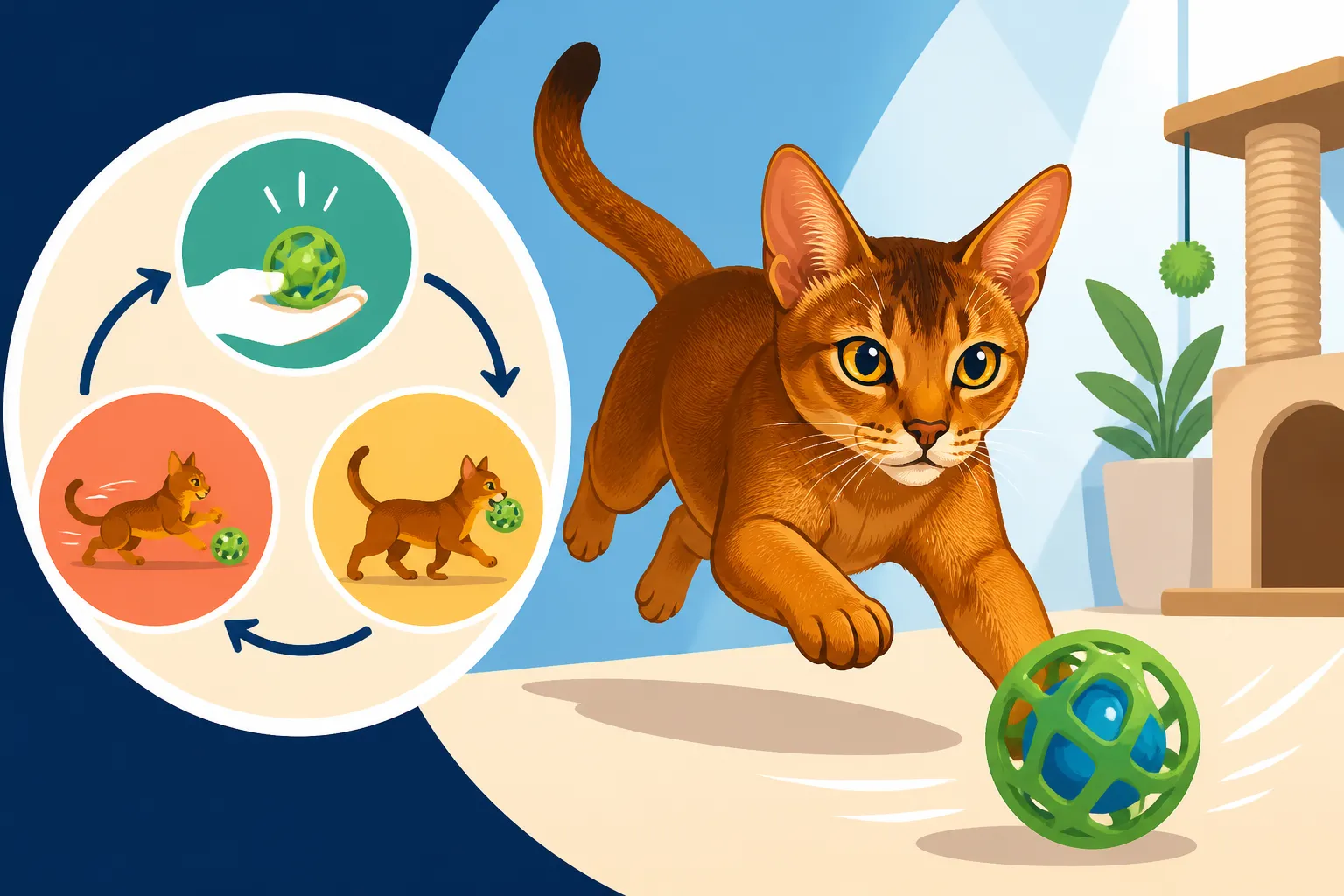
Once you have your ideal toy, begin in a quiet, confined space with minimal distractions. A hallway or a small room works perfectly. Sit on the floor and gently toss the toy a short distance away from you, just a few feet. The goal here isn't to get them to bring it back to you yet, but to encourage them to chase and pounce on it. When they engage with the toy, offer immediate verbal praise ("Good kitty!" "Yes!"). If they pick it up, even better! Let them carry it around for a moment. Then, try to gently lure them back towards you with another treat or by wiggling your fingers enticingly, showing them how exciting you are.
As soon as they come close, or even drop the toy within reach, offer a small, high-value treat and enthusiastic praise. The key is positive reinforcement for any progress. Don't chase after them to get the toy back; that turns it into a game of "keep away," which, while fun for them, isn't helping establish a routine. Patience is your best friend here. This initial stage is all about building positive associations with you, the toy, and the act of retrieving.
Introducing the "Bring It Back" Command
Once your Abyssinian consistently chases and picks up the toy, you can start adding a verbal cue. As they pick up the toy, say a clear, consistent command like "Bring it!" or "Fetch!" (Choose one and stick to it!). As they head back towards you, continue offering encouragement. If they drop the toy nearby, immediately reward them with a treat and praise. Gradually, you can start requiring them to bring it a little closer before they get their reward.
You might find that clicker training is incredibly effective for Abyssinians, given their intelligence and responsiveness to clear signals. The clicker marks the exact moment they perform the desired action (dropping the toy near you), making the association much stronger. Then, the treat follows. Many cats respond wonderfully to this method. For more on this, you might find How Long It Takes to Clicker Train an Abyssinian helpful, and also exploring Which Cue an Abyssinian Learns First for general training principles. Remember, keep sessions short – 5-10 minutes max – and end on a high note.
Overcoming Obstacles and Keeping It Engaging
Even with the best intentions, establishing a fetch routine isn't always smooth sailing. Abyssinians are clever, and sometimes their cleverness can lead to playful deviations from the "rules" of fetch. The good news is, with a little understanding and some strategic adjustments, you can keep the game fun and on track.
When Your Abyssinian Won't Bring it Back
Ah, the classic "I caught it, it's mine now!" scenario. This is incredibly common and can be frustrating when you're trying to establish that retrieve part of the routine. Your Abyssinian's instinct is to "kill" and keep their prize. To counteract this, try the "two-toy" method. Have two identical (or very similar) fetch toys. When your cat picks up the first one and runs off, instead of trying to get it back, simply toss the second toy in a different direction. Many Abyssinians, driven by that chase instinct, will drop the first toy to go after the new one. As they drop the first toy, praise them and reward. Then, pick up the discarded toy and repeat. This teaches them that dropping the toy near you leads to more fun, rather than the game ending.
Another trick is using food motivation. Once they retrieve the toy, offer them a small, enticing treat, like a freeze-dried chicken bit. They'll have to drop the toy to eat the treat, reinforcing the "drop" action. Keep in mind that Why an Abyssinian Learns Faster When It Is Hungry is a real phenomenon, so timing your sessions before a meal can sometimes boost their motivation.
Maintaining Interest: The Importance of Variety and Session Length
Abyssinians, for all their energy, can get bored with repetition. If your cat suddenly loses interest or seems less enthusiastic about fetching, it might be time to shake things up. Keep fetching sessions relatively short, perhaps 5-10 minutes, several times a day. This keeps the game exciting and prevents them from getting "burnt out." Ending a session while they're still eager for more is always a good strategy.
Rotate their fetch toys, too. Don't use the same exact toy every single time. Having a stash of different lightweight balls, crinkly toys, or even wadded-up paper (many Abyssinians adore crumpled paper!) will keep things fresh. Amazon is a great place to find new and interesting cat toys to add to your rotation. Just like us, variety is the spice of life for them too! You'll find more insights into managing their play energy in How Much Play an Abyssinian Needs Each Day and practical tips in How to Rotate an Abyssinian's Toys.
Expanding the Playing Field: Taking Fetch to New Heights
Once your Abyssinian has the hang of fetching on flat ground, it's time to leverage their incredible climbing abilities. Abyssinians love vertical space, and incorporating it into fetch can add a whole new level of mental and physical stimulation. Try tossing a toy up to a low shelf on a cat tree, or onto a wall-mounted perch. They'll get the thrill of chasing and the added challenge of climbing to retrieve it. This not only makes the game more dynamic but also provides excellent exercise for their powerful hind legs. Just ensure all climbing surfaces are sturdy and safe for their enthusiastic leaps and bounds.
Common Fetch Toys for Abyssinians
Here's a quick comparison of some popular fetching toys that often hit the mark with Abyssinians:
| Toy Type | Material | Advantages | Disadvantages | Best For |
|---|---|---|---|---|
| Crinkly Balls | Mylar, plastic | Lightweight, makes enticing sound, easy to carry | Can be easily lost under furniture, less durable | Initiating chase, stimulating prey drive |
| Spring Toys | Plastic | Bounces unpredictably, engaging chase | Can be batted and lost, might not be "picked up" | High-energy chases, independent play |
| Felt Balls | Wool, felt | Soft on teeth, good grip, quiet | Can absorb odors, some cats ignore them | Gentle fetchers, silent play |
| Fur Mice | Real/faux fur | Mimics real prey, satisfying texture | Can shed, quickly destroyed by persistent chewers | Strong prey drive, tactile enjoyment |
| Scrunchie/Hair Tie | Fabric/elastic | Lightweight, easy to pick up, often a household hit | Can unravel, potential ingestion hazard if unsupervised | Impromptu play, budget-friendly "toy" |
Sustaining the Routine: Long-Term Engagement
A fetching routine isn't just a phase; it can be a lifelong source of joy and exercise for your Abyssinian. As they age, their energy levels might shift, but their need for engagement often remains.
Adapting to Age and Energy Levels
A young Abyssinian kitten might fetch with relentless enthusiasm for short bursts, while a senior Abyssinian might prefer fewer, gentler tosses. It's crucial to observe your cat and adjust the intensity and duration of play accordingly. Don't push them if they're tired; keep it positive. For an older cat, tossing the toy onto a lower perch or closer to them respects their changing physical capabilities while still offering that mental stimulation. The essence of the game—the interaction and the satisfaction of the "hunt"—remains valuable at any age. Even an older cat who has slowed down can benefit immensely from the mental engagement of a few gentle fetch sessions a day.
Integrating Fetch into Daily Life
The best routines are the ones that become a natural part of your day. Maybe it's a quick 5-minute session first thing in the morning to burn off some of that pre-dawn energy, another short burst during your lunch break, and a longer, more involved session in the evening before winding down. Using a timed feeder for their meals can also help; after they eat, they'll have energy to burn, making it a perfect time for a play session.
By making fetch a predictable and rewarding part of your Abyssinian's day, you're not just providing exercise; you're building a deeper bond and ensuring their active, intelligent minds are always engaged. And honestly, there's nothing quite like the sight of your Abyssinian proudly trotting back with their favorite toy, ready for another round. It's a testament to their unique charm and the incredible connection you share.
Disclaimer
This article is for general informational purposes only and does not constitute professional advice. Laws, prices and regulations vary by location and change over time. Consult a qualified professional for guidance on your specific situation.