Why an Abyssinian Sells on a Non Breeding Agreement
Non-breeding agreements protect Abyssinian health standards, prevent backyard breeding, and require spaying or neutering for pet cats.
The price tag is the smallest number.
Purchase and adoption costs, insurance, routine vet care, food and grooming budgets, and the emergencies that change the total.
Non-breeding agreements protect Abyssinian health standards, prevent backyard breeding, and require spaying or neutering for pet cats.
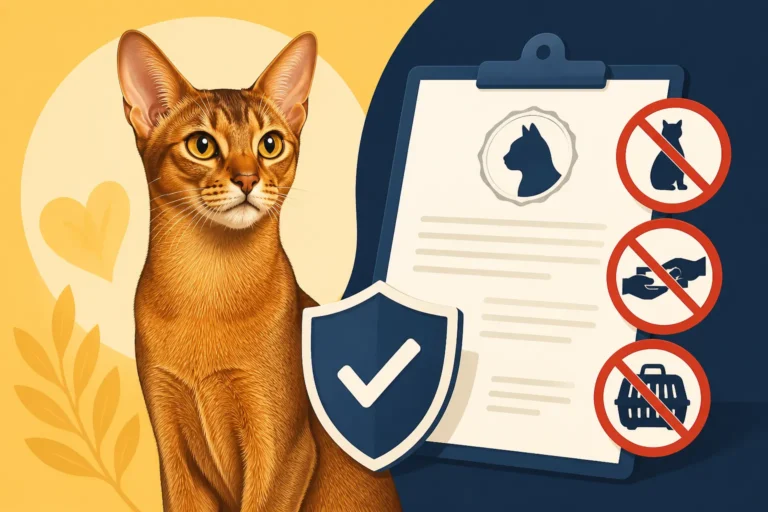
Abyssinian breeder contracts restrict breeding, outdoor access, and require spaying or neutering, health guarantees, and returns.
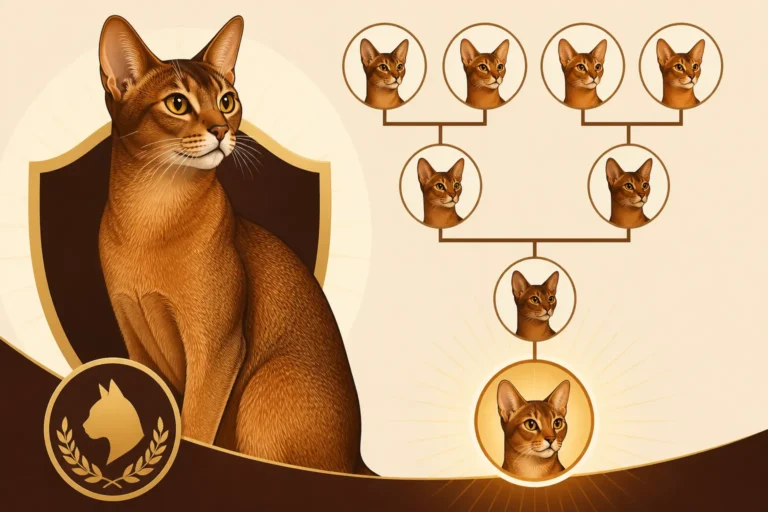
An Abyssinian pedigree spanning four generations reveals inherited health risks, carrier status, and longevity trends for prospective owners.
Abyssinian cat registries determine lineage, health requirements, and breed standards through official pedigree and registration certificates.
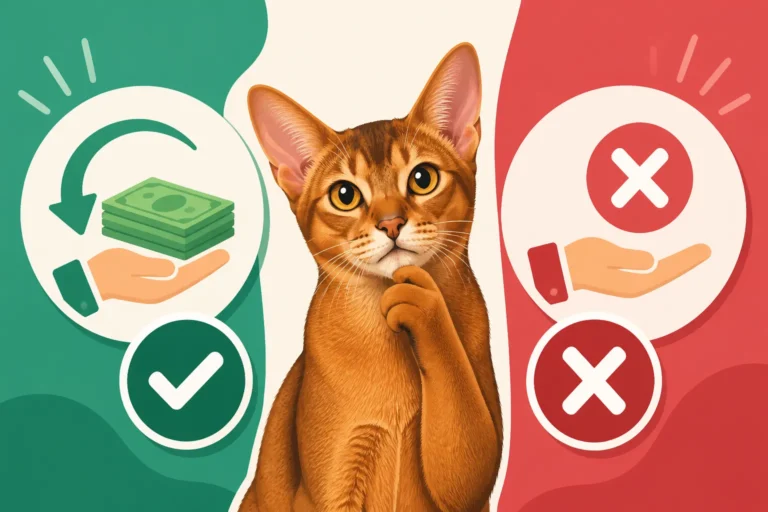
Abyssinian deposit refundability rules vary, explaining when payments are non-refundable, conditional, or transferable to future litters.
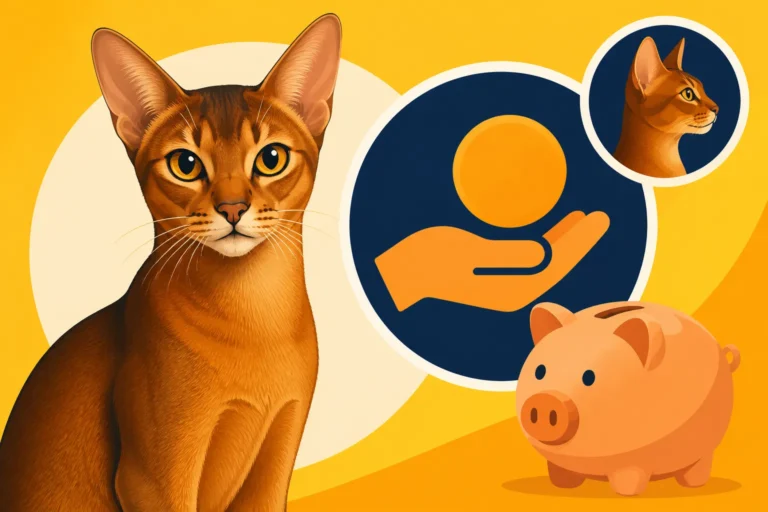
Abyssinian kitten deposits vary by breeder reputation, color, and location, usually requiring a clear written contract before purchase.
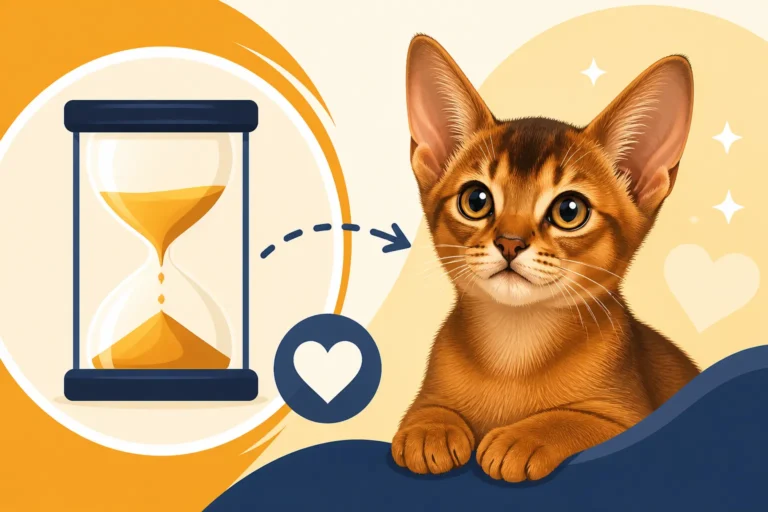
Abyssinian kitten waiting times typically span months due to small litters of two to four kittens and strict responsible breeding standards.
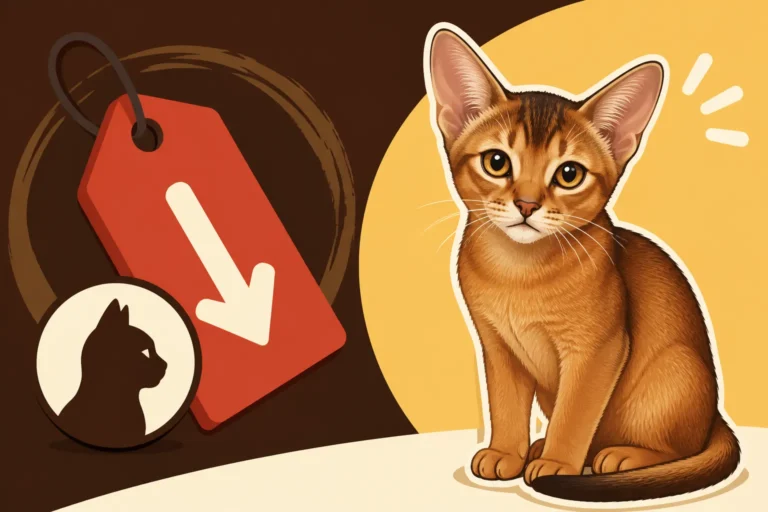
Older Abyssinian kittens between four and eight months old are discounted because breeders face higher overhead costs and a smaller buyer pool.
Retired Abyssinian breeding queen costs depend on age and health checks, offering a more affordable alternative to pricey kittens.
Chocolate Abyssinian cat recognition by the Cat Fanciers Association and the coat genetics behind official breed color standards.