How a Kidney Diet Buys an Abyssinian Time
Specialized kidney diets help manage renal disease in Abyssinians by controlling protein and restricting phosphorus to extend life.
Know what to watch for.
Breed-specific conditions, screening and DNA tests, what surgery actually costs, and the daily habits that stretch a healthy lifespan.
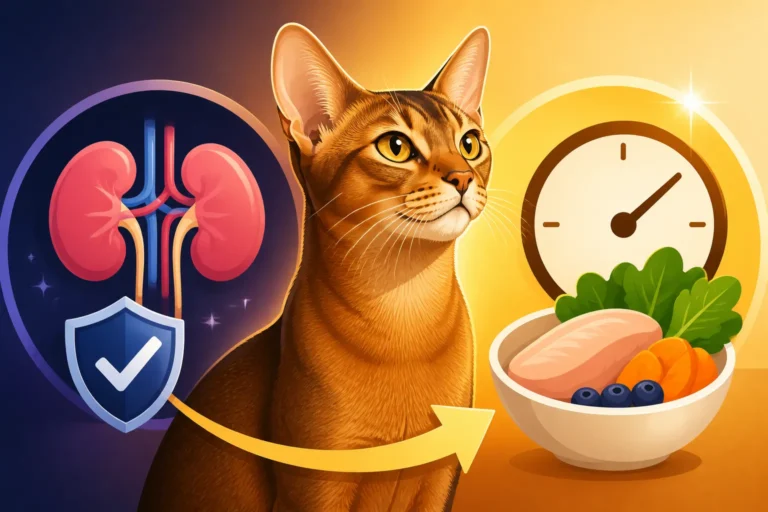
Specialized kidney diets help manage renal disease in Abyssinians by controlling protein and restricting phosphorus to extend life.
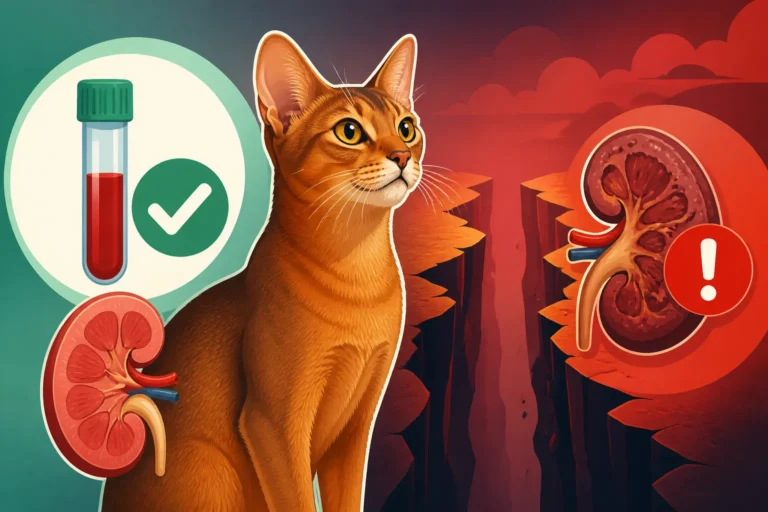
Normal creatinine levels fail to clear an Abyssinian because kidney function declines before routine blood tests show damage.
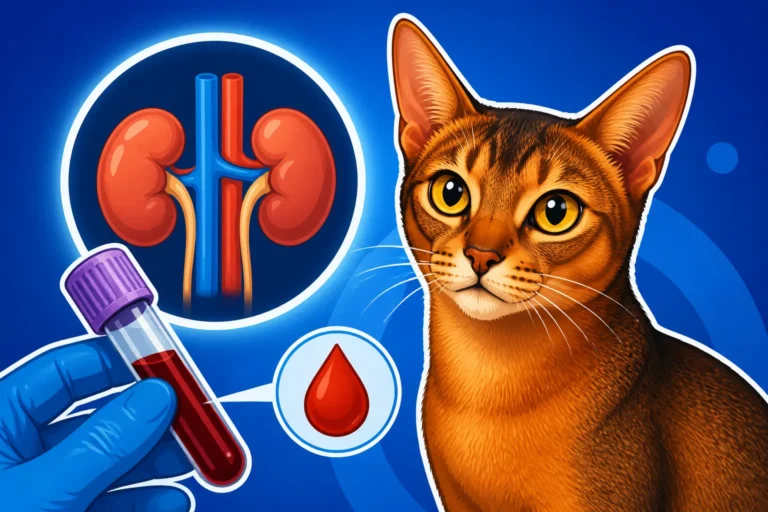
Abyssinian kidney health monitoring through SDMA values detects disease early, before traditional markers like creatinine rise.

The urine protein creatinine ratio test identifies early kidney damage in Abyssinians before blood values shift significantly.

Excessive thirst in young Abyssinians signals kidney disease and other serious health issues requiring prompt veterinary care.
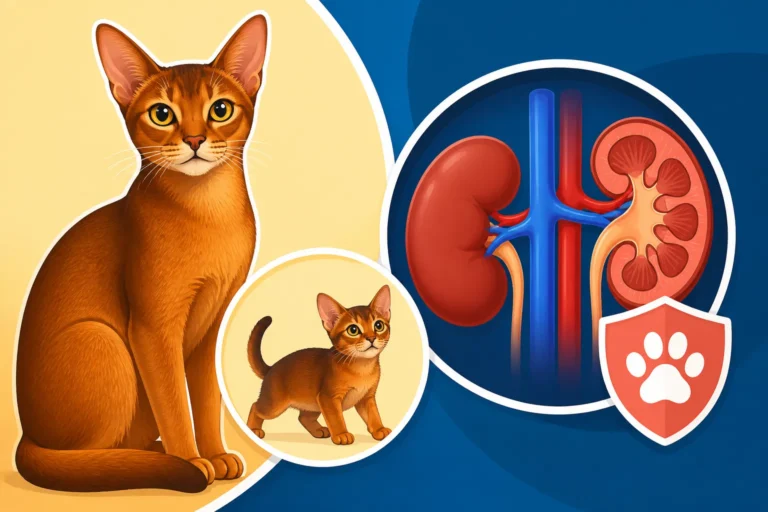
Abyssinian kidney signs can appear as young as two or three years old, revealing subtle changes in thirst, urination, and appetite.
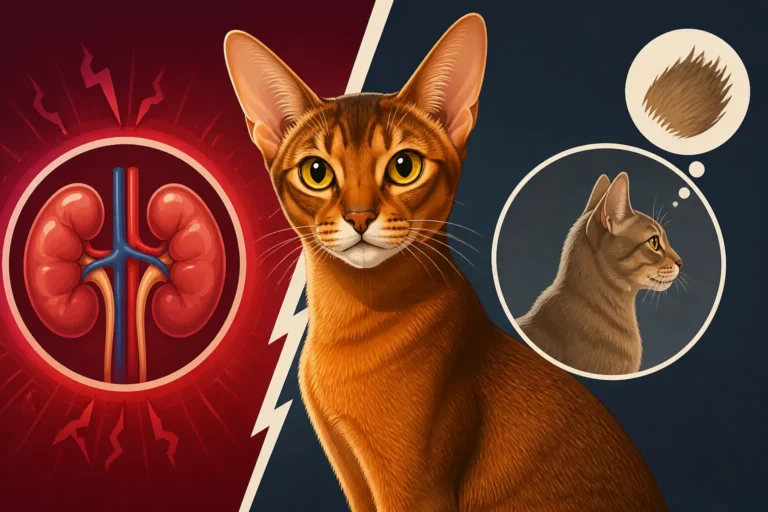
Renal amyloidosis in Abyssinians causes silent kidney failure before the coat dulls, as blood and urine tests detect early decline.
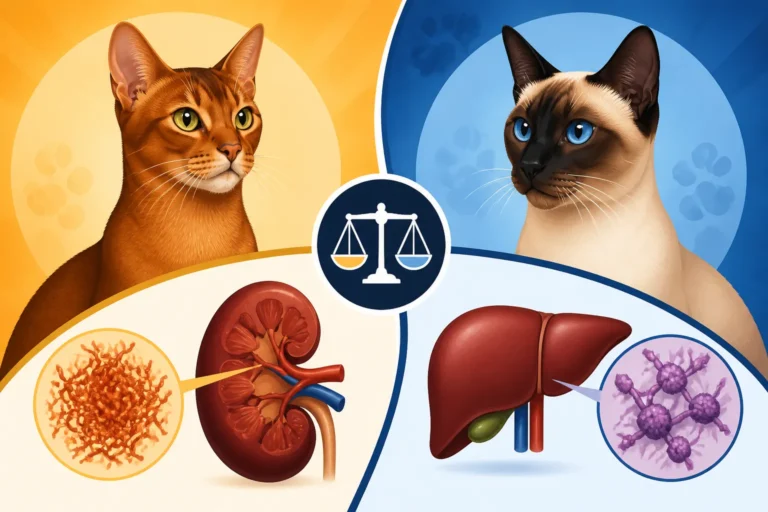
Abyssinian renal amyloidosis destroys kidney function, while Siamese hepatic amyloidosis causes liver failure and internal bleeding.
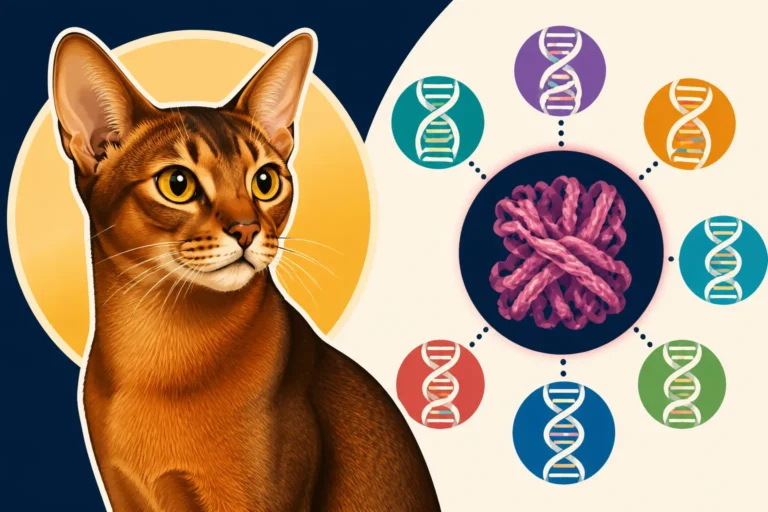
Abyssinian amyloidosis is a complex polygenic disease affecting kidneys, requiring family history tracking and supportive veterinary care.
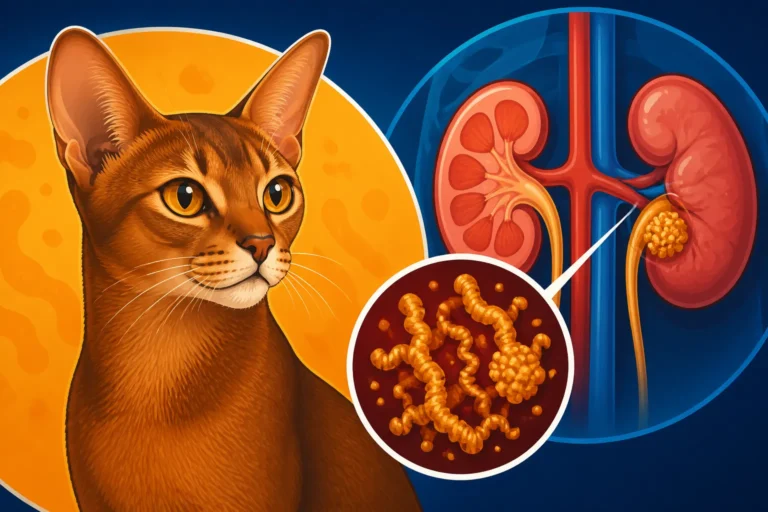
Abnormal amyloid protein deposits target Abyssinian kidneys due to a genetic predisposition, causing progressive organ failure without a test.