Why Two Clear Abyssinian Parents End the Problem
Bringing an Abyssinian cat into your home is an incredibly exciting prospect, filled with dreams of their playful antics and loving companionship. However, the joy of finding your perfect kitten can quickly be overshadowed by the lurking worry of genetic diseases, especially when you hear terms like "carrier" or "affected." It’s a frustrating reality for many prospective owners, as nobody wants to fall in love with a kitten only to face heartbreaking health challenges down the line. This comprehensive guide is here to unravel the complexities of Abyssinian genetic health, focusing on why two parents cleared of specific genetic conditions truly do put an end to many of these concerns for their offspring, offering you peace of mind and a healthier future with your new family member.
Understanding Genetic Testing in Abyssinians
The world of cat genetics can feel like a labyrinth, especially when you're trying to make sense of what all those certificates and acronyms mean for your future companion. But understanding the basics of genetic testing is the first crucial step in ensuring your Abyssinian kitten has the best possible start in life. It's about proactive care, not just reactive treatment.
The Importance of DNA Panels
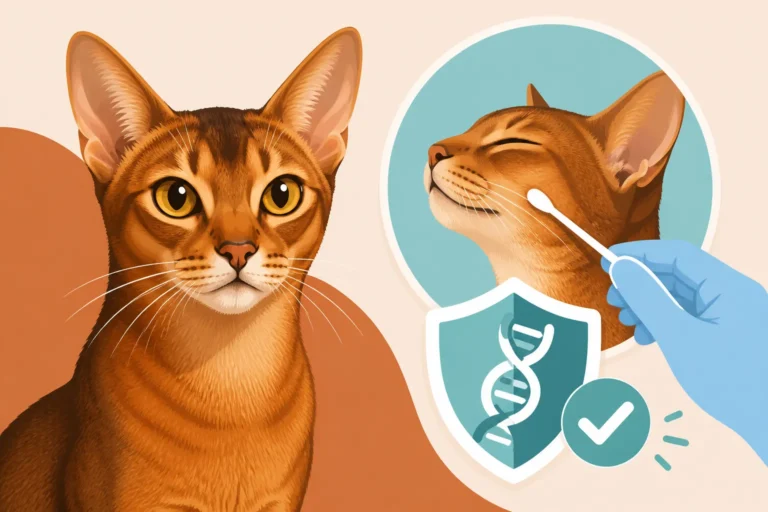
Think of a DNA panel as a comprehensive health report card for your cat's genetic makeup. For Abyssinians, there are specific conditions that reputable breeders screen for, most notably Pyruvate Kinase Deficiency (PKD) and Progressive Retinal Atrophy (PRA-rdAc). These aren't just obscure medical terms; they represent real threats to an Abyssinian's health and quality of life. A DNA test can definitively tell you if a cat is clear, a carrier, or affected by these conditions. This information is invaluable because it allows breeders to make informed decisions about pairings, aiming to produce kittens that are genetically clear of these inherited diseases. Knowing How the Abyssinian's DNA Panel Is Ordered can help you understand the process breeders go through to ensure their cats are healthy.
Without these tests, breeding becomes a roll of the dice. You might unknowingly pair two carriers, leading to affected kittens that will develop severe health issues. The responsibility lies with the breeder to conduct these tests and understand their results. It’s not just about the parents, but about safeguarding the entire breed's health for generations to come.
How Abyssinian Test Results Are Interpreted
When you look at a genetic test certificate, you'll typically see three possible results for each condition: "Clear," "Carrier," or "Affected."
- Clear: This means the cat does not have the gene mutation for the disease and cannot pass it on to its offspring.
- Carrier: This means the cat carries one copy of the gene mutation but does not show symptoms of the disease itself. They can, however, pass this gene on to approximately 50% of their offspring.
- Affected: This means the cat has two copies of the gene mutation and will likely develop the disease. They will pass on one copy of the mutation to all of their offspring.
For recessive conditions like PRA-rdAc and PKD, a kitten can only be affected if it inherits a copy of the faulty gene from both parents. This is where the power of "clear" parents comes into play. If both parents are "Clear," there's no faulty gene to pass on, guaranteeing that their kittens will also be "Clear." This simple understanding is a game-changer for ethical breeding and for giving future owners immense peace of mind. For a deeper dive into one such condition, consider reading about What PK Deficiency Does to an Abyssinian's Red Cells.
The Limitations of Genetic Testing
While DNA testing is a phenomenal tool, it's essential to remember it's not a silver bullet for all health issues. Genetic tests specifically target known gene mutations linked to particular diseases. This means that if a disease doesn't have a known genetic marker, or if its inheritance pattern is more complex, a DNA test won't provide answers. The most significant example of this in Abyssinians is Renal Amyloidosis, a devastating kidney disease for which there is currently no DNA test. This condition, which can cause kidney failure in young Abyssinians, highlights the importance of asking breeders about their lines' health history, not just relying on DNA certificates alone. It's why responsible breeders keep meticulous records and are transparent about their cats' pedigrees and any known health issues in their lines. This gap in testing is exactly Why No Gene Test Exists for Abyssinian Amyloidosis, making family history even more critical.
This isn't to diminish the value of genetic testing; rather, it’s to emphasize that it’s one vital component of a holistic approach to responsible breeding and kitten selection. When discussing the financial aspects of health, it's wise to consider comprehensive pet insurance providers like Healthy Paws, which can help cover unexpected veterinary costs, as no cat is entirely immune to health challenges, genetic or otherwise.
The Specifics of Progressive Retinal Atrophy (PRA-rdAc)
Progressive Retinal Atrophy, often abbreviated as PRA, is a term that strikes fear into the hearts of many cat owners, and rightly so. For Abyssinians, the specific form is called PRA-rdAc, and it's a condition that leads to eventual blindness. It's a cruel reality for affected cats, and understanding it can help you appreciate why genetic screening is so vital.
What PRA-rdAc Does to an Abyssinian's Sight
PRA-rdAc is a degenerative eye disease that affects the photoreceptor cells in the retina – those rods and cones responsible for detecting light and color. In simple terms, these cells, which are critical for vision, gradually waste away. The "rdAc" stands for "rod-cone dysplasia, early onset, Abyssinian cat type," indicating that both rod and cone cells are affected, and the signs can begin to show relatively early in life. Cats are naturally more reliant on their rods for low-light vision, so one of the first things owners might notice is their Abyssinian struggling in dim environments. This condition is progressive, meaning it gets worse over time, ultimately leading to complete blindness. It's a heartbreaking journey, watching a vibrant, active cat slowly lose its ability to navigate its world. You can learn more about How PRA-rdAc Blinds an Abyssinian Slowly for a detailed understanding of the progression.
Imagine your spirited Abyssinian, typically darting around with boundless energy, suddenly hesitating before jumping or becoming more cautious in unfamiliar spaces. These are often the subtle early indicators.
Recognizing the Early Signs of Vision Loss
Catching the signs of PRA-rdAc early can be challenging because cats are incredibly adept at compensating for vision loss, especially in a familiar environment. They rely heavily on their other senses, like hearing and smell, and their memory of a space. However, as the disease progresses, certain behavioral changes become more apparent. Often, the first noticeable change is a decline in night vision. Your Abyssinian might start bumping into furniture in low light, become reluctant to go into dark rooms, or seem more startled by sudden movements. Their pupils might also appear more dilated than usual, even in normal light, as their eyes try to gather more light to compensate.
As the condition advances, their daytime vision will also deteriorate. They might become clumsier, miss jumps they once aced, or show increased anxiety in new places. Owners might also notice a reflective "eye shine" when light hits their eyes, or an ophthalmologist can observe retinal changes during an examination. This is why regular vet check-ups are so important, as sometimes a professional can spot subtle changes before you do. For more insights, refer to What an Abyssinian Does First as Its Sight Goes.
The Genetic Mechanism of PRA-rdAc
PRA-rdAc is an autosomal recessive inherited disorder. What does "autosomal recessive" mean? It's fairly straightforward once you break it down.
- Autosomal: This means the gene responsible for the disease is located on a non-sex chromosome, so it affects both males and females equally.
- Recessive: This is the key part. It means a cat must inherit two copies of the defective gene—one from each parent—to develop the disease. If a cat inherits only one copy, it will be a "carrier" and won't show symptoms, but it can still pass the gene on.
This mode of inheritance explains why two seemingly healthy, vision-perfect parents can produce a blind kitten if both happen to be carriers. This is the very frustration that genetic testing aims to alleviate. By testing breeding cats, breeders can identify carriers and avoid pairings that risk producing affected kittens. The CEP290 gene is specifically linked to PRA-rdAc, and testing for this gene is now standard practice for reputable Abyssinian breeders, making it possible to essentially eliminate the disease from a breeding line.
Why Clear Parents are the Ultimate Assurance for PRA-rdAc
This brings us to the core of the matter: the profound relief and certainty that comes from knowing both parents of your potential kitten are genetically "clear" for conditions like PRA-rdAc. It’s not just a nice-to-have; it’s a non-negotiable for responsible breeding.
Understanding Recessive Inheritance
Let’s quickly revisit that recessive inheritance pattern. Imagine genes as pairs of shoes, where you need a matching pair of faulty shoes to have the "problem." If you only have one faulty shoe, you can still walk fine, but you could pass that faulty shoe on.
- Clear Cat: Has two normal copies of the gene (NN). They don't have the disease, and they can't pass on the defective gene.
- Carrier Cat: Has one normal copy and one defective copy (ND). They don't have the disease (because the normal gene "masks" the defective one), but they can pass on the defective copy.
- Affected Cat: Has two defective copies of the gene (DD). They will develop the disease.
The danger arises when two carriers (ND x ND) are bred together. In this scenario, there's a 25% chance with each kitten that it will inherit two defective genes (DD) and be affected. There's also a 50% chance it will be a carrier (ND) and a 25% chance it will be clear (NN). This genetic roulette is what responsible breeders strive to avoid entirely.
The Power of Two Clear Parents
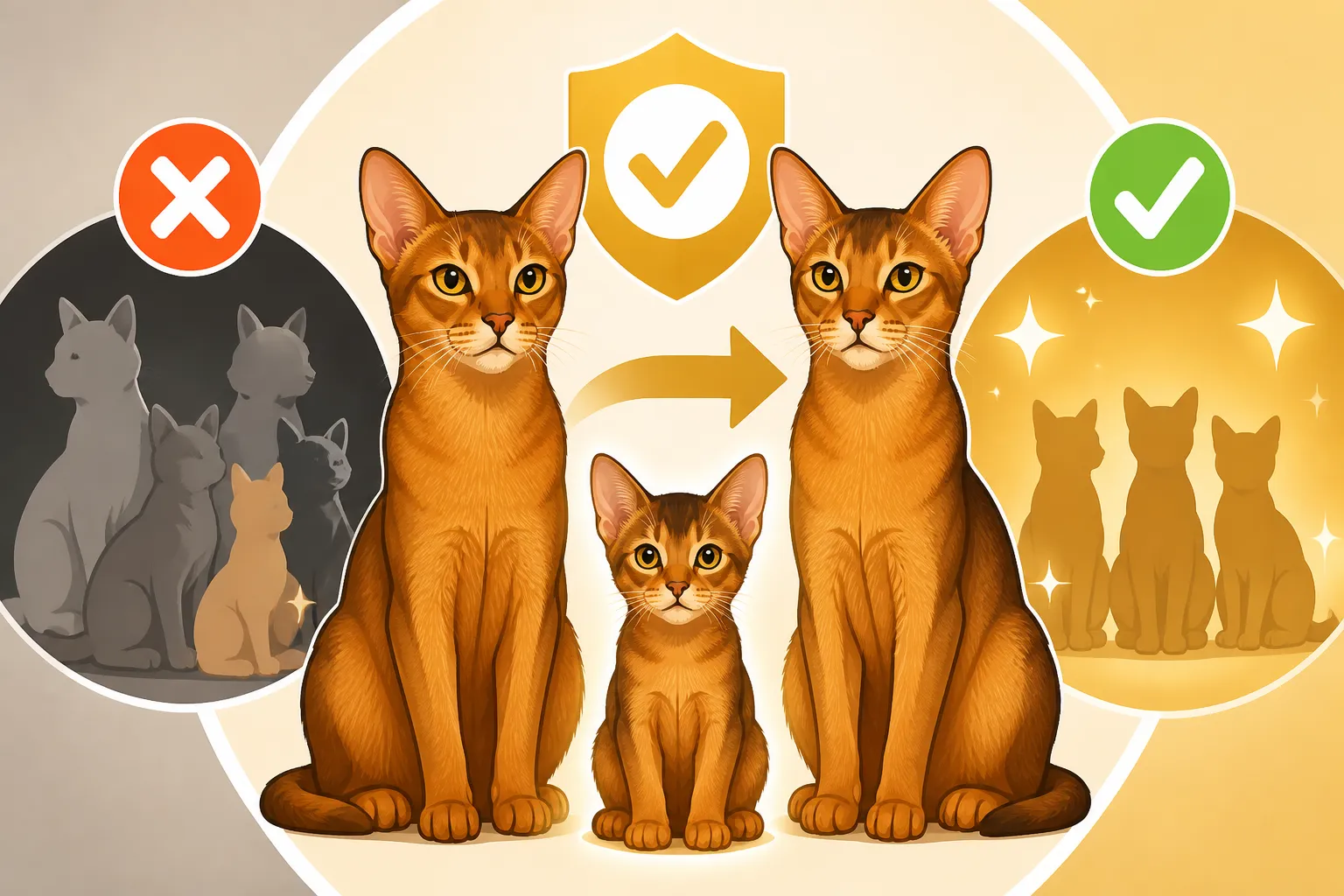
This is where the magic happens. When a breeder carefully selects two Abyssinian cats that have both tested "Clear" for PRA-rdAc (NN x NN), the genetic outcome for their kittens is simple and beautiful. Every single kitten in that litter is guaranteed to inherit two normal copies of the gene. There is absolutely no possibility of them being a carrier or being affected by PRA-rdAc.
This isn't a "likely scenario" or "high probability"; it's a 100% certainty. For you, the prospective owner, this means you can breathe a huge sigh of relief knowing that your Abyssinian kitten will never develop PRA-rdAc because of its genetic makeup. This is the gold standard in breeding practices for inherited recessive diseases and offers unparalleled assurance. You can learn more about How the CEP290 Test Clears an Abyssinian and its significance.
The Mathematical Certainty of a Clear Litter
The beauty of Mendelian genetics is its predictability. When both parents are genotypically clear (NN), they can only contribute a normal allele (N) to their offspring. Therefore, every single kitten produced will have the genotype NN, meaning they are clear of the condition. This completely bypasses the risk of affected kittens that arise from carrier-to-carrier breedings or even carrier-to-affected breedings.
| Parent 1 (NN) \ Parent 2 (NN) | N | N |
|---|---|---|
| N | NN | NN |
| N | NN | NN |
As the table clearly illustrates, 100% of the offspring will be NN (clear). This isn't just theory; it's a demonstrable genetic fact. This certainty is why Why Two Clear Abyssinian Parents End the Problem of inherited diseases like PRA-rdAc in their offspring is such a powerful statement for the Abyssinian breed. It protects individual kittens and helps to gradually reduce the prevalence of these undesirable genes in the broader breed population. It’s a testament to the dedication of ethical breeders who prioritize health above all else.
Other Genetic Concerns and How Testing Helps
While PRA-rdAc is a major focus, it's not the only genetic concern in the Abyssinian breed. There are other inherited conditions that good breeders also screen for, or at least track through pedigree analysis and ongoing health monitoring.
Pyruvate Kinase Deficiency (PKD) and Its Inheritance
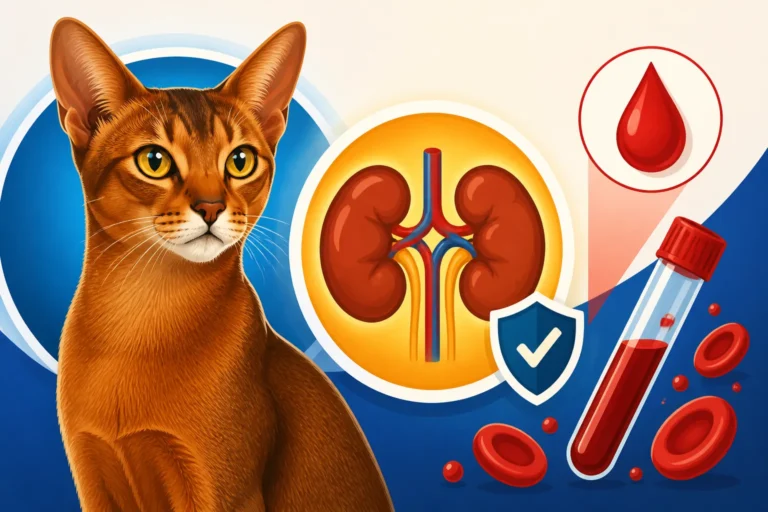
Another significant genetic condition found in Abyssinians is Pyruvate Kinase Deficiency, often simply called PKD. This is a red blood cell disorder that can lead to intermittent anemia. Affected cats might appear lethargic, have pale gums, or suffer from jaundice. Like PRA-rdAc, PKD is also inherited in an autosomal recessive manner. This means that a cat needs two copies of the defective PKLR gene to develop the disease.
The same genetic principles apply here: if both parents are tested "Clear" for PKD, their kittens are guaranteed to be "Clear" as well. If a cat is a "carrier" for PKD, it won't show symptoms itself but could pass the gene to its kittens. This is why it's vital for breeders to know the status of both parents for this gene, just as they do for PRA-rdAc. The combined DNA panel usually tests for both conditions, providing a comprehensive genetic health profile. Understanding Which Four Diseases the Abyssinian Actually Carries can help put PKD into perspective alongside other health challenges.
The Challenge of Renal Amyloidosis
Now, here's where things get a bit more complicated and frustrating. Renal Amyloidosis is a severe, often fatal kidney disease prevalent in Abyssinians, and tragically, there is currently no specific gene test available for it. This condition involves the abnormal deposition of amyloid protein in the kidneys, which eventually leads to kidney failure. It can affect Abyssinians at surprisingly young ages, sometimes as early as one or two years old, but more typically in middle age.
Because there's no DNA test, responsible breeders must rely on meticulously tracking health histories within their breeding lines. They look for patterns of amyloidosis in parents, grandparents, and siblings. A breeder committed to health will be transparent about any instances of this disease in their cats' pedigrees and will make efforts to avoid breeding lines with a strong history of amyloidosis, even if it means retiring a seemingly healthy cat. This demonstrates the ongoing challenge that breeders face when dealing with complex, multi-gene conditions. This situation emphasizes why a breeder should show you the Abyssinian parents' results, not just for tested diseases, but also for historical health data.
Other Health Considerations Beyond DNA Tests
Beyond the specific DNA-tested conditions, there are other health considerations for Abyssinians that require careful attention from both breeders and owners. These might not have direct genetic tests, but a responsible breeder will still work to minimize their occurrence. Juvenile gingivitis, for instance, is a condition where young Abyssinian kittens develop inflamed, overgrown gums, sometimes leading to early tooth loss. While not a DNA-testable disease in the same way as PRA or PKD, it does show familial patterns and requires proactive dental care from a young age. This is often why an Abyssinian Kitten's Gums Fail at Six Months, requiring veterinary intervention.
Cardiomyopathy (heart disease) and patellar luxation (kneecap dislocation) are also conditions seen in some lines. While not uniquely Abyssinian problems, they are part of a broader health picture. A good breeder will screen for these issues through physical exams, cardiac ultrasounds, or orthopedic evaluations, depending on the condition. This layered approach ensures that while genetic testing covers known DNA mutations, the overall health and vigor of the breeding line are also being carefully managed. When it comes to overall health preparedness, thinking about pet insurance from providers like Healthy Paws early on can provide a financial safety net for these broader health challenges.
The Broader Impact on Breed Health and Future Generations
Choosing a kitten from genetically clear parents does more than just ensure the health of your individual pet; it contributes significantly to the long-term health and integrity of the entire Abyssinian breed. This collective responsibility is something every ethical breeder takes to heart.
Elevating Breeding Standards
By consistently testing their breeding cats for known genetic diseases and only breeding "clear" to "clear" or "clear" to "carrier" (carefully monitoring the offspring to prevent further carrier-to-carrier pairings), breeders elevate the overall health standard of the breed. This practice isn't just about compliance; it's about a deep commitment to the welfare of these magnificent animals. Breeders who cut corners and don't test are not only risking the health of their kittens but are also inadvertently perpetuating these undesirable genes within the breed gene pool. This can lead to a higher incidence of these diseases over time, causing more suffering for cats and heartache for owners.
When you choose a kitten from tested parents, you're voting with your wallet for ethical breeding practices. You're supporting those who invest their time, money, and emotional energy into ensuring the health of their lines. This collective action helps to gradually reduce the frequency of disease alleles, making the breed stronger and healthier for everyone involved. For a comprehensive overview of what to look for, check out What an Abyssinian Breeder Should Have Tested Before You Buy.
The Role of Reputable Breeders
A reputable Abyssinian breeder is far more than just someone who produces kittens. They are stewards of the breed, dedicated to preserving and improving its health, temperament, and conformity to the breed standard. This commitment manifests in several ways:
- Comprehensive Genetic Testing: They will openly share the DNA test results for both parents, usually for PRA-rdAc and PKD. They will also be transparent about the health history of their lines, particularly regarding conditions like Renal Amyloidosis.
- Health Guarantees: Reputable breeders stand behind the health of their kittens, often offering a health guarantee that outlines their responsibilities in case of genetic illness. What an Abyssinian Breeder's Health Guarantee Covers can vary, so it's important to understand the specifics.
- Socialization and Care: They raise their kittens in a stimulating, loving environment, ensuring they are well-socialized and receive appropriate veterinary care, vaccinations, and nutrition before going to their new homes.
- Ongoing Support: They remain a resource for you throughout your cat's life, ready to offer advice and support.
It's tempting to look for a "bargain" kitten, but often, a lower price point indicates a breeder who is skipping essential health screening and proper care, which ultimately costs you more in vet bills and emotional distress down the road. Investing in a kitten from a reputable breeder is an investment in health and peace of mind.
Securing the Abyssinian's Legacy
The Abyssinian is a truly special breed, known for its striking appearance, vivacious personality, and deep bond with its human companions. To ensure this breed thrives for another century, careful and ethical breeding practices are paramount. By consistently breeding from genetically clear parents for conditions where tests exist, and carefully managing lines for untestable conditions, breeders are actively working to secure the breed's future.
This collaborative effort within the breeding community ensures that future generations of Abyssinians can continue to be the healthy, active, and beloved companions we know them to be. It’s a commitment to preventing heartbreak and ensuring that the unique joy an Abyssinian brings can be experienced by families for years to come, without the shadow of preventable genetic illness. Thinking ahead, pet insurance from companies like Healthy Paws plays a critical role in supporting this legacy by making advanced veterinary care more accessible for both common ailments and unexpected genetic conditions that may still arise despite best efforts.
Making Informed Decisions When Choosing an Abyssinian Kitten
Bringing home an Abyssinian is a long-term commitment, often spanning well over a decade. Making an informed decision at the outset can save you immense heartache and expense down the line. It's about being proactive and asking the right questions.
What to Ask Your Breeder
When you're speaking with a prospective breeder, don't be shy about asking direct questions regarding genetic health. A good breeder will welcome your inquiries and be eager to share information. Here’s a checklist of crucial questions:
- "Can I see the DNA test results for both parents for PRA-rdAc and PKD?" They should be able to provide physical or digital copies of these certificates. Verify that the cats named on the certificates match the parents of your potential kitten.
- "What is the health history of your lines, particularly regarding Renal Amyloidosis?" A responsible breeder will be open about any cases in their pedigree and what steps they take to mitigate risk.
- "What is included in your health guarantee, and for how long does it run?" Understand the terms of their guarantee fully.
- "At what age do your kittens leave for their new homes?" Reputable breeders generally don't let kittens leave before 12-14 weeks, as this allows for crucial socialization and completion of initial vaccinations.
- "Can I visit your cattery and meet the parents?" Seeing the living conditions and observing the parents' temperament and health firsthand is invaluable.
These questions are not intrusive; they are a sign of a responsible owner, and a reputable breeder will appreciate your thoroughness. If a breeder is hesitant, evasive, or cannot provide documentation, consider it a significant red flag. You don't want to regret your choice later when you're dealing with costly medical issues that could have been avoided. Thinking about How Long to Wait for an Abyssinian Kitten can also be a good indicator of a reputable breeder who prioritizes quality over quantity.
Verifying Test Results Independently
While you should trust your breeder, it's also smart to know how to verify test results independently. Most reputable genetic testing labs, such as Optimal Selection or Wisdom Panel, maintain public databases or allow for verification of results with a unique certificate number. This allows you to confirm that the documentation is authentic and accurate. The breeder should provide you with the cat's full registered name and the certificate number to facilitate this.
Some breed clubs or registries also maintain public records of tested cats. For instance, the Cat Fanciers' Association (CFA) or The International Cat Association (TICA) may have health registries or information available. This extra step provides an additional layer of assurance, ensuring that the health claims are legitimate. It’s a small amount of effort for a significant amount of peace of mind.
The Peace of Mind a Healthy Kitten Brings
Ultimately, the goal of all this diligence is to bring home a healthy, happy Abyssinian kitten that will enrich your life for many years. Knowing that your kitten's parents were thoroughly tested and found "Clear" for major genetic diseases like PRA-rdAc means you can largely set aside those particular worries. You'll be able to focus on the joy of their vibrant personality, their endless energy, and their unique way of becoming an indispensable part of your family.
While no cat comes with an absolute lifetime guarantee against all possible health issues—just like humans, they can have unexpected illnesses or accidents—having genetic predispositions eliminated is a massive advantage. It allows you to enjoy their companionship to the fullest, building cherished memories without the constant dread of a looming genetic condition. And for those unforeseen circumstances, having a robust pet insurance plan, perhaps from a provider like Healthy Paws, can offer an invaluable financial buffer, allowing you to prioritize your Abyssinian's health without undue stress about the veterinary bills. This proactive approach to health, from genetic testing to insurance, truly helps secure a brighter, healthier future for your beloved Abyssinian.
Disclaimer
This article provides general information and recommendations regarding Abyssinian cat health and genetic testing. It is not a substitute for professional veterinary advice. Always consult with a qualified veterinarian for any health concerns or before making any decisions about your pet's care.