Which Two DNA Tests an Abyssinian Must Have
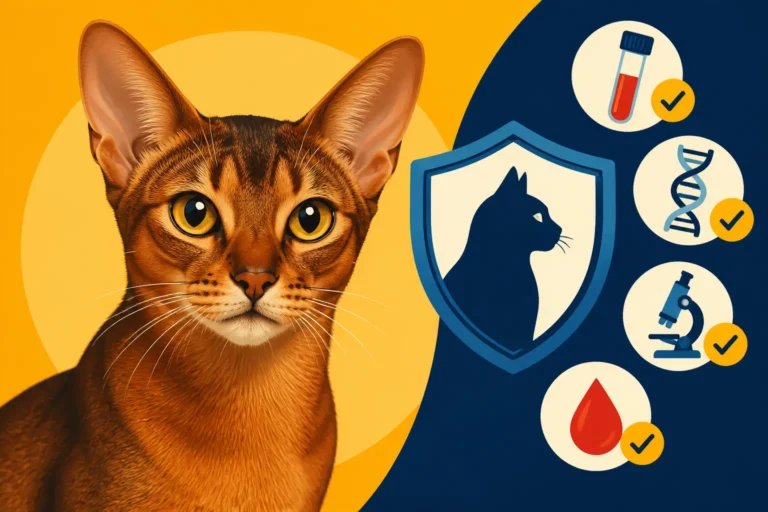
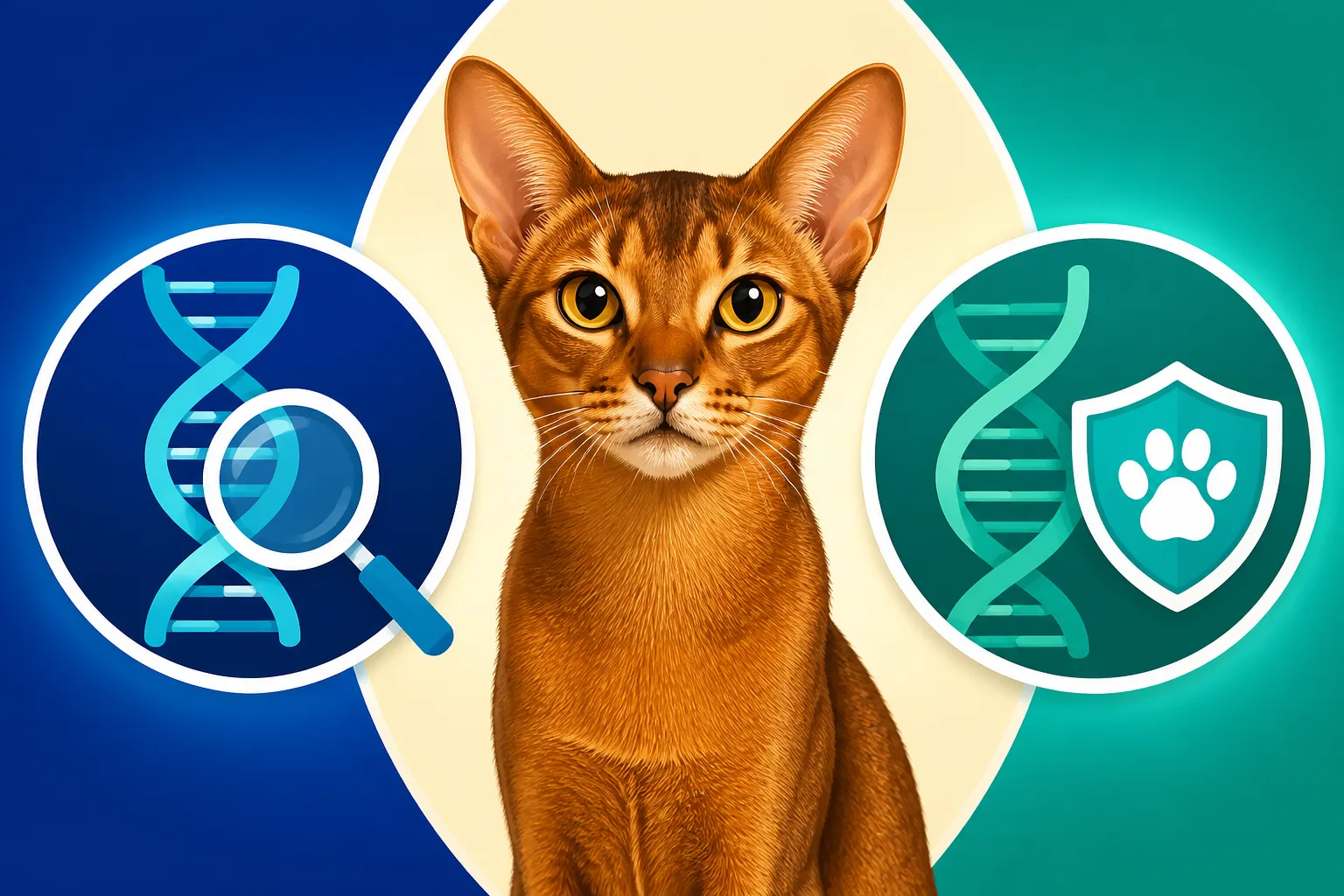
It’s a common misconception that if a kitten looks healthy and energetic, it must be perfectly fine. But with a dynamic, active breed like the Abyssinian, outward appearances can be incredibly deceiving, especially when it comes to inherited health conditions. Many prospective owners are completely unaware that their future feline friend could be silently carrying genes for serious diseases. This guide is here to shed light on the two absolutely essential DNA tests every Abyssinian must have, empowering you to make informed decisions and ensure your beloved cat lives the healthiest, happiest life possible.
The Crucial Importance of Genetic Screening for Abyssinians
When you're bringing an Abyssinian kitten into your home, you’re not just getting a cat; you’re welcoming a vibrant, intelligent, and highly athletic companion. Their playful antics and stunning ticked coats can easily distract from the underlying genetic realities that breeders, and by extension, owners, simply must address. Relying solely on a kitten appearing "healthy" is a gamble no responsible owner or breeder should take. The future well-being of these magnificent creatures depends on understanding what lies beneath the surface.
Why "Healthy" Isn't Enough for a Breeder to Claim
Imagine falling in love with a tiny, bouncing Abyssinian kitten. The breeder assures you the parents are healthy, and the kittens are thriving. You see them running, playing, eating well – everything seems perfect. But here’s the rub: many inherited diseases don't show symptoms in young kittens, or even young adult cats. A cat can be a carrier, meaning it carries one copy of a faulty gene, and might never show signs of the disease itself, yet still pass that gene on to its offspring. Or, in some cases, a cat might be "affected" (meaning it has two copies of the faulty gene) but the disease has a delayed onset, only appearing later in life when the cat is already part of your family.
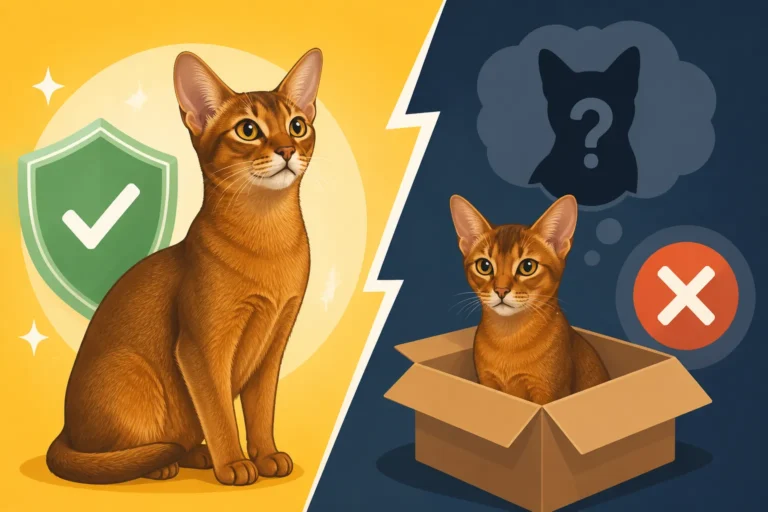
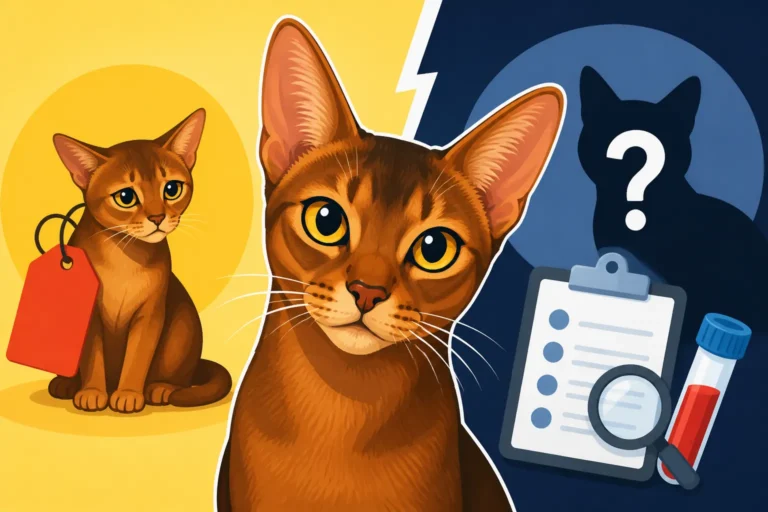
A breeder stating their cats are "healthy" without concrete, verifiable DNA test results is like buying a car that the seller says has a perfect engine, but refuses to let you see under the hood or check its service records. It simply doesn't cut it. For a breed with known genetic predispositions, specific testing is the only way to genuinely confirm health status and responsible breeding practices. Without this transparency, you're buying into an unknown future, and that's not fair to you or the cat.
The Hidden Risks in the Abyssinian Gene Pool
Like many purebred animals, Abyssinians have a relatively small gene pool compared to mixed-breed cats. While breeders work tirelessly to maintain breed standards and enhance desirable traits, this concentration of genes also means that certain undesirable genes can become more prevalent if not carefully managed. The two primary genetic conditions that are well-documented and testable in Abyssinians are Pyruvate Kinase Deficiency (PK Deficiency) and Progressive Retinal Atrophy (PRA-rdAc).
These aren't obscure, rare diseases. They are significant health concerns that, if ignored, can lead to debilitating and heartbreaking conditions for your cat. PK Deficiency can cause severe, life-threatening anemia, while PRA-rdAc leads to progressive blindness. These are not minor ailments; they deeply impact a cat's quality of life and can incur significant veterinary costs. Understanding these risks upfront allows you to confidently choose a kitten from lines that have been responsibly screened, mitigating the chances of facing these challenges later on.
Pyruvate Kinase Deficiency (PK Deficiency): Understanding the Anemia Risk
Pyruvate Kinase Deficiency, or PK Deficiency, is an inherited metabolic disorder that affects a cat's red blood cells. It's a condition that can be truly devastating, causing intermittent or chronic anemia, and often only showing its true colors when a cat is already well into kittenhood or young adulthood. The thought of your vibrant Abyssinian suddenly becoming weak and lethargic due to this silent genetic threat is something no owner wants to face.
What PK Deficiency Does to an Abyssinian's Red Cells
At its core, PK Deficiency is a problem with an enzyme called pyruvate kinase, which is crucial for the survival of red blood cells. Without enough functional pyruvate kinase, red blood cells become fragile and break down prematurely, leading to a condition known as hemolytic anemia. This loss of red blood cells means the cat's body struggles to carry enough oxygen, resulting in symptoms like lethargy, weakness, pale gums, and sometimes even an enlarged spleen.
It's not a constant state of illness for affected cats; the anemia can wax and wane, making it particularly difficult to diagnose without specific testing. A cat might have periods of appearing completely normal, only to crash suddenly during a stressful event or another illness. This makes it a ticking time bomb for unsuspecting owners. For a deeper dive into the specifics, you can read more about What PK Deficiency Does to an Abyssinian's Red Cells.
How the PKLR Mutation Reaches an Abyssinian
PK Deficiency is an autosomal recessive genetic disorder. What does that mean for your Abyssinian? It means a kitten must inherit two copies of the defective gene – one from its mother and one from its father – to actually be affected by the disease. If a kitten inherits only one copy, it becomes a "carrier." Carriers are typically healthy themselves; they don't develop PK Deficiency because their one normal gene copy produces enough functional enzyme. However, carriers can still pass the gene on to their own offspring, continuing the cycle.
This mode of inheritance is precisely why DNA testing is so vital. A perfectly healthy-looking pair of Abyssinian parents, both carriers of the PKLR mutation, could produce a litter where, statistically, 25% of the kittens are affected, 50% are carriers, and 25% are clear. Without testing the parents, a breeder has no way of knowing this risk. For more details on the genetic pathway, you might find How the PKLR Mutation Reaches an Abyssinian helpful.
What a Carrier Abyssinian Means for Breeding and Ownership
Discovering your Abyssinian is a carrier for PK Deficiency can feel alarming, but it's essential to understand that a carrier status does not mean your pet will develop the disease. As mentioned, carriers usually live completely normal, healthy lives. The primary implication of a carrier status lies in breeding. Responsible breeders will never breed two known carriers together, as this is the only way for affected kittens to be born. Instead, a carrier might be bred with a "clear" cat (one that has no copies of the defective gene), ensuring that all offspring will be either clear or carriers, but none will be affected.
For pet owners who have no intention of breeding their Abyssinian, a carrier status has minimal direct impact on their cat's health. It simply means you're aware of their genetic makeup. If you ever found yourself in a situation where your cat required significant veterinary care, such as for a different illness, knowing their carrier status might inform your vet's diagnostic approach, though it's unlikely to change routine care. Understanding this distinction is key to avoiding unnecessary worry. For further clarification, explore How a Carrier Abyssinian Differs From an Affected One.
Progressive Retinal Atrophy (PRA-rdAc): Safeguarding Your Abyssinian's Sight
The world is a vibrant playground for an Abyssinian, full of vertical challenges and intricate spaces to explore. The thought of this curious, active breed losing its sight is truly heartbreaking. Progressive Retinal Atrophy, specifically the rdAc form, is a condition that does just that, slowly and irreversibly robbing an Abyssinian of its vision.
How PRA-rdAc Blinds an Abyssinian Slowly
Progressive Retinal Atrophy (PRA-rdAc) is a degenerative eye condition that affects the photoreceptor cells (rods and cones) in the retina, which are responsible for detecting light. Initially, it primarily impacts night vision, as the rod cells degenerate first. You might notice your Abyssinian becoming more hesitant in dim light, bumping into furniture in the dark, or seeming disoriented at dusk. As the disease progresses, day vision also deteriorates, eventually leading to complete blindness.
The insidious nature of PRA-rdAc is its gradual onset. Many Abyssinians are incredibly adaptable and will learn to navigate their familiar environment even as their vision diminishes. Owners might not even realize something is wrong until the cat is significantly impaired. The disease typically begins to manifest by the time the cat is between two and five years old, but the genetic defect is present from birth. For a comprehensive look at this progression, consider reading How PRA-rdAc Blinds an Abyssinian Slowly.
The Genetic Basis of PRA-rdAc in Abyssinians
Like PK Deficiency, PRA-rdAc is also an autosomal recessive genetic disorder. This means that, just as with PK Deficiency, a kitten must inherit two copies of the specific defective gene (in this case, the CEP290 mutation) to develop the condition. Inheriting only one copy makes the cat a carrier, meaning it will have normal vision but can pass the faulty gene to its offspring.
This genetic pattern underscores the critical importance of DNA testing for both breeding cats. Two carriers, outwardly healthy with perfect vision, can produce kittens that will eventually go blind if they inherit two copies of the affected gene. The simple act of testing parents can prevent an entire generation of cats from suffering this loss of sight, making it a cornerstone of ethical breeding.
Ensuring a Clear Abyssinian Through Testing
The good news is that reliable DNA tests are readily available to identify both carriers and affected Abyssinians for PRA-rdAc. When choosing an Abyssinian, you should always insist on seeing the test results for both parents, verifying they are "clear" or that at least one parent is "clear" if the other is a carrier. This ensures that your kitten will not be affected by the disease.
A responsible breeder will proudly provide these certificates, often from reputable genetic testing labs. These labs analyze a simple cheek swab from the cat to determine its genetic status. If you're considering a rescue Abyssinian, or if you're unsure about your current cat's history, having them tested themselves is a proactive step that can offer valuable peace of mind. For more on what a 'clear' test means, check out How the CEP290 Test Clears an Abyssinian.
Navigating DNA Test Results and What They Mean for You
Understanding the results of these genetic tests is paramount, whether you're a prospective owner, a new owner, or even an experienced breeder. The terminology can sometimes feel like a foreign language, but once you break it down, it's quite straightforward. These results are not just pieces of paper; they are blueprints to your Abyssinian's long-term health.
Deciphering Clear, Carrier, and Affected Status
When you receive an Abyssinian's DNA test results, you'll typically see one of three designations for each genetic condition tested:
- Clear (or Homozygous Normal): This is the ideal result. It means the cat does not carry any copies of the defective gene. A clear cat cannot develop the disease and cannot pass the defective gene on to its offspring.
- Carrier (or Heterozygous): This means the cat carries one copy of the defective gene and one normal copy. For both PK Deficiency and PRA-rdAc, carriers are typically asymptomatic and will not develop the disease. However, they can pass the defective gene to their offspring. This is why careful breeding decisions are essential, as two carriers bred together can produce affected kittens.
- Affected (or Homozygous Affected): This means the cat has inherited two copies of the defective gene (one from each parent). A cat with this status will develop the disease. In the case of PK Deficiency, they will suffer from anemia, and with PRA-rdAc, they will experience progressive blindness.
Here's a quick summary of what each status means for these specific tests:
| Test Result | PK Deficiency Implications | PRA-rdAc Implications | Breeding Implications |
|---|---|---|---|
| Clear | Will not develop PK Deficiency; cannot pass the gene on. | Will not develop PRA-rdAc; cannot pass the gene on. | Can be bred to any cat without risk of affected kittens for this specific disease. |
| Carrier | Will not develop PK Deficiency; carries the gene. | Will not develop PRA-rdAc; carries the gene. | Should only be bred to a "Clear" cat to avoid producing "Affected" offspring. |
| Affected | Will develop PK Deficiency (anemia). | Will develop PRA-rdAc (progressive blindness). | Should ideally not be bred. If bred, all offspring will be at least carriers for the disease. |
For a more in-depth explanation of results, see How to Read an Abyssinian's Normal Test Result.
What to Ask Your Breeder About Test Results
When you're speaking to an Abyssinian breeder, don't be shy about asking for proof of genetic testing. Any reputable breeder will not only understand your concern but will welcome the opportunity to share their practices. Here are key questions to ask:
- "Can I see the DNA test results for both the sire (father) and dam (mother) of this litter for PK Deficiency and PRA-rdAc?"
- "Which laboratory did you use for the testing?" (Reputable labs are well-known within the breeding community.)
- "Are the parents clear for both conditions, or are any carriers?"
- "How often do you test your breeding cats, and do you re-test new additions to your breeding program?"
A breeder who hesitates, makes excuses, or claims testing isn't necessary because their lines are "healthy" is a red flag. Responsible breeding involves transparency and verifiable documentation. Remember, you're investing in a living creature's health and your own peace of mind for years to come.
When and How to Test Your Abyssinian
For most Abyssinian kittens purchased from responsible breeders, the parents will have been tested, guaranteeing the kitten's status (e.g., if both parents are clear, the kitten is also clear). However, if you've adopted an Abyssinian from a rescue, or if your cat's history is unknown, testing can still be done at any age. It’s a simple, non-invasive process.
Most genetic tests for cats involve a cheek swab, which you or your veterinarian can collect. The swab is then sent to a specialized veterinary genetics laboratory. Labs like OptiGen or UC Davis are well-regarded for these types of tests. The process is straightforward, and the results typically come back within a few weeks. Some online retailers, like Chewy, might even offer links or kits for genetic testing services, making it even more accessible. This proactive step can provide invaluable information about your Abyssinian's health profile, particularly if you have concerns about their lineage or if they exhibit symptoms that could be linked to these conditions. You can learn more about the testing process in How the Abyssinian's DNA Panel Is Ordered.
The Broader Picture: Beyond the Two Essential Tests
While PK Deficiency and PRA-rdAc are the two primary testable genetic conditions for Abyssinians, it's vital to remember that genetic health is just one piece of the puzzle. There are other significant health concerns within the breed that, unfortunately, don't yet have direct DNA tests, requiring a different approach to management and care.
Why No Gene Test Exists for Abyssinian Amyloidosis
One of the most concerning and devastating conditions in Abyssinians is Renal Amyloidosis. This is a progressive disease where abnormal protein (amyloid) deposits accumulate in the kidneys, eventually leading to kidney failure. Unlike PK Deficiency and PRA-rdAc, there is currently no DNA test available to identify cats at risk for Amyloidosis. This is largely because the inheritance pattern appears to be more complex, likely involving multiple genes or environmental factors, rather than a single gene mutation.
This lack of a direct genetic test is incredibly frustrating for breeders and owners alike. It means that even the most dedicated breeders cannot "test clear" for this condition. Instead, responsible breeders rely heavily on detailed pedigree research, tracking the health and longevity of their cats' ancestors for many generations, looking for patterns of early kidney disease or amyloidosis. They are essentially their own genetic detectives, trying to minimize the risk through selective breeding based on family history. This is why Renal Amyloidosis Is the Abyssinian Problem Nobody Can Test For is such an important read.
The Value of a Comprehensive Health Strategy
Given that not all health concerns can be pre-emptively identified through DNA tests, a holistic approach to your Abyssinian's health is crucial. This means focusing on several key areas beyond genetic screening:
-
Veterinary Care: Regular veterinary check-ups are non-negotiable. For an active, often stoic breed like the Abyssinian, subtle changes in behavior or energy can be the first signs of illness. Your vet can perform routine bloodwork, urine tests, and physical examinations to catch issues early. As your Abyssinian ages, yearly comprehensive blood panels become even more important. How a Vet Manages an Abyssinian in Kidney Failure offers insights into managing one of the more common conditions.
-
Nutrition: A high-quality diet plays a fundamental role in supporting an Abyssinian's overall health and energy levels. Given their lean, muscular build and high metabolism, they need food that provides excellent protein and balanced nutrients. Consider reputable brands that focus on quality ingredients.
-
Hydration: Especially with the risk of kidney issues like Amyloidosis, ensuring your Abyssinian drinks enough water is paramount. Many cats don't drink enough plain standing water, so incorporating wet food into their diet is highly recommended. Cat fountains can also encourage increased water intake, as many cats prefer running water.
-
Environmental Enrichment: An Abyssinian thrives on mental and physical stimulation. A rich environment with plenty of climbing opportunities, interactive toys, and regular play sessions will keep them happy, reduce stress, and help them maintain a healthy weight. A bored Abyssinian can be a destructive Abyssinian, so channeling their energy positively is key.
-
Pet Insurance: Despite all precautions, health issues can arise, and veterinary care can be expensive. Pet insurance can provide a financial safety net, allowing you to make the best medical decisions for your Abyssinian without being solely driven by cost. Companies like Healthy Paws are well-known for their comprehensive coverage, which can be invaluable for unexpected illnesses or accidents, potentially even covering treatments for conditions like PK Deficiency if symptoms emerge or for chronic conditions like kidney disease. Investing in pet insurance, especially when your Abyssinian is young and healthy, ensures that pre-existing conditions won't be an issue for coverage later on.
By combining responsible genetic screening with proactive veterinary care, excellent nutrition, and a stimulating environment, you’re giving your Abyssinian the best possible chance at a long, healthy, and joy-filled life.
Disclaimer
This article is for general informational purposes only and does not constitute professional advice. Laws, prices and regulations vary by location and change over time. Consult a qualified professional for guidance on your specific situation.