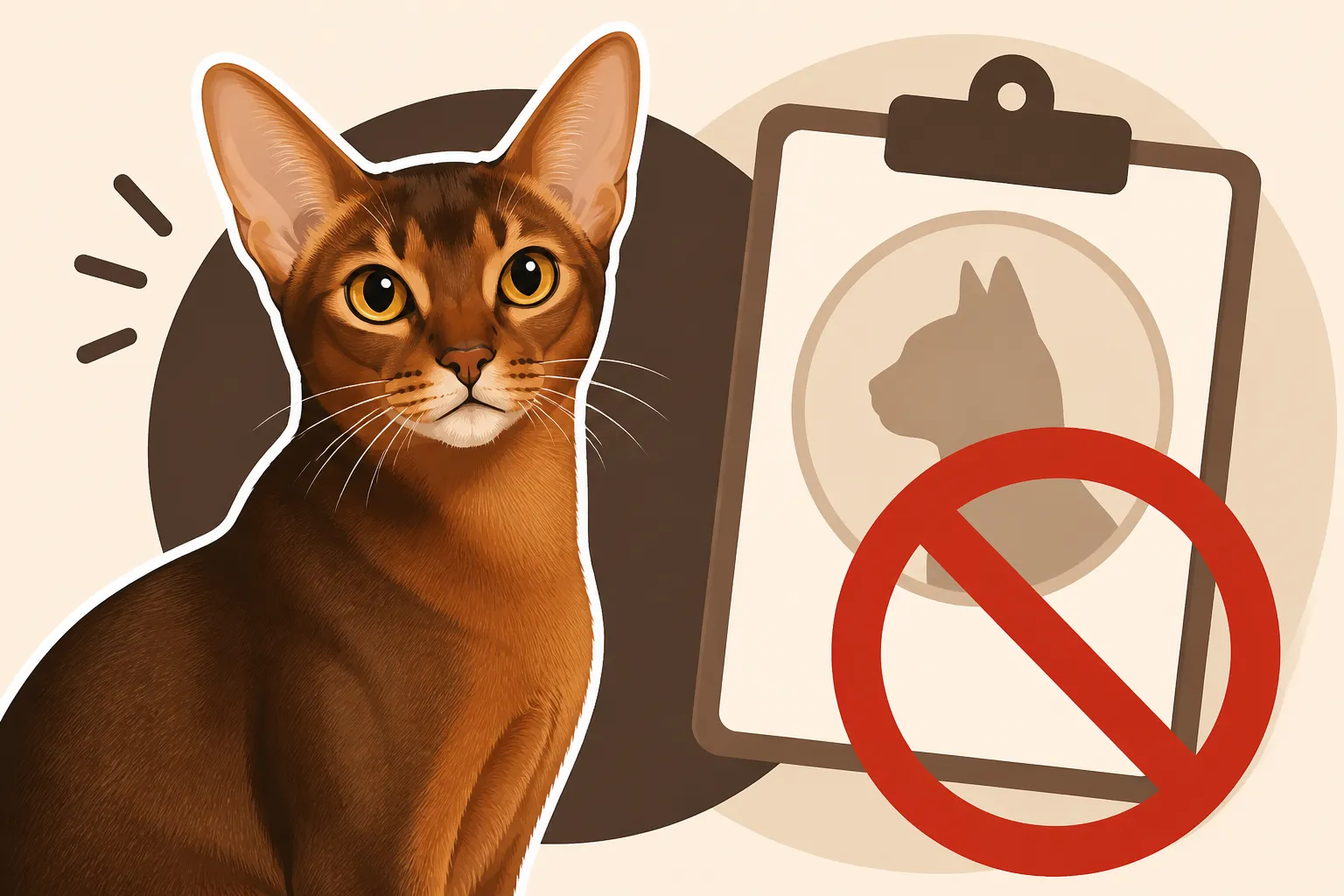
Why a Chocolate Abyssinian Is Not CFA Recognized
It's completely understandable to be curious about all the potential color variations of an Abyssinian, especially when you see a beautiful cat described as "chocolate" and wonder why it doesn't seem to fit the official mold. This can be a real head-scratcher for new and prospective owners alike, as the world of pedigree cat standards can feel a bit rigid. This guide will help demystify why a "chocolate Abyssinian" isn't recognized by the Cat Fanciers' Association (CFA) and what that means for both the breed standard and the loving home environment.
Understanding Abyssinian Coat Genetics and Color Standards
The Abyssinian is renowned for its unique coat, which is truly a hallmark of the breed. When you first look at an Abyssinian, you see a rich, warm color, but a closer inspection reveals a stunning complexity. This is where the breed's distinct genetics come into play, dictating not just the shades we see, but also what is considered "standard."
The Foundation of Abyssinian Colors: Ticking and Agouti
At the heart of every Abyssinian's coat is a genetic marvel called ticking. Unlike many other cat breeds that display solid colors, stripes, or spots, the Abyssinian's individual hairs are banded with several colors. Imagine each strand of fur as a tiny miniature rainbow, with bands of lighter and darker pigment alternating from the base to the tip. This is what creates that shimmering, variegated effect, making the coat appear to change color as the cat moves and the light hits it. This isn't just a random trait; it's a specific expression of the agouti gene, which is responsible for patterns like tabby stripes. In Abyssinians, this gene is expressed in a way that suppresses most other patterns, leaving just the beautiful, even ticking across the body. The goal is a coat that looks like wild rabbit fur, deep and rich, without any visible bars or stripes on the body, though some subtle barring might appear on the legs or tail in pet-quality cats.
The absence of an undercoat further enhances this effect, making the Abyssinian's fur incredibly fine and lying close to the body, almost like velvet. This means the ticking is always on full display, contributing to the breed's elegant and somewhat wild appearance. It's a key characteristic that breeders strive to maintain, ensuring the integrity and unique beauty of the Abyssinian line. The richness of color and the distinctness of the ticking are paramount to the breed's identity.
The Four Recognized Colors: Ruddy, Red Sorrel, Blue, Fawn
When it comes to official recognition, the Cat Fanciers' Association (CFA) acknowledges a very specific palette for the Abyssinian. These colors are not just arbitrarily chosen; they represent the foundational genetic expressions that define the breed's appearance. The standard colors are Ruddy, Red (also often called Sorrel), Blue, and Fawn. Each of these colors has its own specific genetic makeup and visual characteristics that breeders work hard to maintain through careful selection.
The Ruddy Abyssinian, often referred to as "Usual" in some parts of the world, is perhaps the most iconic. It features a warm, reddish-brown or burnt sienna base, ticked with black. The overall impression is a rich, coppery hue, reminiscent of a wild fox. Then there's the Red, or Sorrel, Abyssinian. This gorgeous variant showcases a beautiful copper-red or cinnamon base, ticked with chocolate-brown. The richness of this red is truly striking, often appearing quite vibrant. For more on this, you can look up What Sorrel Means on an Abyssinian.
Next, we have the diluted colors. The Blue Abyssinian presents a soft, warm blue-grey (which is actually a diluted black), ticked with a deeper slate blue. It's a wonderfully subtle and elegant color. Lastly, the Fawn Abyssinian is a diluted sorrel, featuring a warm cream base ticked with a lighter cocoa brown. It's the palest of the recognized colors, possessing a delicate and refined appearance. You can learn more about its specific characteristics in What a Fawn Abyssinian Is the Palest of the Four. These four colors are the pillars of the Abyssinian breed, each contributing to its distinctive aesthetic while adhering to a strict genetic standard.
Why Certain Colors Are Valued in Show Standards
The adherence to a limited number of recognized colors within breed standards, like those for the Abyssinian, isn't about preference for "pretty" over "less pretty" in a superficial sense. It's deeply rooted in the historical development of the breed and the desire to maintain specific genetic lines and characteristics. When a breed is first established and developed, certain traits, including color, become defining features. These features are then meticulously documented and upheld by breed registries.
For the Abyssinian, the four recognized colors – Ruddy, Sorrel, Blue, and Fawn – represent the genetic palette that has been consistently bred for over generations. These colors are known to be stable, predictable in inheritance, and contribute to the overall "look" that distinguishes an Abyssinian from any other cat. They are part of the breed's genetic heritage, a testament to years of selective breeding to achieve a consistent type. Introducing or recognizing a color like "chocolate" could imply a deviation from these established lines, possibly suggesting outcrossing to other breeds at some point in the lineage, or the presence of a recessive gene not typically found or desired within the pure Abyssinian genetic pool. The emphasis is on preserving the original and well-documented characteristics that make an Abyssinian an Abyssinian.
The CFA's Stance on Breed Standards and Color Recognition
The Cat Fanciers' Association (CFA) plays a crucial role in the world of pedigree cats, acting as a custodian of breed integrity and standards. Their guidelines are not just suggestions; they are the definitive rulebook for what constitutes a purebred Abyssinian, especially when it comes to showing these magnificent animals.
The Role of Breed Registries Like CFA
Think of the CFA as the keeper of the purebred cat kingdom. Its primary role is to register pedigreed cats, promote the welfare of all cats, and preserve the integrity of individual breeds through established standards. For a breed like the Abyssinian, these standards are incredibly detailed, covering everything from head shape and ear set to body type, coat texture, and, of course, color. These standards aren't just for show judges; they serve as a blueprint for ethical breeders, guiding their breeding programs to ensure that kittens produced genuinely represent the breed's characteristics.
The CFA's recognition of a specific color means that particular genetic expression is considered an authentic and desirable trait within that breed's established history and development. Without adherence to these standards, the very definition of a "purebred" cat would become ambiguous. It provides a consistent framework, ensuring that when you acquire an Abyssinian from a CFA-registered breeder, you are getting a cat that meets the accepted criteria of the breed. This strictness is what allows for breed-specific shows, where cats are judged against an ideal, and helps to safeguard the genetic health and phenotypic characteristics that make each breed unique.
The Specifics of the Abyssinian Breed Standard for Color
When you delve into the official CFA Abyssinian Breed Standard, the section on color is very precise, leaving little room for interpretation. The standard explicitly details the expected appearance of Ruddy, Sorrel, Blue, and Fawn Abyssinians, including the base color, the ticking color, and even the paw pad and nose leather colors that should accompany each. For instance, a Ruddy Abyssinian should have black ticking, deep ruddy banding, and black paw pads with terra cotta or brick red between the toes. A Sorrel, on the other hand, will have chocolate-brown ticking and cinnamon paw pads. These are not minor details; they are integral parts of the overall picture of a breed-standard Abyssinian.
The standard also explicitly states what is not allowed. Any deviation from these specified colors, or the presence of white markings (except for a small patch on the chin or throat, which is usually not ideal), any noticeable barring, blotches, or necklaces (stripes around the neck) are considered faults. In a show environment, these faults would lead to disqualification. This isn't to say that a cat with a non-standard color isn't a beautiful or wonderful companion; it simply means it doesn't conform to the very specific aesthetic and genetic requirements established for exhibition and perpetuation of the breed according to CFA guidelines. The standard acts as a very specific filter, ensuring only those cats that perfectly embody the breed's defined characteristics are recognized within the competitive show circuit.
How New Colors Are (or Aren't) Integrated
The process for integrating a "new" color into a recognized breed standard by organizations like the CFA is exceptionally long, arduous, and frankly, quite rare for established breeds like the Abyssinian. It's not a matter of simply liking a new shade; it requires extensive genetic proof, multiple generations of consistent breeding for the trait, and a demonstrable history that the color arises naturally within the breed's existing genetic pool without outcrossing to other breeds. For instance, the fawn color was once considered a "new" variation, emerging as a dilute of the sorrel, and it took decades of careful breeding and documentation to gain full recognition.
The challenge for a color like "chocolate" in Abyssinians is that it doesn't represent a simple dilution or a natural recessive gene within the established Abyssinian genetic framework. If such a color were to appear, it would immediately raise questions about the purity of the lineage. Was there an accidental outcross in the pedigree? Does it represent a mutation not commonly accepted within the breed's historical development? Because the Abyssinian's genetic history and accepted colors are so well-defined, any color that falls outside the Ruddy, Sorrel, Blue, and Fawn spectrum is generally considered to be a non-standard variation, and therefore, not eligible for CFA recognition. The bar is set extremely high to maintain the purity and integrity of the breed's genetic heritage as it has been carefully cultivated over more than a century.
Delving into "Chocolate" and Other Unrecognized Abyssinian Colors
When someone mentions a "chocolate Abyssinian," it often sparks confusion, precisely because it isn't a recognized color. This can lead to misconceptions about what these cats truly are and why they exist outside the official breed standard.
What a "Chocolate" Abyssinian Might Look Like
So, what exactly does a "chocolate Abyssinian" look like if it's not an official color? Often, what people perceive as "chocolate" is either a very rich, deep Sorrel Abyssinian, or a variation that isn't quite as clearly defined. A true Sorrel Abyssinian can have such a profound reddish-brown tone, ticked with chocolate, that it might appear "chocolatey" to the untrained eye, especially under certain lighting conditions. The official Sorrel color is already described as a rich copper-red, ticked with chocolate-brown, which can be quite dark and intense.
However, sometimes a cat described as "chocolate" might be the result of a less-than-standard breeding practice, or it could simply be a descriptive term used by a pet owner rather than a breeder adhering to strict genetic definitions. It might present as a warmer, darker brown than a typical Ruddy, but lacking the red tones of a Sorrel, or appearing less grey than a Blue. These are often beautiful cats, with lovely coats, but their coloration doesn't align with the precise genetic markers and visual expectations that the CFA has laid out for the breed. It's more of a descriptive nickname than a recognized genetic color, and this distinction is crucial when discussing breed standards.
The Genetic Reality Behind Unrecognized Shades
The genetic reality behind unrecognized shades like "chocolate" in Abyssinians usually boils down to one of two things: either it's a descriptive term for a variant of a recognized color (like a very deep sorrel), or it stems from genetic factors that are not part of the established Abyssinian gene pool. In some breeds, a "chocolate" gene is a distinct recessive allele that dilutes black pigment to brown. While this gene exists in the wider feline population, it is not considered part of the Abyssinian's core genetics as defined by breed standards.
If a "chocolate" colored cat does appear in an Abyssinian litter, it could be an indication of an ancestral outcross that introduced a non-Abyssinian gene into the line generations ago, or it might be a spontaneous mutation that doesn't fit the breed's established color standards. Reputable breeders meticulously track pedigrees to ensure the genetic purity of their lines, making such "surprises" rare. When they do occur, responsible breeders understand that these variations, while perhaps visually appealing, do not meet the strict criteria for a purebred Abyssinian as recognized by associations like the CFA. The primary goal of breed organizations is to maintain a consistent genetic blueprint, and any deviation from that, especially in color, raises flags about breed integrity.
Implications for Breeding and Showing
For anyone involved in the world of pedigree cats, the implications of a non-recognized color like "chocolate" are significant. First and foremost, a "chocolate Abyssinian" cannot be shown in CFA-sanctioned events. The judging standards are very specific about color, and any cat deviating from the four recognized shades would be immediately disqualified. This means that if your goal is to compete, a non-standard color simply won't cut it, no matter how stunning the cat might be.
From a breeding perspective, the situation is even more critical. Breeders striving for CFA recognition and contributing to the breed's integrity would not intentionally breed for, or use in their programs, a cat carrying genes for an unrecognized color. Doing so could dilute their lines, introduce undesirable traits, and potentially jeopardize their reputation as responsible breeders. While a "chocolate" Aby might be a fantastic pet, it would be considered "pet quality" at best, meaning it is sold strictly as a companion animal with a non-breeding agreement. This distinction is vital for maintaining the strict genetic purity and the high standards set by breed associations, ensuring that the Abyssinian breed continues to evolve in a controlled and predictable manner. You might find breeders discussing Why an Abyssinian Sells on a Non Breeding Agreement for these very reasons.
| Abyssinian Color Trait | CFA Recognized Colors | Unrecognized "Chocolate" (Descriptive) |
|---|---|---|
| Base Coat Color | Ruddy (reddish-brown), Sorrel (copper-red), Blue (warm blue-grey), Fawn (warm cream) | Darker, richer brown, potentially lacking specific red or grey undertones |
| Ticking Color | Black (Ruddy), Chocolate-brown (Sorrel), Slate blue (Blue), Cocoa brown (Fawn) | Varies, but typically a darker brown ticking |
| Genetic Origin | Defined by established Abyssinian genes for agouti and dilution | Potentially from outcrosses, genetic mutations, or just a deep sorrel variant |
| Show Eligibility | Yes, if meeting all other breed standards | No, would be disqualified in CFA shows |
| Breeding Program | Essential for maintaining breed integrity | Not used in reputable, standard-compliant breeding programs |
| Pet Value | Excellent, intelligent, active companion | Excellent, intelligent, active companion |
The Value of a Non-Standard Abyssinian: Beyond the Show Ring
While breed standards are vital for the integrity of show lines, they don't dictate the immense value and joy a cat brings to a home. An Abyssinian, regardless of its coat color or official recognition status, remains a fantastic companion.
The Pet Quality Abyssinian
It's so important to remember that a cat's "pet quality" designation doesn't diminish its worth as a cherished family member by one single bit. A "pet quality" Abyssinian, even if it has a non-standard color like "chocolate" or perhaps a slight barring on its legs that wouldn't pass muster in the show ring, is still 100% Abyssinian in heart, soul, and personality. These cats carry all the wonderful traits the breed is known for: their boundless energy, their playful curiosity, their incredible intelligence, and their deep affection for their human companions. They're often sold at a different price point, sometimes less than a show or breeding quality kitten, and usually come with a spay/neuter clause in their contract to ensure they won't be used to perpetuate non-standard traits.
For the vast majority of cat owners, who simply want a loving, engaging feline friend, the show standard is utterly irrelevant. What matters is the bond, the individual personality, and the health of the cat. These "pet quality" Abyssinians offer all the charm and vivacity of the breed, ready to climb your shelves, "help" with every chore, and keep you entertained for years. They are just as worthy of love and a forever home as any champion, proving that true value comes from companionship, not a judge's ribbon.
Finding a Reputable Breeder for Any Color Abyssinian
Whether you're looking for a recognized Ruddy or a beautiful "chocolate" Abyssinian that you've fallen in love with descriptively, finding a reputable breeder is the absolute cornerstone of responsible pet ownership. This isn't just about getting the right color; it's about bringing home a healthy, well-socialized kitten that will thrive in your home for years to come. A reputable breeder, regardless of the colors they produce (as long as they are transparent about recognition), will prioritize the health and temperament of their cats above all else. They will be registered with a recognized cat association, even if their focus is pet homes rather than show rings.
What should you look for? Ethical breeders will be incredibly open about their breeding practices, allowing you to ask questions about their lines, their health testing, and the environment their kittens are raised in. They should provide full disclosure on the parents' health screenings for genetic conditions prevalent in Abyssinians, such as Pyruvate Kinase Deficiency (PKD) and Progressive Retinal Atrophy (PRA-rdAc). You can ask to see certificates for What a PK Deficiency Test Costs for an Abyssinian and What a Retinal Atrophy Test Costs for an Abyssinian. They'll be upfront about whether a particular cat meets show standards or is designated as pet quality due to a non-standard color or other minor fault. Furthermore, they will interview you as much as you interview them, ensuring their kittens go to good homes. Don't be shy about asking Which Questions to Ask an Abyssinian Breeder First. They should also provide a health guarantee and discuss the importance of lifelong care, including good nutrition and pet insurance to cover unexpected veterinary costs, especially for Abyssinians who can sometimes face specific health challenges as they age. Reputable breeders are focused on the long-term well-being of their animals, not just making a quick sale.
The Joy of an Abyssinian, Recognized or Not
Ultimately, the most profound joy of owning an Abyssinian cat transcends any official recognition status or specific coat color. These cats are absolute powerhouses of personality and affection, and that's what truly matters. An Abyssinian will engage with you, communicate with you, and become an integral part of your daily life. They are known for being incredibly intelligent and curious, constantly exploring their environment and finding new ways to entertain themselves (and you!). You'll quickly discover The Abyssinian Is the Busiest Cat in the House, always on the move, always investigating.
Even if they don't necessarily want to be a "lap cat" in the traditional sense, they show affection in so many other ways. They'll follow you from room to room, perch on your shoulder, and "chat" with you in their unique, chirping vocalizations. They love heights, so providing An Abyssinian Needs Height More Than It Needs Floor with cat trees and wall shelves will make them incredibly happy. Whether your Abyssinian is a champion Ruddy or a beloved "chocolate" companion, the experience of sharing your home with one of these vibrant, engaging cats is truly a delight. Their spirited nature and deep connection with their humans are the real trophies.
Disclaimer
This article is for general informational purposes only and does not constitute professional advice. Laws, prices and regulations vary by location and change over time. Consult a qualified professional for guidance on your specific situation.