What an Abyssinian Health Guarantee Actually Promises
Bringing home a vibrant Abyssinian kitten is an incredibly exciting time, full of dreams of playful antics and affectionate head-nuzzles. But amidst all that joy, a tiny seed of worry can often sprout: what if they get sick? What does that "health guarantee" your breeder offered actually promise, and what does it not cover when it comes to your new furry family member? It’s easy to feel overwhelmed by the jargon and the emotional weight of it all, unsure what protections you truly have. This comprehensive guide is here to demystify Abyssinian health guarantees, breaking down what you can realistically expect and how to protect your beloved feline.
Understanding the Landscape of a Health Guarantee
When you purchase a purebred kitten like an Abyssinian, a health guarantee is usually part of the contract you sign with the breeder. It's meant to offer a certain level of assurance regarding the kitten's initial health and genetic background. However, it’s crucial to understand that these guarantees are not all-encompassing, nor are they a substitute for ongoing veterinary care or comprehensive pet insurance. They operate within specific parameters, and knowing these boundaries from the start will save you a lot of heartache and potential financial strain down the road.
What "Health Guarantee" Really Means
At its core, a health guarantee is a legal promise from the breeder to you, the buyer, concerning the health status of the kitten at the time of sale and often for a limited period afterward. It’s typically laid out in the sales contract, specifying conditions under which the breeder would offer a replacement kitten, a partial refund, or cover certain veterinary expenses if the kitten is found to have specific health issues. Think of it less as a broad safety net and more as a very specific kind of warranty. It’s designed to protect against conditions that were either present at the time of sale or are direct genetic issues from the breeding line. This contract is a formal document, and it's essential to read every single word before you commit.
The Critical Difference Between a Breeder's Guarantee and Pet Insurance
This is perhaps one of the most misunderstood areas for new pet parents. A breeder's health guarantee is fundamentally different from pet insurance, and it's vital not to confuse the two. A breeder's guarantee is generally short-term and specific, focusing on pre-existing or congenital conditions linked to genetics or immediate post-sale health. For example, it might cover a kitten diagnosed with a severe genetic condition within its first year.
Pet insurance, on the other hand, is a long-term financial safety net you purchase from a third-party provider, like Healthy Paws. It kicks in for new illnesses or accidents that occur after your policy starts and after any waiting periods have passed. Pet insurance is designed to help with the unexpected, ongoing costs of veterinary care throughout your Abyssinian's life, from a sudden broken leg to a chronic condition diagnosed years later. It covers things that a breeder's guarantee simply cannot, such as your cat developing a urinary tract infection at three years old or needing emergency surgery after an accidental fall. While a guarantee might provide initial peace of mind, insurance provides continuous coverage.
Common Promises and Their Limitations
Breeder health guarantees vary widely, but most will cover a few key areas. It's important to know what these are and, crucially, what their typical limitations might be. This is where understanding the specific health concerns of the Abyssinian breed becomes incredibly important.
Genetic Disease Guarantees
For Abyssinians, genetic guarantees are often the most significant part of a breeder's promise. Reputable breeders invest in genetic testing for their breeding cats to ensure they are not passing on known inheritable diseases. The primary testable genetic conditions for Abyssinians are Pyruvate Kinase Deficiency (PKD or PK Deficiency) and Progressive Retinal Atrophy (PRA-rdAc).
A strong genetic health guarantee will typically promise that your kitten is clear of these diseases or will not be affected by them. This often means the parents were tested and found "clear" or that if one parent was a "carrier," the other was "clear," ensuring no affected kittens. If your Abyssinian kitten is diagnosed by a licensed veterinarian with one of these specific, testable genetic diseases within the guarantee period (which could range from one to several years), the breeder usually offers a remedy. This might be a replacement kitten, a refund of the purchase price, or assistance with treatment costs, depending on the contract.
However, be aware of the wording. Some guarantees might only cover "affected" kittens, not "carriers." An Abyssinian marked as a carrier is still fine and healthy, it just means they carry one copy of the gene. Why an Abyssinian Marked as a Carrier Is Still Fine is an important read if you're concerned. The key is that the condition must be definitively diagnosed by a vet and often confirmed by DNA testing. The breeder should provide documentation of the parents' genetic test results, which you can verify. How the Abyssinian's DNA Panel Is Ordered explains this process in detail.
General Health and Contagious Disease Guarantees
Beyond genetics, most guarantees will cover the immediate general health of the kitten. This usually includes a short window, typically 48 to 72 hours from the time you pick up your kitten, during which you must have them examined by your own veterinarian. During this initial vet check, your vet will look for common issues like parasites, upper respiratory infections (URIs), fungal infections (like ringworm), or other readily apparent illnesses that the kitten might have contracted before coming home.
If your vet finds a serious, treatable condition, the breeder's guarantee often states they will take the kitten back, refund your money, or pay for the initial treatment. If a fatal illness is found within this short period (e.g., panleukopenia), the guarantee would almost certainly kick in. The crucial part here is the timeline. You absolutely must get that initial vet check within the specified window, or you risk voiding this part of the guarantee. Breeders often require proof of this vet visit to uphold their promise.
Congenital Defects vs. Inherited Conditions
This can be a tricky distinction. A congenital defect is a condition present at birth, though it may not be apparent until later. This could be anything from a heart murmur to a hernia. An inherited condition is a defect passed down through genes, like PK Deficiency or PRA-rdAc, which we discussed. While all inherited conditions are congenital, not all congenital conditions are inherited (some can be developmental, for instance).
Most reputable breeders will include congenital defects in their health guarantee, especially if they severely impact the kitten's quality of life. For example, if a severe heart defect is found within the first year, it would likely be covered. However, the exact defects covered and the duration of coverage can vary greatly. Minor issues like small umbilical hernias might be excluded or covered differently than life-threatening heart conditions. Again, the contract's specific language is paramount.
What Guarantees Often Don't Cover (and why it matters for Abyssinians)
Just as important as knowing what's covered is understanding the limits of a health guarantee. This is where pet ownership becomes a journey of ongoing responsibility and careful planning.
Age-Related or Later-Onset Conditions
This is where breeder guarantees often fall short, and it's a significant point of concern for Abyssinian owners. Many serious health issues in cats, including some that Abyssinians are predisposed to, don't show up until later in life, well after most health guarantees have expired.
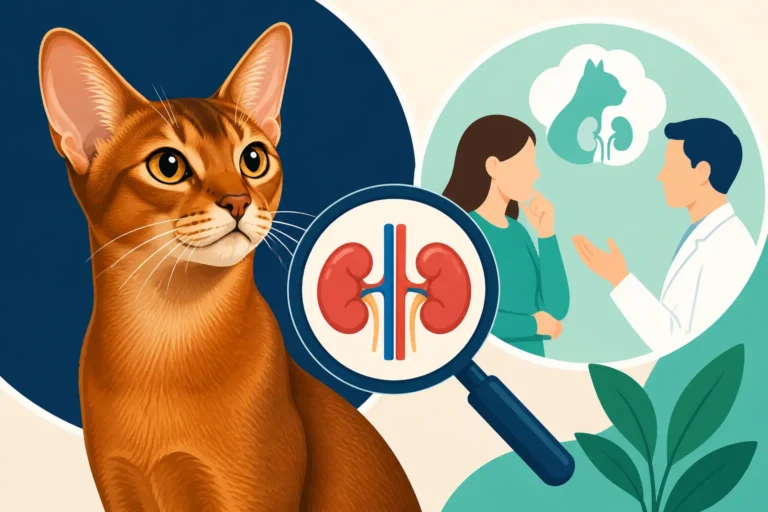
A prime example for Abyssinians is renal amyloidosis. This devastating kidney disease is hereditary in Abyssinians, but it often doesn't manifest until the cat is a few years old, sometimes even middle-aged. Crucially, there is currently no DNA test for Abyssinian amyloidosis, making it incredibly difficult for breeders to definitively "guarantee" against it in the same way they can with PK Deficiency or PRA-rdAc. Renal Amyloidosis Is the Abyssinian Problem Nobody Can Test For goes into detail on why this is such a challenge. A breeder's guarantee almost universally excludes conditions for which there is no current genetic test or those that appear past a specific age limit (e.g., 1 or 2 years old). This is where proactive care and a good pet insurance policy become indispensable. How Young an Abyssinian Can Lose Its Kidneys highlights the potential early onset of such conditions.
"Buyer's Remorse" or Lifestyle Changes
A health guarantee is strictly about the kitten's health, not about whether the cat fits into your lifestyle, whether you've developed allergies, or if you simply changed your mind. If you decide the Abyssinian's high energy isn't for you, or your living situation changes, the guarantee will not provide any remedy. These are personal decisions and responsibilities that come with adopting any pet. Responsible breeders often include clauses that require you to return the cat to them if you can no longer care for it, regardless of the reason, but this is a rehoming agreement, not a health guarantee.
Accidents and Illnesses Post-Arrival
Once the kitten is in your home and past the initial short health check window, the breeder's guarantee generally doesn't cover accidents (like falling off a cat tree) or illnesses that develop due to environmental factors, diet, or contagious diseases picked up in your home or community. This includes things like ingesting a toxic plant, developing an ear infection, or suffering a broken bone. This is precisely the realm where pet insurance becomes your best friend. Services like Chewy often have resources or partnerships for pet insurance to help cover these unforeseen circumstances.
Routine Vet Care and Preventative Measures
Don't expect your breeder's guarantee to cover routine vaccinations, deworming, spaying/neutering, or annual check-ups. These are standard costs of pet ownership. Also, remember that Abyssinians are prone to specific dental issues, like juvenile gingivitis, which can lead to expensive dental work throughout their lives. Why Abyssinian Dental Work Is the Biggest Line in the Budget explains this financial reality. Your guarantee will not cover these preventative or maintenance costs. Establishing a regular vet relationship and budgeting for these expenses from day one is essential.
Reading the Fine Print: Your Checklist Before Signing
Before you commit to bringing an Abyssinian home, you must read the health guarantee thoroughly. Don't be afraid to ask questions until you fully understand every clause. This is a significant investment, both financially and emotionally.
Duration and Specific Conditions
Always check the length of the guarantee for different types of conditions. Is it 48 hours for general health, one year for congenital defects, and five years for genetic diseases? Some guarantees might extend longer for life-threatening genetic conditions. Ensure the specific testable Abyssinian diseases like PK Deficiency and PRA-rdAc are explicitly mentioned if they are meant to be covered. If a breeder makes a verbal promise, insist it is written into the contract. Which Diseases an Abyssinian Breeder Must Declare offers more insight into what breeders should be transparent about.
Remedies and Your Obligations
What exactly does the breeder promise to do if the guarantee is invoked? Will they offer a full refund, a partial refund, a replacement kitten, or contribute to veterinary bills? Understand their limits. Most guarantees will not cover all veterinary costs if you choose to treat a condition; they might offer a specified amount or a percentage.
Equally important are your obligations. Many guarantees require specific actions from you to remain valid. This often includes:
- Taking the kitten to your vet for a health check within a very short timeframe (e.g., 48-72 hours).
- Providing proper nutrition and care, sometimes even specifying a particular brand of food (though be wary of overly restrictive clauses).
- Not allowing the cat to roam outdoors unsupervised, which is good practice for Abyssinians anyway, as Why an Indoor Abyssinian Reaches Fifteen More Often highlights.
- Providing proof of spay/neuter by a certain age if the kitten is sold as a pet.
- Not breeding the kitten if it's sold as pet quality. Why an Abyssinian Sells on a Non Breeding Agreement clarifies this common clause.
Failing to meet these obligations can void the guarantee entirely, leaving you without recourse.
The Importance of Independent Vet Checks
This cannot be stressed enough: always take your new Abyssinian kitten to your own trusted veterinarian within the timeframe specified by the breeder's guarantee. This independent examination serves multiple critical purposes. First, it confirms the kitten's health status at the time of transfer, giving you peace of mind and validating the breeder's claims. Second, it establishes a baseline for your kitten's health and ensures you meet the terms of your guarantee. Third, it allows your vet to identify any potential issues early, whether they're covered by the guarantee or require immediate attention. Make sure your vet documents everything thoroughly.
Here's a quick comparison to help you visualize the differences:
| Feature | Breeder Health Guarantee | Pet Insurance |
|---|---|---|
| Purpose | Assurance for initial health & specific genetic issues | Financial aid for new accidents & illnesses over time |
| Coverage Duration | Short-term (e.g., 48 hrs for general, 1-5 yrs for genetic) | Long-term (monthly premium, lifetime coverage possible) |
| Conditions Covered | Pre-existing, congenital, testable genetic diseases | New accidents, new illnesses, surgeries, medications, diagnostics |
| Conditions NOT Covered | Accidents, illnesses after initial period, routine care, later-onset conditions without genetic test | Pre-existing conditions (before policy starts), routine wellness (unless specific rider) |
| Cost | Included in kitten purchase price | Ongoing monthly premiums |
| Remedy Provided | Replacement kitten, refund, partial vet cost contribution | Reimbursement for vet bills (after deductible/copay) |
| Obligations | Initial vet check, proper care, spay/neuter | Pay premiums, adhere to policy terms, annual vet checks |
In conclusion, an Abyssinian health guarantee is a valuable part of a responsible breeder's practice, offering important initial protections. However, it's a specific, limited contract that is not designed to cover all possible health scenarios your adventurous Abyssinian might encounter over their long, active life. Understanding its scope and limitations is key to being a well-prepared and responsible Abyssinian owner. For true peace of mind and comprehensive financial protection, combining a good breeder's guarantee with a robust pet insurance policy is the wisest course of action.
Disclaimer
This article is for general informational purposes only and does not constitute professional advice. Laws, prices and regulations vary by location and change over time. Consult a qualified professional for guidance on your specific situation.